


Cooperation more sustainable than protectionism, Chinese experts say after EU reportedly delays trade confrontation with China
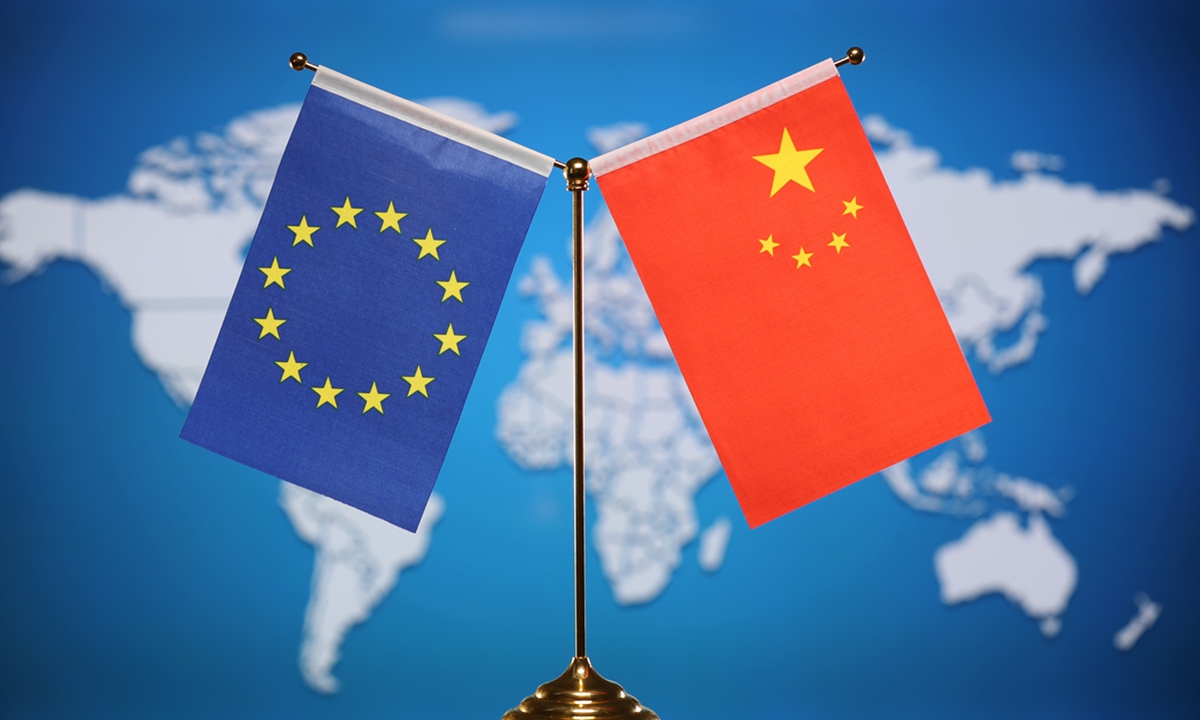
Photo: VCG
Despite European Union (EU) protectionist policy and politicized trade narratives within the bloc, deep China-Europe economic interdependence will ensure continued cooperation, making engagement and negotiation more sustainable than protectionism, Chinese experts said on Friday, after the Financial Times (FT) reported that the EU had delayed a potential trade confrontation with China following a two-day summit in Brussels that exposed divisions within the bloc.
The leaders of the 27 EU countries gathered in Brussels for a two-day summit on Thursday and Friday. Despite combative rhetoric in the lead-up to the Brussels meeting, the 27 leaders opted for dialogue rather than immediate action to deal with what they called "global macroeconomic imbalances," the report said.
EU leaders instructed European Commission President Ursula von der Leyen to "continue engaging in a constructive dialogue" with main economic partners. At the same time, they said she should "develop and eventually complement the toolbox in the area of trade defence and industrial policy," an EU official was cited by the report as saying.
The latest signal from the Brussels meeting - delaying trade confrontation with China - was not unexpected, as the EU's overall China policy direction had already been shaped through a series of recent high-level interactions and internal EU discussions, Feng Zhongping, director of the Institute of European Studies at the Chinese Academy of Social Sciences, told the Global Times on Friday.
The EU is expected to continue its dual-track approach of "de-risking" while maintaining China as an indispensable trading partner, Feng said, adding that current European policy combines the use of pressure tools such as trade defense measures with an ongoing willingness to engage in dialogue, nevertheless reflecting an effort to manage competition rather than escalate it.
Jian Junbo, director of the Center for China-Europe Relations at Fudan University's Institute of International Studies, told the Global Times on Friday that one of the key factors shaping the EU's approach is China's rational and firm response to current trade frictions through bilateral coordination mechanisms aimed at managing disputes and easing tensions.
China has consistently taken a rational and firm approach, seeking to resolve these issues and ease tensions through bilateral coordination mechanisms, including recent consultations between senior trade officials, Jian said.
Communication between China and the EU in the economic and trade fields remains smooth, Chinese Ministry of Commerce (MOFCOM) spokesperson He Yadong said at a regular press briefing on Thursday, in response to a question over the current progress of China-EU economic and trade negotiations and whether China is concerned that current frictions could escalate into a full-blown trade war.
On June 9, China's Vice Minister of Commerce Ling Ji, also deputy China international trade representative, met with Ditte Juul Jorgensen, director-general for Trade and Economic Security of the European Commission. The two sides held comprehensive discussions on preparations for establishing a China-EU trade and investment consultation mechanism, laying the groundwork for an upcoming ministerial-level dialogue, the spokesperson said.
During the talks, the EU side stated that a trade war is not the objective of its policy toward China, and expressed a positive attitude toward conducting constructive dialogue with China, He Yadong said.
The remarks came after the Global Times learned from a source who is familiar with the situation, Ling is visiting the EU headquarters from June 9 to 14 to discuss with European officials the relevant arrangements for establishing the China-EU Trade and Investment Consultation Mechanism.
The recent pragmatic signals are unfolding at a difficult and complex moment for China-EU economic ties, as Europe ramps up pressure to impose trade restrictions, and weighs broader "economic security" tools seen as directly affecting China.
EU trade policy tools shaped by political considerations, "de-risking," and protectionist measures are increasingly constraining economic and investment ties with China, posing long-term challenges to cooperation, according to Jian.
Viewing China's policies through a politicized lens is misguided, and a more rational and objective approach is needed - one that focuses on enhancing Europe's own competitiveness, including through closer economic ties with the Chinese market, Jian said, adding that a closer bilateral relationship should be pursued to achieve mutually beneficial outcomes, rather than relying on "de-risking" and protectionist measures.