


When Moldovan sailor Stanislav Lungu arrived at Shanghai's Changhai Hospital, he was facing a medical emergency in a country far from home. Yet as doctors explained the treatment plan, his anxiety began to ease.
"I trusted them because they said I wasn't the first patient they'd treated this way. They had performed this procedure many times before," he said.
The encounter lasted only a few moments, but it captured something that vascular surgeon Xiao Yu has come to understand over years of medical practice: trust can transcend language. For Xiao, an attending physician at Changhai Hospital and a Communist Party of China (CPC) member for nearly two decades, that sense of responsibility recently took her far beyond the operating room.
From a hospital ward to the high seas
In April, she returned from a deployment aboard the People's Liberation Army (PLA) Navy's Silk Road Ark, China's second domestically designed and built hospital ship. The voyage, known as Mission Harmony-2025, took medical personnel across the South Pacific and Latin America, delivering free healthcare services, conducting medical exchanges and building people-to-people ties.
The mission marked the first overseas deployment of the Silk Road Ark since its commissioning in 2024. Over the course of eight months, the ship traveled more than 36,000 nautical miles, visiting countries including Brazil, Chile, Fiji, Tonga, Jamaica and Nauru. The medical team completed more than 26,000 outpatient consultations and over 2,700 surgical procedures.
For Xiao, however, the significance of the journey cannot be measured by the distance travelled alone. As a CPC member, she saw the mission as an opportunity to answer a call to serve. And as a member of a team pushing the boundaries of modern medicine, she carried with her some of China's latest advances in vascular treatment.
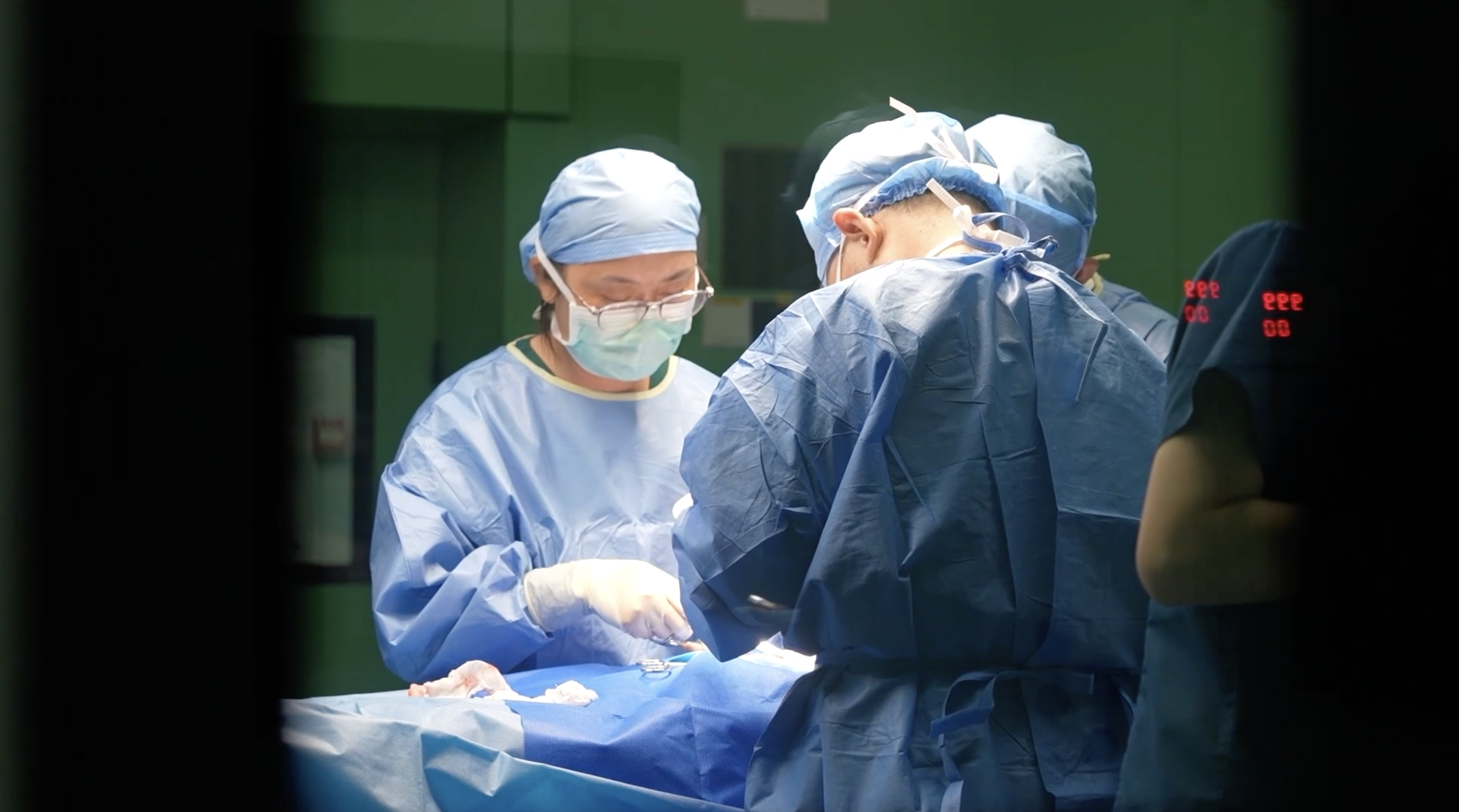
Xiao Yu (left) performs a surgery onboard the Silk Road Ark. (File photo: PLA Navy)
Bringing Chinese innovation to the world
One of the mission's most memorable stops came in Brazil, where Xiao participated in academic exchanges with local medical professionals. There, she introduced Chinese innovations in vascular surgery, including an endovascular assistant robot developed by her team at Changhai Hospital.
The technology is designed to help surgeons perform delicate procedures inside blood vessels with greater precision. Built on years of clinical research and practical experience treating complex vascular diseases, the system represents a shift toward smarter surgery that can improve outcomes and shorten recovery times.
Leading the effort is Lu Qingsheng, director of Changhai Hospital's Department of Vascular Surgery.
"We have now entered an era of precise, intelligent and minimally invasive surgery, which is aimed at a higher success rate. Promoting this from China to the world demonstrates China's leading role in this field," Lu said.
For Xiao, sharing those achievements overseas was as important as the treatments themselves.
"After our robot is officially launched, it won't need to invite our Director Lu over. By using 5G signals, Director Lu can perform surgery on patients in Brazil from China. This is a leap forward," she said.
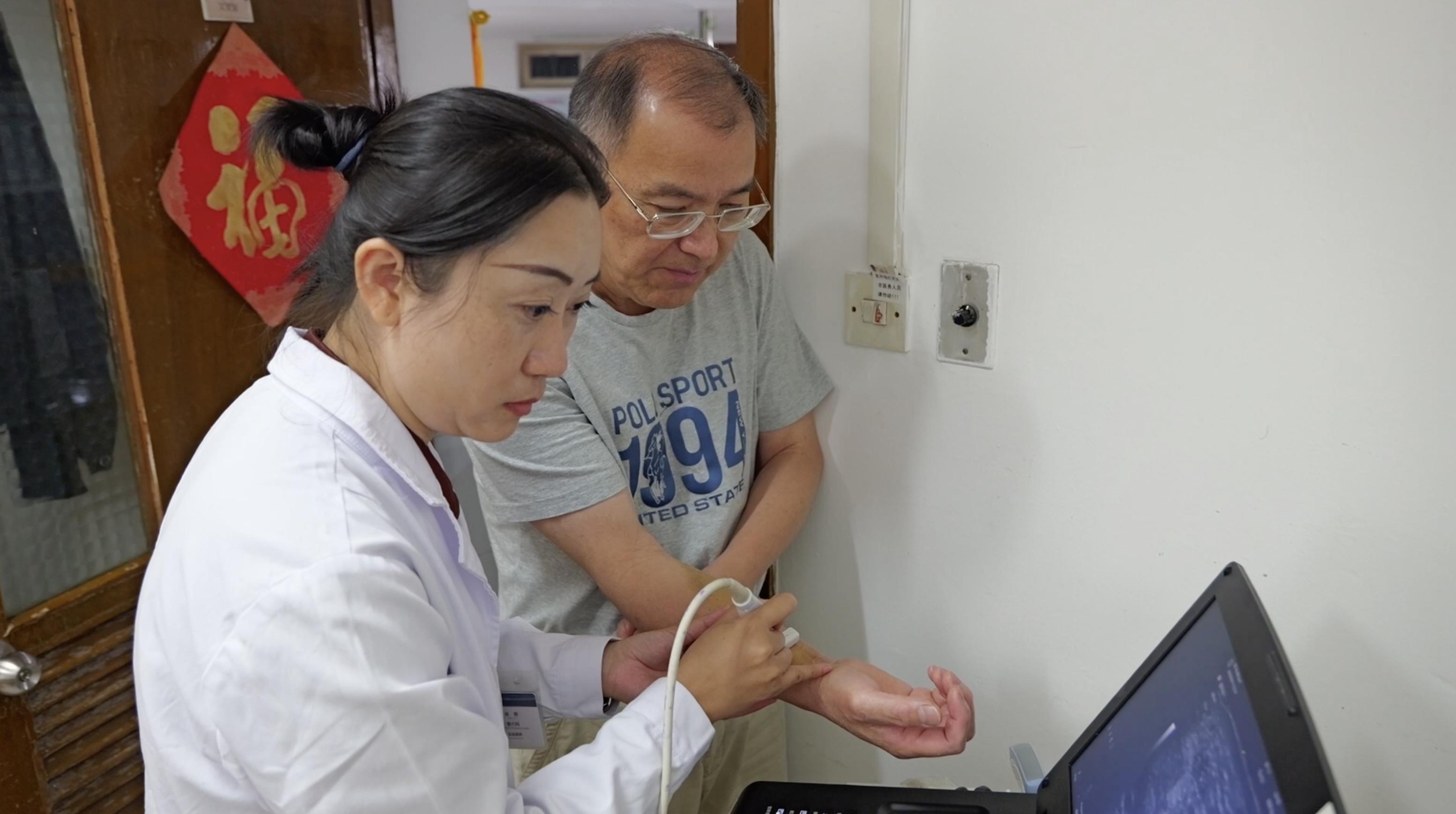
Xiao Yu treating a patient at Changhai Hospital in Shanghai. (File photo: CGTN)
A journey of duty and growth
While the mission showcased China's growing medical capabilities, it also became a deeply personal journey. When the ship crossed back into the Northern Hemisphere, Xiao began drawing a map by hand, tracing the route of the Silk Road Ark across oceans and continents.
"It was all for the children. I wanted to go home and let them know where I had been, which countries I had visited, and what my journey had been like," she said.
The map would eventually become a keepsake for her family, a way of explaining months spent away from home. The 234-day deployment is longer than any previous mission by a Chinese naval hospital ship.
"I have a new understanding of my country. Patriotism has become tangible for me, and I can influence my children," she said.
Back at Changhai Hospital, Xiao has resumed the rhythm of daily clinical work. As a member of the CPC, she remains guided by the belief that professional excellence carries with it a broader responsibility to serve society.
"As our generation went out, we also learned that each generation has its own responsibilities. The task of Mission Harmony is to implement a community with a shared future for humanity, and it reflects our responsibility," she said.
From a hospital ward in Shanghai to ports across the Pacific and Latin America, Xiao's journey has connected people with different languages, cultures and homelands. What they do share is the trust in a doctor, in a treatment and in the possibility that care can travel across oceans.
(Li Siqi, Bai Jin and Tang Lei also contributed to this story.)