


Editor's note: Lidia Fagale is a journalist at Clave China Radio and the news portal www.clavechinanoticias.com. The article reflects the author's opinions and not necessarily the views of CGTN.
At Summer Davos 2026, artificial intelligence was no longer discussed merely as a technological promise. It has become a central force driving structural reform in the global economy. The roundtables and research reports presented by the World Economic Forum in China's Dalian examined AI through three critical lenses: The urgent need for harmonized global governance, the democratization of infrastructure, and its real impact on the labor market.
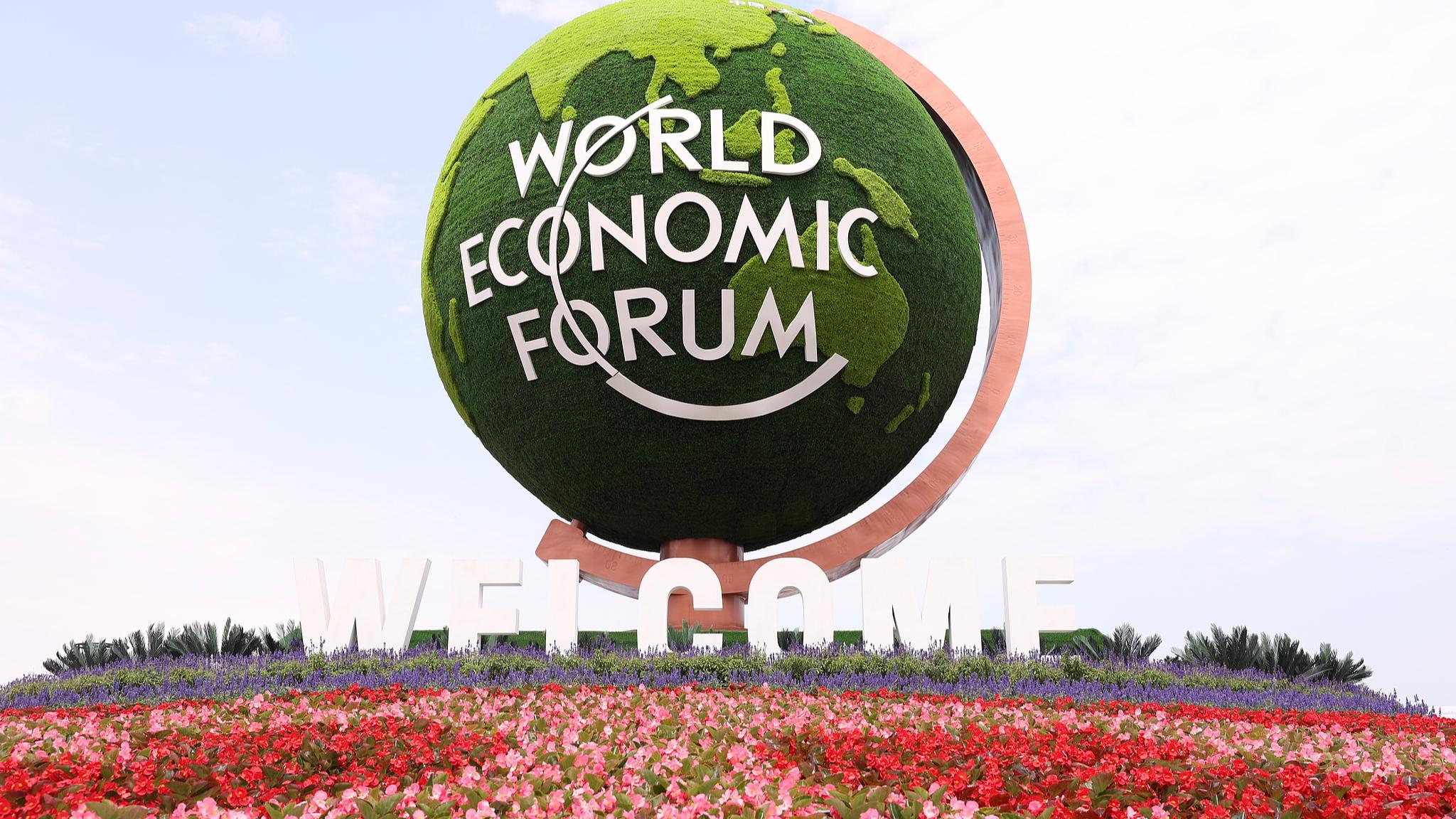
The main venue of the World Economic Forum's Annual Meeting of the New Champions 2026 in Dalian, China's Liaoning Province, June 22, 2026. (Photo: VCG)
Global governance in the face of regulatory fragmentation
One of the most intense debates among academics and political leaders in Dalian focused on the risk of a regulatory fragmentation in AI governance. While the European Union is moving ahead with the strict framework of its AI Act, and the United States prioritizes market-based corporate self-regulation, China promotes an AI governance approach that balances development and security, strengthens ethical guidance, and improves regulatory effectiveness.
Researchers at the forum agreed that the absence of a unified global standard is holding back cross-border innovation. The goal in Dalian was to explore pathways for regulatory interoperability, allowing startups from the Global South to export their technological solutions without facing incompatible legal barriers across continents.
Democratizing hardware and building "AI sovereignty"
Access to computing power and advanced semiconductors — the latest generation of chips — remains concentrated in the hands of a small group of Silicon Valley corporations and Asian firms. In response, delegations from emerging economies placed the concept of AI sovereignty on the academic agenda.
Panel discussions stressed that, in order to achieve true "innovation at scale," developing countries cannot remain mere consumers of foreign language models. That is why participants debated the need to finance publicly accessible regional data centers, develop foundation models trained on local data that reflect the cultural and linguistic diversity of the Global South, and design technology transfer mechanisms that prevent Western big tech companies from consolidating monopolistic control.

Attendees at the Dalian International Conference Centre during the World Economic Forum Annual Meeting of the New Champions 2026 in Dalian, China's Liaoning province, June 23, 2026. (Photo: VCG)
From laboratory to real economy: Industrial deployment
The long-term perspective of Summer Davos was especially evident in discussions on how AI is being integrated into traditional industries. Scientific presentations highlighted advances in the use of AI in medical biotechnology, the discovery of new materials for electric batteries, and the real-time optimization of renewable energy grids.
The conclusion was clear: The competitive advantage of nations will no longer depend solely on creating AI, but on how quickly and efficiently their traditional industries can adopt it.
The impact on employment: Toward a model of "human augmentation"
Far from apocalyptic narratives about mass job displacement, the working sessions of the Davos forum proposed an academic approach centered on assistive AI, or "human augmentation." Experts in education and labor economics emphasized the urgent need to restructure university and technical education curricula.
The consensus in Dalian was that the real risk of unemployment does not come from AI itself, but from the gap between traditional professionals and workers trained to co-create alongside autonomous systems.
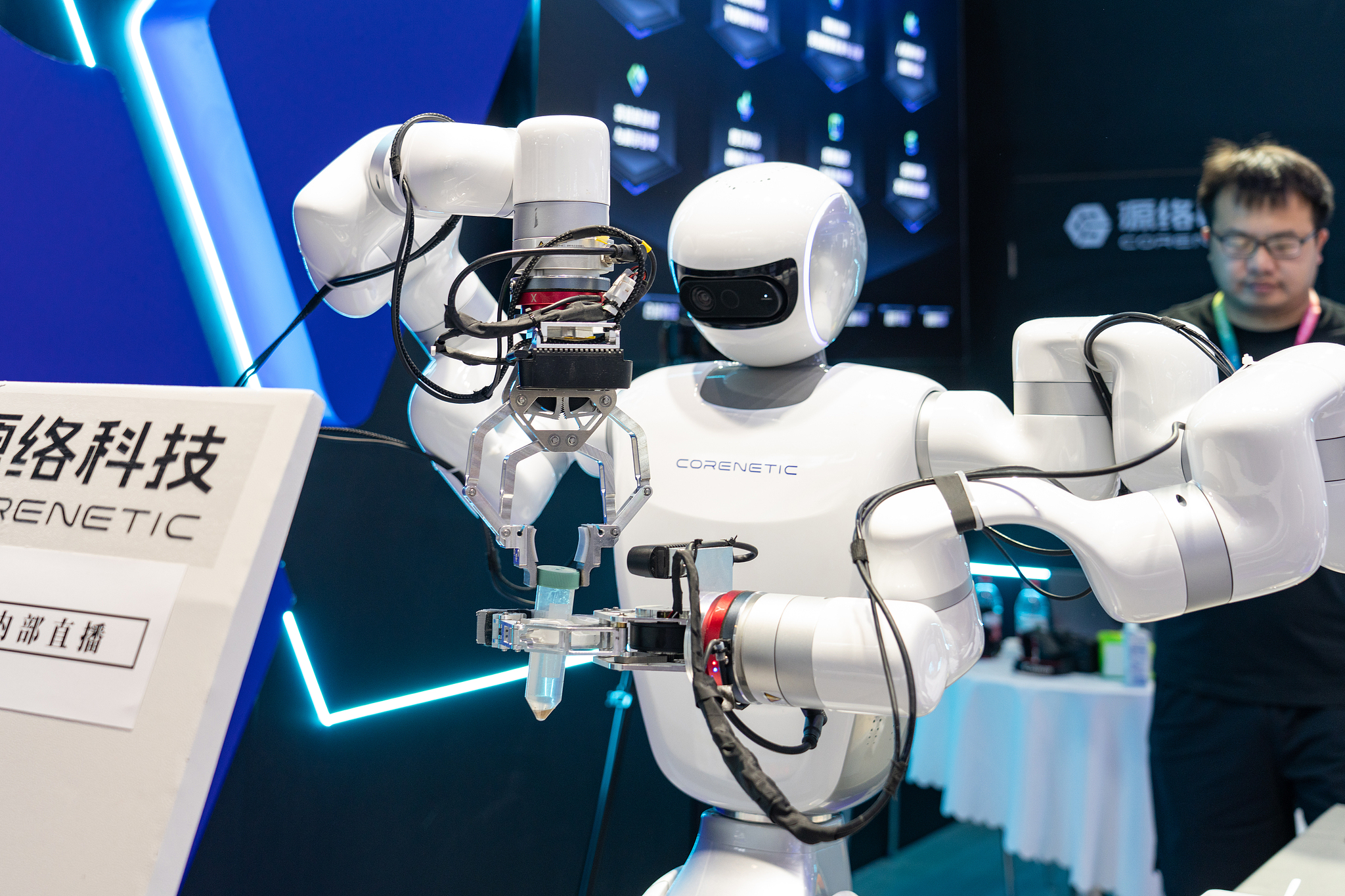
A humanoid robot designed to conduct pharmaceutical research and drug experimentation at the 2025 World Robot Conference, Beijing, China, August 12, 2025. (Photo: VCG)
A labor consensus: Human augmentation
In Dalian, the conclusion was that unemployment does not come from AI; it comes from the skills gap. The worker of the future does not compete against the machine. The worker works with it.
Ultimately, Summer Davos 2026 helped build broader consensus on the future of AI governance. China reaffirmed its commitment to participating in global AI governance in a responsible and constructive manner, calling for stronger international cooperation, improved rules, enhanced regulatory effectiveness, and a better balance between development and security.
The Global South is no longer asking for permission: It is demanding infrastructure, financing its own models, and turning education into a national priority.