


Once a niche concern primarily for industry professionals, tin, a fundamental non-ferrous metal, has surged to prominence. Its price has skyrocketed nearly 40 percent in just six months, while smelters report robust production and strong sales.
This revival stems from a critical new application: Tin has become indispensable in advanced semiconductor packaging. The ever-growing demand for computing power requires increasingly dense chip packaging, directly driving up tin consumption. As artificial intelligence (AI) advances rapidly, tin is now being hailed as an "essential metal of the computing era."
This trend extends far beyond tin, permeating the broader non-ferrous metals sector. Propelled by surging demand from emerging industries, production of key battery materials such as nickel, cobalt and lithium, along with copper and aluminum foil, high-end copper products and rare and rare-earth metals, continues to climb. As a result, profits in China's non-ferrous metals industry surged 117.8 percent year on year during the first four months of 2026.
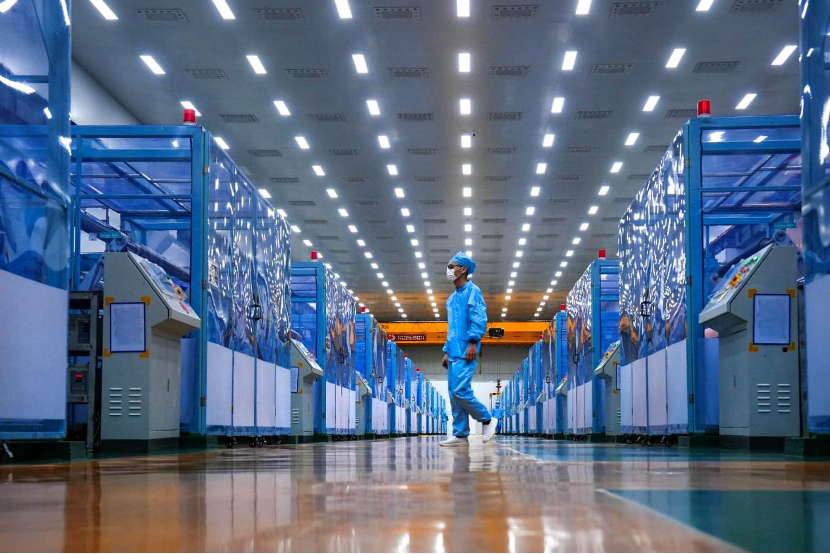
A worker walks in a copper foil manufacturing factory of a new energy enterprise in Dongyang, East China's Zhejiang Province. (Photos provided to People's Daily)
Long viewed as a cyclical, traditional sector, the industry is now achieving simultaneous growth in output and profitability by capitalizing on opportunities created by AI computing. At the same time, its transition toward smarter, greener production is accelerating.
This is not an isolated phenomenon. It vividly demonstrates how innovation is revitalizing the real economy, with effects extending far beyond the metals industry.
The mass production and deployment of AI infrastructure is driving demand for specialty steels, bearings and general-purpose rubber components.
The rapid expansion of new energy storage is reinvigorating markets for traditional chemical materials such as soda ash, electrolyte solvents and separator substrates.
The emergence of the low-altitude economy is generating steady demand for aluminum alloys, carbon-fiber composites and standard cabling.
As new technologies, applications and market demand spread throughout the economy, many industries once considered mature or saturated are breaking through growth constraints and moving beyond long-established development paths. In doing so, they are discovering fresh opportunities for transformation and upgrading.
For years, many traditional industries grappled with rigid demand structures and limited growth prospects, often finding themselves trapped in cycles of periodic fluctuations and homogeneous competition. The recent tin boom, fueled by surging demand for computing power, illustrates how emerging industries can create entirely new sources of structural demand.
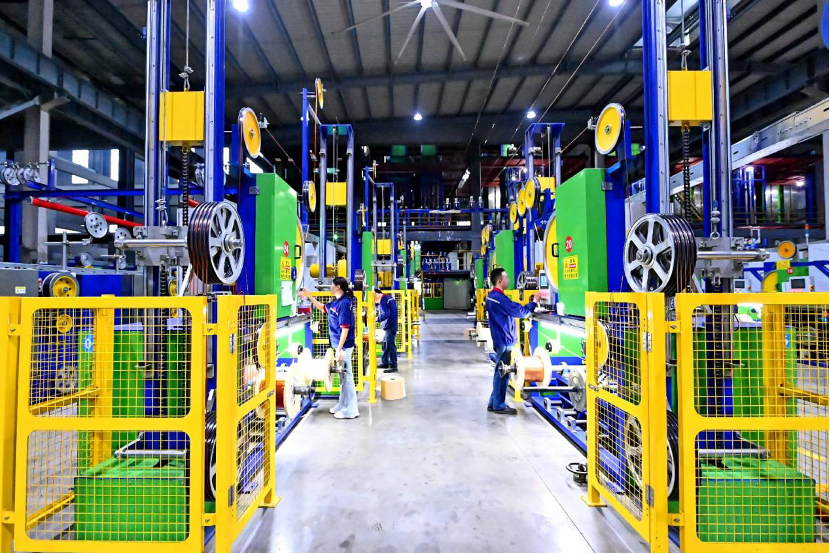
Workers manufacture electromagnetic wire in a factory in Fuzhou, East China's Jiangxi Province.
Through this process, a conventional industrial raw material has been transformed into a strategically vital input for the digital economy and intelligent industries, fundamentally reshaping its value.
The lesson is clear: No industry is inherently obsolete, only applications remain undiscovered. No industrial capacity is truly outdated, only unrealized value remains untapped.
For traditional industries, the greatest opportunities lie not in competing over shrinking existing markets but in expanding into new frontiers. By embracing digitalization and green development, exploring cross-sector applications and broadening industrial boundaries, companies can leverage existing capabilities to meet emerging demand. In doing so, they can transform established resources into competitive advantages while increasing both product value and market potential.
Technological innovation is the core driver of traditional industrial upgrading and the primary engine of quality improvement and efficiency gains.
Take tin as an example. Midstream and downstream producers of tin powder, solder paste and solder balls have overcome technical barriers to develop ultra-fine, ultra-high-purity and ultra-precision products. These advances have significantly increased the value of their products, shifting their business model from bulk commodity sales to high-margin specialty products.
Upgrading traditional industries cannot rely solely on expanding capacity or making incremental process improvements. It requires a strategic move up the value chain by harnessing digital technologies to improve efficiency, prioritizing green development to optimize industrial structures and embracing high-value manufacturing to enhance product quality.
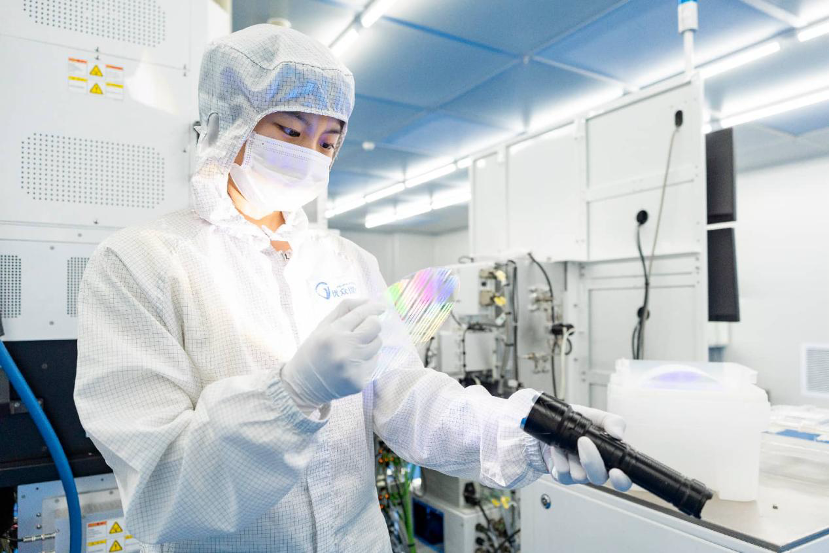
A technician inspects part of a semiconductor micro-nano device being manufactured in a factory in Nantong, East China's Jiangsu Province.
Only by using technological innovation to overcome systemic bottlenecks can traditional industries achieve meaningful and sustainable renewal.
Across China, a growing number of traditional sectors are cultivating new growth drivers through innovative business models and industrial formats.
The new energy vehicle industry, for example, has expanded beyond the traditional boundaries of manufacturing, evolving from simply producing vehicles to building integrated industrial ecosystems.
The textile and apparel industry has moved beyond low-end processing to develop new segments such as functional fabrics, smart textiles and high-end customization.
The construction machinery sector has established systems for remote maintenance, intelligent dispatching and equipment-sharing services, transforming itself from a manufacturer into a provider of integrated solutions.
These examples point to a common pathway for traditional industries. Through the reorganization of production factors, technological integration and institutional coordination, industries can promote cross-sector convergence, foster new business models and operating formats and ultimately drive industrial upgrading and structural optimization.
Those who adapt thrive, and those who embrace transformation move forward. New quality productive forces are creating vast opportunities for development.
As more traditional industries seize these opportunities, they can unlock the potential of existing assets, cultivate new competitive strengths and create fresh sources of growth and value.