


Finding meaning in small things: A grassroots worker's commitment to serving the people
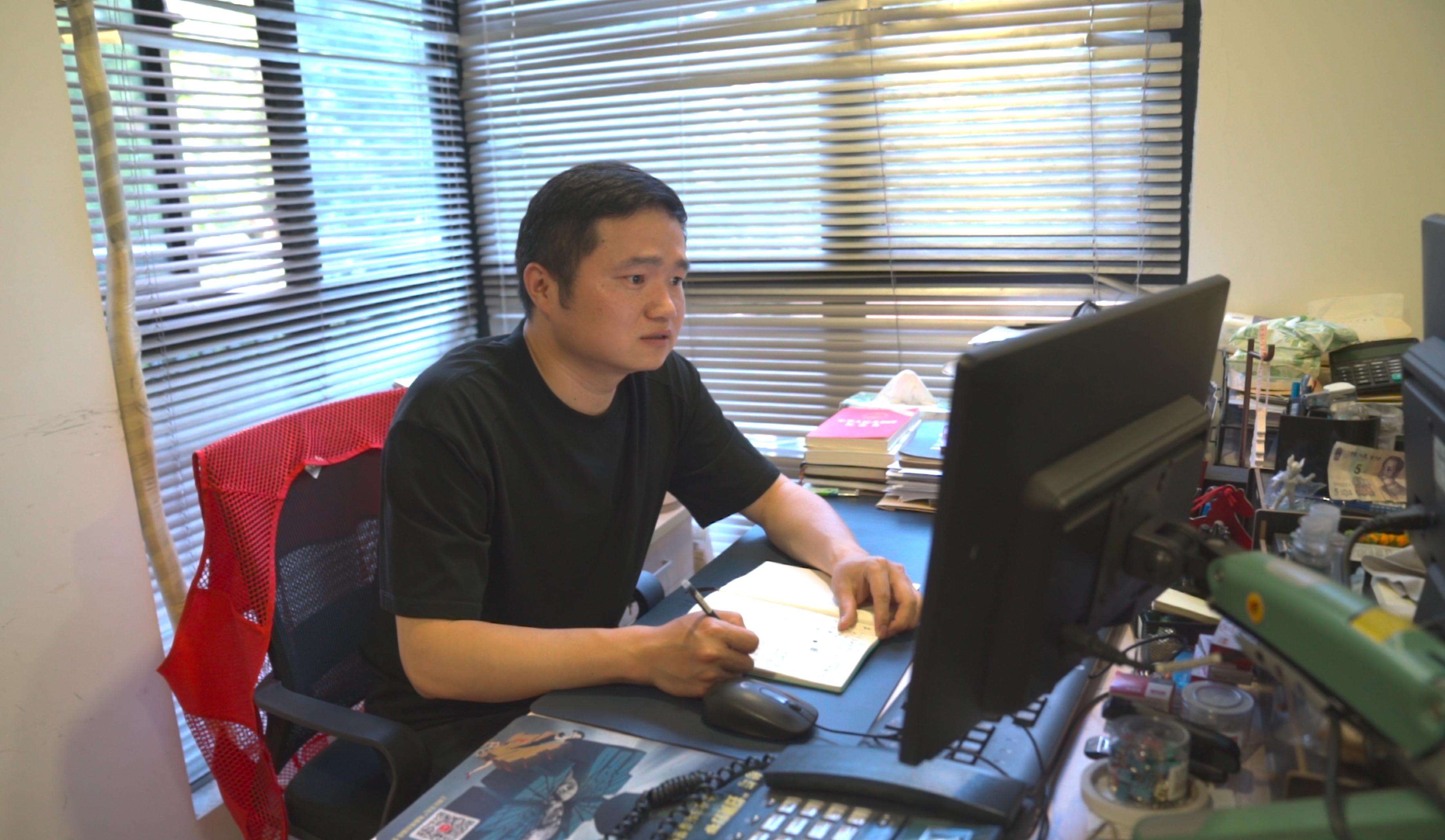
He Mu, Party secretary of Chunjiang community in Shangcheng district, Hangzhou, east China's Zhejiang Province, works in his office on June 11, 2026. (Photo: People's Daily Online)
For He Mu, Party secretary of Chunjiang community in Shangcheng district, Hangzhou, east China's Zhejiang Province, grassroots work begins with the most ordinary details of daily life.
His days are often filled with visits, conversations and paperwork. Some residents come to ask about unemployment assistance. Some elderly people need help applying for allowances. Families with disabled members may need guidance on policies and procedures. For He and his colleagues, community work means responding to these concrete needs, especially those of seniors and children.
In Chunjiang community, regular visits to elderly residents are part of the routine. Each month, community workers check in on senior residents, ask about their health, and spend time talking with those who live alone. Sometimes, He also helps bring together elderly residents with similar interests, so they can become friends and support one another in daily life.
For He, caring for seniors is not only part of his duty, but also something deeply personal.
"Everyone has elderly family members," He said. "One day, our parents will grow old, and we ourselves will grow old too. If we can build a stronger atmosphere of respecting and helping the elderly, it will be good for everyone."
He has worked at the grassroots level for about 14 years. His understanding of community service was shaped early in his career, when he was involved in relocation-related work in old residential areas.
During that period, he often met elderly residents who knew little about government policies or available subsidies. Some were not familiar with smartphones or computers, and even simple procedures could become difficult for them. These experiences made him realize that community work is about noticing residents' everyday difficulties and helping make their lives more convenient.
"That was when I began to understand the meaning of grassroots work," He said. "It is about telling residents what we know, helping them handle the things they find difficult, and making their lives a little easier and more convenient."
For He, serving the people is not an abstract idea. It means discovering problems, listening to residents, coordinating resources and working out solutions that can truly be carried out.
The community's meal service site for elderly residents is one example. After residents voiced concerns about seniors' difficulty in accessing meals, He and his team began visiting elderly residents to better understand their needs.
The process was far from easy. Space in the community was limited, and a traditional canteen with an on-site kitchen was not practical because of catering regulations. He and other community workers spent weeks coordinating with the property management company, the homeowners' committee, government departments and catering providers, making repeated visits and adjustments to push the matter forward.
From the first suggestion to the opening of the meal service site, the process took only about two months. Food is now prepared nearby and delivered to the community, allowing elderly residents to enjoy hot meals closer to home.
For He, opening the site was just the beginning. He still visits regularly, listens to seniors' feedback, works with the operator to improve the service, and helps organize meal delivery for residents aged 90 and above.
When he saw elderly residents sitting down to enjoy hot meals near their homes, He felt that all the effort had paid off.
"Whenever we can help residents solve a real problem, I feel very proud," He said. "When residents speak to us in a warmer and closer way because of what we have done, we already feel that our work is meaningful."
The meal service site is only one example of He's daily work at the grassroots level. In his eyes, there is no such thing as an issue too small for community workers. A broken facility near someone's home, an inconvenient step, or a lack of barrier-free access may seem minor to others, but each can affect a resident's everyday life.
"What residents need most is help with the problems right in front of them," he said. "Once we discover a problem, we should act as soon as possible. Even if adjustments are needed along the way, taking the first step is already important."
For He, the sense of achievement often comes quietly. Sometimes it is not a banner or formal praise, but a warmer tone from residents, a smile or a willingness to share more of their thoughts.
"When residents feel closer to us because of something we have done, we feel very happy," He said. "That is already a strong sense of achievement."
In these small changes, He finds the meaning of his work: staying close to residents, taking their everyday concerns seriously and following through with concrete care.