


How Chinese clay shapes world's porcelain standards
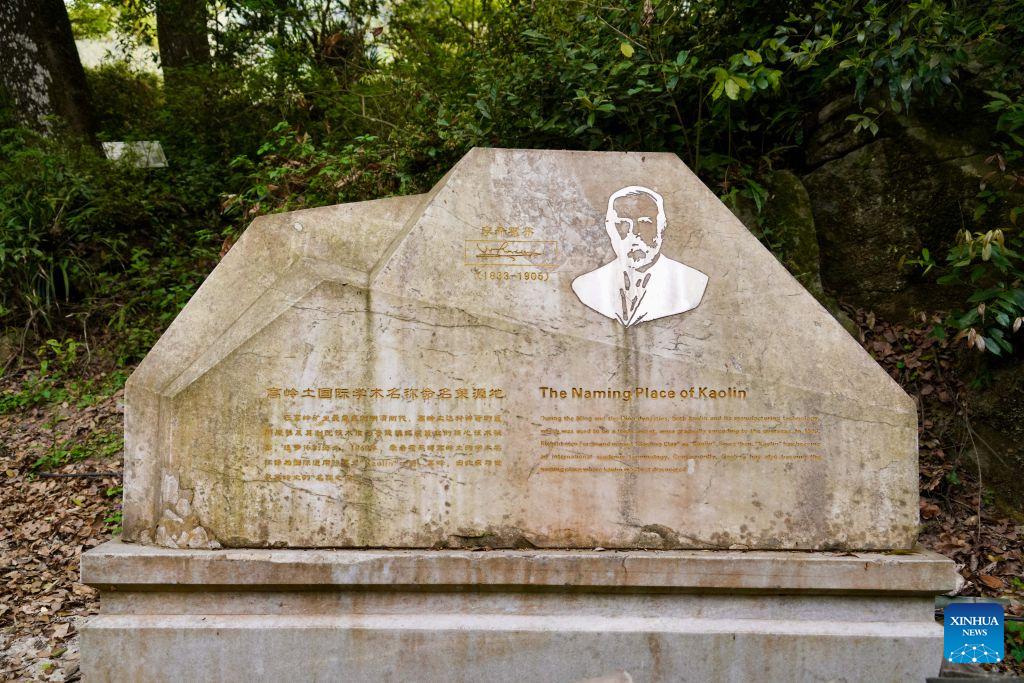
This file photo taken on April 9, 2025 shows the monument of the naming place of kaolin in Gaoling village, Jingdezhen, east China's Jiangxi Province. (Photo: Xinhua)
NANCHANG, July 1 (Xinhua) -- For centuries, the word kaolin has been closely connected to porcelain worldwide. For Dutch ceramic collector Marc van Hevel, however, it's more than just a term; it serves as his guiding compass.
Hevel has spent eight years living in Jingdezhen, China's porcelain capital in Jiangxi Province. Drawn by the name's origins, he visited Gaoling village, where kaolin was first discovered and whose name closely resembles the word kaolin.
In Jingdezhen's Gaoling, he collected samples from different mineral layers, bringing them back to his studio to analyze their crystal structures.
He told Xinhua that in Europe, kaolin is simply found in bottles or bags. But in Jingdezhen, visitors can see the ancient mining sites firsthand and truly understand that the international standard of porcelain has deep, tangible roots and did not emerge out of thin air.
Hevel is certainly not the first to enjoy this experience. The ancient mining site has attracted countless ceramic enthusiasts from around the world to Gaoling. The mine, which ceased operations in 1965, stands as a testament to a millennium of open-source wisdom in China's porcelain industry.
More than 700 years ago, people at the mining site first mixed kaolin with porcelain stone in precise proportions. This formula allows the clay mixture to withstand temperatures above 1,300 degrees Celsius without deforming.
Rather than keeping its secrets, Jingdezhen encouraged the spread of its techniques. Armed with this formula, Chinese porcelain -- admired for its smooth, refined beauty -- made its way around the world along the Maritime Silk Road.
"Before kaolin, porcelain was mostly limited to small vessels. Its discovery enabled the creation of large-scale ceramics in Jingdezhen and propelled Chinese porcelain onto the world stage," said Qiu Han, a master of Chinese arts and crafts.
"The Gaoling site showcases the scale, specialization and standardization of porcelain raw materials, which drove China's ceramic technology and influenced European high-temperature hard-paste porcelain," said Weng Yanjun, head of the Jingdezhen Imperial Kiln Institute.
Oriol Calvo Vergés, president of the Geneva-based International Academy of Ceramics, highlighted kaolin in his speech at the opening ceremony of the ongoing 2026 Congress of the International Academy of Ceramics held in Jingdezhen.
"We are close to Gaoling village, which gave its name to kaolin, or China clay, one of the elements of porcelain, a name that belongs not only to the history of Chinese ceramics, but to the history of ceramics throughout the world," said Vergés.
He noted that Chinese ceramics journeyed across continents, finding their way into palaces, museums, and collections, and leaving a lasting mark on ceramic traditions around the world.
Since the Song Dynasty (960-1279), ceramics crafted in Jingdezhen have been exported to Central Asia, West Asia, Europe and Africa.
This enduring spirit of innovation and inclusiveness lives on in Jingdezhen. In recent years, Jingdezhen Ceramic University has contributed to the revision of international ceramic standards by conducting precise research on kaolin.
"Centuries ago, Jingdezhen gave kaolin to the world. Today, we are refining ceramic material standards to make them more scientific and precise," said Wang Yongqing, a professor at the university.
Kaolin's legacy extends far beyond traditional ceramics. Its main ingredient, silicon-aluminum oxide, is pushing boundaries in aerospace, chemical, and military applications.
At the grinding workshop of Jingdezhen Jiahua Special Ceramic Co., Ltd., workers are busy testing processed alumina ceramics. Their products, made of silicon-aluminum oxide, are applied in new energy vehicles and exported to markets including Southeast Asia, Europe and the United States.
Wu Gang, head of the company, said that its expansion from a 20-person startup to a team of over 100 has been driven by its alignment with global quality standards.
"Stories are told and retold about kaolin and the fire. We learn of them today and are fascinated by the timeless enchantment of science and artistic vision," said Donald Wayne Higby, an emeritus professor of ceramic art at Jingdezhen Ceramic University. Enditem
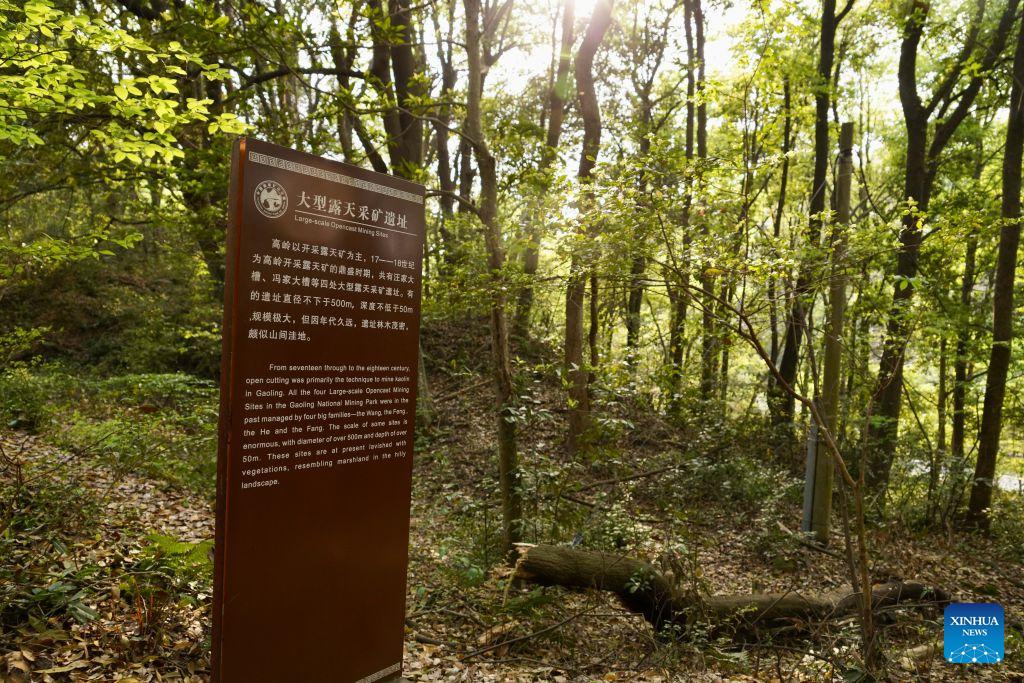
This file photo taken on April 9, 2025 shows an opencast mining site of kaolin clay in Gaoling village, Jingdezhen, east China's Jiangxi Province. (Xinhua/Du Juanjuan)
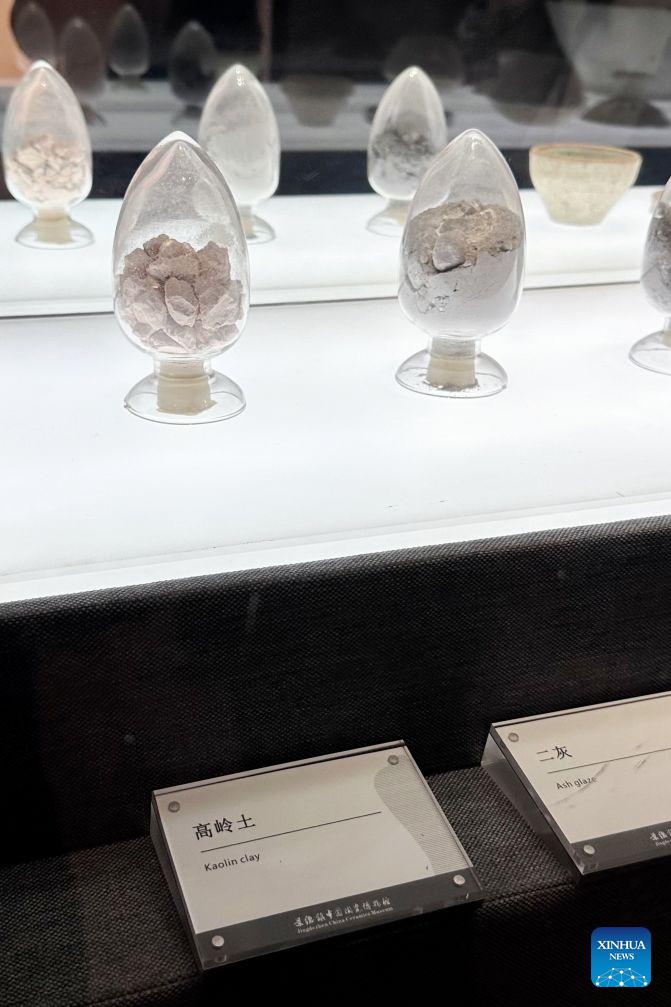
This file photo taken on April 9, 2025 shows a sample of kaolin clay (L) at China Ceramics Museum in Jingdezhen, east China's Jiangxi Province. (Xinhua/Du Juanjuan)