


Hundreds of snakes escaped from a breeding farm in Hengzhou, south China's Guangxi Zhuang Autonomous Region, after severe flooding triggered by Typhoon Maysak damaged the facility, the Global Times reported.
The incident occurred after heavy rainfall breached the embankment of a local reservoir, triggering flooding in the surrounding area.
An estimated 800 to 900 snakes escaped from the farm on Monday, though most are believed to be non-venomous. Wu Zhi, head of the Dengwei Village Committee in Yunbiao Township, told Red Star News that one villager had been bitten by a snake and was receiving emergency treatment in the hospital.
"The floodwaters have already swept away the vast majority of the snakes," Wu said. "Only a small number remain on floating waste in flooded areas. Most of the snakes captured so far are non-venomous water snakes."
Following the incident, residents from neighboring villages organized a volunteer snake-catching team to help contain the situation. Using fishing nets and other equipment, the team has been working to locate and capture the escaped reptiles.
Residents with no experience or skills in capturing reptiles are advised not to attempt to catch snakes themselves. "Only individuals with practical experience and professional knowledge should handle the animals to reduce the risk of injury," Wu added.
Local authorities in Hengzhou have also stepped up emergency medical preparedness. The antivenom stockpile has been expanded, and medical specialists from regional hospitals have been invited to provide on-site support.
Additional search-and-rescue patrols have been deployed across affected areas, while temporary medical stations have been set up to provide emergency treatment. A dedicated fast-track system for snakebite patients has also been activated to ensure timely medical care.
Meanwhile, health authorities and local governments have launched public awareness campaigns through village loudspeakers, WeChat groups and door-to-door visits, advising residents to avoid going out at night and stay away from areas where snakes are more likely to gather, including overgrown vegetation, ditches and floodwater.
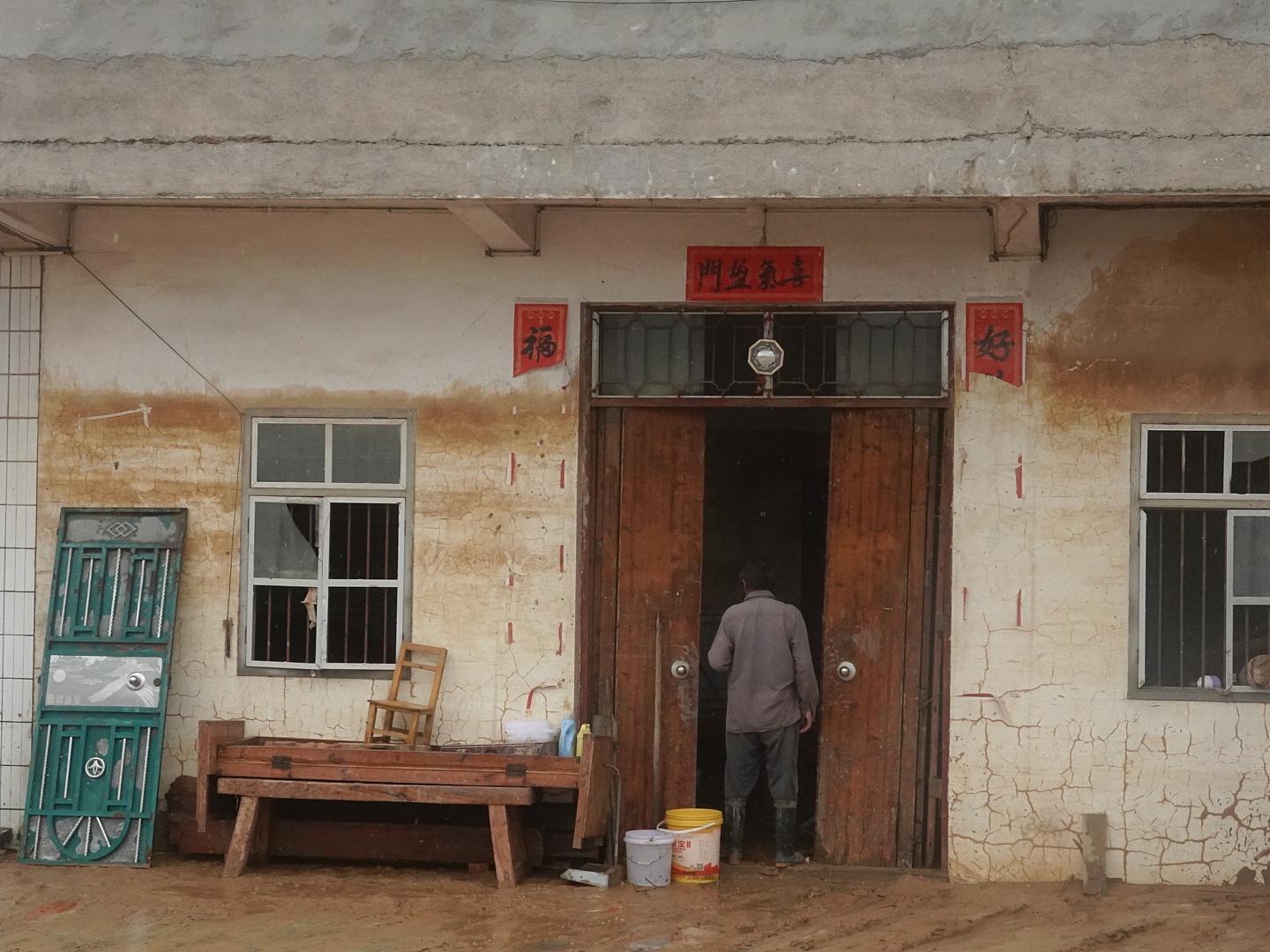
A villager returns to his home after the floodwaters receded, with the waterline still visible on his wall, Guangxi Zhuang Autonomous Region, China, July 7, 2026. (Photo: VCG)
Hengzhou's local media center issued emergency guidelines on Wednesday advising residents on how to prevent snakebites and respond if bitten during the flooding. Residents are urged to wear protective clothing, including rain boots, long-sleeved clothing and rain gear, when wading through floodwater and to avoid walking barefoot or handling floating debris where snakes may be hiding.
The guidelines also warn against common but dangerous first-aid practices, including sucking venom from the wound, cutting the wound open, applying herbal remedies, toothpaste or other substances, drinking alcohol, or raising the bitten limb, as these measures may worsen the injury or accelerate the spread of venom.
Instead, victims are advised to keep the affected limb still and below heart level, rinse the wound with clean water if possible and seek immediate treatment at a designated medical facility, even if symptoms initially appear mild.
The snake escape comes as Guangxi continues to grapple with severe flooding caused by Typhoon Maysak. Six people had died and 11 remained missing as of Tuesday evening after torrential rains triggered flooding across the region, according to Xinhua.
In response, China has allocated more than 36,000 additional disaster relief items to Guangxi, the Ministry of Emergency Management said Tuesday.