


BEIJING, July 9 (Xinhua) -- China's State Council has issued an action plan for carbon peaking during the 15th Five-Year Plan period (2026-2030), outlining key tasks and measures to achieve the goal.
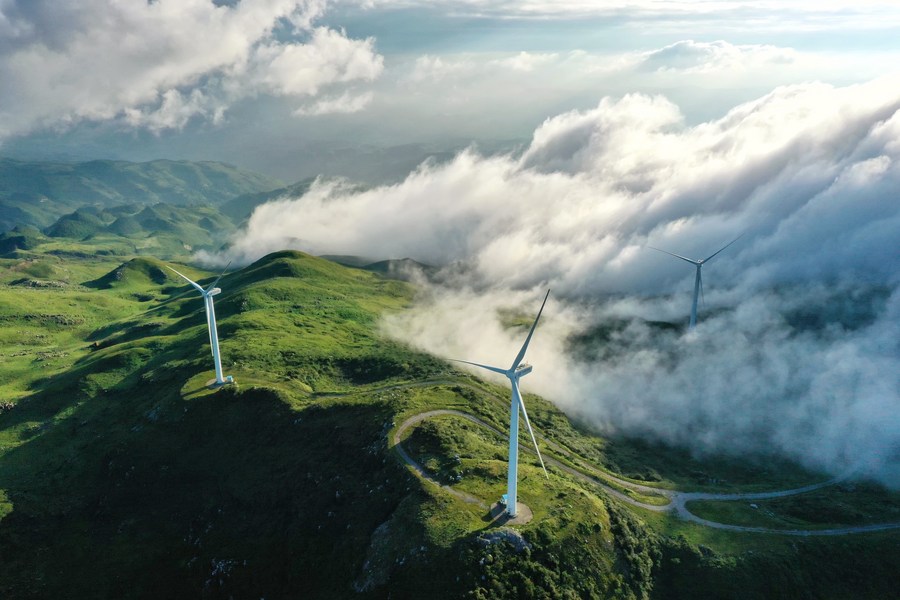
Aerial photo taken on Aug. 19, 2020 shows wind turbines in Jiucaiping scenic spot in southwest China's Guizhou Province. (File photo: Xinhua)
By 2030, China's carbon dioxide emissions per unit of GDP will be reduced by 17 percent from the 2025 level, and the share of non-fossil energy consumption will reach 25 percent, according to the plan.
These measures aim to ensure the timely achievement of a carbon peaking goal and lay a solid foundation for meeting the country's nationally determined contributions target for 2035 and advancing carbon neutrality.
The plan outlines key tasks across five areas, including accelerating the adjustment and optimization of the energy structure, promoting green and low-carbon industrial development, and deepening the green and low-carbon transition in key sectors.
To accelerate the optimization of energy structure, China will vigorously advance the development of non-fossil energy, promote clean substitution of coal consumption, and continuously optimize the structure of oil and gas consumption.
Efforts will be made to advance energy conservation and carbon-reduction transformation in traditional industries, accelerate the construction of zero-carbon parks and zero-carbon factories, promote the green and low-carbon transformation of computing infrastructure, and leverage the circular economy to reduce carbon emissions.
The plan also highlights carbon reduction in buildings, public institutions, and transportation, as well as the enhancement of ecosystem carbon sinks.
On the policy front, the plan emphasizes improving laws, regulations and standards; enhancing the carbon emissions statistical and accounting system; increasing financial backing; and refining pricing and market-based mechanisms.
The document urges local governments to fulfill their responsibilities, calls for broader public participation in green and low-carbon initiatives, and pledges to deepen international cooperation.
China has set the dual carbon goals of peaking carbon dioxide emissions before 2030 and achieving carbon neutrality before 2060.