


At a handicraft company in Bobai county, Yulin, south China's Guangxi Zhuang Autonomous Region, 65-year-old Zheng skillfully weaves silvergrass into delicate baskets. "I earn about 2,000 yuan (about $294.43) a month from weaving baskets," she said.
Her story reflects the experience of many local weaving artisans. What begins as common silvergrass or bamboo has grown into an industry with an annual output value exceeding 4.2 billion yuan.
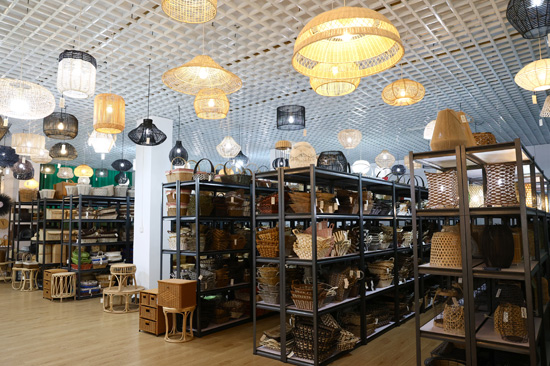
Photo shows silvergrass and bamboo weaving products displayed in Bobai county, south China's Guangxi Zhuang Autonomous Region. (Photo courtesy of the publicity department of CPC Bobai county committee)
Bobai's silvergrass and bamboo weaving techniques, with a history spanning more than 1,000 years, were listed as a regional-level intangible cultural heritage in Guangxi in 2014. The silvergrass and bamboo weaving industry has become one of the county's pillar industries.
According to Huang Haifeng, an official in the county, the industry's total industrial output reached 4.27 billion yuan in 2025, up 5.57 percent year on year, while its exports rose 2.33 percent from the previous year to 1.28 billion yuan.
At this year's China Import and Export Fair, also known as the Canton Fair, a local handicraft company displayed woven handicrafts in creative shapes such as cacti and elephants instead of conventional baskets.
"Our products have evolved from something people associated with their grandparents' generation into items that appeal to young consumers," said Huang Lianjiang, general manager of the company. His company's products are now exported to more than 60 countries and regions and supplied to several international brands.
Another local handicraft company has developed products ranging from Nordic-style lampshades and French-style picnic baskets to tea trays by blending traditional weaving techniques with modern aesthetics. "We place great emphasis on design innovation by incorporating Bobai's traditional weaving elements into products tailored to international markets," said Tu Chunxiao, the company's general manager.
To support the industry's development, Bobai has established a specialized light-industry park for bamboo, wood and grass products, introduced supportive policies including subsidies for participating in trade fairs and rewards for obtaining international certifications and patents, held activities such as intangible cultural heritage festivals and weaving competitions, and encouraged collaboration with universities and design institutes to promote innovation.
Today, the county is home to over 390 weaving enterprises, providing stable employment for about 25,000 people and temporary, seasonal work for more than 200,000 others.