


Global AI infrastructure continues to expand, with energy supply emerging as a new variable for future development, said a report released on Friday at the 2026 World AI Conference and High-Level Meeting on Global AI Governance in Shanghai.
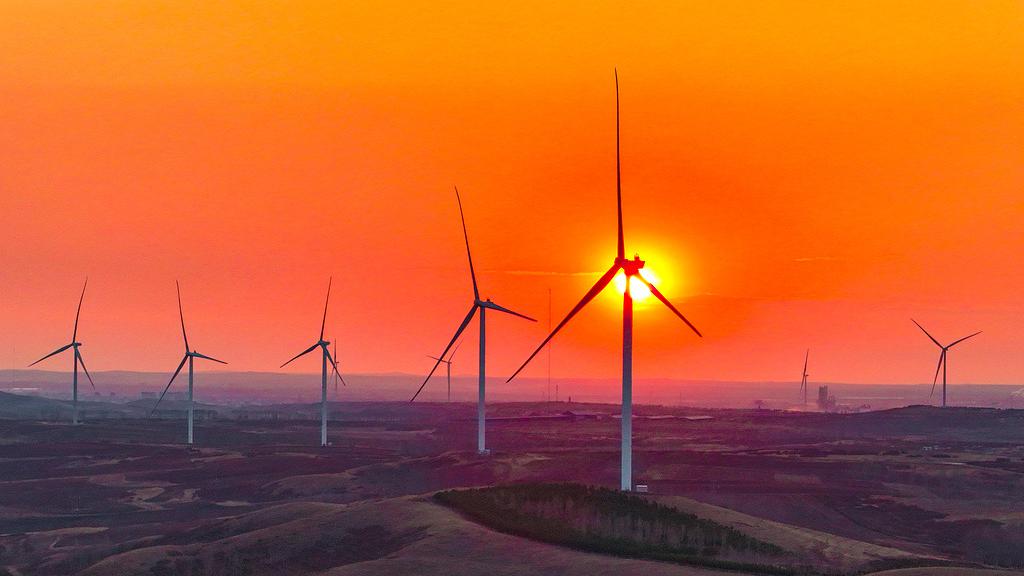
A view of a wind farm in Hulun Buir, north China's Inner Mongolia Autonomous Region, April 27, 2025. (Photo: VCG)
In the AI era, computing power depends fundamentally on electricity, making the availability, reliability, flexibility and sustainability of electricity supply a critical factor shaping the competitiveness of the global AI industry.
Global data center electricity consumption is expected to nearly double from around 485 terawatt-hours (TWh) in 2025 to approximately 945 TWh by 2030, driven largely by the rapid growth of AI workloads, according to the International Energy Agency (IEA).
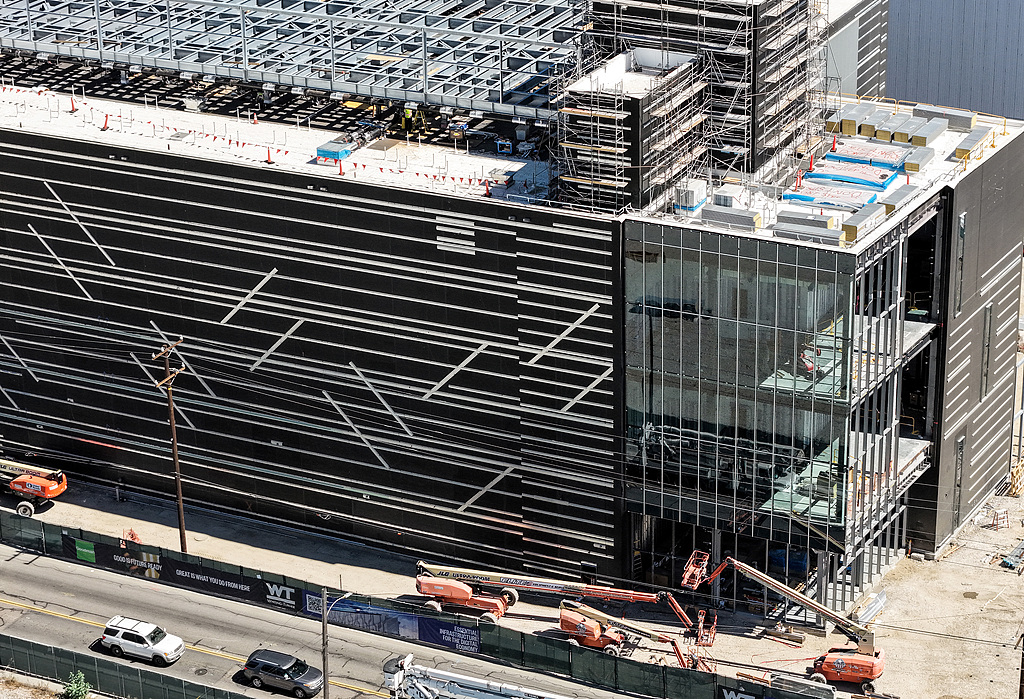
An aerial view of a 49.5-megawatt three-level data center under construction in Vernon, California, July 8, 2026. (Photo: VCG)
Around the world, governments and grid operators are increasingly confronting the challenge of balancing accelerating AI infrastructure expansion with limited power capacity.
New York State recently became the first US state to suspend approvals for new large-scale AI data centers, citing concerns over grid capacity and future electricity demand. Ireland has also faced significant pressure from data center expansion, with the country restricting new data center developments for most of the past three years to ensure that its power grid can accommodate the sector's growing electricity demand. In Denmark, grid operator Energinet suspended new data center connection applications after receiving power connection requests totaling around 60 gigawatts – nearly nine times the country's peak electricity demand.
The challenges brought by AI expansion extend far beyond electricity demand. It is also emerging as a significant driver of carbon emissions, creating new challenges for the global transition toward a more sustainable energy system.
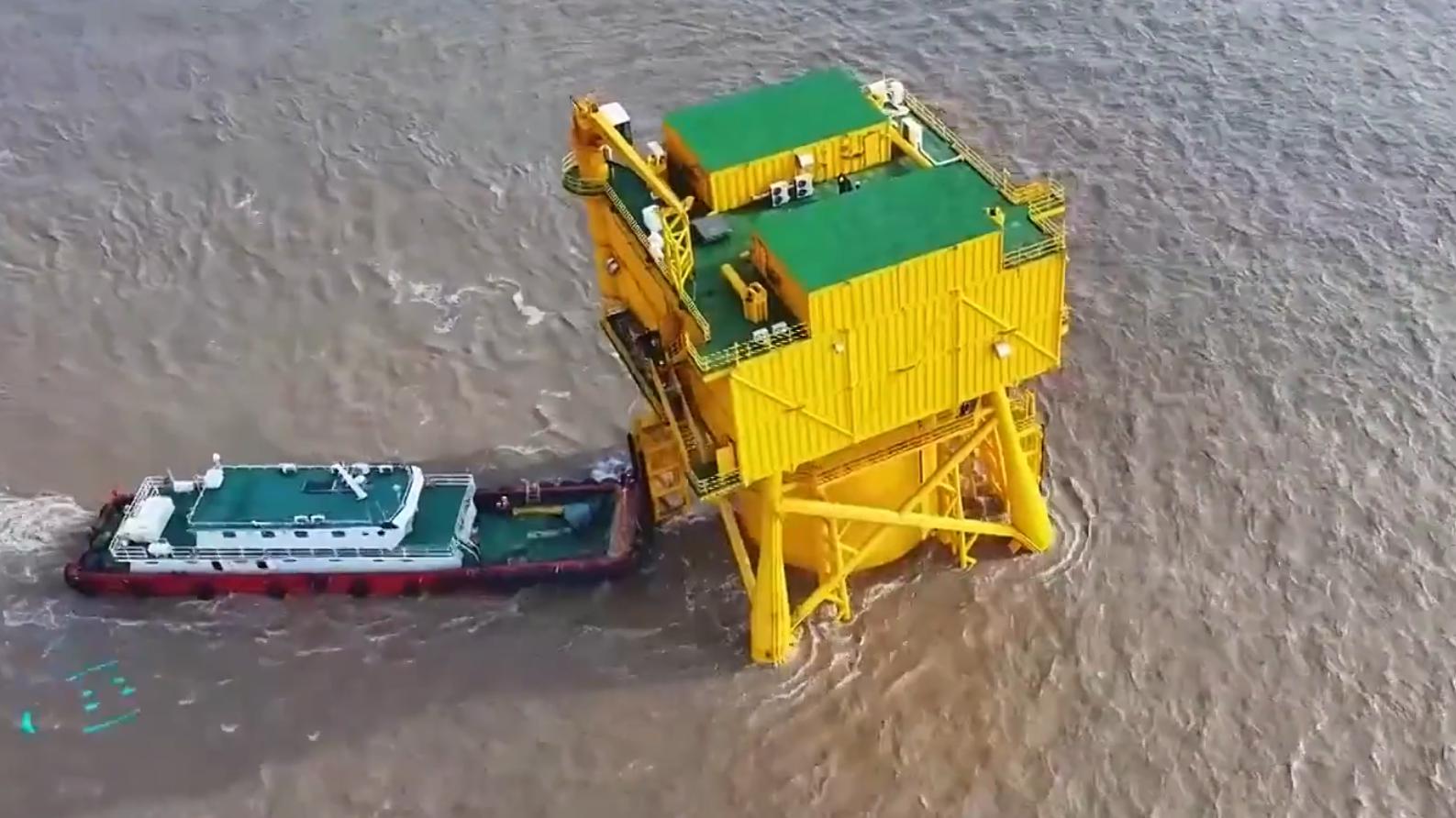
A view of a part of the world's first commercial underwater data center powered directly by offshore wind energy, Lingang Special Area, Shanghai. (Photo: CMG)
To address these challenges, China is exploring a new pathway through computing-electricity coordination, integrating computing infrastructure with clean energy systems. The approach focuses on a two-way integration, using electricity to power computing and using computing to optimize electricity systems.
On the one hand, China is leveraging its abundant renewable energy resources in western regions, where wind, solar and hydropower resources are plentiful but consumption capacity remains limited, while eastern regions face strong demand for computing power but tighter energy supply. By deploying computing centers closer to renewable energy bases under the "Eastern Data, Western Computing" initiative, China aims to improve renewable energy utilization, reduce long-distance power transmission losses and address the geographical mismatch between energy supply and computing demand.
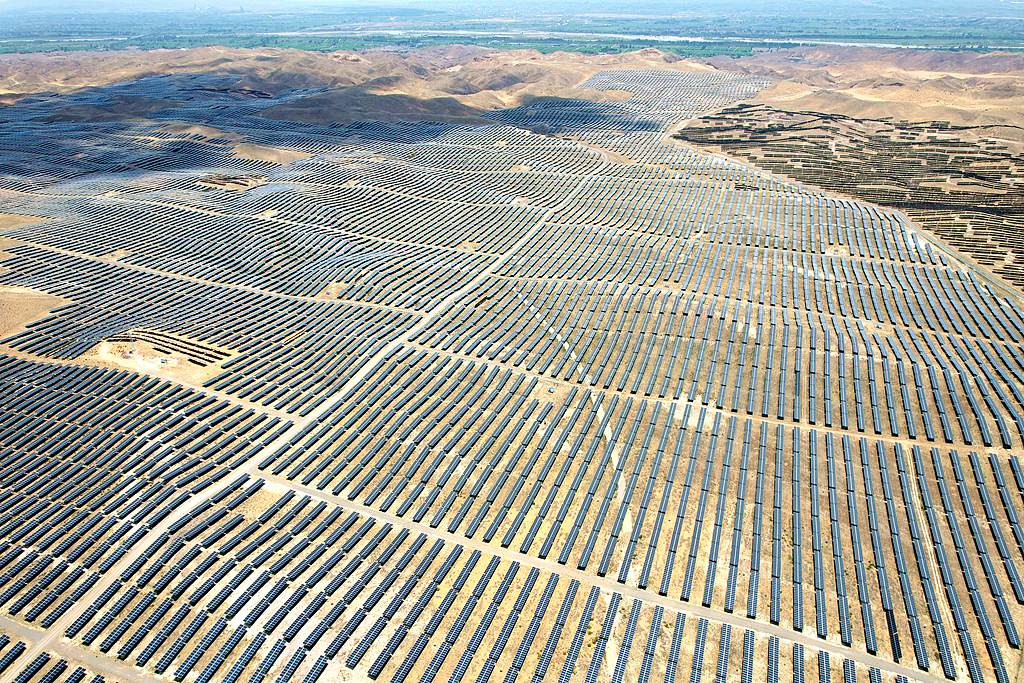
An aerial view of a solar power plant in the Gobi Desert, Zhongwei, Ningxia Hui Autonomous Region, June 12, 2026. (Photo: VCG)
A key example is a data center in Zhongwei, Ningxia Hui Autonomous Region, that operates on 100% green electricity. The project combines a 500-megawatt photovoltaic power station with a large-scale wind power base, providing clean, stable and cost-effective renewable electricity directly to the computing park. By connecting renewable energy generation with computing demand, the project reduces operational costs, improves green energy utilization and lowers carbon emissions.
On the other hand, China is exploring how computing power can empower the energy sector. AI models are being applied to improve renewable energy output forecasting, optimize grid dispatch and increase the utilization of fluctuating wind and solar power. AI-powered energy management systems can monitor grid conditions in real time, identify faults and support intelligent restoration, enabling the power system to become more flexible, efficient and resilient. As AI becomes the "smart brain" of the future energy system, computing is helping accelerate the transformation toward a more intelligent and sustainable electricity network.
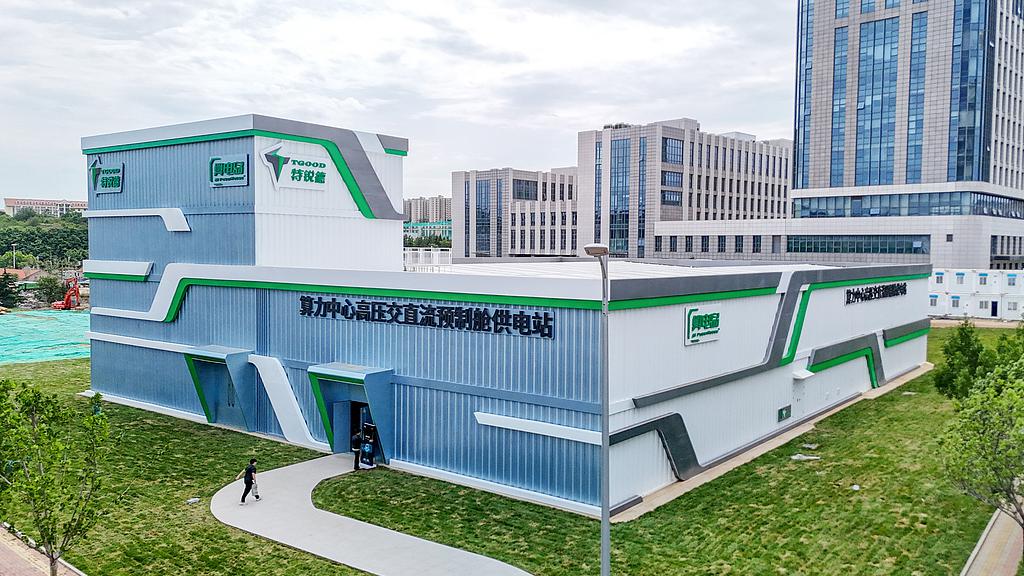
A view of the world's first prefabricated computing center base in Qingdao, east China's Shandong Province, June 6, 2026. (Photo: VCG)
A recent Bloomberg report noted that China is accelerating its renewable energy transition at an unprecedented pace, with investment and deployment in solar, wind power and supporting grid infrastructure surpassing those of many other major economies. Analysts said that China's large-scale investment in clean energy not only strengthens its leading position in the global energy transition but also provides a critical foundation for meeting the growing power demands of artificial intelligence development.