


Urban renewal makes cities more livable
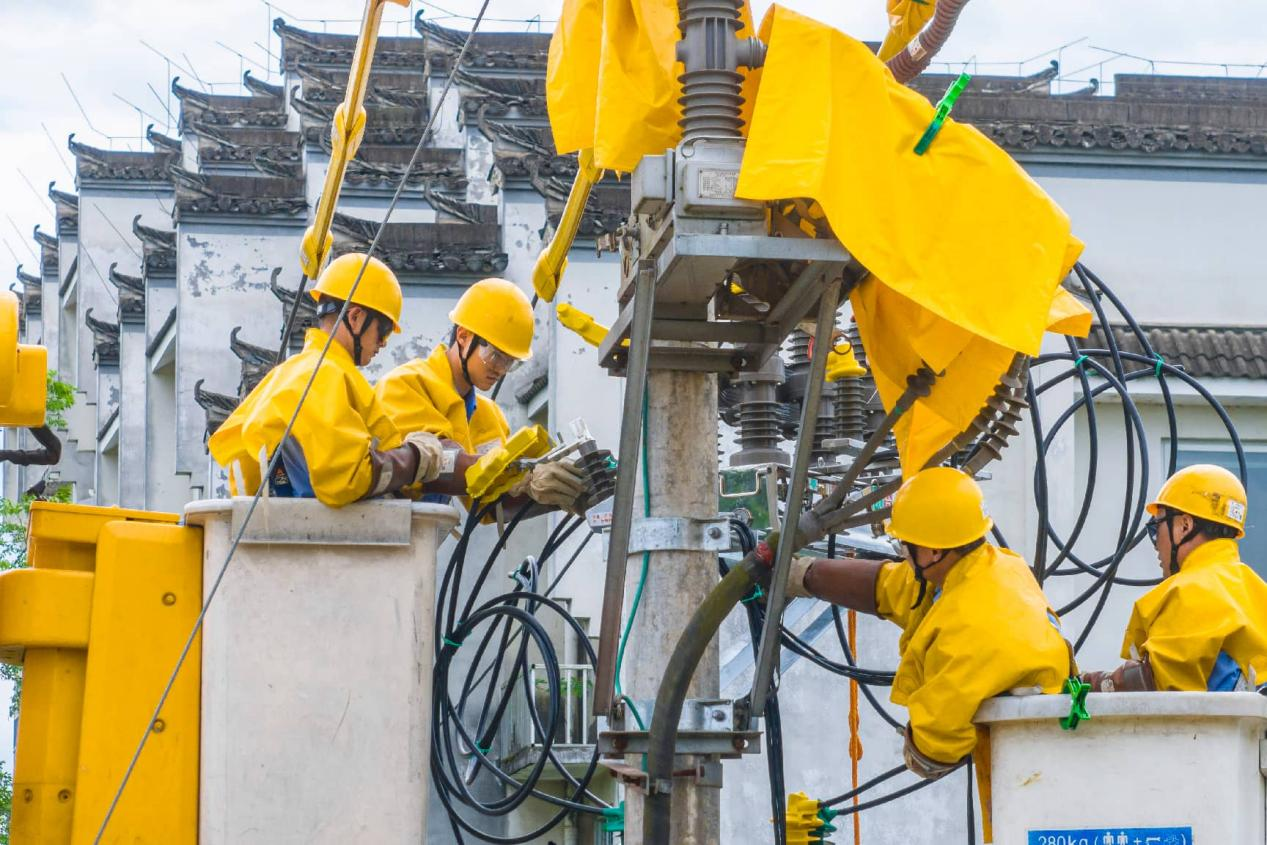
Workers carry out smart upgrades to aging electrical switches in Xiuning county, Huangshan city, East China's Anhui Province. (Photo: Fang Jianzhong)
On a summer weekend, laughter filled the air as a cultural performance took place on a square in Beiyuanercun residential community in Xuanwu district, Nanjing, East China's Jiangsu Province.
Just two years earlier, the scene was completely different. During the rainy season, walls became moldy and homes suffered from dampness caused by water seepage. Vehicles were parked randomly, residents had nowhere to charge their electric bikes, and the only public space was a bare patch of ground.
In July 2025, local authorities launched a renovation project for the old community. By listening to residents' concerns through meetings, surveys and other channels, they carried out targeted improvements that gave the community a complete makeover.
The exterior walls were waterproofed to tackle leaks and dampness; underused spaces were turned into 20 parking spaces and two bike shelters with charging facilities. A community service center was built, offering services such as smart payment, home repairs, housekeeping and a community canteen.
At Hudiewan, a public area in Shanghai's Jing'an district, three historic buildings stand along the Suzhou River in the shape of butterflies with outstretched wings. A canteen serves affordable meals, a rest area provides deliverymen with a place to take a break, and a support station provides female delivery riders with essential hygiene products.
After renovation, the red-brick historic buildings have retained their original character while adding services and facilities for people of all ages. The area has become not only a community service hub but also a popular destination for young people.
Across China, urban renewal has become an important approach optimizing urban structures, fostering new growth drivers, improving living quality, advancing green transformation, preserving cultural heritage and enhancing governance. In May 2026, an urban renewal plan for the 15th Five-Year Plan period (2026-2030) was released, translating key priorities into concrete action plans.
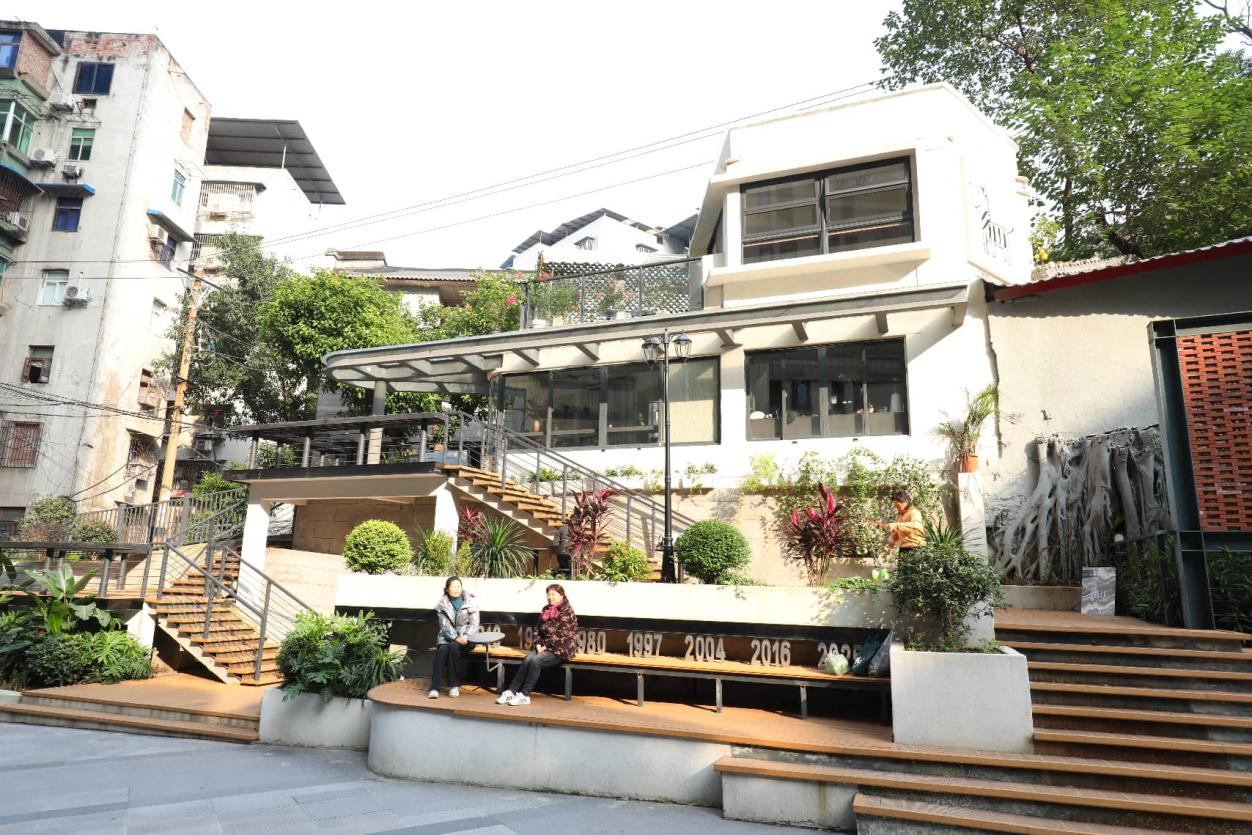
Residents relax in a renovated public area in Yixin Lane, Shapingba subdistrict, Southwest China's Chongqing Municipality. (Photo: Sun Kaifang)
Creating high-quality urban living spaces
Recently, an intangible cultural heritage street opened to the public in Wenjiang district, Chengdu, Southwest China's Sichuan Province. Visitors are welcomed with floral hair ornaments and can enjoy traditional tea ceremonies and Sichuan Opera performances, immersing themselves in a setting where historical charm meets the bustle of everyday life.
Yet just a few years ago, many old buildings here were vacant and poorly maintained, while illegal additions were common, leaving the area struggling to grow.
Urban renewal has helped revive the neighborhood.
"Rather than resorting to large-scale demolition and reconstruction, we have optimized the area's layout, diversified its commercial offerings and created new visitor experiences while preserving its historical heritage," said Zhang Nana, director of the urban organic renewal center in Wenjiang district.
During the 15th Five-Year Plan period, China will begin renovating 115,000 old urban residential communities, implement complete improvement projects in 5,000 communities, and renovate and upgrade 300 historic and cultural districts, creating higher-quality urban living spaces.
Driving green and low-carbon urban transformation
This year, a 40-kilometer forest trail in Baiyun district, Guangzhou, South China's Guangdong Province, opened to the public. What was once an overgrown fringe woodland with barely discernible trails and aging facilities has been transformed into a safe, well-connected and vibrant green corridor.
"With the greenway, we now have a 'natural oxygen bar' right at our doorstep," said Li Zheng, a 65-year-old retired teacher who often takes his grandson there for walks and exercise. The forest trail has not only restored the urban ecosystem but also provided residents with accessible, high-quality ecological amenities.
During the 15th Five-Year Plan period, China plans to upgrade 20,000 hectares of urban parks and green spaces, add 15,000 pocket parks, and build or renovate 20,000 kilometers of urban greenways to restore urban ecosystems and promote green, low-carbon urban transformation.
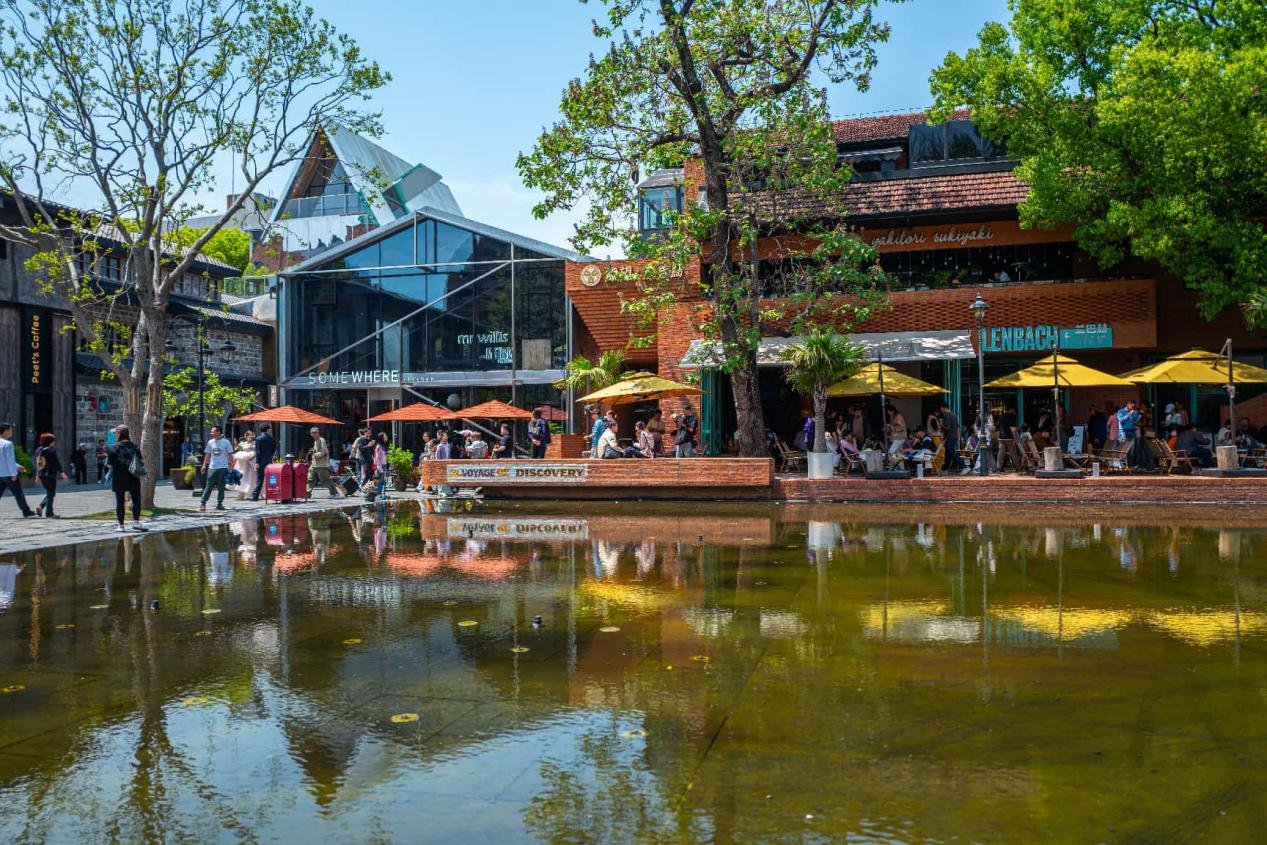
Residents enjoy leisure activities in a commercial area transformed from old factory buildings in Pudong New Area, Shanghai. (Photo: Wang Chu)
Enhancing urban safety and resilience
On Huakai Road in Jiulongpo district, Southwest China's Chongqing Municipality, everything appears normal above ground. Several meters below the surface, however, a "minimally invasive surgery" is underway on the city's underground arteries.
Workers are inserting a flexible liner wrapped in special resin material into an old pipeline through a manhole. High-temperature steam is then pumped into the liner, causing it to expand, press tightly against the old pipe wall and quickly harden. In this way, a high-strength pipe lining is created without the need for large-scale excavation of the road.
After decades of operation, some sewage pipelines in the central urban area in the city have developed problems such as corrosion, leaks and improper connections. This underground renewal project aims to address these issues at the source, reducing the risk of urban flooding and sewage overflows.
During the 15th Five-Year Plan period, China plans to upgrade 770,000 kilometers of urban underground pipelines, including about 200,000 kilometers of gas pipelines, 175,000 kilometers of drainage pipelines, 175,000 kilometers of water supply pipelines, 100,000 kilometers of sewage pipelines and 120,000 kilometers of heating pipelines, as part of efforts to build safer, more reliable and resilient cities.
From the micro-renovation of aging residential communities to the ecological restoration of urban greenways and the minimally invasive upgrading of underground pipelines, China is advancing urban renewal to make cities more livable, vibrant and people-centered.