


Speaker of Czech Republic Chamber of Deputies starts visit in Shanghai; China trip opens door for dialogue to warm bilateral ties: Chinese expert
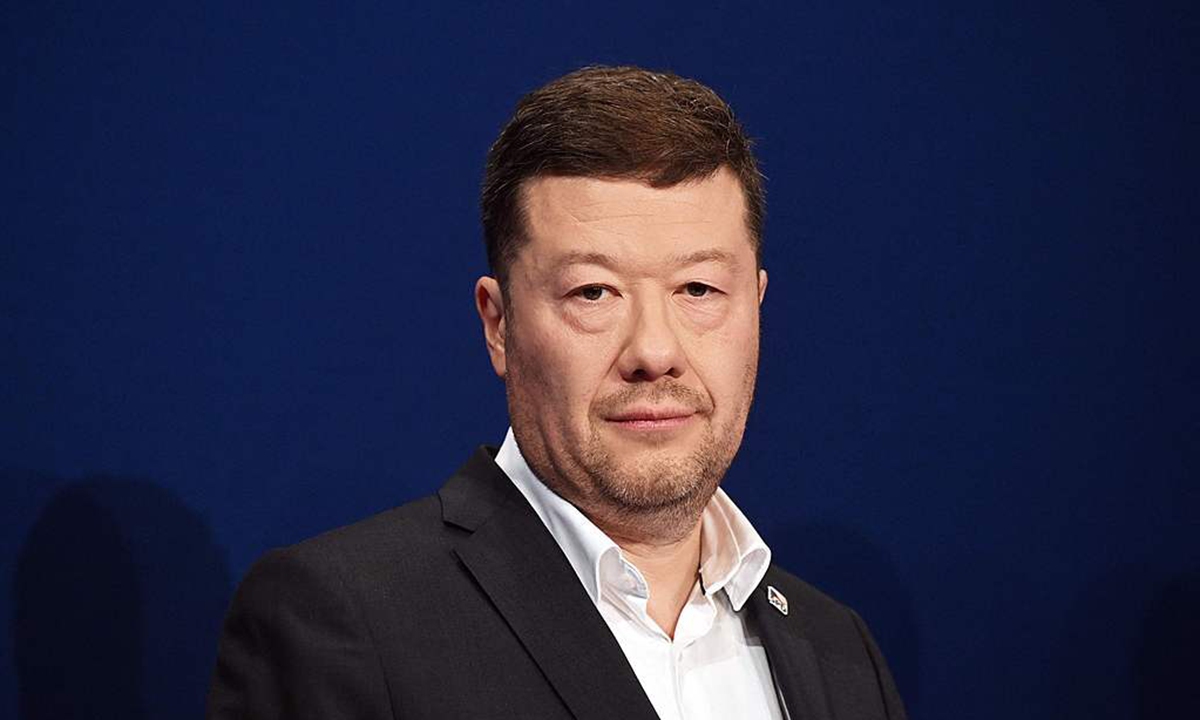
Czech Chamber of Deputies speaker Tomio Okamura (Photo: VCG)
Speaker of the Chamber of Deputies of the Czech Republic, Tomio Okamura, led a delegation on a visit to China starting on Monday, with objectives ranging from tourism promotion to business cooperation. A Chinese observer said the legislative-led engagement, which took relatively non-sensitive issues as an entry point for dialogue, could help warm bilateral ties after a period of relatively strained relations, carrying important positive significance.
According to Shanghai Observer, a local media outlet in Shanghai, Okamura arrived in Shanghai on Monday, and met with Huang Lixin, Chairperson of the Standing Committee of the Shanghai Municipal People's Congress.
Speaking on CNN Prima News ahead of his departure on Sunday, Okamura said the trip will focus on boosting Chinese tourism to Czechia, restoring direct flights, supporting Czech businesses, negotiating visa-free travel for Czech tourists and seeking to bring a Terracotta Army exhibition to Prague, the country's media outlet Radio Prague International reported.
In his X post on Sunday, he outlined the goals of the trip, noting that part of his delegation is a group of 20 Czech companies from the Confederation of Industry of the Czech Republic, who have been preparing for business opportunities. "It will be a welcome contribution to our economy," he wrote.
Cui Hongjian, a professor at the Academy of Regional and Global Governance at Beijing Foreign Studies University, told the Global Times on Monday that China-Czech Republic relations have seen ups and downs in recent years. During former President Milos Zeman's tenure, bilateral ties developed steadily, but after a right-wing government took office, Prague adjusted its China policy to a certain extent by aligning more closely with the West and emphasizing ideological and political differences with Beijing, he said.
However, the two sides still retain a foundation for bilateral cooperation. The visit signals a broader shift in European nations' China policies, and demonstrates that the Czech Republic has no desire to prolong the coolness and stagnation of bilateral ties, a state of affairs detrimental to both its diplomatic and economic interests. This generates inherent impetus for the country to improve and reset China-Czech relations, Cui added.
Okamura is set to lead a delegation from July 20 to 24, according to the Xinhua News Agency. According to Czech media outlets, he will travel to Beijing, as well as to Shanghai, Hangzhou, or Chengdu.
Cui noted that taking place through legislative bodies and centering on a host of non-sensitive issues, the visit this time can be regarded as the entry point and channel for repairing bilateral ties and resuming cooperation after a relatively strained relationship, bearing substantial positive significance.
This approach may follow a gradual path that starts with peripheral, low-sensitivity topics before advancing to core agenda items. This signals the Czech Republic's genuine willingness to advance China-Czech ties at this stage, Cui said.
Cui added that several Chinese cities have become must-visit destinations for European politicians on their China trips. They come to Shanghai to observe China's economy and European investment here, while Hangzhou draws them mainly for its tech ecosystem. "European countries including the Czech Republic are largely grappling with how to advance technological innovation and embed more innovation-driven momentum into economic growth," he told the Global Times.
The prime minister of the country, Andrej Babis, has repeatedly stated that his government will not pursue a values-based foreign policy, but rather a pragmatic one, according to a report by Ceske Noviny. At the beginning of this year, Czech Foreign Minister Petr Macinka announced plans to restore standard-level relations with China.
In April, Babis also said the Czech government will not make a government plane available for the Senate chief's planned trip to the Taiwan region and wants a more pragmatic foreign policy that does not damage business ties with China, according to a Reuters report.
During a press conference in May, a Chinese Foreign Ministry spokesperson said that since Prime Minister Babis took office, he has expressed the desire to improve ties with China on many occasions, and reiterated the Czech government's commitment to the one-China policy, which China highly commends. China is ready to work with the Czech side to enhance political mutual trust and conduct dialogue and cooperation across the board to ensure our relations will return to the track of sound and stable development as soon as possible.
The expert noted that building broad consensus will still take time and favorable opportunities, but productive exchanges during the visit will bolster the Babis government's resolve to advance bilateral ties and help both sides clear up cognitive barriers.