


LANZHOU, July 24 (Xinhua) -- After supper, Wang Shaoping went for a stroll in the lush, leafy pocket park right at her doorstep, a consistent routine she has kept for several years. Having called Jiayuguan, an industrial city bordering the Gobi Desert in northwest China's Gansu Province, her home for over two decades, she can still vividly recall the days when the site of the park was nothing but a desolate, vacant lot.
The 65-year-old now lives in a six-story apartment building, located just a few minutes' walk from the park. Fitted with lighting, fitness and entertainment equipment, sun shelters and toilets, the park has become a popular venue for local residents keen on participating in various activities.
"The greenery right outside is so refreshing, especially in the torrid summer days," she said.
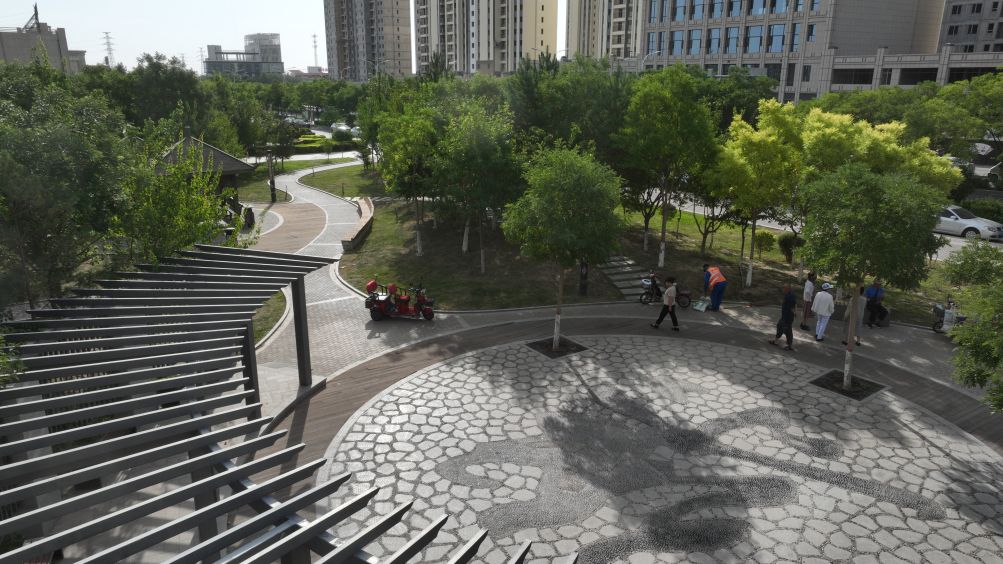
An aerial drone photo taken on July 24, 2026 shows a view of a pocket park of the Dong'an community in Jiayuguan City, northwest China's Gansu Province. (Photo: Li Wei/Xinhua)
Pocket parks, which typically cover an area of 400 to 10,000 square meters, are mushrooming across China.
Statistics show that China had built more than 18,000 pocket parks across the country between 2021 and 2025, greatly enhancing urban living conditions.
The State Council, notably, unveiled an urban renewal plan in May 2026, outlining key targets, major tasks and projects for the country's urban renewal efforts during the 15th Five-Year Plan period (2026-2030), which includes creating high-quality urban living spaces as one of the core missions.
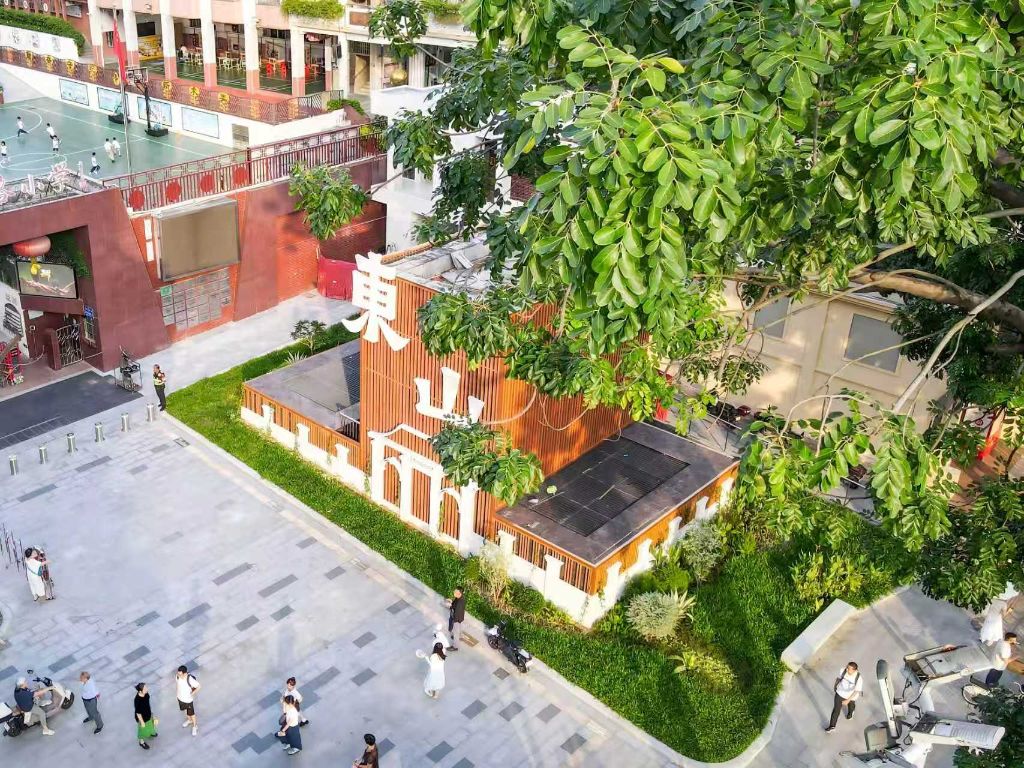
An aerial drone photo taken in October 2025 shows a view of the Dongshan pocket park in Guangzhou, south China's Guangdong Province. (Photo: Xinhua)
In fast-paced metropolises like Guangzhou, capital of prosperous Guangdong Province in south China, the rollout of pocket parks not only provides local residents with easily accessible high-quality public leisure spaces, but also drives micro-renewal of old urban districts and unlocks the inherent vitality of underused existing built-up areas in these neighborhoods.
Before its renovation, Dongshan pocket park in Guangzhou was little more than a stretch of bare concrete. Its original green spaces had been cleared to make way for local subway construction, leaving only seven standing trees. Heavy, constant foot traffic and unregulated vehicle flow in the area also posed public safety and sanitation management challenges.
Completed in August last year, this quiet park, where bird chirps have replaced beeps and bickers, now is not only a venue for local people to take a rest, but also a popular city walk and photo spot for tourists. A cultural-themed corridor, meanwhile, tells the story of the local history.
Local authorities take charge of managing and maintaining public sections of these sites, while private enterprises are brought on board to operate commercial spaces, an official with the Forestry and Landscaping Bureau of Guangzhou's Yuexiu District explained. He added that following the 15th National Games held last November, the parks rolled out a range of Games-themed cultural merchandise, with a portion of the proceeds earmarked for facility maintenance and upgrades, as well as the hosting of public welfare events.
Lin Zhaotao, a landscape architecture engineer, told Xinhua that amid sweltering summer heat, pocket parks repurpose underused urban vacant lots, helping regulate local urban microclimates.
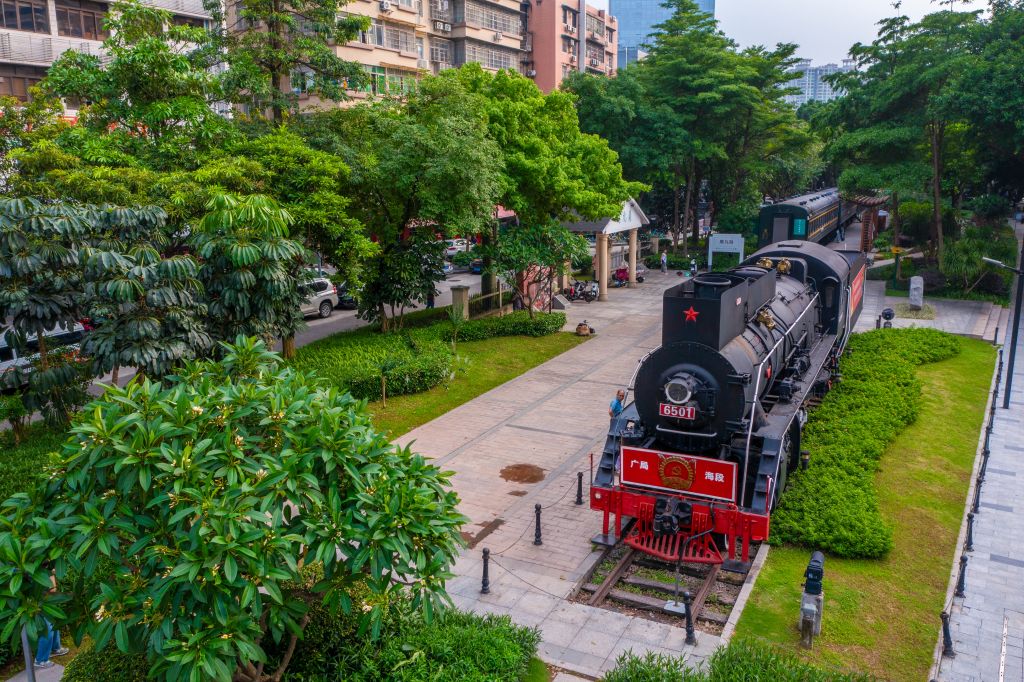
This photo taken in February 2025 shows a view of the Guangzhou-Kowloon Railway Memorial Park in Guangzhou, south China's Guangdong Province. (Photo: Xinhua)
A recent study from the China-Singapore Tianjin Eco-City, a northern Chinese municipal project dotted with pocket parks within walking distance of residential compounds, found that in summers between 2023 and 2025, the eco-city's average annual temperature was consistently lower than that of surrounding areas.
"Vegetation provides shade, cools ambient air and cuts down on dust, while design elements including water features, misting systems, planned wind corridors and shaded pavilions further optimize ventilation, temperature and humidity levels, making pocket parks cool, comfortable refuges from summer heat," Lin noted.
Pu Xindong, deputy director of the Urban Planning and Design Institute at Lanzhou University in northwest China, stated that revitalizing existing urban assets and redeveloping underutilized land via urban renewal initiatives have become core priorities for China's current urban development endeavors.
"Modern urban development is no longer about building from scratch on empty land. Instead, it focuses on upgrading already built spaces, refining urban governance and improving public services," said Pu, adding that pocket parks are a proven, effective measure to advance high-quality urban renewal.
The small-scale urban upgrade model represented by pocket parks has also drawn praise from international visitors to China.
Earlier this year, Christian Arnaud Adjelou, president of the National Human Rights Council of Côte d'Ivoire, saw pocket parks in north China's Tianjin.
"These pocket parks not only make cities more pleasing and greener, but also deliver tangible benefits to people's health and daily travel convenience," he said. "As accessible spaces for physical exercise and recreational activities, they effectively guarantee the comfort, health, safety and well-being of the public, and constitute a vital component of human rights protection."
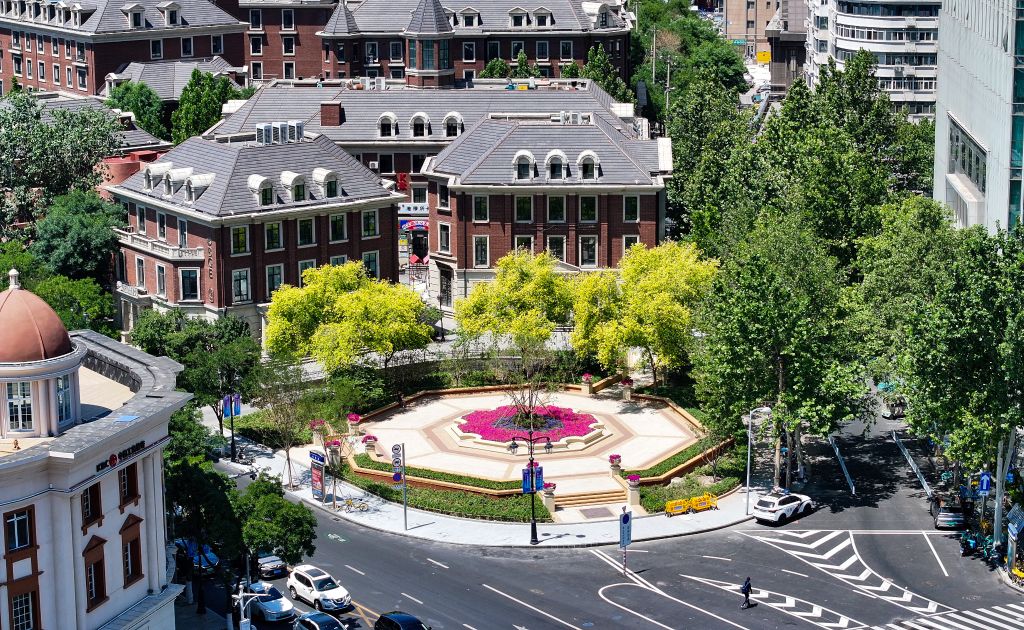
This drone photo shows a pocket park in Heping District of Tianjin, north China, June 3, 2025. (Photo: Xinhua/Zhao Zishuo)
The National Greening Commission reported that China's forest and grass coverage rate has exceeded 56 percent thanks to its greening efforts. According to the 15th Five-Year Plan (2026-2030), China will accelerate its green transition across the board and cut carbon dioxide emissions per unit of GDP by a total of 17 percent in the 2026-2030 period.
Li Chao, deputy director of the Jiayuguan housing and urban-rural development bureau, noted that by building two pocket parks annually, the city enables all citizens to share in the achievements accumulated through years of afforestation and eco-environmental protection.
Residents are deeply involved in the entire planning and construction process of pocket parks. Local authorities conduct door-to-door visits and community consultations to collect public opinion, which is fully incorporated to refine and finalize construction efforts that fit people's actual needs.
Many pocket parks also integrate distinctive local historical and cultural elements. For example, in Lanzhou in Gansu, one park near a residential community formerly affiliated with a steel enterprise is equipped with a "memory wall" that chronicles the factory's decades-long industrial development journey, evoking shared nostalgia among local residents.
"Pocket parks are no longer a distant destination we need to travel far to reach, but an extension of our own doorsteps," said Wang Shaoping.