


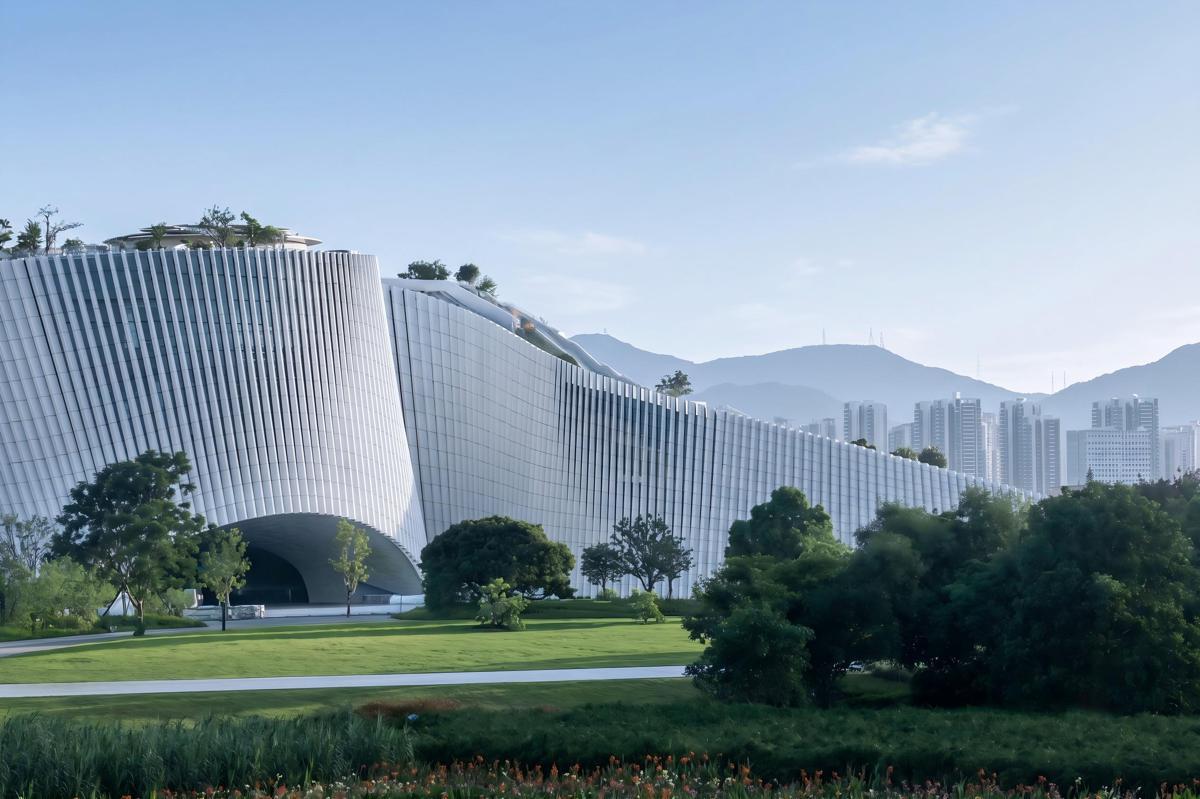
An exterior view of the Shenzhen Natural Museum. (Photo provided to chinadaily.com.cn)
The Shenzhen Natural Museum opened on Tuesday and immediately became the largest natural science venue in South China.
Located in Pingshan district in northeast Shenzhen, Guangdong province, the massive museum is roughly the size of 15 soccer pitches, nearly one-third of which is dedicated to exhibition spaces.
Home to eight permanent themed halls covering the universe, Earth, evolution, dinosaurs, humanity, biology, ecology, and homeland, the venue presents a sweeping narrative ranging from cosmic stars to earthly habitats through 7,461 original specimens, 338 simulation models, and 194 displays.
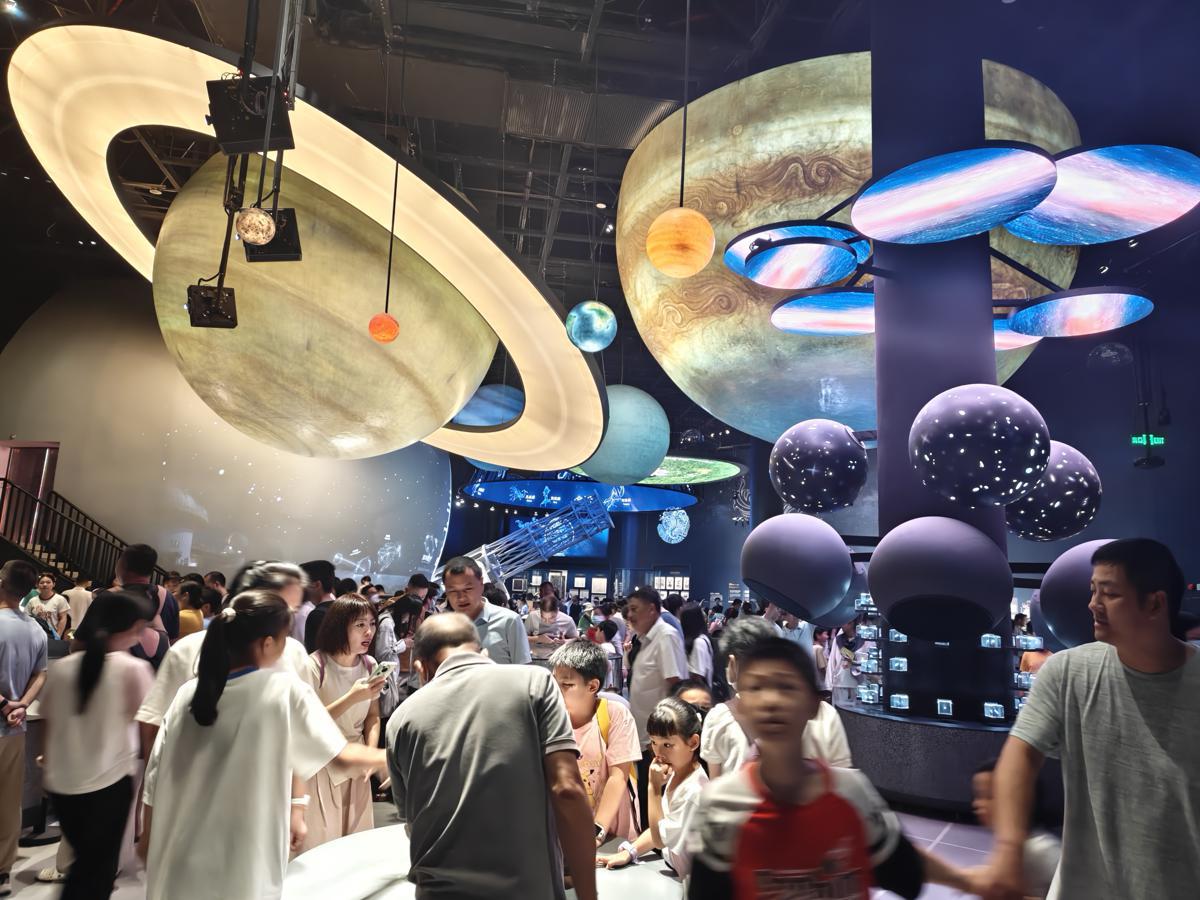
Visitors view exhibits inside the Shenzhen Natural Museum. (Photo provided to chinadaily.com.cn)
In the universe, Earth, and evolution halls, visitors can trace the 13.8-billion-year evolution of the universe, the 4.6-billion-year history of Earth, and the 3.8-billion-year development of life. They can also explore dominant Mesozoic creatures and representative species across the world's zoogeographic regions in the dinosaur and ecology halls.
The venue is positioning itself as South China's top innovative natural museum, a comprehensive public education center for natural science, and a showcase for ecological civilization development under Chinese modernization.
Wan Shilin, executive deputy curator of the Natural History Museum of China, said the opening of the Shenzhen museum fills the gap in large-scale comprehensive natural museums in South China and will advance natural science popularization across the Guangdong-Hong Kong-Macao Greater Bay Area.
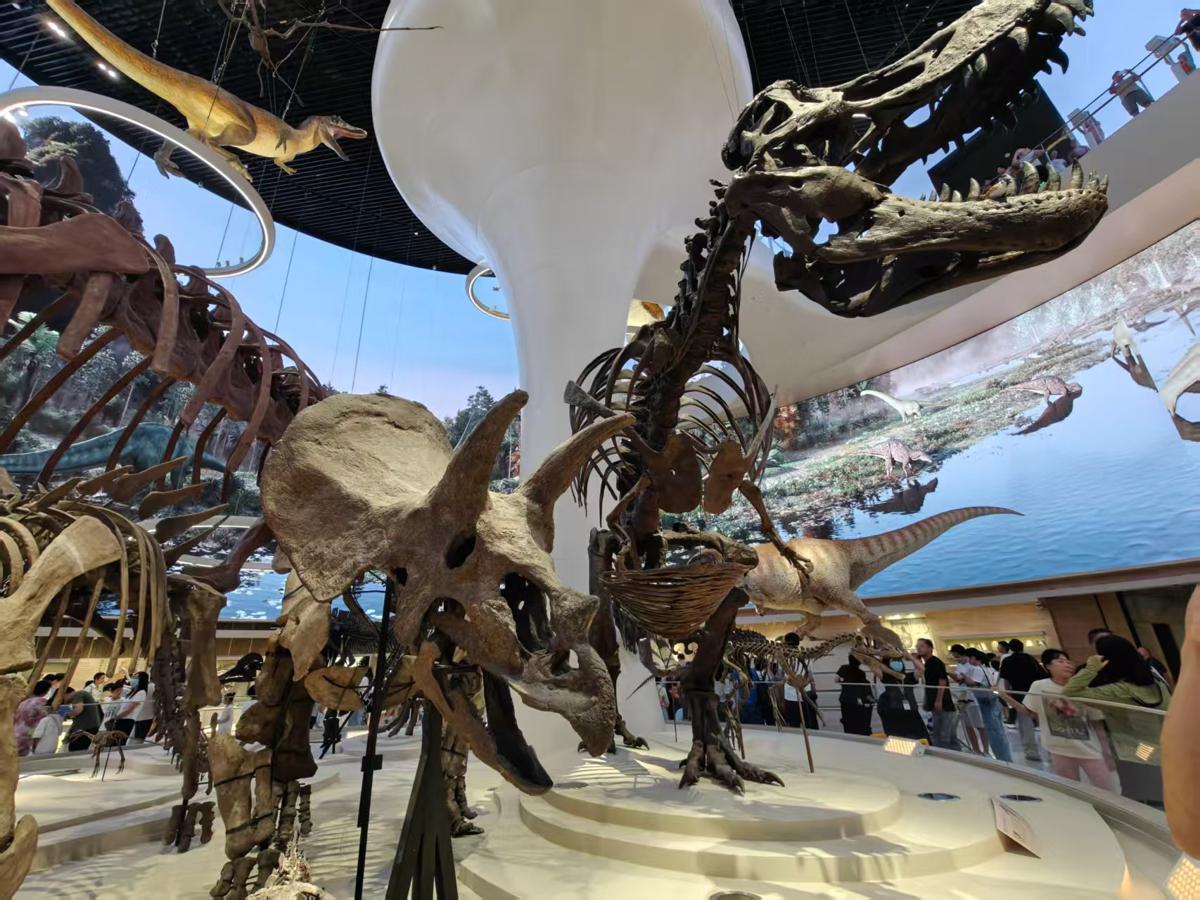
Visitors view exhibits inside the Shenzhen Natural Museum. (Photo provided to chinadaily.com.cn)
Shoutuo, a prominent science writer and one of China's 10 most popular science influencers on Weibo, contributed to drafting the museum's prefaces, exhibition labels, and popular science texts.
He compared the museum to other new venues around the country, saying that it avoids an over-reliance on digital gadgets. "Minerals, meteorites, astronomical instruments, animal specimens, and paleontological fossils are all displayed in their original sizes, and visitors are encouraged to touch and feel certain exhibits," he was quoted as saying by the Yangcheng Evening News.
During the opening ceremony, the museum signed strategic cooperation agreements with the Geological Museum of China, the Natural History Museum of China, and the Institute of Vertebrate Paleontology and Paleoanthropology of the Chinese Academy of Sciences to build a leading natural science communication hub in the GBA.