


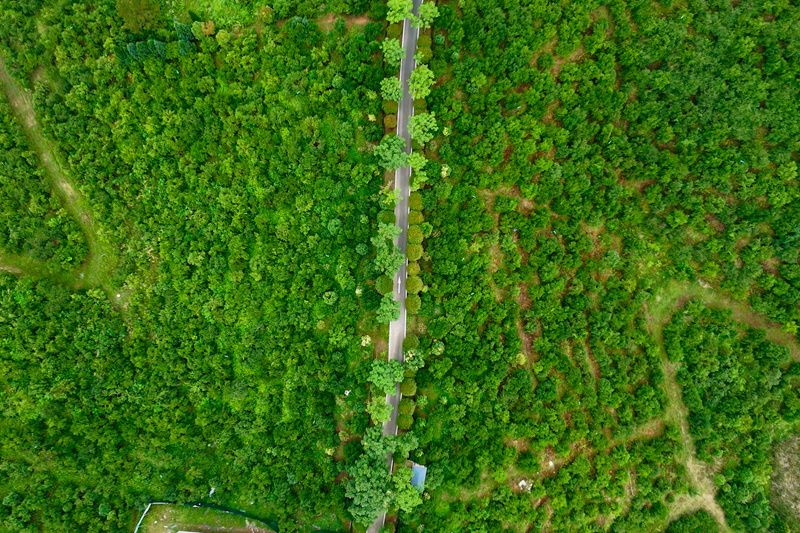
Photo shows the Sima Guang Oil-Tea Camellia Plantation in Huaidian township, Guangshan county, Xinyang city, central China's Henan Province. (People's Daily Online/Dai Zexin)
Oil-tea camellia trees have become a cash cow in Guangshan county, Xinyang city, central China's Henan Province.
Huaidian township in the county is home to the Sima Guang Oil-Tea Camellia Plantation. Just over a decade ago, the site was little more than barren hillsides.
Located where Hubei, Henan and Anhui provinces meet, Guangshan county was once listed as a national-level poverty-stricken county, with hills and low mountains covering more than half of its territory.
"The barren hills produced almost nothing," said Li Pengfei, deputy Party secretary of the township.
Starting in 2009, the county made oil-tea camellia cultivation a key part of its poverty-relief efforts. Determined to turn the barren slopes into a valuable economic resource, it organized companies to seek partnerships and learn from successful growers elsewhere.
Early plantings struggled to survive the region's winters until a team led by Yao Xiaohua, chief expert at the National Center for Oil-Tea Camellia Science, worked with universities, research institutes and enterprises to develop varieties suited to local conditions. Measures such as land transfers, paid employment, dividends and forest protection helped ease villagers' concerns about the risks of planting.
The county paired the cultivation of improved varieties with processing, producing cold-pressed camellia oil, camellia-based skincare products and other value-added goods.
The core area of the Sima Guang Oil-Tea Camellia Plantation in Huaidian township now covers more than 30,000 mu (2,000 hectares) across seven villages, offering jobs to more than 3,000 local residents.
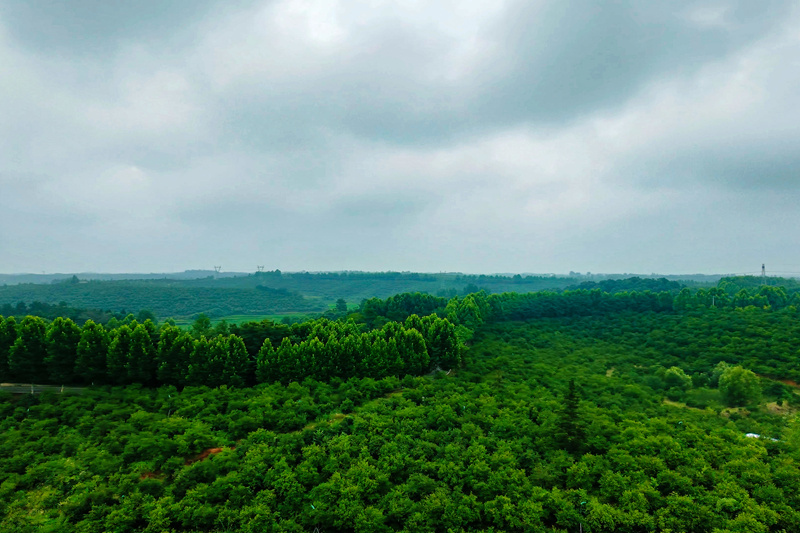
Photo shows the Sima Guang Oil-Tea Camellia Plantation in Huaidian township, Guangshan county, Xinyang city, central China's Henan Province. (People's Daily Online/Dai Zexin)
"Last year, my wife and I earned more than 40,000 yuan ($5,600)," said Zheng Chengyin of Chenwa village in the township, who works at the plantation with his wife tending seedlings, weeding, harvesting and pruning the trees.
The plantation was designated a 3A tourist attraction in 2023. It drew more than 100,000 tourist visits in 2025, according to Li.
The county's oil-tea camellia plantations now cover 323,700 mu, employ about 50,000 people and draw more than 2 million tourist visits annually.