


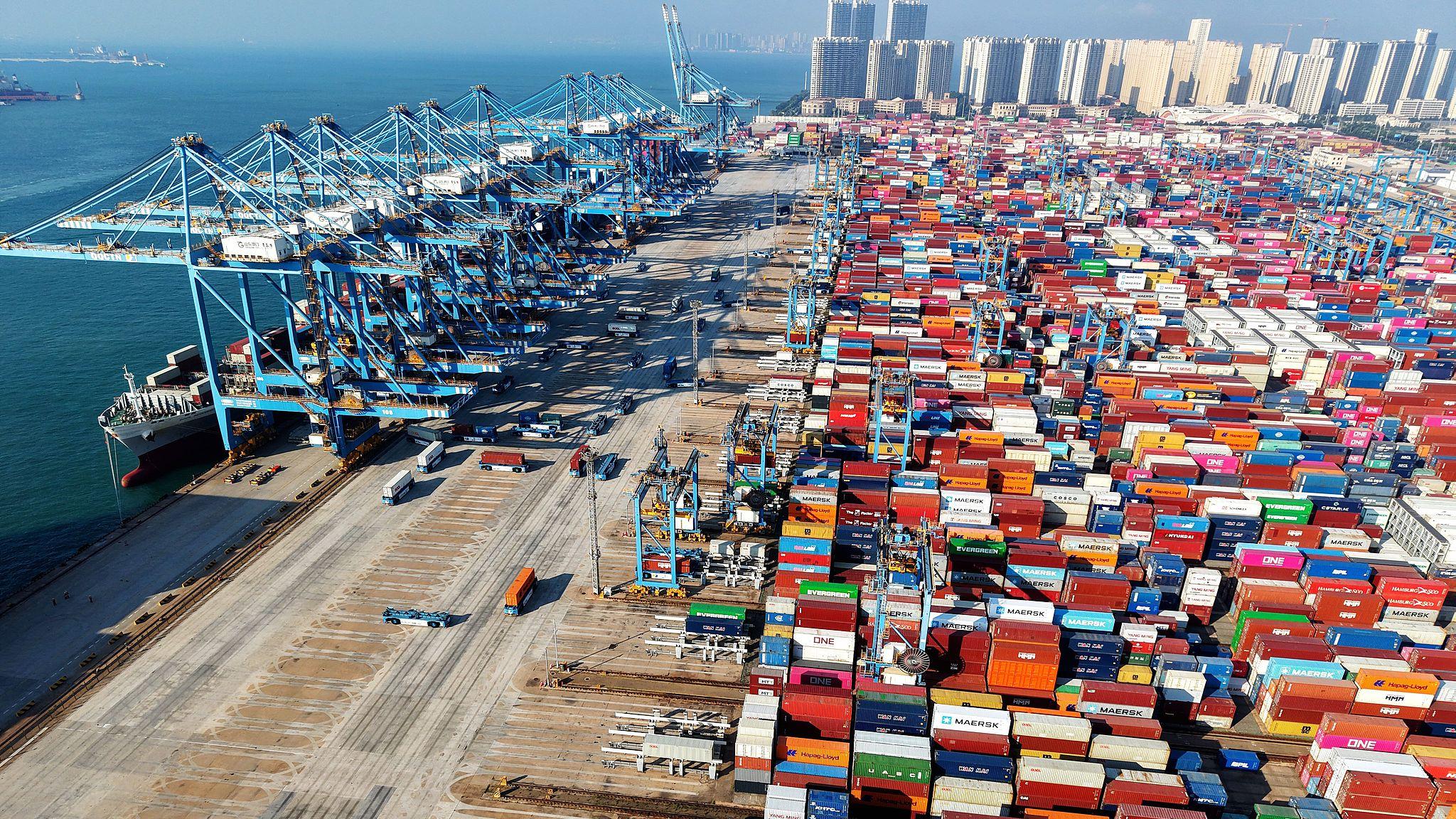
A view of Qingdao Port in Qingdao, east China's Shandong Province, July 30, 2026. (Photo: VCG)
When Amway announced a new $35 million investment in southwest China's Sichuan Province earlier this year, it was making more than a business decision. The American company was casting another vote of confidence in China's long-term growth story.
In March, Amway signed an agreement with the government of Pengzhou City to build a high-standard, modern organic farm covering 1,680 mu (about 112 hectares). Scheduled to begin operations in 2029, the farm will cultivate traditional Chinese medicinal herbs, including chrysanthemum and eucommia. Together with the company's research centers in Guangzhou, Shanghai and Wuxi, the project will form an integrated innovation chain spanning basic research, raw material cultivation and product development.
"China's 15th Five-Year Plan has elevated the Healthy China initiative to a new level, creating fresh opportunities for the company's long-term development in the country," said Yu Fang, president of Amway China.
Amway's latest investment reflects a broader trend. At a time when geopolitical tensions and global economic uncertainty continue to reshape investment decisions, an increasing number of multinational enterprises are choosing to deepen their footprint in China – not despite the uncertainties, but because of the certainty the Chinese market continues to offer.
The Political Bureau of the Communist Party of China (CPC) Central Committee recently analyzed and studied the current economic situation and made arrangements for economic work in the second half of this year at a meeting, urging the need to improve the regulatory framework for outbound investment and overseas comprehensive service systems, while actively attracting and utilizing foreign investment.
Speaking to CGTN, Xu Hongcai, chairman of Beijing Honglve Consulting Co., Ltd. and chief economist of the World Innovation Development Cooperation Organization, affirmed his advocacy of "countering the uncertainty of global protectionism through institutional opening up."
Investing in certainty
Global investment flows have faced mounting headwinds in recent years, yet China remains one of the world's most attractive destinations for foreign capital.
For many international businesses, China's advantages remain difficult to replicate: a vast domestic market, a complete industrial system, improving innovation capabilities and a stable policy environment.
German chemical giant BASF offers a compelling example. Its integrated production site in south China's Guangdong Province, covering nearly four square kilometers – roughly equivalent to more than 560 standard football fields – is the company's largest-ever single investment worldwide. The project underscores BASF's long-term commitment to the Chinese market and confidence in the country's future development.
Business surveys continue to reinforce this confidence.
According to a US-China Business Council member survey released in June, 92% of surveyed US companies in China were profitable last year and 95% said the Chinese market helps them "stay globally competitive".
Meanwhile, China remains "the heavyweight champion of efficient and cost-effective supply chains", with 75% of respondents saying their China-based production is more efficient than operations elsewhere, according to the European Business in China Business Confidence Survey 2026.
These findings point to a clear conclusion: For many multinational corporations, China is not merely a manufacturing base, but an increasingly competitive platform for innovation, production and global business expansion.
Speaking of the major signals sent from the CPC leadership meeting to stabilize foreign investment, Xu said amid the global slump in cross-border investment, China has reaffirmed its commitment to "actively attracting and utilizing foreign investment" without swaying amid short-term frictions. "This reassures foreign enterprises such as BASF, Volkswagen and Eli Lilly."
Second, the country is shifting from broadening market access to ensuring both access and operational convenience, proactively aligning with high-standard international economic and trade rules, Xu said.
Third, he said through placing "bringing in foreign investment" alongside "improving the regulatory framework for outbound investment and overseas comprehensive service systems," China demonstrates a mature mindset featuring two-way opening up and risk mitigation.
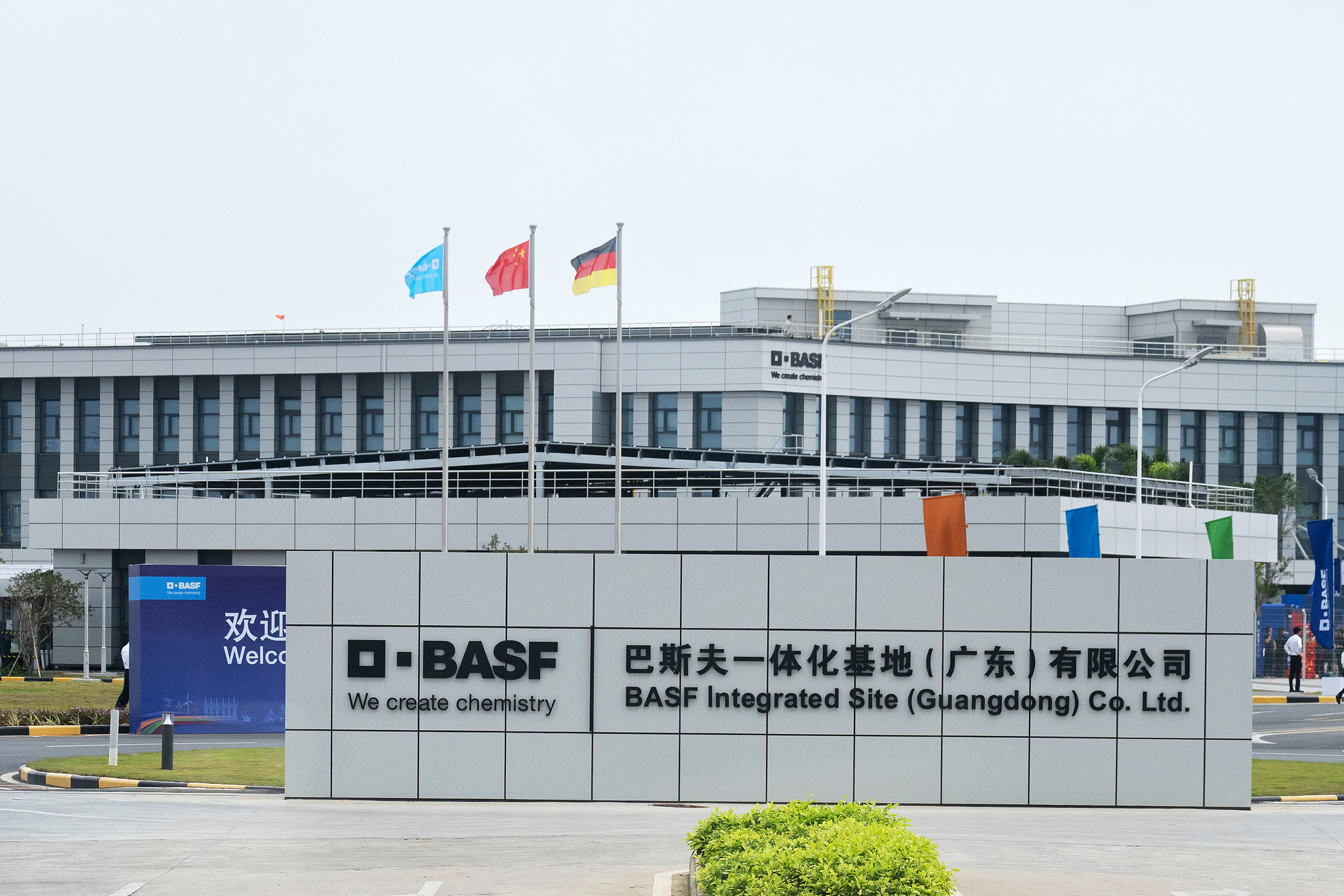
The entrance to the BASF Zhanjiang Verbund site in Zhanjiang, south China's Guangdong province, March 26, 2026. (Photo: VCG)
From manufacturing hub to innovation powerhouse
China's investment landscape is also undergoing profound transformation.
As the country accelerates industrial upgrading and fosters new quality productive forces, emerging industries – including artificial intelligence (AI), healthcare, green development and the low-altitude economy – are becoming new magnets for foreign investment.
Volkswagen recently established its first end-to-end research and development center outside Germany in Hefei, central China's Anhui Province, highlighting China's growing role in the company's global innovation network.
French environmental company Veolia has built carbon capture facilities in China to support the country's green transition, while US pharmaceutical company Eli Lilly has announced plans to invest $3 billion over the next decade to expand its manufacturing capacity in China.
In the past, many multinational corporations entered China primarily to access an untapped consumer market or transfer mature technologies. Today, cooperation has evolved into joint innovation, collaborative research and the co-development of industrial ecosystems.
The transformation was on full display at the fourth China International Supply Chain Expo, where Apple appeared alongside several key Chinese suppliers – including AAC Technologies Holdings Inc. and Sunny Optical Technology (Group) Company Limited – demonstrating the deep integration of global and Chinese supply chains.
In a bid to further improve the business environment, Xu said it is imperative to continue shortening the negative list, facilitate cross-border data flows, streamline talent visa procedures, refine tax credits for reinvestment, and boost emerging sectors including AI, pharmaceuticals and green manufacturing to enable foreign enterprises to integrate into the industrial chains of new quality productive forces.
He emphasized the importance of maintaining stable and predictable policies to instill the mindset that "investing in China equals investing in long-term certainty" among foreign enterprises.
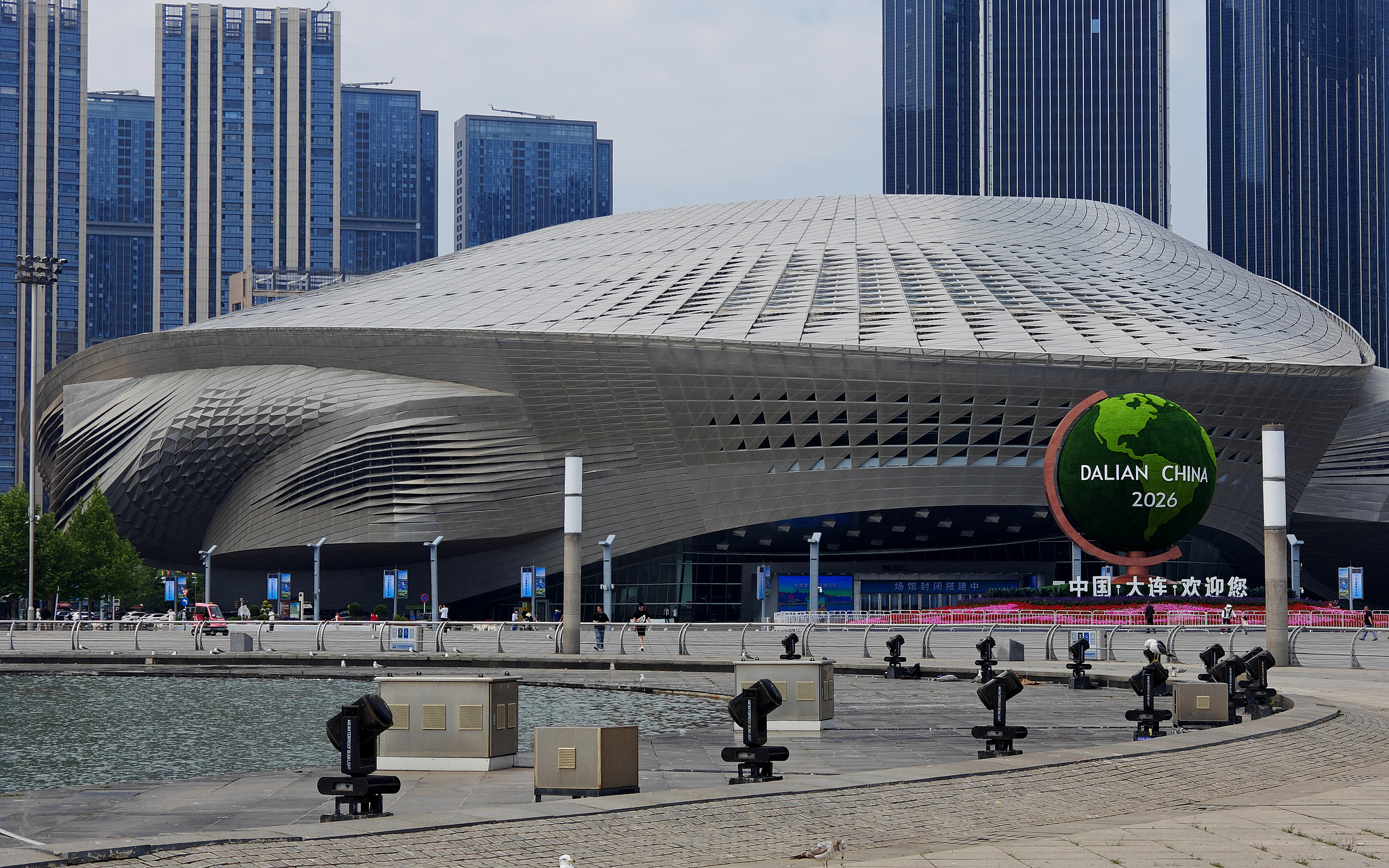
An exterior view of the Dalian International Conference Center, venue of the 2026 Summer Davos, in Dalian, northeast China's Liaoning Province, June 9, 2026. (Photo: VCG)
Sharing China's opportunities
China's expanding appeal extends well beyond investment figures.
Since the beginning of this year, executives of multinational corporations have gathered at major international events in China, including the China Development Forum, the Boao Forum for Asia, the Qingdao Multinationals Summit and the Summer Davos Forum. Meanwhile, a growing number of foreign leaders have visited China accompanied by business delegations, reflecting a broad consensus that engagement with the Chinese market remains indispensable.
Against the backdrop of global supply chain restructuring, international companies increasingly recognize that China offers something few other markets can match: scale, resilience, innovation capacity and continuously expanding opportunities.
Fortune magazine recently summarized this reality with a striking observation: "The next China is still China." The publication argued that no other market can fully replace China's unique role in the global economy. For multinational corporations, success in China now requires more than simply selling products – it demands deeper localization, stronger innovation partnerships and long-term strategic commitment.
As China continues to pursue high-quality development and further expand high-standard opening up, foreign investment is evolving from a vote of confidence into a partnership for shared growth.
According to an article by South Korea's Asia News Agency, amid multiple challenges facing the global economy, the emergence of "China Opportunity 2.0" is reshaping global perceptions. China's robust manufacturing capacity, burgeoning technological innovations and sustained opening up drive are not only advancing the transformation and upgrading of its own economy, but also creating new space for global economic growth and cooperation.