


This year marks the 90th anniversary of the victory of the Long March of the Chinese Workers' and Peasants' Red Army.
During the Long March (1934-1936), Mao Zedong and his comrades reached Yan'an in northwest China's Shaanxi Province, where they established the Communist Party of China (CPC) headquarters and lived and worked for 13 years from 1935 to 1948. Under their leadership, China's revolution rose from a low ebb to a new high and reached a historic turning point that changed the course of the country's future.
The city is thus considered a holy site of the Chinese revolution and the cradle of New China.
"Every generation has its own long march, and every generation must see that march through." Beneath Baota Mountain and along the Yanhe River, generations of Chinese Communists have worked tirelessly with the heroic spirit of "daring to make the sun and the moon shine in the new sky," seeking happiness for the Chinese people and rejuvenation for the Chinese nation. Barren hills have turned into lush forests, rivers and lakes have been restored, and old urban districts have been reborn. The following combo photos trace those changes and the achievements of Yan'an's development in the new era.
From barren hills to lush forests | Yangjialing
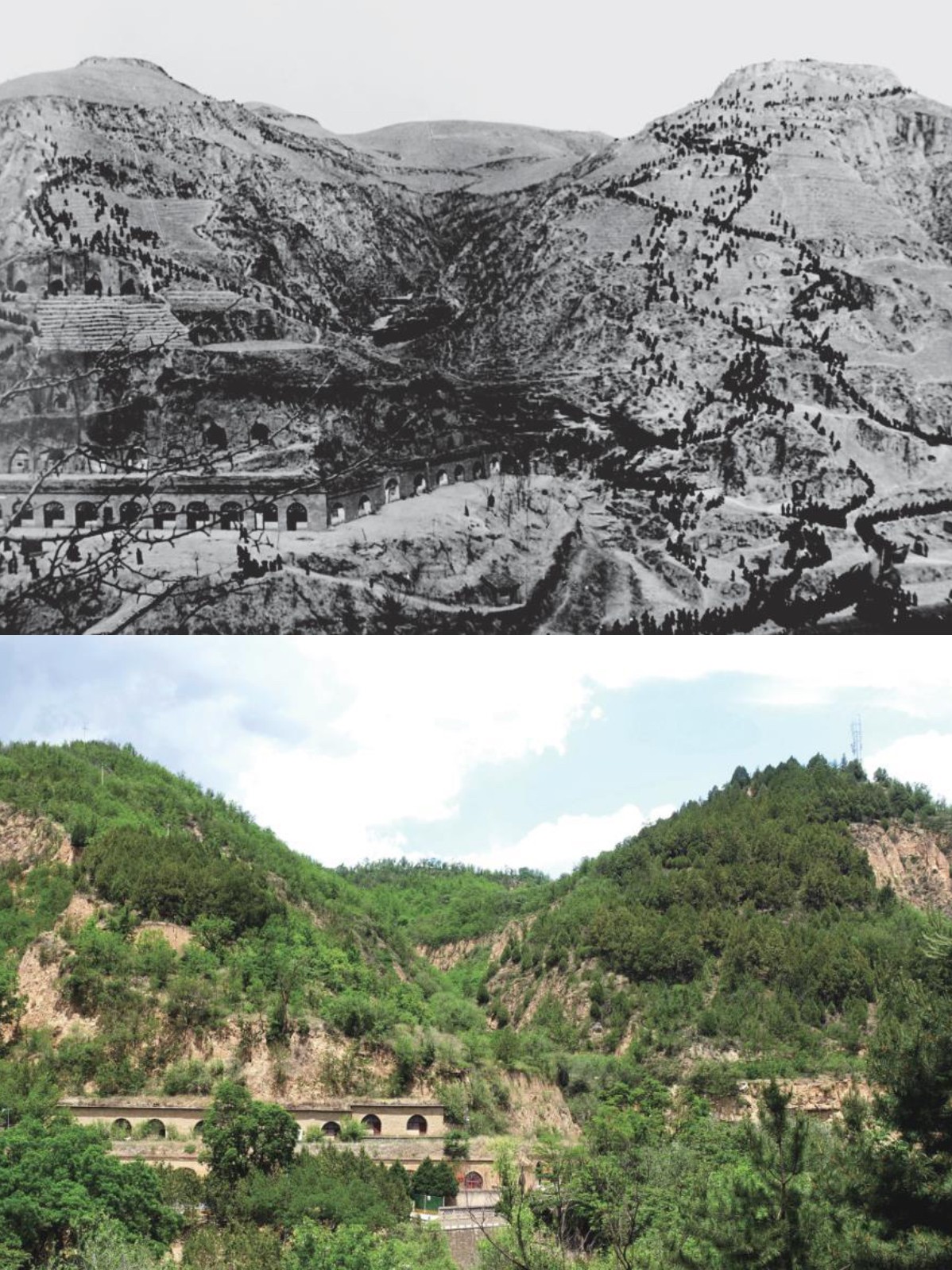
This combo photo shows the hills of Yangjialing in Yan'an, northwest China's Shaanxi Province, in 1956 (above) and in July 2020 (below). In 1956, delegates to the Youth Afforestation Conference of Five Provinces and Autonomous Regions, together with local young people and students, planted trees on the hillsides. Once sparsely vegetated, the slopes have grown into dense woodland. (Photos from Baota District Archives, Yan'an, above, and by Bi Xingshi, below)
Greening the Loess Plateau | Wuqi County
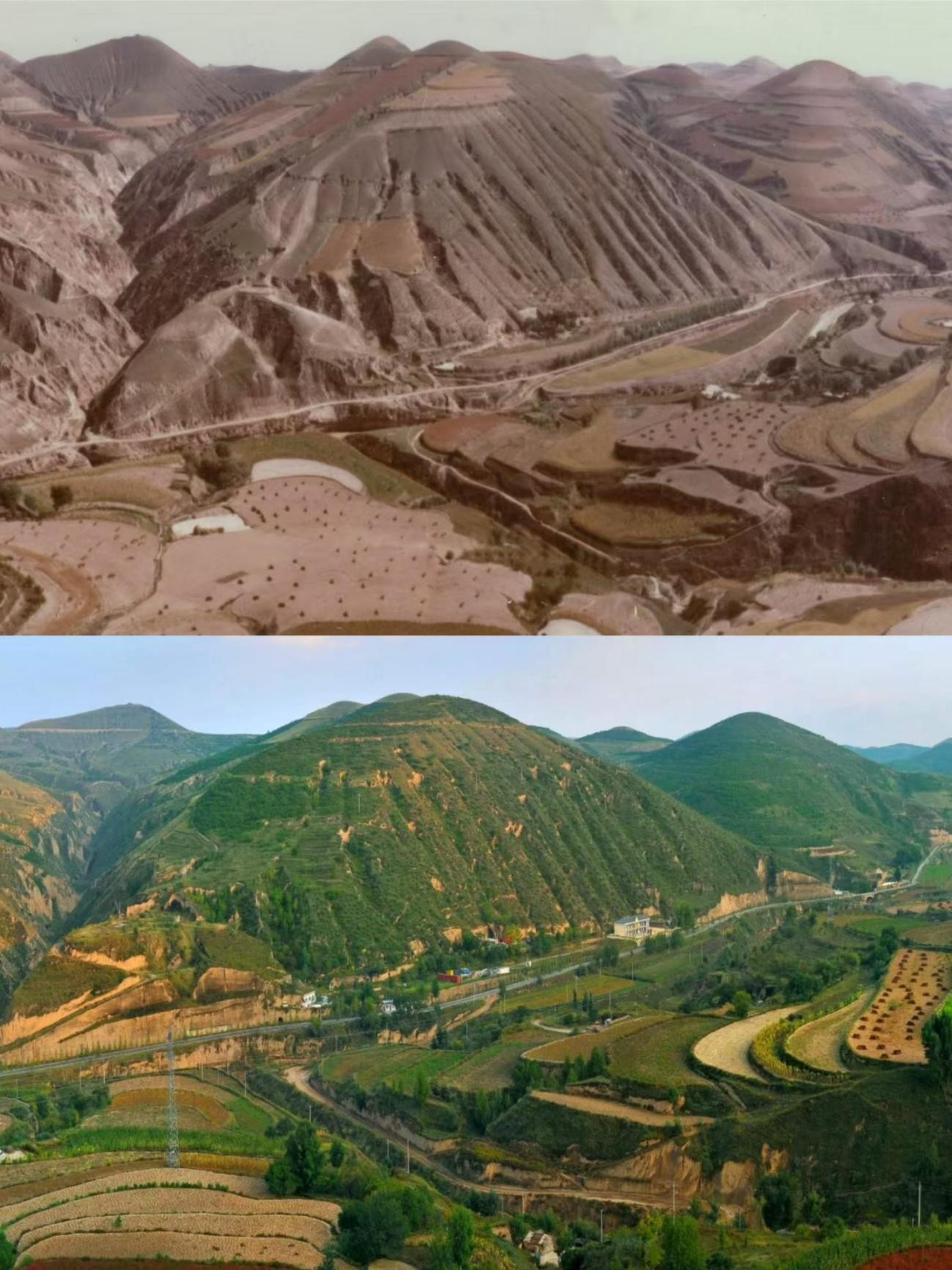
This combo photo shows vegetation cover in Sanguyao village, Wuqi county, Yan'an, northwest China's Shaanxi Province, in 1984 (above) and in 2014 (below). Wuqi, where the Central Red Army concluded its Long March in 1935, became the first county in China to launch the "Grain for Green" program in 1998. Over more than two decades, forest and grassland cover in the county rose to 72.9 percent, transforming a once-barren stretch of the Loess Plateau into a green landscape. (Photos from the Wuqi County Media Center)
Building a new city | Yan'an New Area
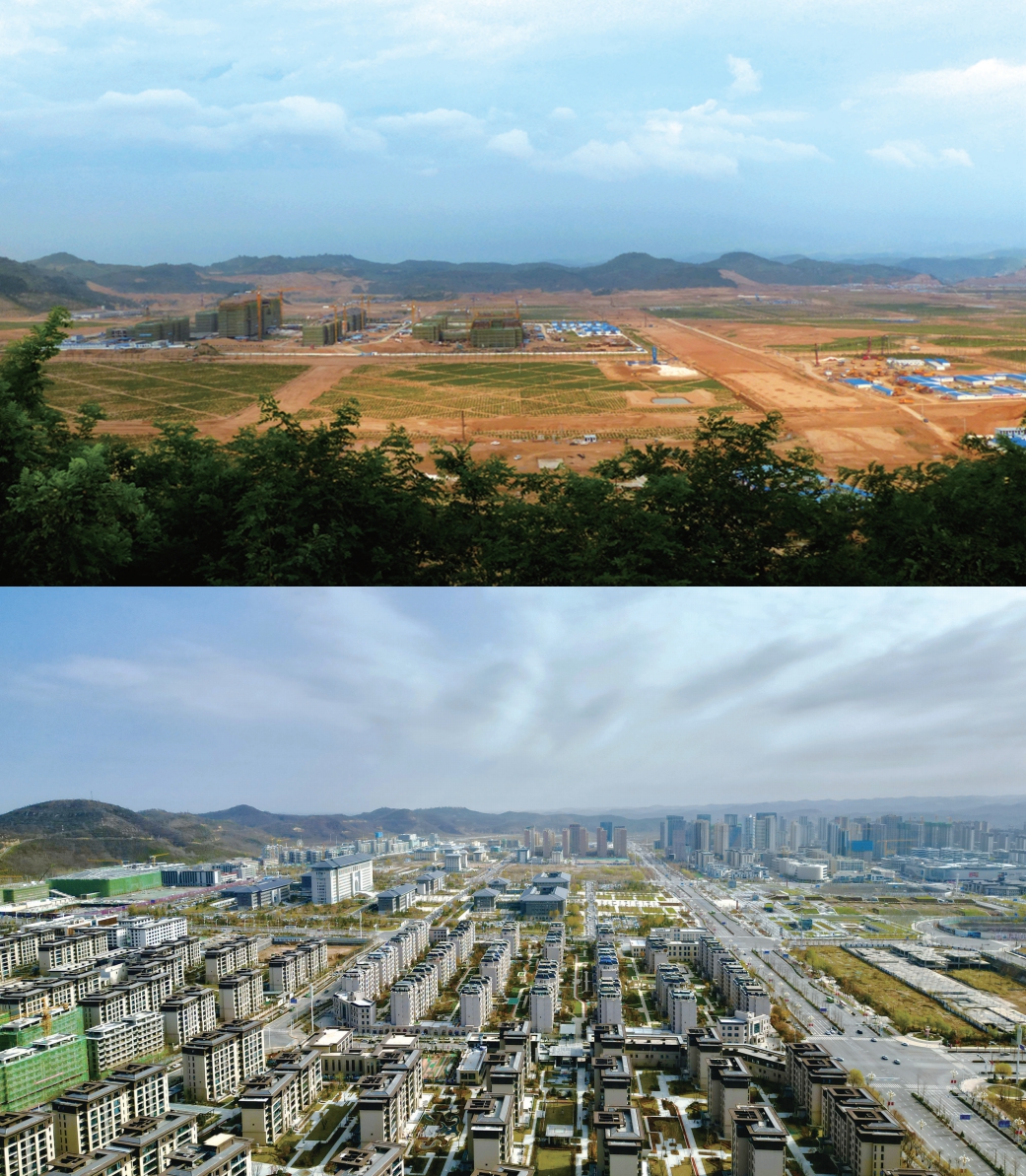
This combo photo shows the Yan'an New Area in northwest China's Shaanxi Province under construction in 2014 (above) and in 2022 (below). Launched in April 2012, the area has developed over 14 years into a district with working urban services, an emerging cityscape and growing vitality. (Photos by Bi Xingshi)
Keeping the revolutionary legacy alive | Yan'an Revolutionary Memorial Hall
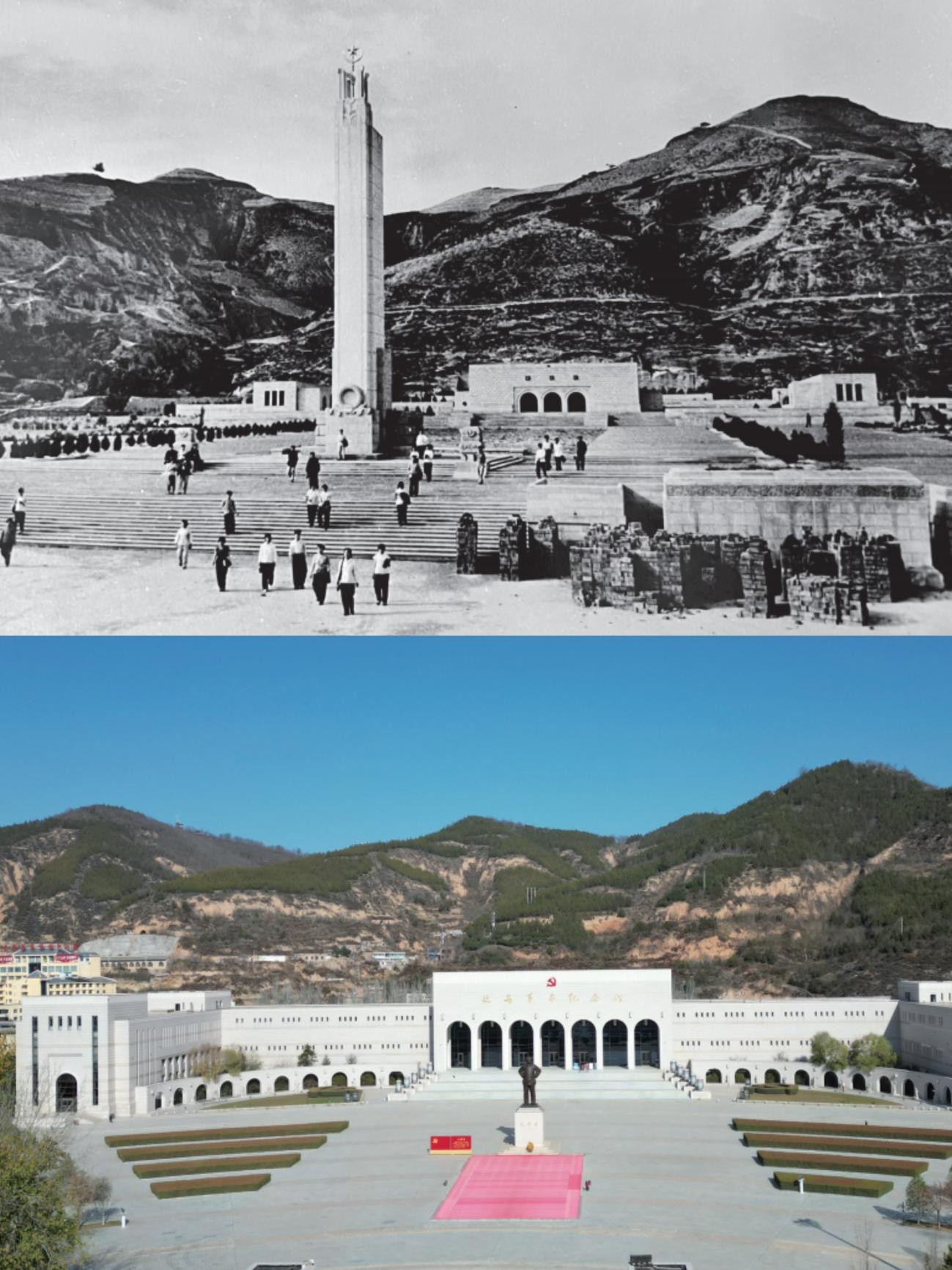
This combo photo shows the "April 8" Martyrs' Cemetery at Wangjiaping in Yan'an, northwest China's Shaanxi Province, in the 1960s (above) and the Yan'an Revolutionary Memorial Hall in November 2022 (below). The martyrs' remains were moved to Lijiawa in the northern part of the city in 1970, and the memorial hall was relocated to the former cemetery site in June 1973. (Photos from Xinhua, above, and by Bi Xingshi, below)
An old neighborhood renewed | Shichanggou
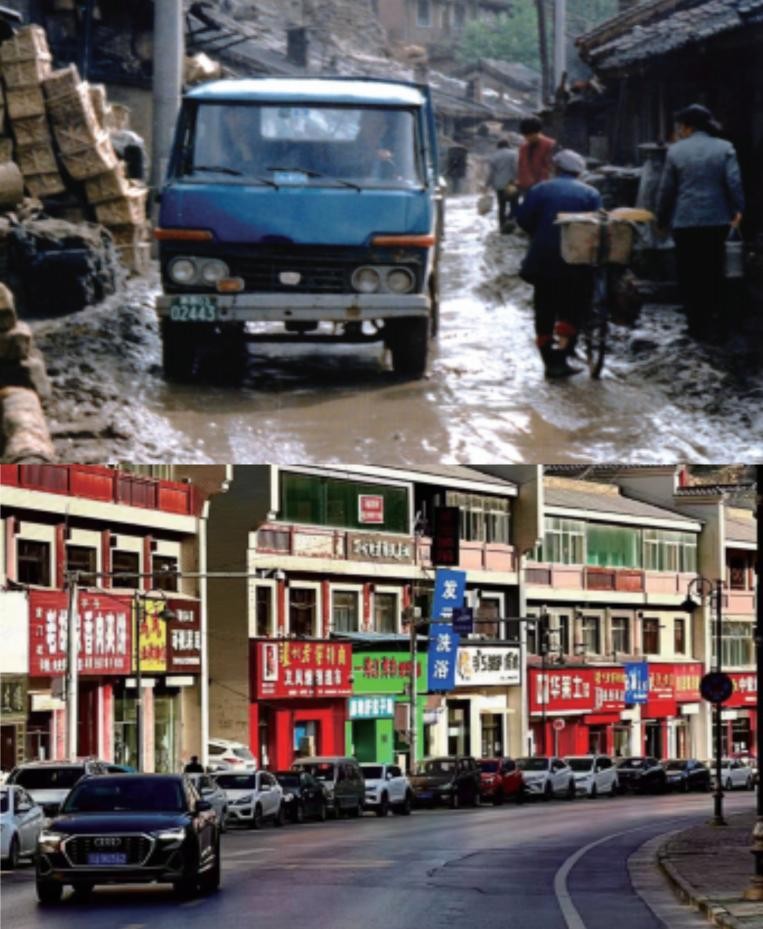
This combo photo shows Shichanggou, or Market Valley, in Yan'an, northwest China's Shaanxi Province, in 1990 (above) and in November 2022 (below). Narrow, muddy roads, dilapidated housing, and poor flood drainage defined the neighborhood in the 1990s. A comprehensive renovation project carried out from the 2000s transformed the area, creating a dynamic new commercial and residential hub in urban Yan'an. (Photos by Bi Xingshi)