


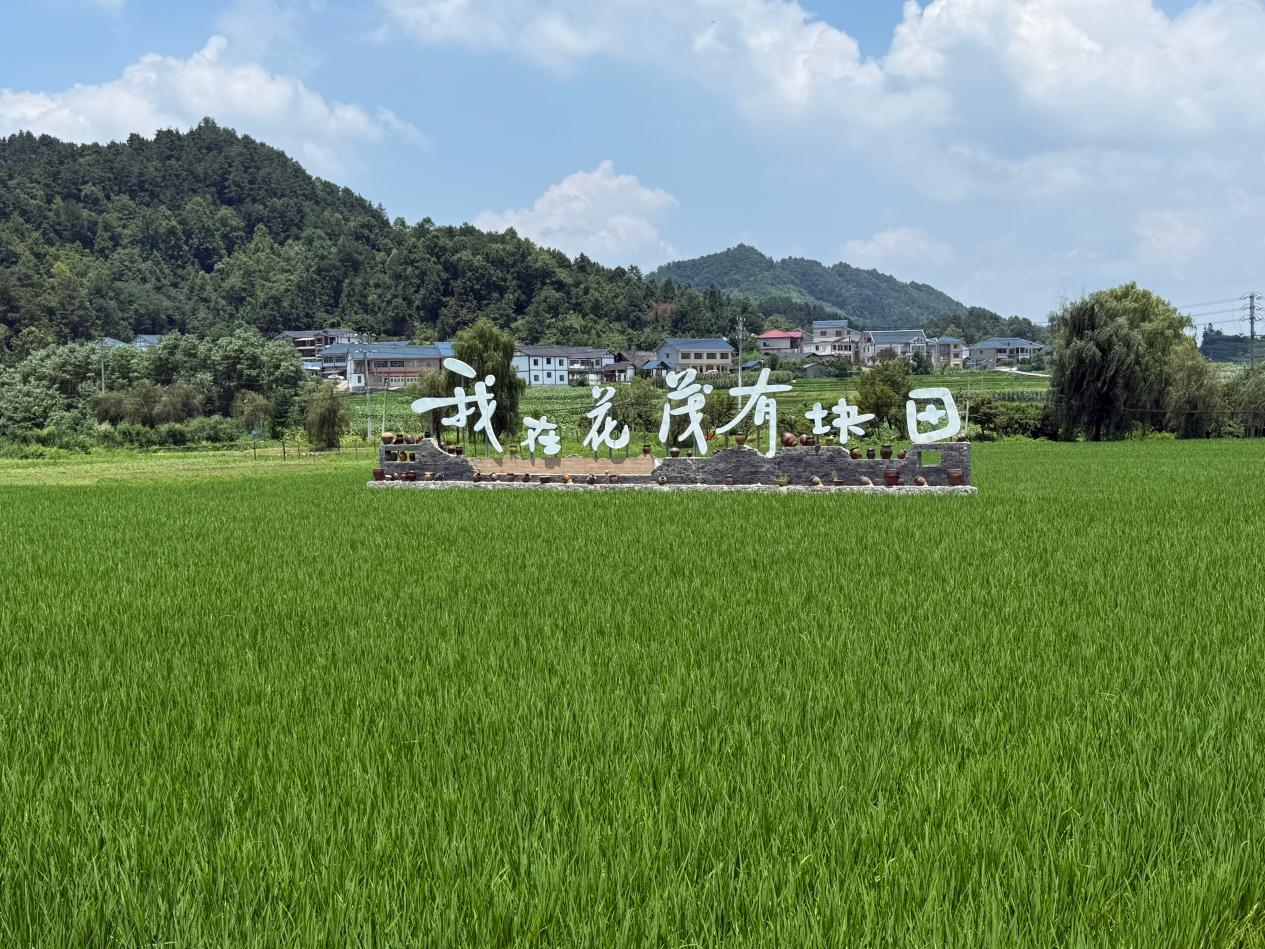
Pictured are rapeseed-rice rotation fields in Huamao village. (Photo by He Hongyu)
In spring, rapeseed flowers cover Huamao village's hillsides and field ridges. By early summer, the yellow blossoms give way to flooded rice paddies, where young seedlings sway in the breeze.
Along Huamao's "Nostalgia Trail" in Zunyi, Southwest China's Guizhou Province, visitors pass fields, homes, a pottery workshop and a traditional papermaking studio as villagers carry on with their daily work.
The scene marks a sharp change from the village's past. Huamao was once known for its barren, overgrown fields. With few roads and local industries, most families grew rice and corn on small, scattered plots. For many young villagers, leaving home to find work elsewhere was the main way to supplement their household incomes.
To create more opportunities at home, Huamao turned to what it already had: farmland, traditional crafts and village life. It improved agricultural production, found new markets for pottery and papermaking, and developed tourism around these resources.
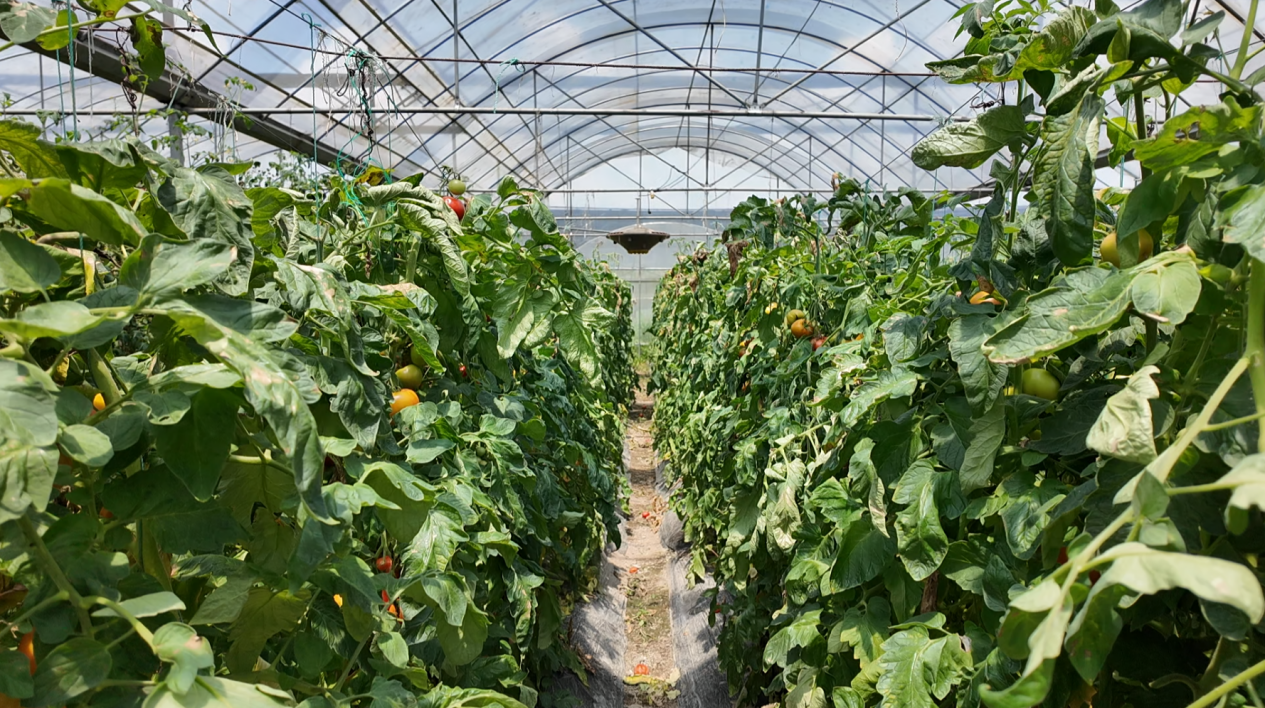
Pictured is a greenhouse in Huamao village. (Photo by Zhai Sirui)
Cultivating change
"Farming used to be small-scale, with each household working on its own. We did not have today's coordinated production and management system," said Lan Ronghong, who manages a local vegetable cooperative.
The cooperative introduced greenhouse techniques and vegetable varieties from Shouguang in East China's Shandong Province, a major vegetable-producing center. Technicians came to teach residents how to raise seedlings and tend crops.
"Modern agriculture depends on technology," Lan said.
Today, the cooperative produces 1-1.5 million kilograms of vegetables a year. Most are sold in Zunyi and surrounding areas, with some sent to neighboring Chongqing during peak harvests.
Vegetables now cover about 147 hectares, while greenhouse crops can generate an annual output value of 150,000 to 300,000 yuan per hectare.
Through the cooperative, previously scattered plots are now managed in a more coordinated way, creating jobs close to home. Most workers are local residents aged 40 to 60. Some earn more than 4,000 yuan a month while remaining close to their children and elderly parents.
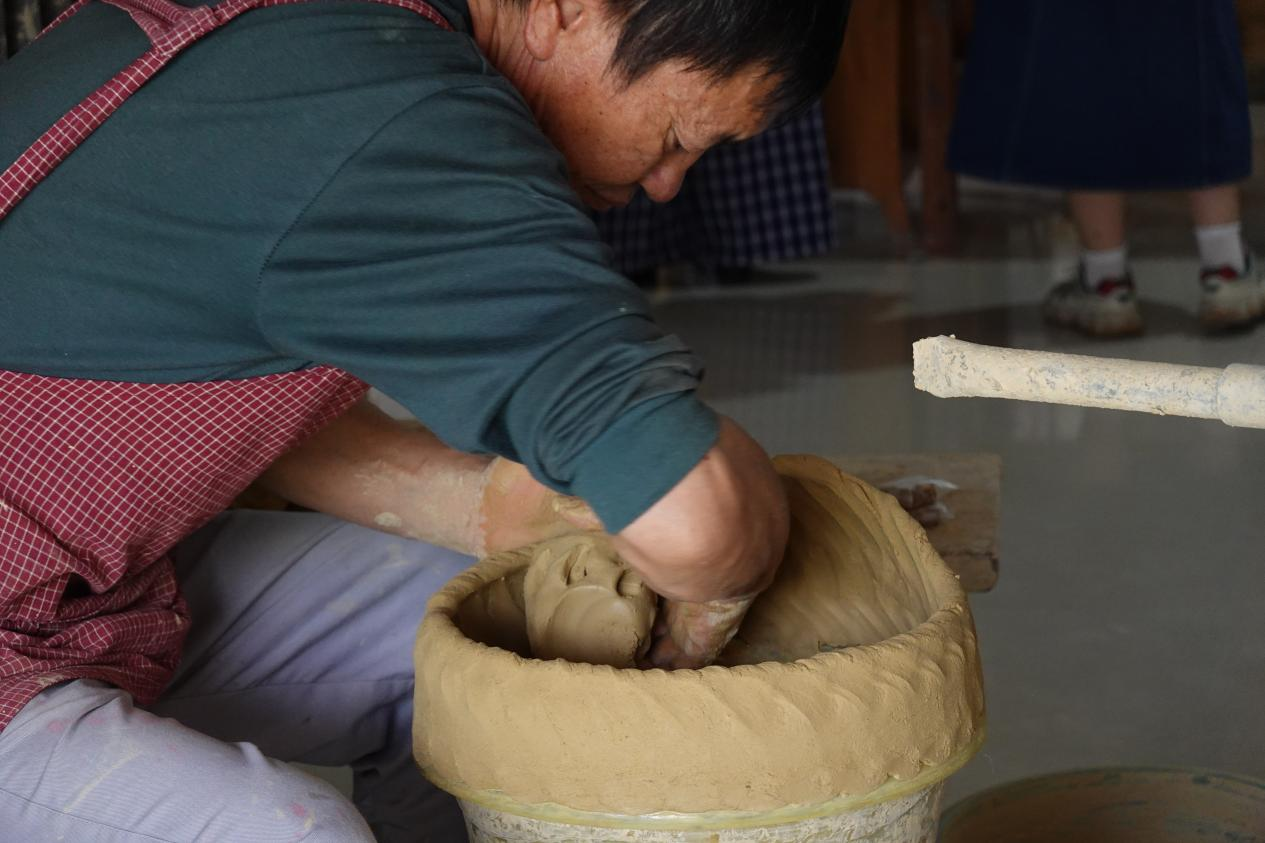
A master potter surnamed Jiang makes a traditional earthenware pot called guzi in Huamao village's pottery workshop. (Photo by Jin Shuhan)
Pots and paper
A short walk from the greenhouses, pottery wheels turn slowly. In a craftsperson's hands, a lump of damp clay takes shape.
Pottery has been made in Huamao for centuries. Mu Xiancai is the fourth generation of his family to practice the craft.
Huamao earthenware was traditionally used to store grain and preserve food. As plastic containers and mass-produced goods became common, demand for handmade pottery declined.
"This craft was handed down by our ancestors. We must pass on our traditions," Mu said.
The workshop now makes tea sets, tableware, vases and ornaments alongside traditional storage jars. More than 100 types of products are sold across China, while visitors can sit at the wheel and try shaping clay themselves. Each year, the workshop welcomes more than 10,000 visitors for hands-on pottery experiences.
Huamao's 400-year-old papermaking tradition has also found new applications. Once used mainly for genealogies and scriptures, handmade paper lost ground to cheaper industrial products.
After returning to Huamao, Zhang Mengying, a young practitioner of the village's traditional papermaking craft, began adding petals and leaves to the pulp, turning the paper into bookmarks, lamps and decorative pieces.
"We have developed new products that appeal to younger customers," Zhang said. "Sales have improved, and more people are learning about the craft."
New products and hands-on experiences have brought pottery and papermaking to a wider audience. A clay cup or a sheet of flower-patterned paper offers visitors a direct introduction to Huamao's traditions.
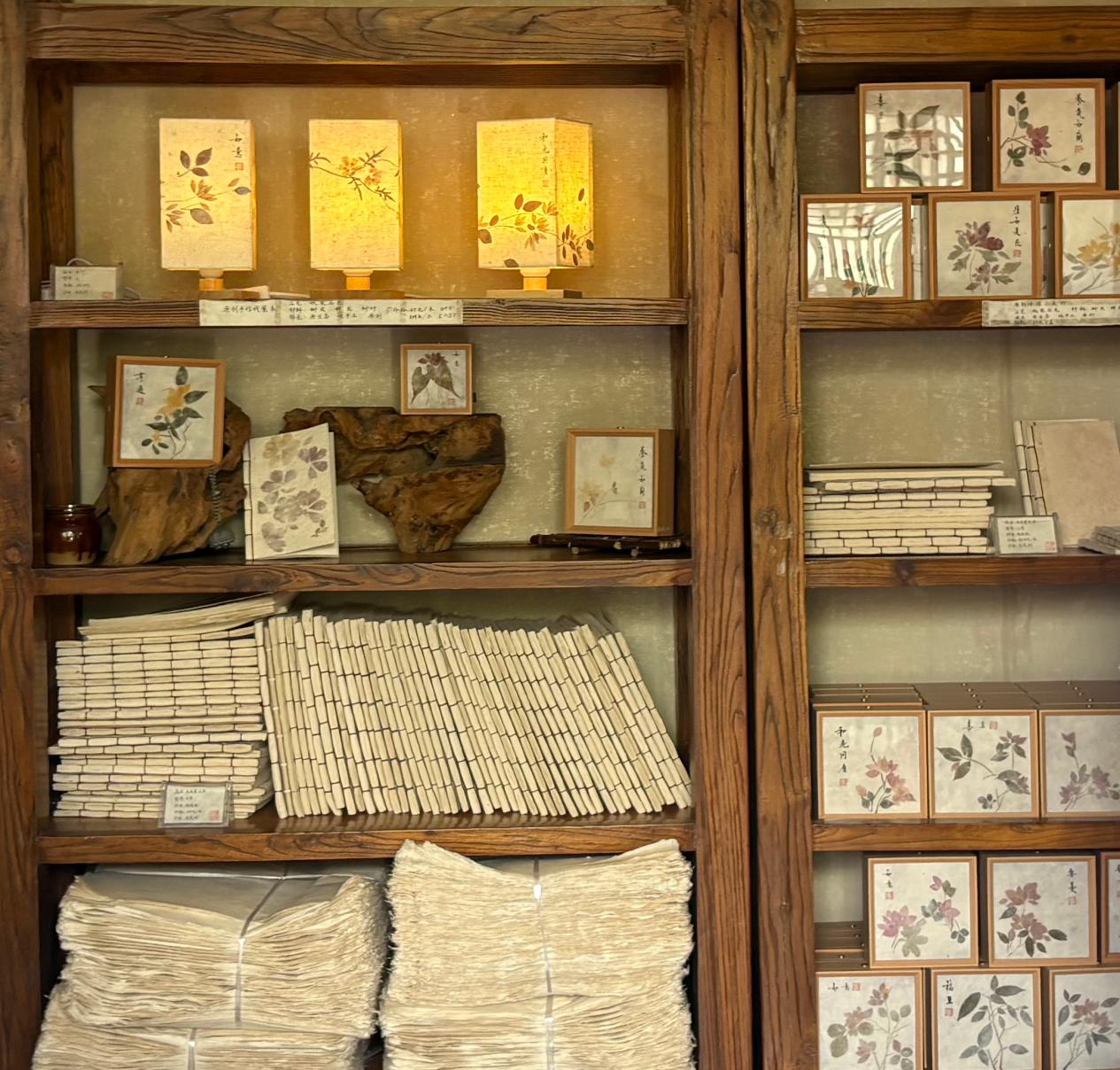
Handmade paper products featuring flower petals and leaves are displayed in Huamao village. (Photo by Zhang Xinyi)
Reasons to return
Huamao's fields and traditional workshops have also become part of the village's tourism experience. Visitors can pick vegetables in greenhouses, shape clay at a pottery wheel and make paper decorated with petals and leaves.
The growth of tourism has given some villagers new reasons to return home. Wang Hao once left Huamao to find work elsewhere. After returning in 2017, he began helping run his family's guesthouse.
"The environment back home has kept improving, and more tourists are coming. It is good to see young people return home and start businesses," he said.
Other returnees work at cooperatives, run restaurants and guesthouses, serve as guides or create social media content. A more diverse local economy has given young people more ways to build a life in the village.
Since 2015, Huamao has recorded more than 9.3 million tourist visits. Nineteen guesthouses and farm restaurants now operate in the village, providing jobs in accommodation, catering, cleaning and sales. New attractions, including rice paddy art and an outdoor camping area, have also been introduced to attract younger visitors.
Tourism has grown alongside local production. Farm work still follows the seasons, potters remain at their wheels, and traditional papermakers continue their craft.
In the evening, music plays in the village square as residents dance and children run nearby.
"The roads are better, more people are here and more tourists are coming," said villager Tu Huaqin, who joins in the square dancing whenever she has time.
By summer, green rice paddies stretch across the village. Huamao still moves with the seasons, but its residents now have more choices close to home. "A village must start from its own resources and cultural traditions and find the path that suits it best," said Zhu Jiao, Party secretary of Huamao village.
(Chen Yilin, Guo Yuzhu, He Hongyu, Zhang Xinyi, Dai Yuyang and Weng Yixin also contributed to this report.)