


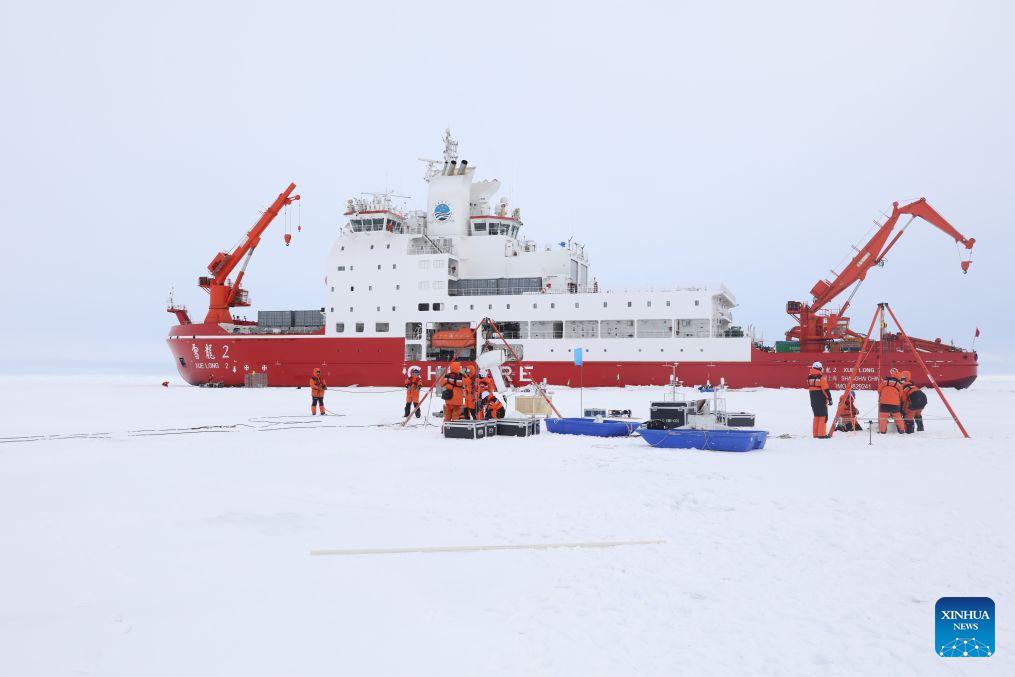
Members of China's 16th Arctic Ocean scientific expedition team work on the ice surface of the Arctic Ocean on Aug. 9, 2026. China's research icebreaker Xuelong 2 will carry out more than 20 operations at seven ice stations, including deploying ice-based buoys, collecting ice cores and conducting remote sensing observations of sea ice, to obtain scientific data for research into changes in Arctic sea ice and the evolution of its ecosystems. (Xinhua/Wen Jinghua)
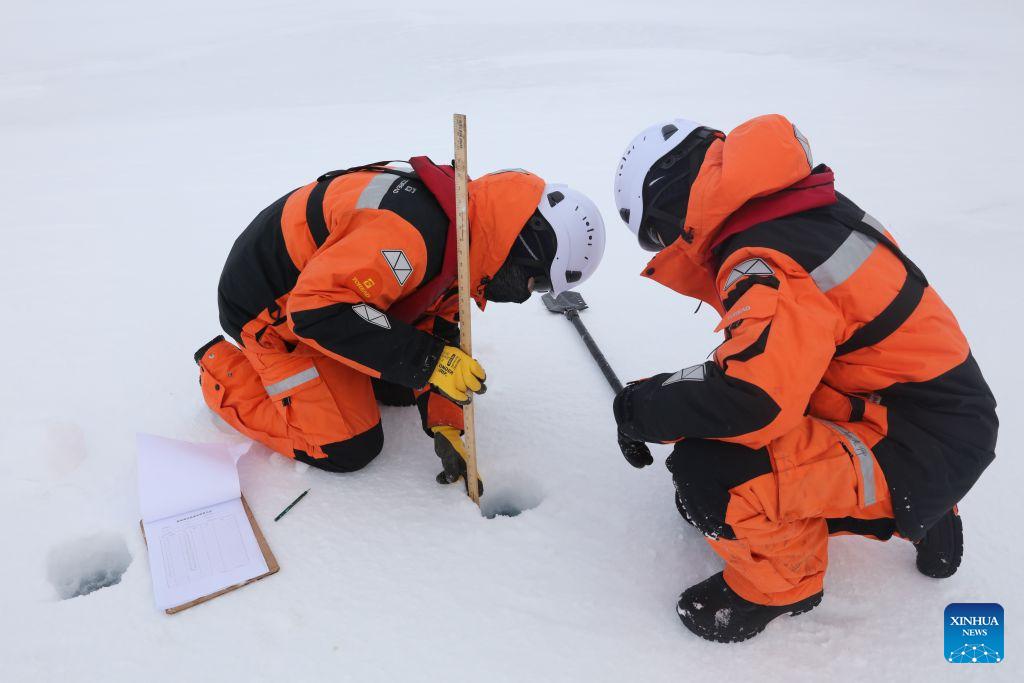
Members of China's 16th Arctic Ocean scientific expedition team work on the ice surface of the Arctic Ocean on Aug. 9, 2026. China's research icebreaker Xuelong 2 will carry out more than 20 operations at seven ice stations, including deploying ice-based buoys, collecting ice cores and conducting remote sensing observations of sea ice, to obtain scientific data for research into changes in Arctic sea ice and the evolution of its ecosystems. (Xinhua/Wen Jinghua)
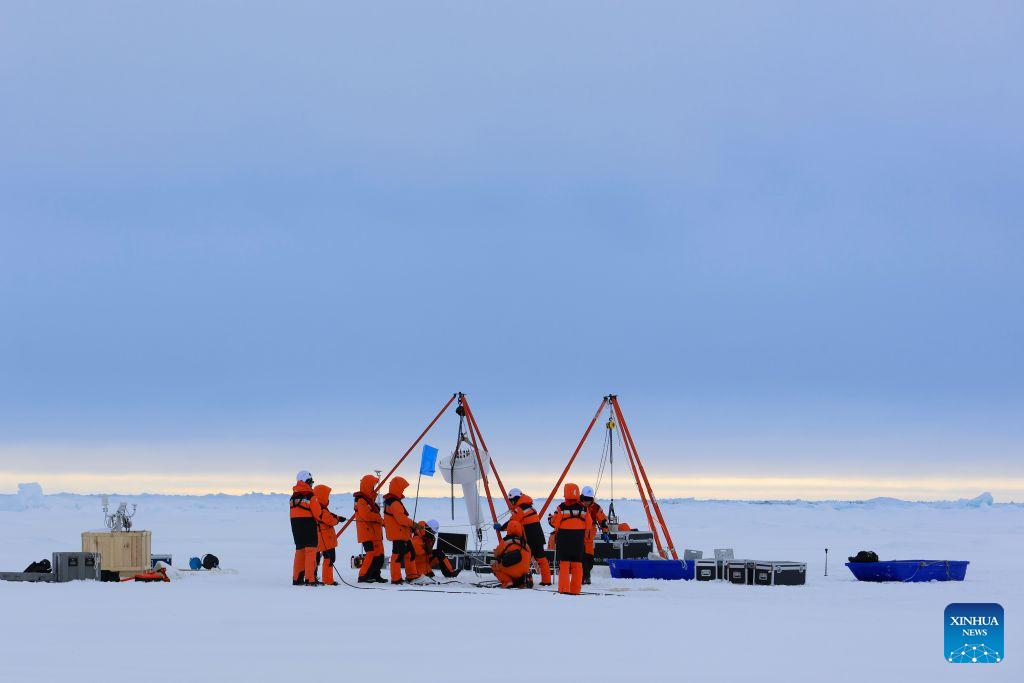
Members of China's 16th Arctic Ocean scientific expedition team work on the ice surface of the Arctic Ocean on Aug. 9, 2026. China's research icebreaker Xuelong 2 will carry out more than 20 operations at seven ice stations, including deploying ice-based buoys, collecting ice cores and conducting remote sensing observations of sea ice, to obtain scientific data for research into changes in Arctic sea ice and the evolution of its ecosystems. (Xinhua/Wen Jinghua)
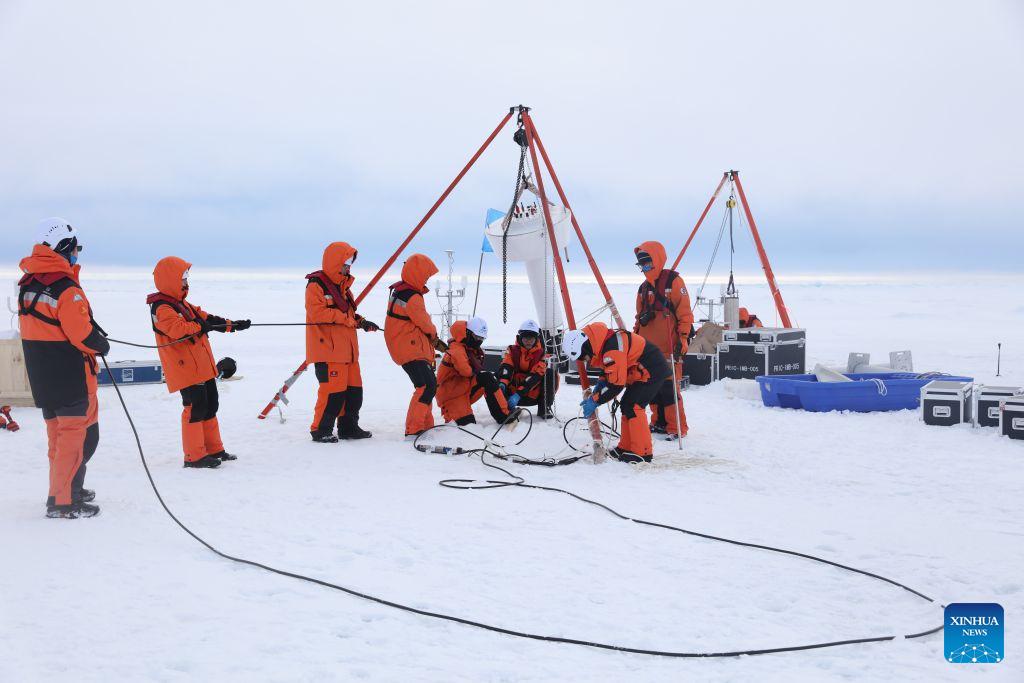
Members of China's 16th Arctic Ocean scientific expedition team work on the ice surface of the Arctic Ocean on Aug. 9, 2026. China's research icebreaker Xuelong 2 will carry out more than 20 operations at seven ice stations, including deploying ice-based buoys, collecting ice cores and conducting remote sensing observations of sea ice, to obtain scientific data for research into changes in Arctic sea ice and the evolution of its ecosystems. (Xinhua/Wen Jinghua)
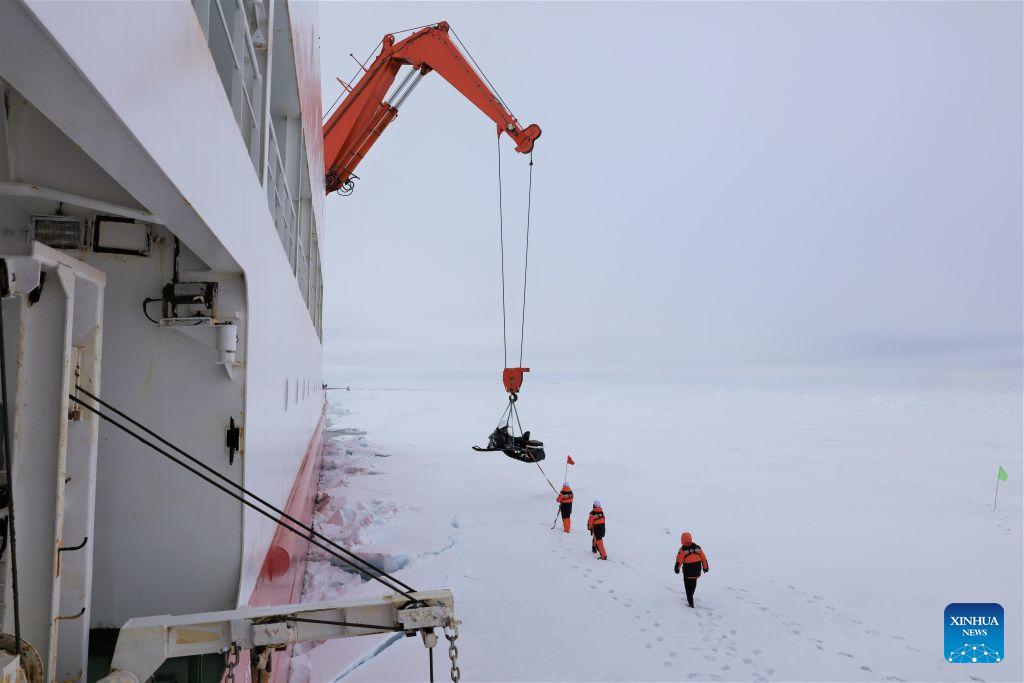
Members of China's 16th Arctic Ocean scientific expedition team work on the ice surface of the Arctic Ocean on Aug. 9, 2026. China's research icebreaker Xuelong 2 will carry out more than 20 operations at seven ice stations, including deploying ice-based buoys, collecting ice cores and conducting remote sensing observations of sea ice, to obtain scientific data for research into changes in Arctic sea ice and the evolution of its ecosystems. (Xinhua/Wen Jinghua)
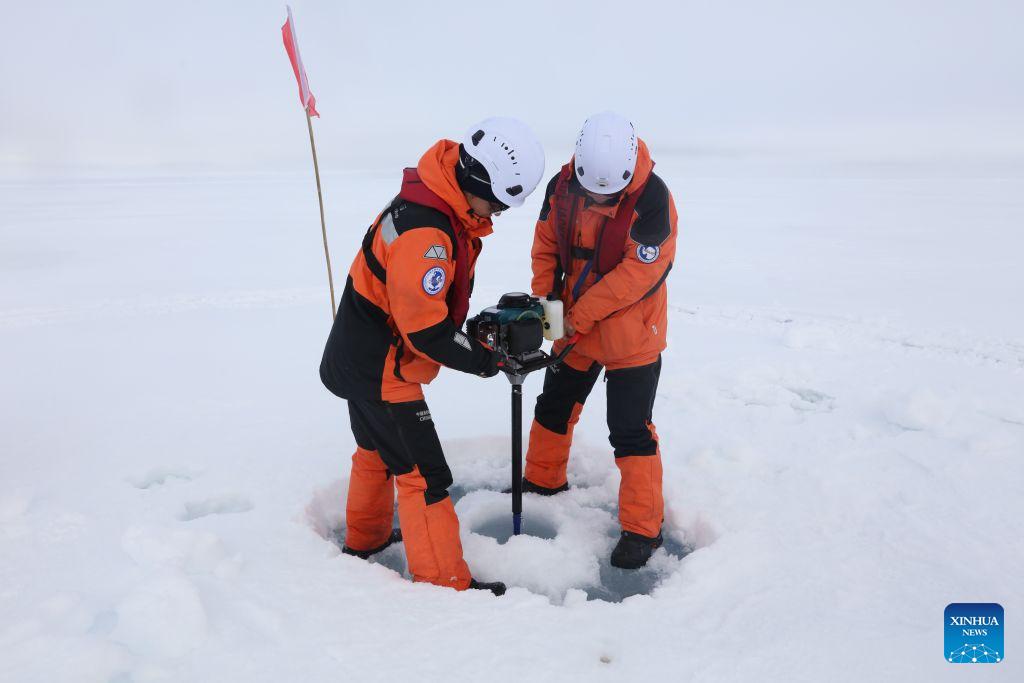
Members of China's 16th Arctic Ocean scientific expedition team work on the ice surface of the Arctic Ocean on Aug. 9, 2026. China's research icebreaker Xuelong 2 will carry out more than 20 operations at seven ice stations, including deploying ice-based buoys, collecting ice cores and conducting remote sensing observations of sea ice, to obtain scientific data for research into changes in Arctic sea ice and the evolution of its ecosystems. (Xinhua/Wen Jinghua)
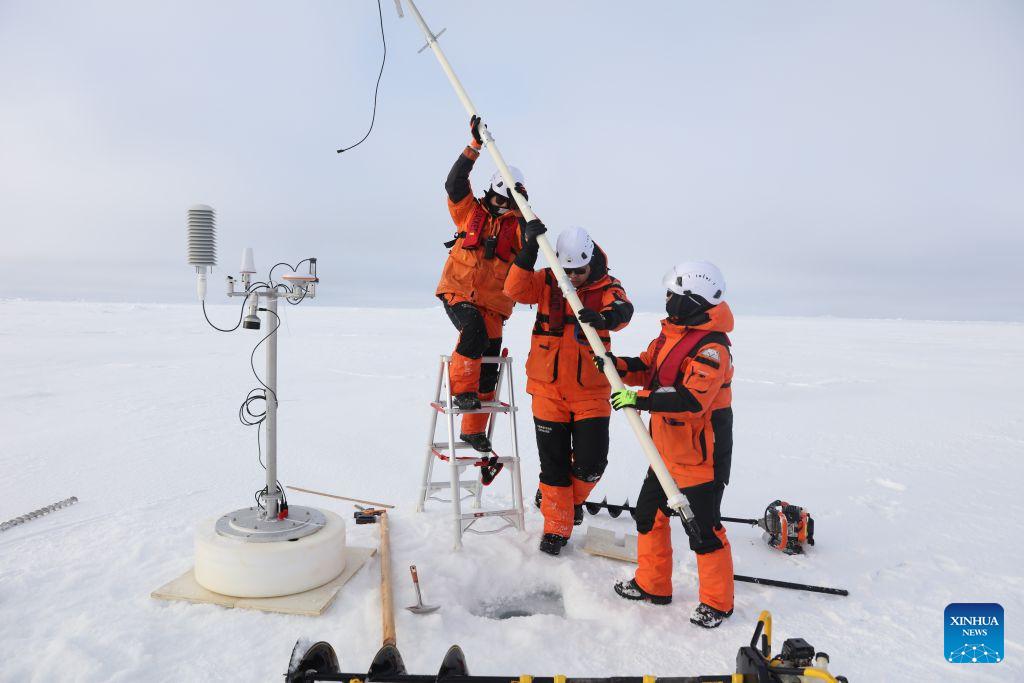
Members of China's 16th Arctic Ocean scientific expedition team work on the ice surface of the Arctic Ocean on Aug. 9, 2026. China's research icebreaker Xuelong 2 will carry out more than 20 operations at seven ice stations, including deploying ice-based buoys, collecting ice cores and conducting remote sensing observations of sea ice, to obtain scientific data for research into changes in Arctic sea ice and the evolution of its ecosystems. (Xinhua/Wen Jinghua)
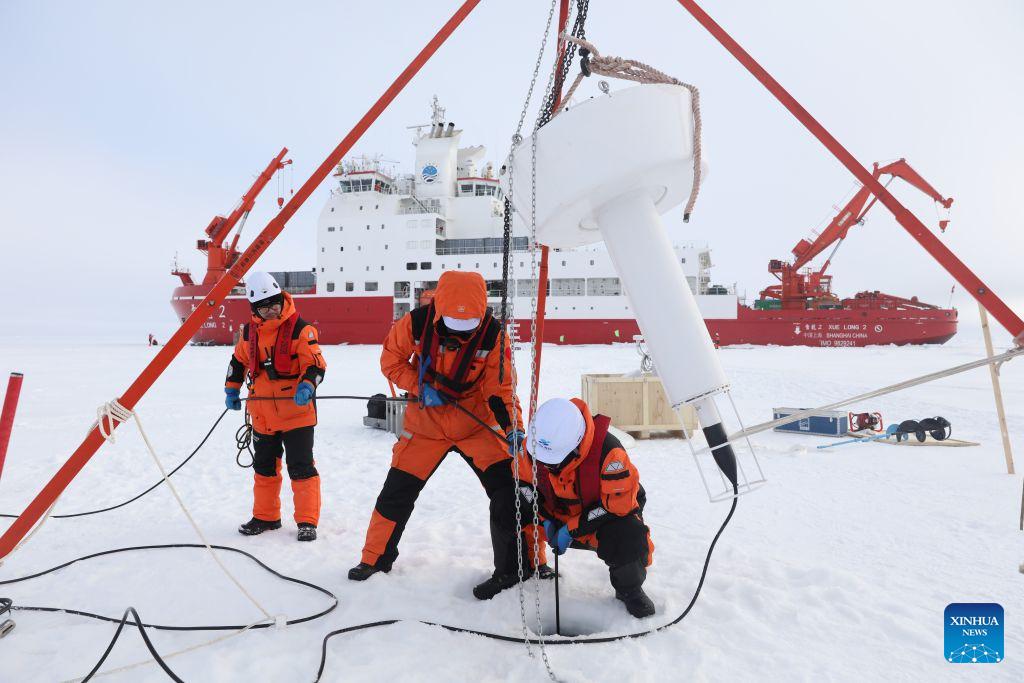
Members of China's 16th Arctic Ocean scientific expedition team work on the ice surface of the Arctic Ocean on Aug. 9, 2026. China's research icebreaker Xuelong 2 will carry out more than 20 operations at seven ice stations, including deploying ice-based buoys, collecting ice cores and conducting remote sensing observations of sea ice, to obtain scientific data for research into changes in Arctic sea ice and the evolution of its ecosystems. (Xinhua/Wen Jinghua)
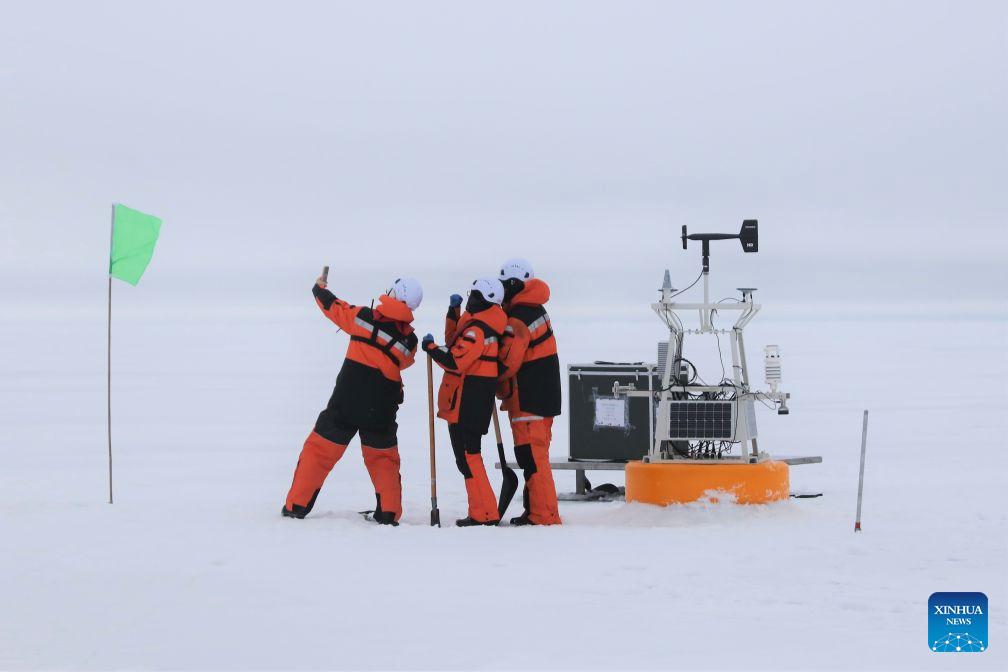
Members of China's 16th Arctic Ocean scientific expedition team take selfies on the ice surface of the Arctic Ocean on Aug. 10, 2026.
China's research icebreaker Xuelong 2 will carry out more than 20 operations at seven ice stations, including deploying ice-based buoys, collecting ice cores and conducting remote sensing observations of sea ice, to obtain scientific data for research into changes in Arctic sea ice and the evolution of its ecosystems. (Xinhua/Wen Jinghua)
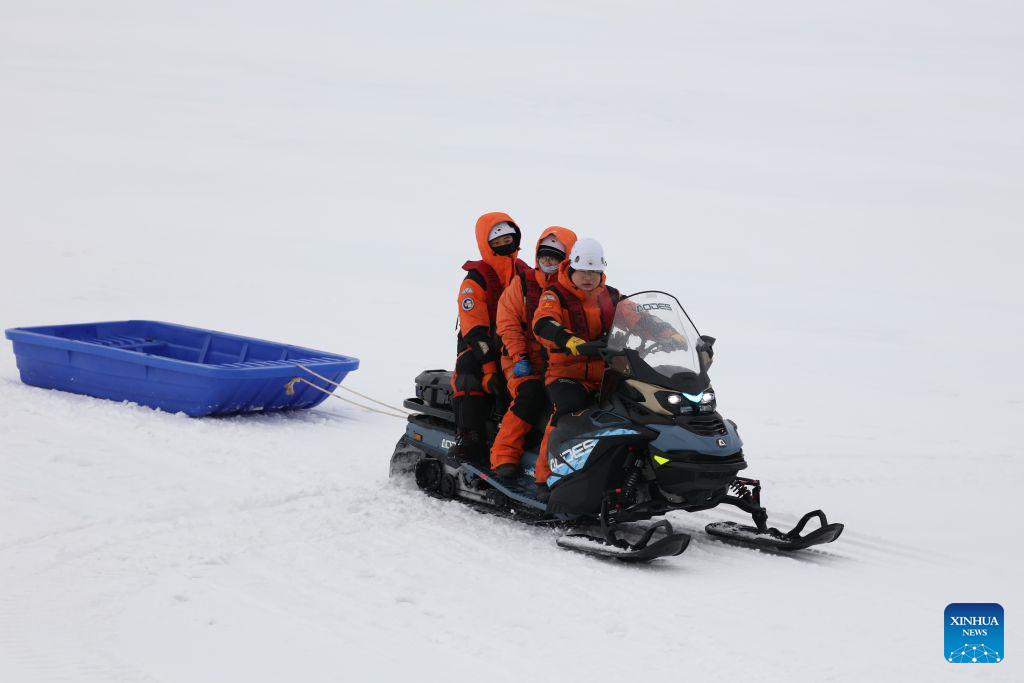
Members of China's 16th Arctic Ocean scientific expedition team travel to the designated operation area by snowmobile on the ice surface of the Arctic Ocean on Aug. 10, 2026.
China's research icebreaker Xuelong 2 will carry out more than 20 operations at seven ice stations, including deploying ice-based buoys, collecting ice cores and conducting remote sensing observations of sea ice, to obtain scientific data for research into changes in Arctic sea ice and the evolution of its ecosystems. (Xinhua/Wen Jinghua)
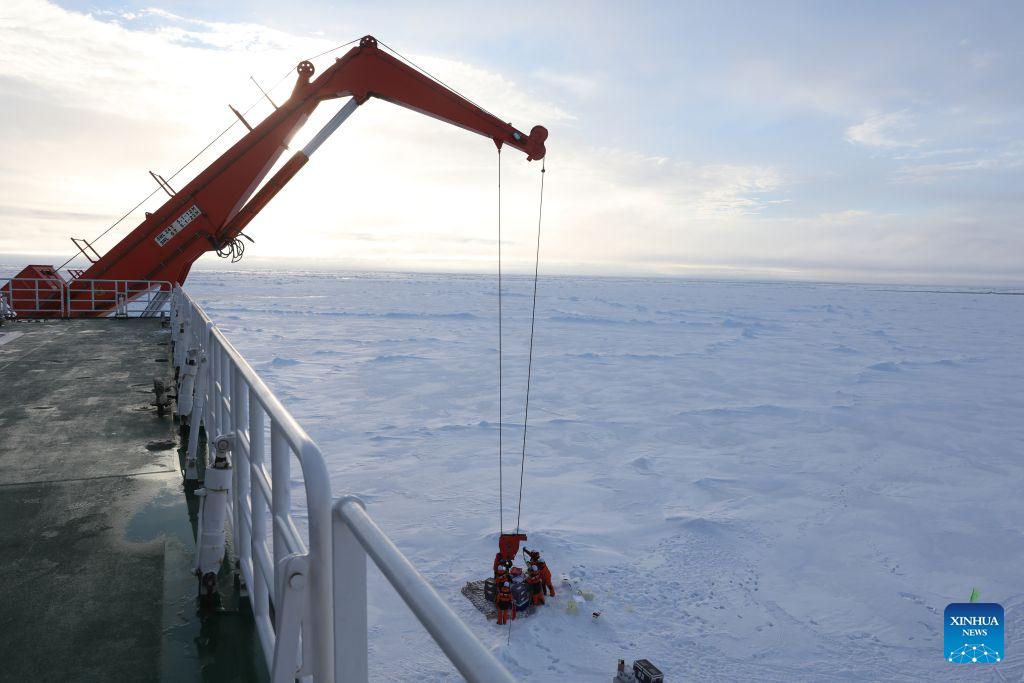
Members of China's 16th Arctic Ocean scientific expedition team work on the ice surface of the Arctic Ocean on Aug. 9, 2026.
China's research icebreaker Xuelong 2 will carry out more than 20 operations at seven ice stations, including deploying ice-based buoys, collecting ice cores and conducting remote sensing observations of sea ice, to obtain scientific data for research into changes in Arctic sea ice and the evolution of its ecosystems. (Xinhua/Wen Jinghua)
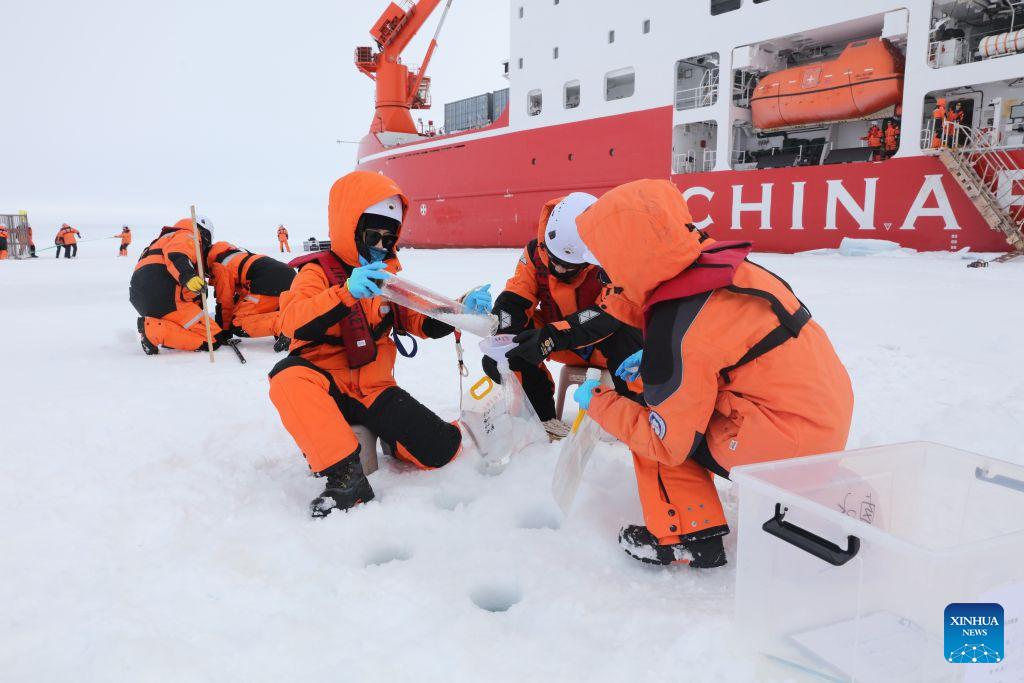
Members of China's 16th Arctic Ocean scientific expedition team work on the ice surface of the Arctic Ocean on Aug. 9, 2026.
China's research icebreaker Xuelong 2 will carry out more than 20 operations at seven ice stations, including deploying ice-based buoys, collecting ice cores and conducting remote sensing observations of sea ice, to obtain scientific data for research into changes in Arctic sea ice and the evolution of its ecosystems. (Xinhua/Wen Jinghua)
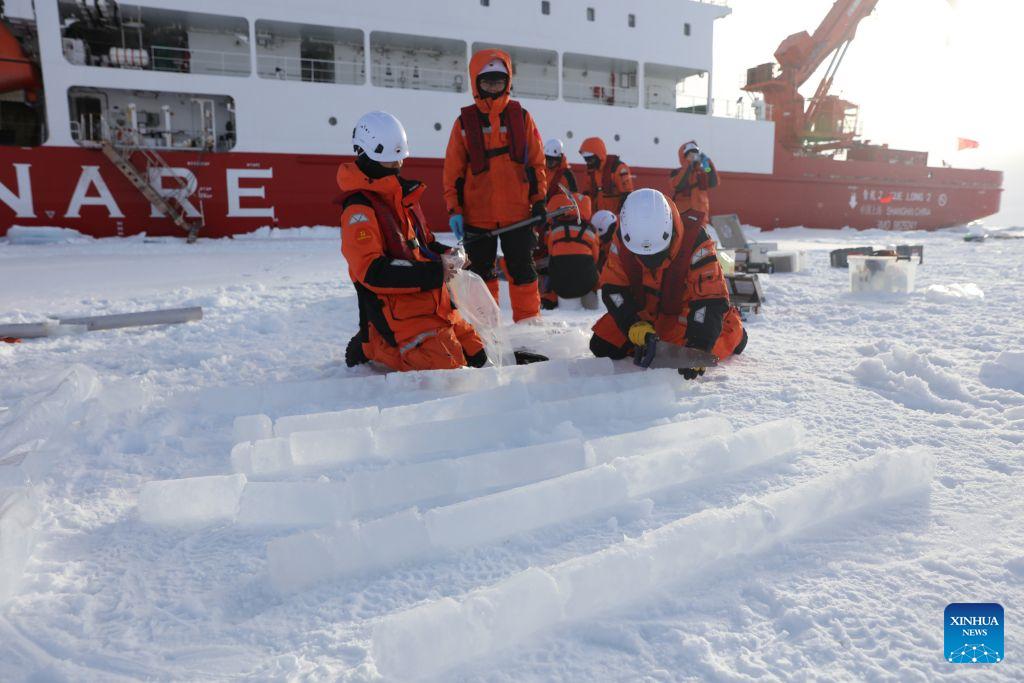
Members of China's 16th Arctic Ocean scientific expedition team collect ice core samples on the ice surface of the Arctic Ocean on Aug. 9, 2026.
China's research icebreaker Xuelong 2 will carry out more than 20 operations at seven ice stations, including deploying ice-based buoys, collecting ice cores and conducting remote sensing observations of sea ice, to obtain scientific data for research into changes in Arctic sea ice and the evolution of its ecosystems. (Xinhua/Wen Jinghua)
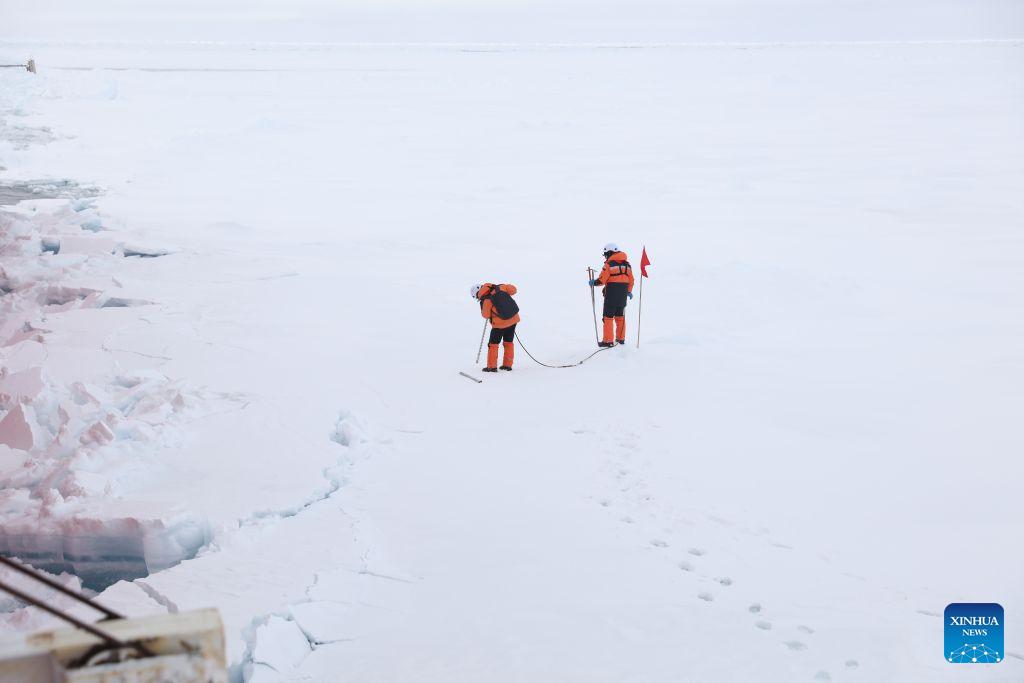
Members of China's 16th Arctic Ocean scientific expedition team work on the ice surface of the Arctic Ocean on Aug. 9, 2026.
China's research icebreaker Xuelong 2 will carry out more than 20 operations at seven ice stations, including deploying ice-based buoys, collecting ice cores and conducting remote sensing observations of sea ice, to obtain scientific data for research into changes in Arctic sea ice and the evolution of its ecosystems. (Xinhua/Wen Jinghua)