


Chi Xuewei keeps a cabinet of scissors on display in his office: carbon steel scissors, tailoring scissors and titanium steel scissors, each marking a different chapter in the transformation of his hometown's centuries-old craft.
Zherong county in Ningde, southeast China's Fujian Province, has long been known as the cradle of knife and scissors making in China, a tradition dating back to the reign of Emperor Yongzheng of the Qing Dynasty (1644-1911), when local blacksmiths mastered techniques for forging, quenching and grinding blades. Today, the county supplies more than 90 percent of China's carbon steel scissors.
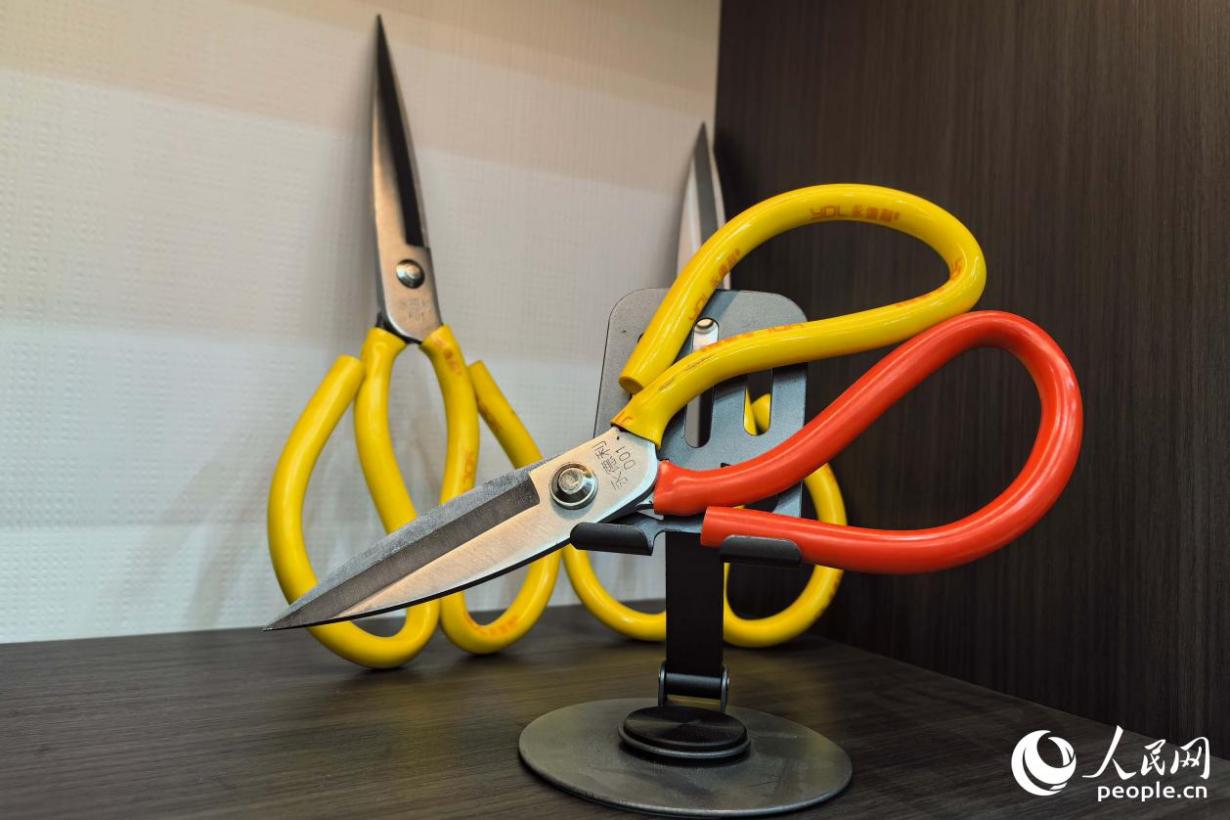
Photo shows carbon steel scissors produced in Zherong county, southeast China's Fujian Province. (People's Daily Online/Lin Xiaoli)
Chi is chairman of Fujian Yongdeli Industrial Co., Ltd., the county's leading scissors maker, which sells more than 10 million pairs a year.
Backed by reliable quality, traditional carbon steel scissors helped Yongdeli achieve annual sales of around 20 million yuan (about $2.96 million) in the early 2000s. Yet for years, sales of these traditional products stagnated. Like the knife and scissors industry across the county, the company faced a development bottleneck due to a limited product range and outdated production techniques.
To break through the bottleneck, Yongdeli began shifting toward premium categories, with tailoring scissors emerging as its flagship product.
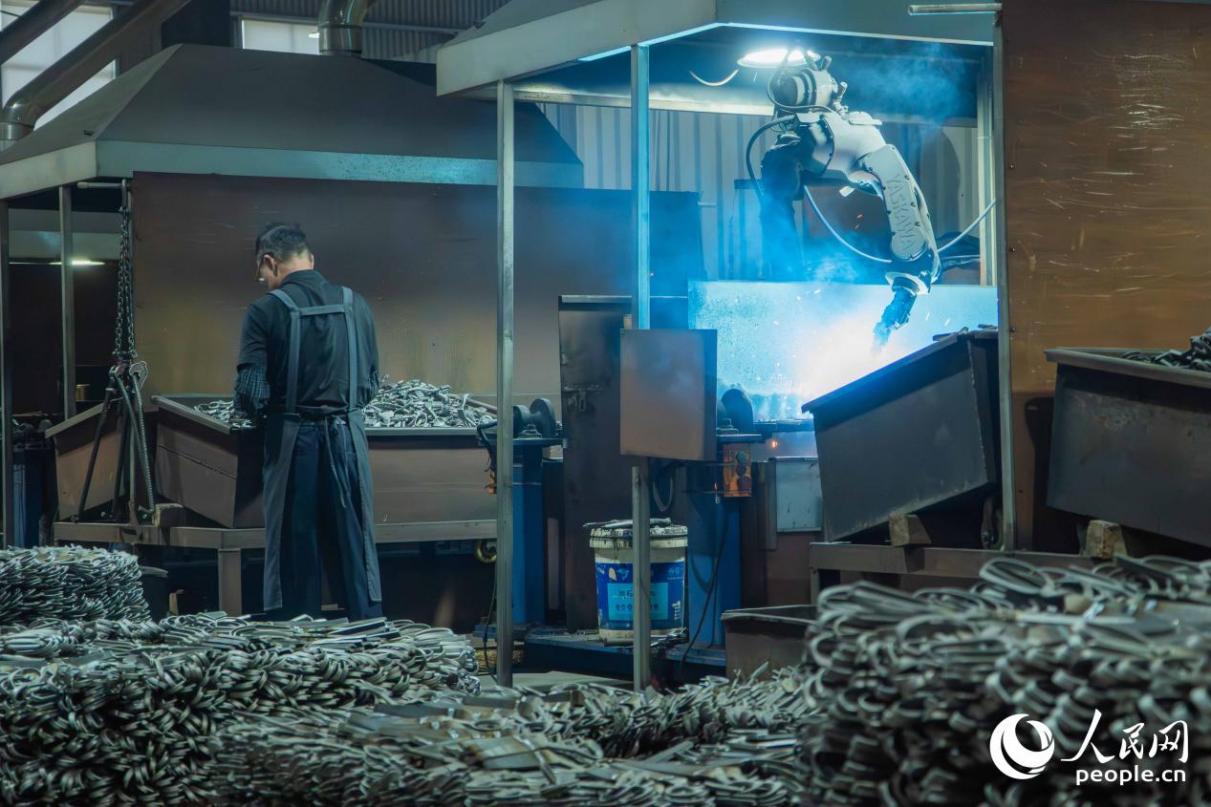
A worker collaborates with a robotic arm to complete welding in Zherong county, southeast China's Fujian Province. (People's Daily Online/Lin Mingxian)
"In 2019, we exhibited this product at an international trade show for the first time," Chi said. Today, more than 90 percent of the company's products are exported.
The success of the tailoring scissors was closely linked to the broader transformation of the county's knife and scissors industry.
The number of small scissors workshops in the county peaked at 253 around 2019. Most turned out the same type of carbon steel scissors, and the fierce competition that followed drove prices down and raised concerns over environmental pollution.
The local government launched an industry overhaul, relocating scattered factories, including Chi's, into an industrial park with proper land use and environmental infrastructure.
As part of the restructuring, the 253 small workshops were consolidated into 92 standardized companies, each specializing in a different product line, from carbon steel and industrial scissors to niche items such as nose-hair scissors. A collective trademark, "Zherong Scissors," was approved in 2021, and the industry's output value exceeded 1.5 billion yuan in 2025.
As market competition intensified, Zherong's knife and scissors industry continued to face mounting pressure.
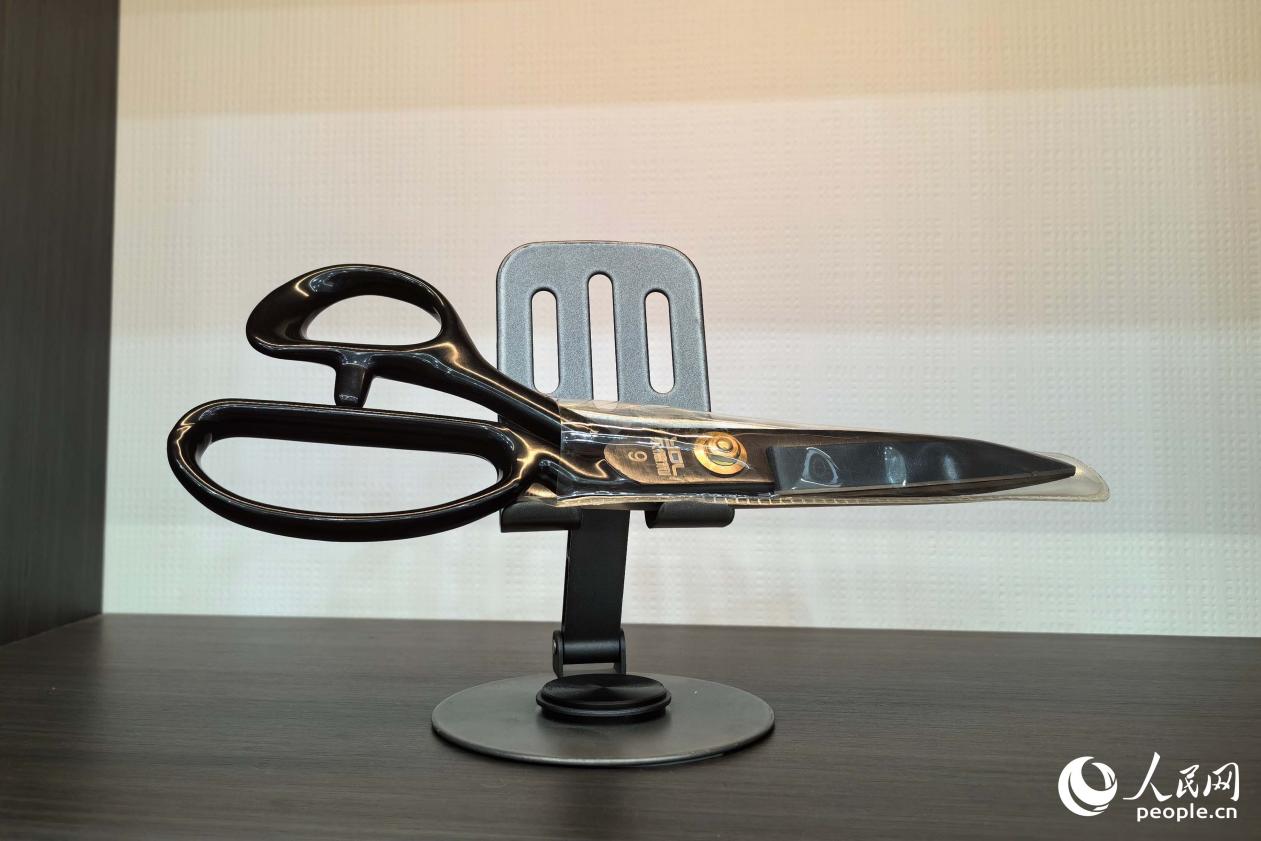
Photo shows a pair of tailoring scissors made by Fujian Yongdeli Industrial Co., Ltd. in Zherong county, southeast China's Fujian Province. (People's Daily Online/Lin Xiaoli)
Yongdeli, however, had already begun investing in smart manufacturing and digital transformation years earlier.
The county rolled out measures in 2023 to support the transformation and upgrading of the knife and scissors industry, offering companies subsidies covering 15 percent of the purchase cost for new production equipment or robotics that meet specified standards. The county has also expanded into higher-end categories such as stainless steel, titanium alloy and gardening scissors.
Today, the 92 companies in the industrial park produce more than 300 million pairs of scissors annually, making the park the country's largest carbon steel scissors manufacturing hub. The knife and scissors industry accounts for nearly 20 percent of the county's GDP.
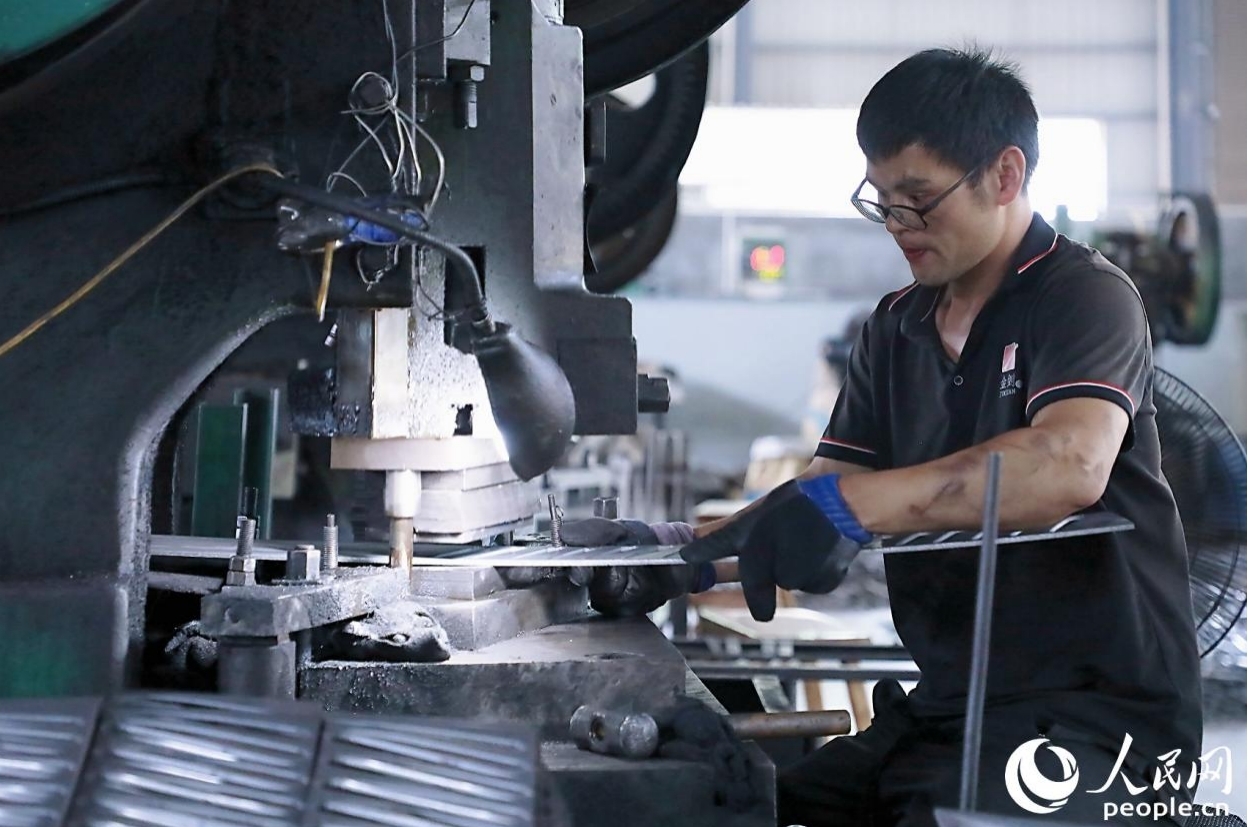
An employee works at a scissors company in Zherong county, southeast China's Fujian Province. (People's Daily Online/Li Weiyi)