


On the afternoon of August 9, Typhoon Dolphin triggered sudden flash floods in Huajiadian village, Jinhua town, Xiaoshan district, Hangzhou, East China's Zhejiang Province. Drawing on an emergency response system forged during Typhoon In-Fa, local authorities safely evacuated and housed all 25 at-risk residents within two hours, with zero casualties reported.
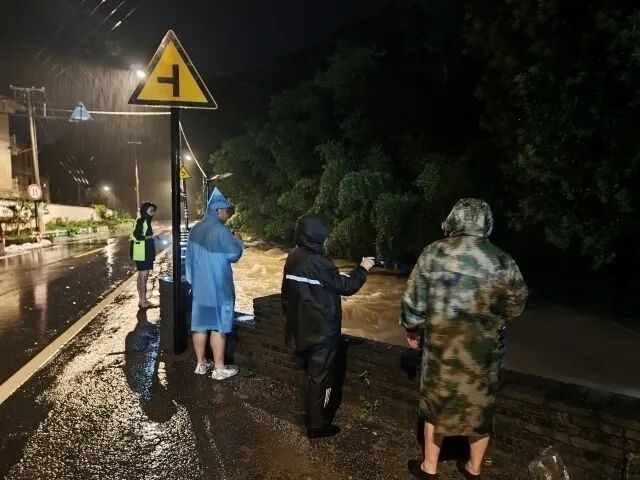
A village patrol takes care of the imporant task of checking for potential hazards on a bridge. There are numerous bridges of various sizes in the village, and many of them are the only access routes for the residents.
Nestled in a hilly basin surrounded by mountains on three sides, Huajiadian is highly vulnerable to flash flooding during intense, short-term downpours. In 2021, Typhoon In-Fa battered the village with severe inundation, flooding homes, damaging roads and water infrastructure, and forcing mass evacuations. Following the disaster, local officials systematically reviewed their response and revamped their disaster management framework. When Typhoon Bavi struck earlier this year, town officials had already implemented preventive measures well in advance. Consequently, village patrols were initiated two days before Typhoon Dolphin made landfall.
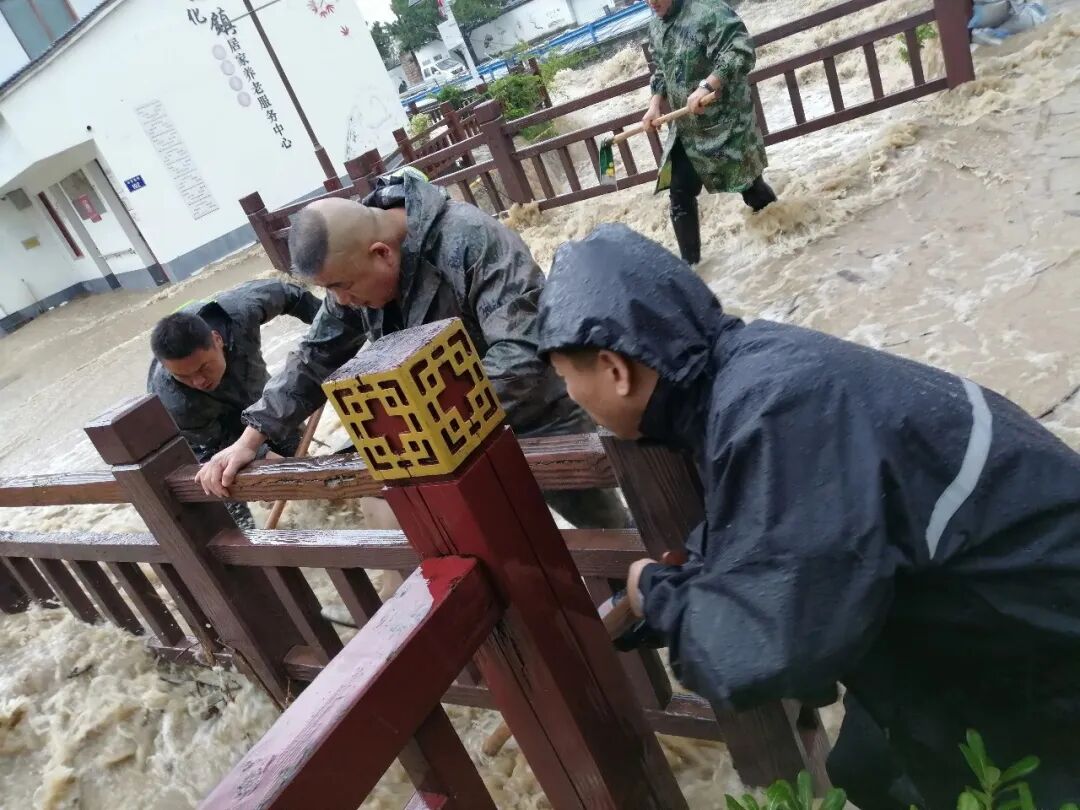
Village officials brave danger to remove a bridge railing amid a flood. Around 4 pm on August 9, a flash flood caused the water level to rise sharply.
At around 4 pm that day, patrolling village officials noticed murky stream waters carrying debris and immediately issued a flash flood warning. Just 10 minutes later, torrents of floodwater surged down the mountain. The village committee promptly activated its emergency response plan, moving riverside residents to nearby safe zones while alerting the rest of the village. Emergency repair and heavy machinery crews deployed immediately to stack sandbags at critical spots, remove bridge railings, and clear debris beneath bridges to accelerate flood discharge and prevent urban logging.
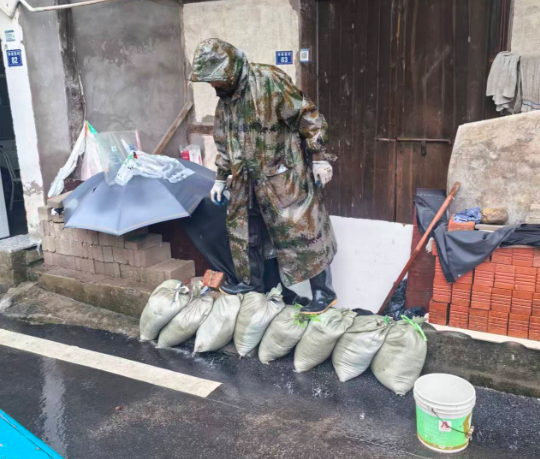
A person places sandbags at the entrance of a house in a low-lying area to prevent floodwater from entering the home.
Reinforcements from local fire and police departments arrived at 4:40 pm to join the relief effort. By 5 pm, the floodwaters began to recede. All 25 evacuees were served hot meals at the village committee shelter, and standing water on main village roads had been largely cleared.
Village officials noted that disaster management strategies refined since Typhoon In-Fa played a vital role during the emergency. From pre-positioning sandbags and coordinating forklift loading to conducting bridge inspections, every protocol was meticulously executed, ensuring the community of nearly 1,800 residents could respond swiftly and navigate the crisis safely.
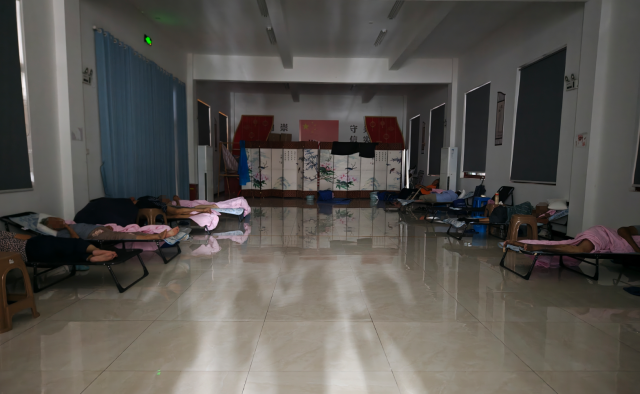
Relocated villagers stay overnight in the activity room at the local village committee building.