


For dialysis patients in Bachu county, Kashgar Prefecture, Xinjiang Uygur Autonomous Region, this year brought a life-changing development: a mobile dialysis vehicle equipped with a remote medical consultation system rolled into the Selibuya Town Health Center.
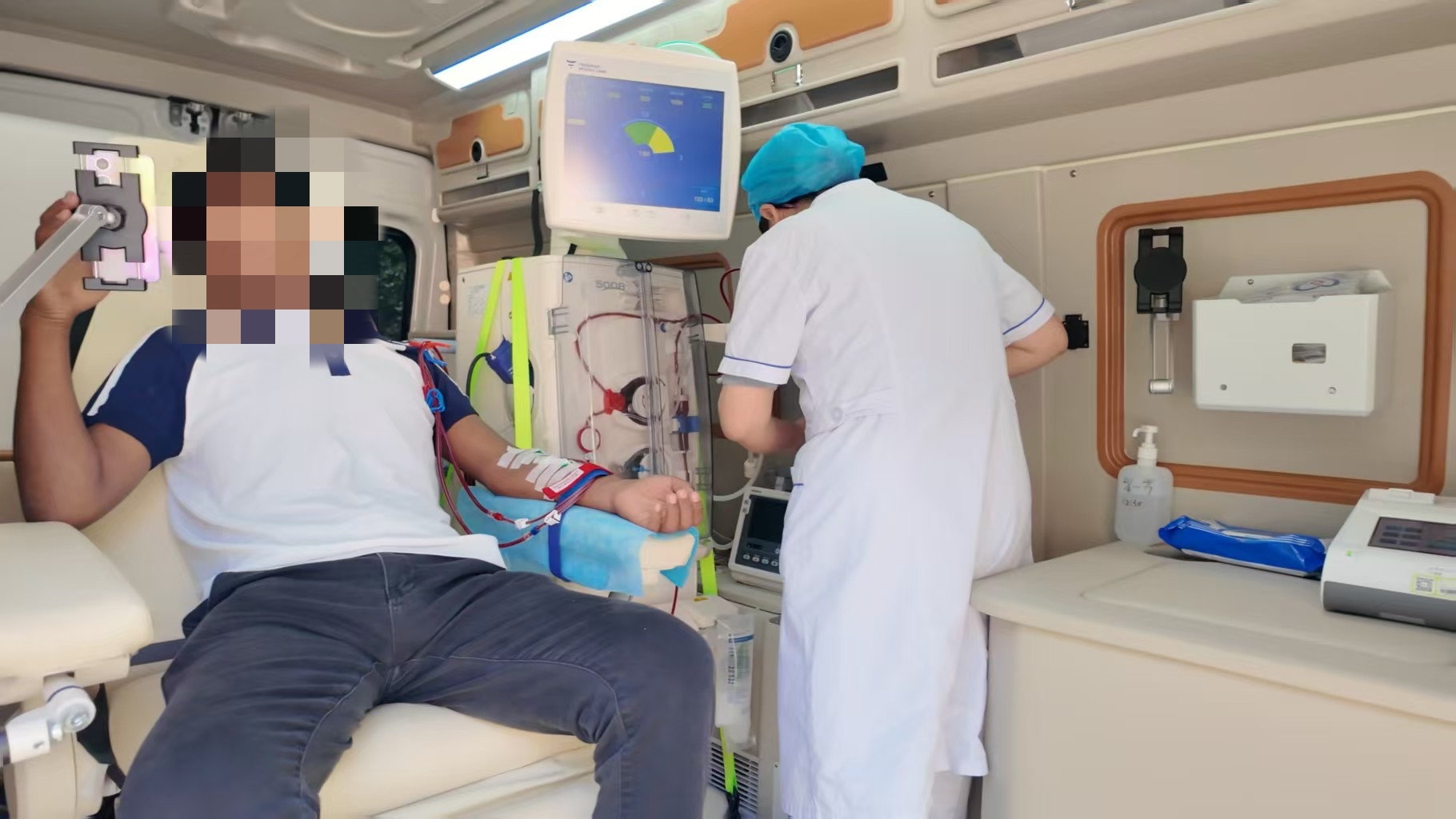
A patient receives hemodialysis treatment inside a mobile dialysis vehicle in Bachu county, Kashgar Prefecture, Xinjiang Uygur Autonomous Region. Shanghai launched the mobile medical outreach program earlier this year to provide accessible healthcare directly to remote township communities. (Photos: Xie Min / Xinmin Evening News)
On a day in May, patient Aili Abulizi lay inside the vehicle receiving hemodialysis. Beside him, a nurse held a tablet, connecting him live with experts at Renji Hospital, affiliated with Shanghai Jiao Tong University School of Medicine, thousands of kilometers away. The dialysis machine screen displayed real-time vital signs—blood pressure, heart rate, and treatment duration—while all clinical data streamed continuously to a backend system for both local and Shanghai medical teams to monitor simultaneously online.
This "mobile lifeline," bringing quality care directly to citizens' doorsteps, represents Shanghai's ongoing innovation in medical assistance to Xinjiang. On May 21 this year, the 12th batch of Shanghai's medical assistance team arrived in Kashgar as scheduled. Bringing cutting-edge technology and proven clinical expertise, team members not only delivered top-tier diagnostic and therapeutic care to residents but also focused on knowledge sharing and cultivating local talent.
The development of the mobile dialysis unit began with a technological research project in Shanghai in 2025. Following initial development, the vehicle entered clinical trials. Rigorous testing confirmed that its treatment efficacy and safety were virtually identical to fixed hospital dialysis systems.
Early this year, field research by the Shanghai front command for aid to Xinjiang revealed that this innovative model could effectively bridge the gap in primary healthcare resources across Kashgar. The project was swiftly prioritized as a major focus of the new medical aid cycle, accelerating its local deployment. By April, the vehicle had arrived in Kashgar and begun clinical trials with local patients.
In areas where healthcare resources are unevenly distributed, this mobile treatment model fills a critical need. In Bachu county, for instance, many uremia patients previously had to travel hundreds of kilometers to the county seat three times a week for dialysis. The physical and financial toll created an overwhelming barrier.
"I used to travel over 100 kilometers to the county seat for dialysis. I was already weak after treatment, yet I still had to endure the long journey back," Aili Abulizi said following a session. "Each round trip cost me more than 200 yuan for transportation and meals." Today, his travel time is down to a ten-minute trip from home, with virtually zero transportation costs—dramatically easing his daily burden.
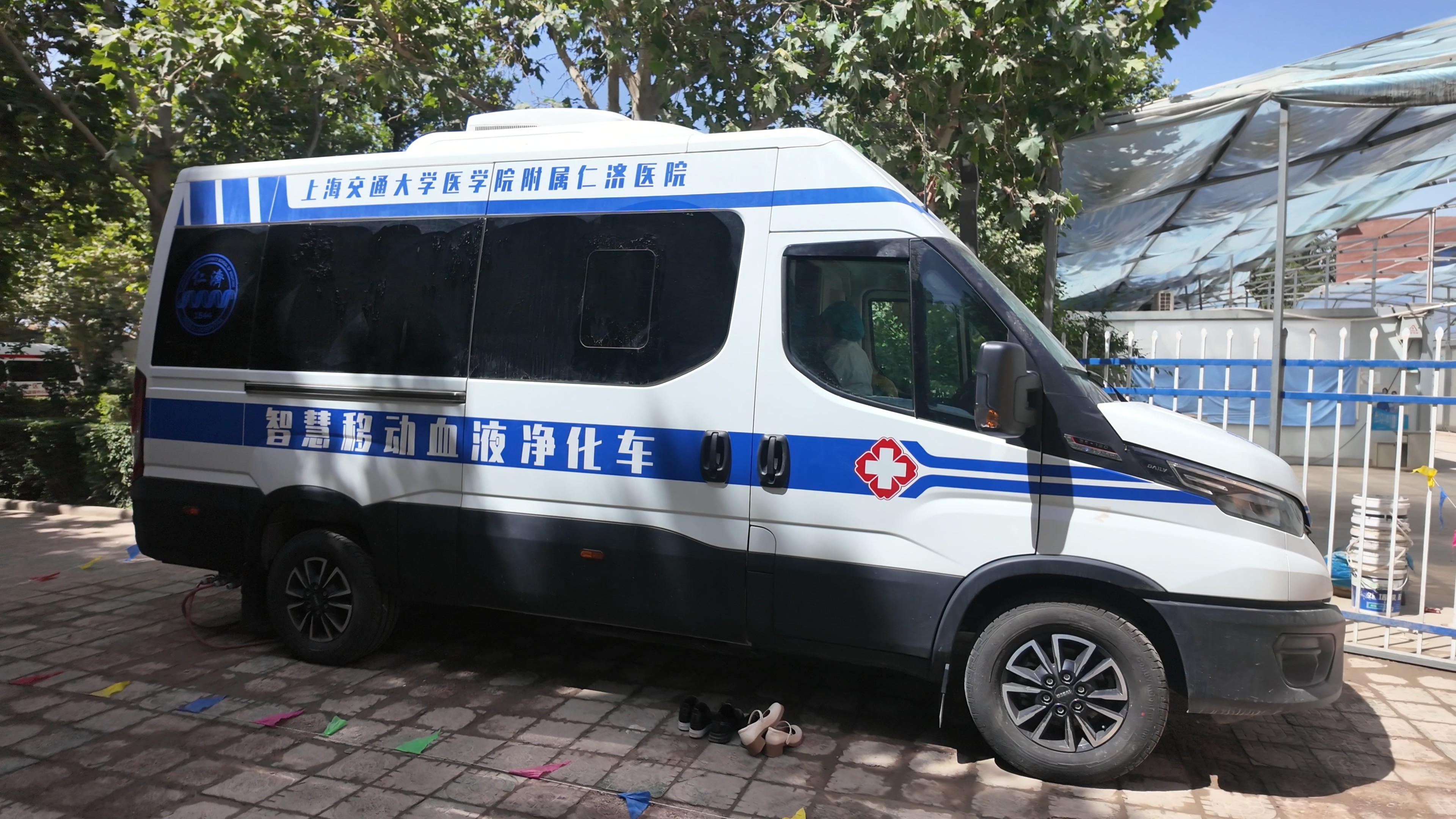
A mobile dialysis vehicle stands ready to deliver specialized care in Bachu county, Kashgar Prefecture, Xinjiang Uygur Autonomous Region. The custom vehicle was developed through a Shanghai technological initiative in 2025 to bridge gaps in primary healthcare resources across the region.
Bi Guiping, head of the Shanghai front command for aid to Xinjiang, noted that bringing mobile hemodialysis vehicles to the township level in southern Xinjiang allows primary care patients to access Shanghai's high-quality medical resources right in their own communities. He emphasized that this initiative reflects Shanghai's commitment to people-centered aid focused on improving daily living standards. Five additional mobile hemodialysis vehicles are scheduled for delivery to Kashgar on September 9.
The mobile dialysis unit is just one highlight of Shanghai's comprehensive medical aid program in Xinjiang. Beyond delivering advanced equipment directly to communities, the medical team utilized a remote consultation platform at Kashgar Second People's Hospital to conduct an international joint consultation for a young girl from Kazakhstan who had suffered two previous surgical failures elsewhere. By designing staged surgical strategies to resolve complex cases, the team served more people while helping to establish Kashgar as a rising medical hub serving Central Asia.
(Translated by Sun Tianren and Xu Zheqi)