


China's southern maritime region showed stable marine ecological conditions last year, with improving coral coverage, expanding mangrove forests and the returning of rare species, according to two reports released by the South China Sea Bureau of the Ministry of Natural Resources on Friday.
File photo: CCTV
The bureau published the 2025 South China Sea marine ecological early warning and monitoring bulletin and the 2025 South China Sea marine ecological protection and restoration bulletin at an event in Haikou, Hainan province, to mark the National Ecology Day, which falls on Saturday this year.
The bulletins indicated that the overall marine ecological status remained stable, with coastal water quality and biodiversity fluctuating within normal ranges. Mangrove ecosystems were in good condition, with canopy coverage exceeding 75 percent. Seagrass beds were also healthy. Coral reef and coastal salt marsh ecosystems were rated as moderate, with live coral coverage increasing across all monitored areas.
Marine ecological risk monitoring and early warning efforts yielded notable results. Last year, 18 red tide warnings were issued, covering a cumulative area of about 366.5 square kilometers — a significant decline from the five-year average. Two localized biological outbreak events in nearshore waters were detected and managed without causing significant economic losses.
For the first time, a comprehensive assessment of island reef ecological conditions was provided across the Xisha, Zhongsha and Nansha islands, covering nine reefs in detail. This has provided a fundamental basis for strengthening the classification, protection, and management of islands and reefs.
The bulletin described Huangyan Island as a rare "biological gene bank" in the central South China Sea, with 135 species of reef-building corals, seagrass beds spanning around 1.85 sq km and live coral coverage reaching 38.8 percent. Green sea turtles, hawksbill turtles, giant clams and triton's trumpets were among the protected species recorded.
Reefs on Xisha Island showed good recovery despite earlier coral bleaching in 2020 and crown-of-thorns starfish outbreaks since 2018, with high hard coral recruitment rates offsetting relatively low live coverage, it added.
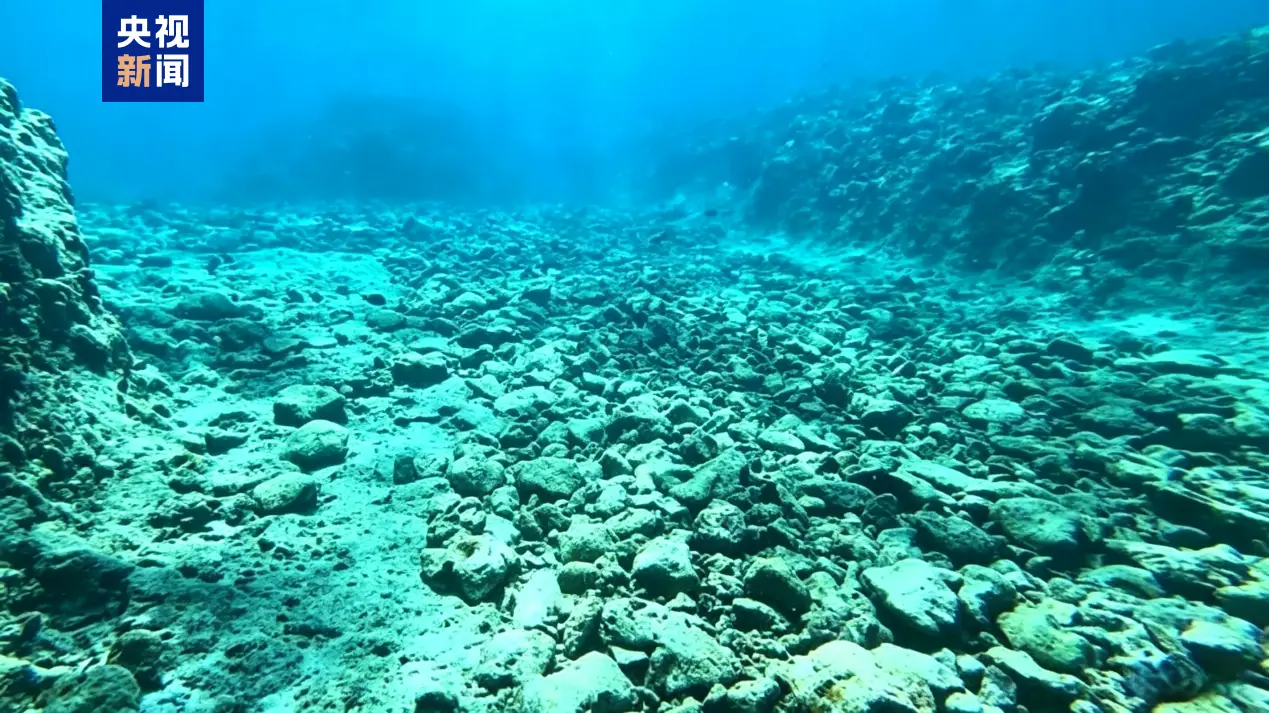
Conditions among reefs on Nansha Island varied significantly. Xianbin Jiao and Niu'e Jiao were rated healthy, with live coral coverage of 24.7 percent and 37.7 percent respectively. Tiexian Jiao and Ren'ai Jiao showed severe degradation. Live coral area at Tiexian Jiao dropped by nearly 70 percent from 2016 levels, affected by starfish outbreaks, tropical cyclones and human activity — particularly ongoing construction by the Philippines at Zhongye Island. At Ren'ai Jiao, a Philippine warship illegally grounded for years has caused pollution from waste discharge, debris accumulation and fishing net entanglement, suppressing coral growth and recovery.
Multiple sightings of endangered marine species confirmed improving ecological trends. Last year, an 8-meter-long adult whale shark was detected off Wenchang, Hainan, for the first time, indicating an abundance of prey and clean water. Bryde's whales and spinner dolphins were observed in groups in Beibu Gulf. Dugongs, once nearly absent from China's coastal waters, reappeared at Yongshu Jiao in Nansha.
New monitoring technologies were deployed across the region, the reports noted. These include the Guangxi Zhuang autonomous region, which used environmental DNA sampling at Weizhou Island to identify dozens of reef fish species from seawater alone, reducing reliance on costly diving surveys. Hainan built an AI-powered coral reef warning system with models predicting bleaching and starfish outbreaks. Guangdong published new measurement methods for blue carbon in coastal salt marshes and seagrass beds, filling a gap in coastal carbon accounting.
In 2025, authorities implemented 66 marine ecological restoration projects with a total investment of nearly 5 billion yuan ($740 million). During the 14th Five-Year Plan period (2021-2025), 262 projects were carried out with cumulative investment exceeding 21.3 billion yuan, according to the bulletins.
By the end of 2025, the region had designated marine ecological protection redline areas covering about 2.66 million hectares and marine nature reserves spanning around 7 million hectares.