


China zero-tariff measures create new opportunities for Nigeria's industrialization
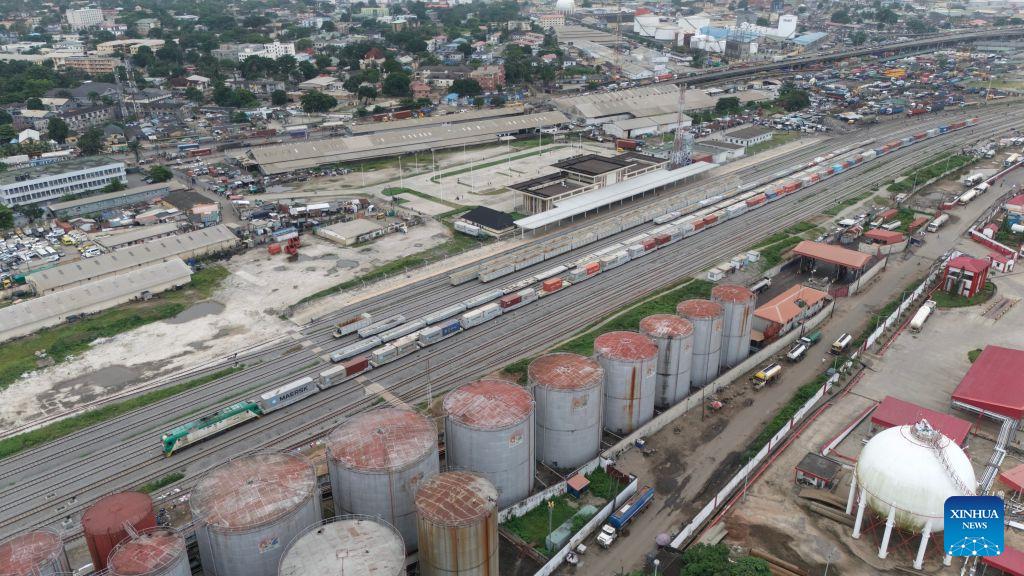
An aerial drone photo taken on Aug. 8, 2026 shows a fully loaded freight train on the Lagos-Ibadan Railway, built by China Civil Engineering Construction Corporation (CCECC), in Lagos, Nigeria. (Photo: Xinhua)
ABUJA, Aug. 15 (Xinhua) -- China's implementation of zero-tariff treatment for exports from African countries is already driving growth in bilateral trade and creating new opportunities for Nigeria to accelerate industrialization and expand non-oil exports, participants at an international seminar said Friday.
Senior government officials, economic and trade experts, diplomats and local business representatives attending the seminar on "China's Zero-Tariff Treatment on 100% of Tariff Lines for African Countries and Its Implications for Structural Economic Transformation in Africa" in Abuja, the Nigerian capital, agreed that the policy has created new opportunities that could help drive economic growth in Africa's most populous country.
The policy, which took effect on May 1, marks China's full implementation of the zero-tariff treatment for the 53 African countries that have diplomatic relations with China, providing duty-free access to one of the world's largest consumer markets.
Speaking at the event, Yu Dunhai, Chinese Ambassador to Nigeria, said the measure represents a practical step toward shared prosperity. He noted that Chinese imports from Nigeria have surged rapidly since the policy took effect, with the monthly growth exceeding 40 percent in both May and June.
Yu noted that the measure is empowering Nigeria's industrial transformation and local livelihoods, with local businesses leveraging zero tariffs to invest in domestic processing and move up the value chain.
Nigeria's Minister of State for Agriculture and Food Security Aliyu Sabi Abdullahi called for urgent domestic structural adjustments, saying local producers must shift their focus from exporting raw materials to supplying high-value processed agricultural products.
"Zero tariffs alone do not guarantee success. While the removal of tariffs creates opportunity, opportunities alone do not create prosperity," Abdullahi said. "The question before us, therefore, is not, can Nigeria export more? The question should be, can Nigeria export better?"
Charles Onunaiju, director of the Center for China Studies in Nigeria, which organized the seminar, said that while China's zero-tariff access offers a major opportunity for growth, African countries must build productive capacity to fully capitalize on access to the Chinese market.
"African countries need to undertake policy reforms, harmonize standards, improve customs arrangements and strengthen productive capacity to maximize access to the Chinese market," he said.