


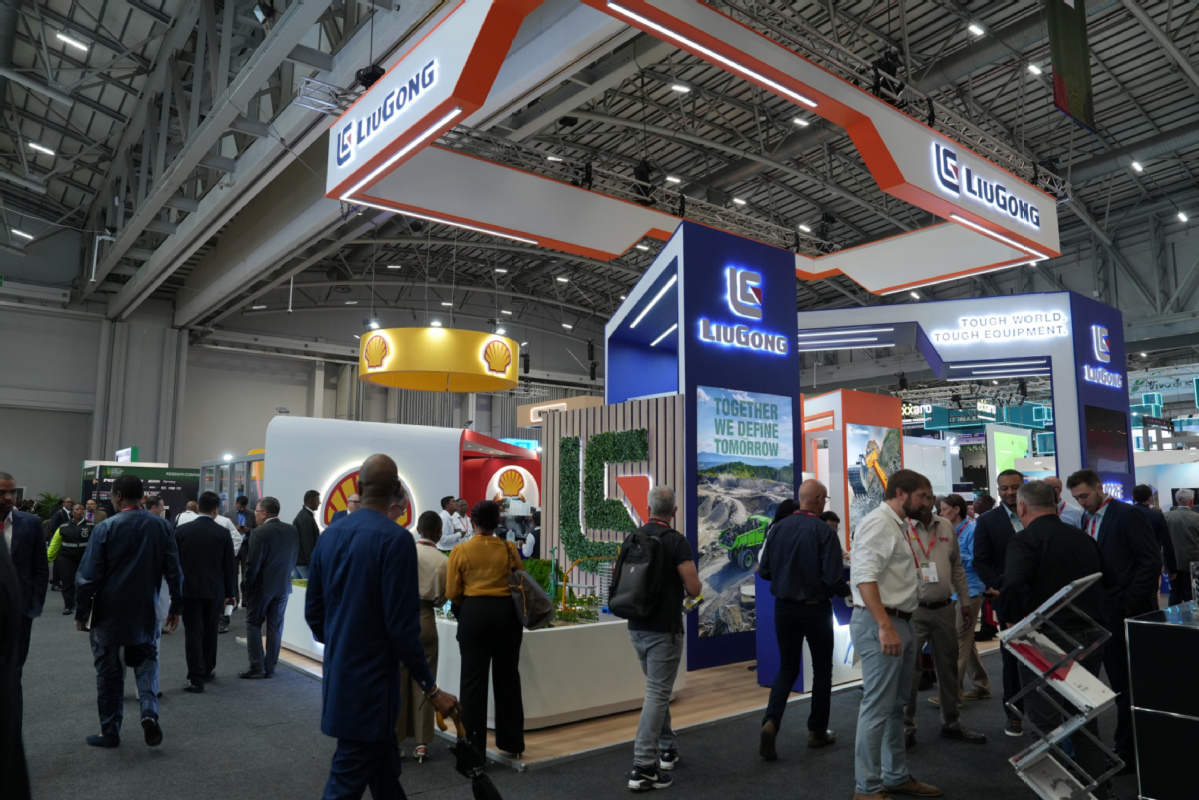
People visit the booth of Chinese machinery company Guangxi LiuGong Group Co Ltd during the 2026 African Mining Indaba, a mining investment conference and trade exhibition held in Cape Town, South Africa, on Feb 9. (Photo: Xinhua)
As the world looks to Africa’s critical minerals to support the global green energy transition, experts say China is well-positioned to be a key partner, citing its deepening economic and trade ties with the continent.
Wellington Muzengeza, a research fellow at the Africa Centre for Critical Minerals and Energy Transition, or, ACCET, a pan-African policy, research and advisory institution headquartered in Accra, Ghana, said China has been an “all-weather friend” to Africa since the liberation movements.
While foreign policy and international cooperation have evolved, Muzengeza said China is not merely a key market for Africa’s minerals, pointing to its capabilities in refining, processing, industrial manufacturing and battery materials.
He said African governments should negotiate investment packages that link access to resources with local processing, manufacturing, technical training, research partnerships, local procurement, supplier development and technology licensing.
“The objective should not be to replace Chinese expertise,” he said. “We need the Chinese. We need to cooperate with them.”
Such partnerships should be structured to ensure African workers and institutions gain more practical knowledge and expertise, he said.
Learning, Muzengeza said, should be built into the commercial structure of major investments rather than limited to occasional workshops or study visits. African engineers, for example, could gain practical experience in Chinese processing and manufacturing facilities.
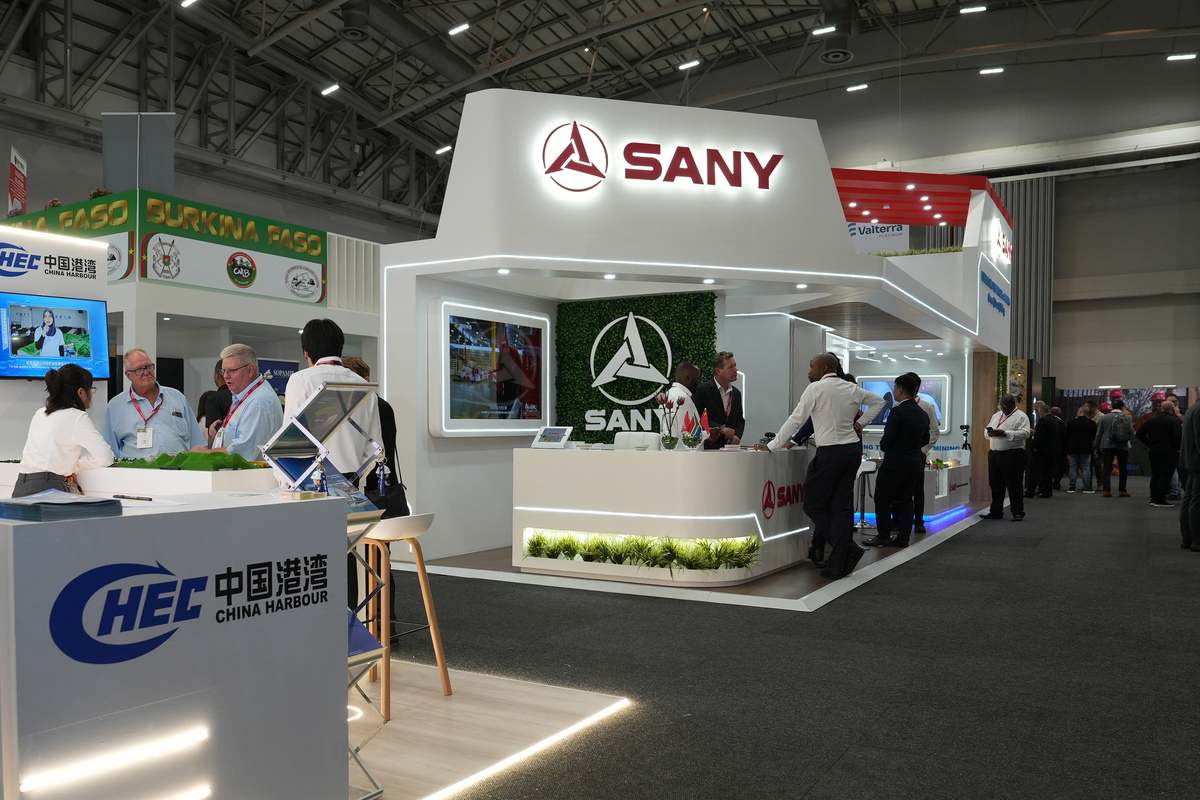
Booths of Chinese companies Sany Group and China Harbor Engineering Company at the 2026 African Mining Indaba, on Feb 9. (Photo: Xinhua)
Obert Bore, a research fellow at the Africa-China Centre for Policy & Advisory in Ghana, said China has developed significant capabilities in refining, processing, industrial manufacturing and battery materials, supported by financial capability.
Chinese companies are also establishing processing facilities in parts of Africa, creating opportunities for countries to develop capabilities closer to the source of the minerals, he said.
He also called for greater research and development partnerships between Chinese companies and African universities and research institutions, which have already gained momentum in recent years.
Earlier this month, Kamativi Mining Company, a Chinese-invested company in Zimbabwe, signed an agreement with Zimbabwe School of Mines, one of the country’s leading institutions delivering mining-related diploma and vocational technical education, to jointly train technical talents for Zimbabwe.
The two sides will work together to develop curricula, conduct scientific research, foster innovation and community empowerment, and will establish a training center for mining industry managerial professionals.
They also plan to deepen their school-enterprise cooperation and work together to build a green, sustainable and mutually beneficial model mining project, according to a report by The Herald, a Zimbabwean newspaper.
“Through this deeper integration of industry, academia, and research, the partnership aims to supply outstanding technical talent to Zimbabwe’s mining sector,” a statement by the company said.
African policymakers, Bore said, need greater “China literacy” to understand how Chinese companies operate and negotiate more effectively.
“Language is very important,” he said, arguing that policymakers need a stronger understanding of China’s business environment when negotiating agreements with Chinese companies.
Bore, however, cautioned against pursuing beneficiation blindly.
Beneficiation policies should be accompanied by reliable electricity and water supplies, predictable licensing regimes, technical training, research capacity, local supplier development and clear performance requirements for investors, he said.
For Muzengeza, the research fellow at ACCET, the priority should not be producing more policy documents but implementing coordinated, bankable industrial projects.
Investment incentives such as tax relief, infrastructure access and mineral rights should be tied to measurable commitments on training, local procurement, processing, research and supplier development, he said.