


Smart technology transforms rubber tapping in S China's Hainan
At the standardized rubber plantation of the Longjiang branch of China Hainan Rubber Industry Group Co., Ltd. in south China's Hainan Province, a showdown unfolds between Yu Hainong, a national role model worker with 26 years of experience in rubber tapping, and an intelligent rubber tapping machine independently developed by the company.
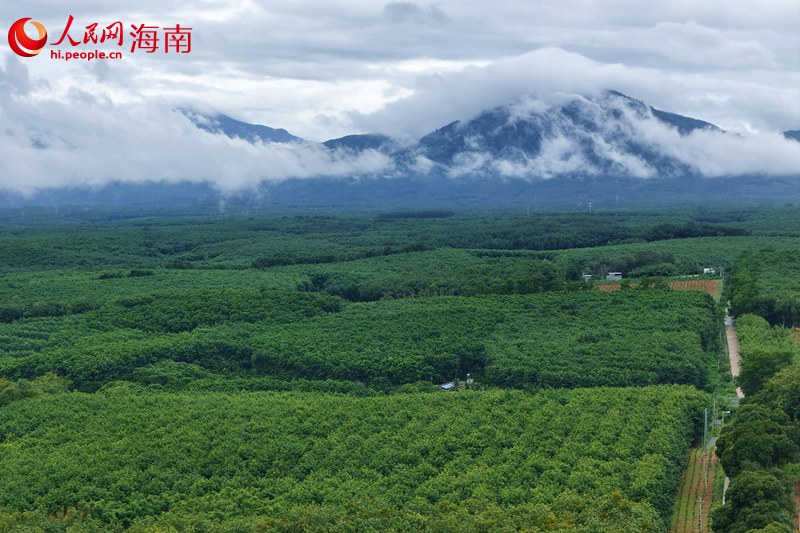
Photo shows an aerial view of the standardized rubber plantation of the Longjiang branch of China Hainan Rubber Industry Group Co., Ltd. in south China's Hainan Province. (People's Daily Online/Fu Wuping)
The machine taps quickly and steadily, while Yu makes precise cuts and finishes each stroke with practiced ease.
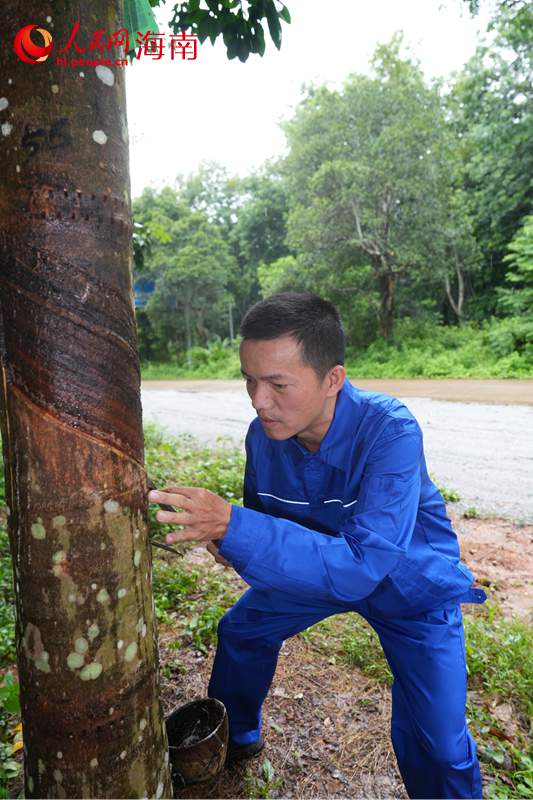
National role model worker Yu Hainong taps a rubber tree. (People's Daily Online/Meng Fansheng)
In the end, Yu narrowly wins the showdown, thanks to his 26 years of experience and refined skills.
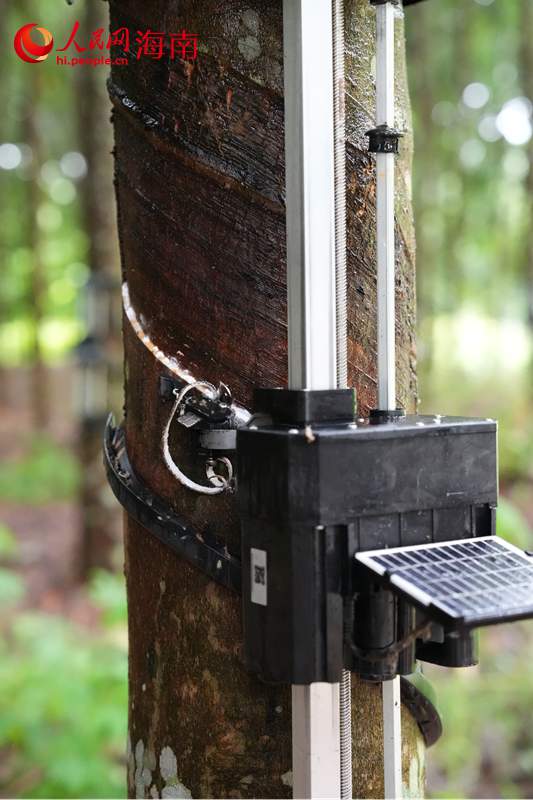
Photo shows a Version 3.4 intelligent rubber tapping machine. (People's Daily Online/Meng Fansheng)
"In a one-on-one match, it still can't beat me. But in a team battle, the machine has the edge," Yu said. At present, intelligent rubber tapping machines still struggle to accurately assess the structure, thickness and age of each tree's bark, resulting in minor imperfections during tapping. But their advantage lies in their potential for large-scale operations.
Yu's observation underscores a major challenge facing the natural rubber industry.
"As older generations of rubber workers retire, the labor shortage is becoming increasingly acute," said Han Bingguang, deputy general manager of the Longjiang branch of Hainan Rubber Industry Group.
Rubber tapping is physically demanding, and the workforce is aging rapidly. The difficulty of attracting young workers and filling the labor gap has become a major bottleneck for the industry.
The Version 3.4 intelligent rubber tapping machine has entered large-scale field trials. (People's Daily Online/Meng Fansheng)
In recent years, Hainan Rubber Industry Group has continued to promote the intelligent upgrading of rubber production equipment. The Version 3.4 intelligent rubber tapping machine has entered large-scale field trials. Han said the trials aim not only to further improve the equipment but also to train professionals to maintain it and explore new models of human-machine collaboration, laying the groundwork for wider adoption.
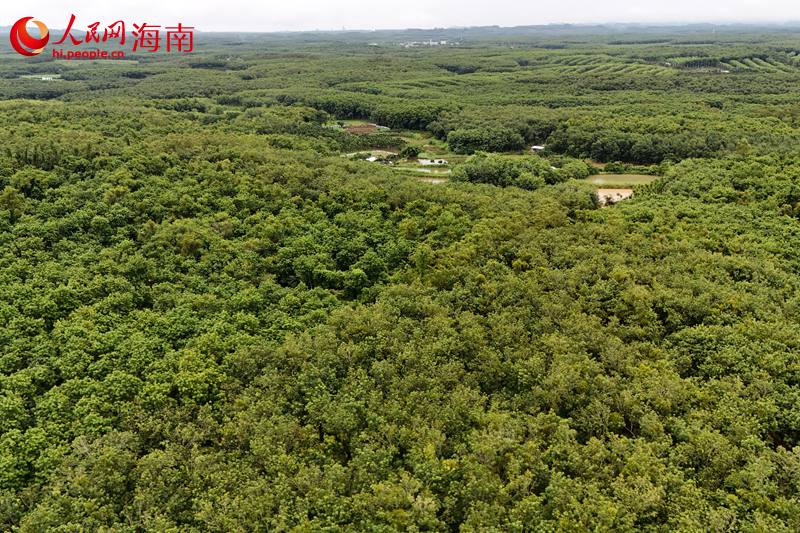
Photo shows an aerial view of the standardized rubber plantation of the Longjiang branch of China Hainan Rubber Industry Group Co., Ltd. in south China's Hainan Province. (People's Daily Online/Fu Wuping)
According to Han, with traditional manual tapping, one side of a tree can be tapped for seven or eight years, and both sides for about 15 years in total. Harvesting latex from regenerated bark requires highly skilled rubber workers. Intelligent rubber tapping machines, however, can maintain consistent and controllable tapping precision. After the bark on both sides has been fully tapped, the machines can continue tapping the regenerated bark and gradually move upward, potentially extending the productive lifespan of individual trees.
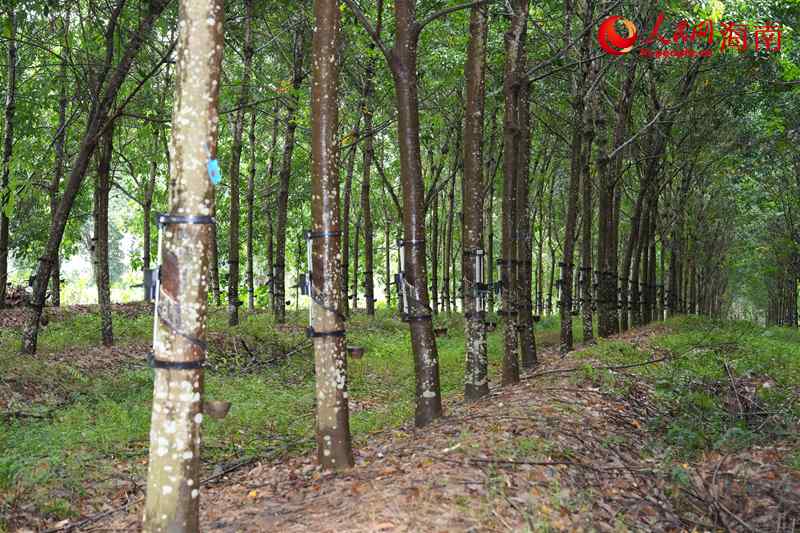
The Version 3.4 intelligent rubber tapping machine has entered large-scale field trials. (People's Daily Online/Meng Fansheng)
"This will not only help improve the quality and efficiency of rubber plantations, but also contribute to the sustainable development of the natural rubber industry," Han said.
From a rubber tapping knife to an intelligent rubber tapping machine, the tool is changing, but the tireless work and hope rooted in these rubber groves remain.
The outcome of the showdown may not be what matters most. What matters is that, at a time when artificial intelligence is intersecting with the challenges facing traditional industries, a national role model worker with 26 years of rubber tapping experience is doing two things at once: preserving his craft at its finest while calmly embracing the prospect of machines one day surpassing him.
"The rubber tapping machine still can't beat me now, but I believe it will surpass us one day," Yu said.