


Rescue teams brave tough conditions after Gyirong mudslide
Following the mudslide disaster in Gyirong County in southwest China’s Xizang Autonomous Region, the Ministry of Emergency Management and the National Fire and Rescue Administration have deployed firefighting and rescue crews from other regions to support the local response.
By Saturday afternoon, the deployment comprised 681 personnel, 13 search-and-rescue dogs, 113 vehicles, 47 drones, and various types of specialized equipment. Relying on an integrated land-air-water search and rescue system, crews are conducting uninterrupted, grid-style searches.
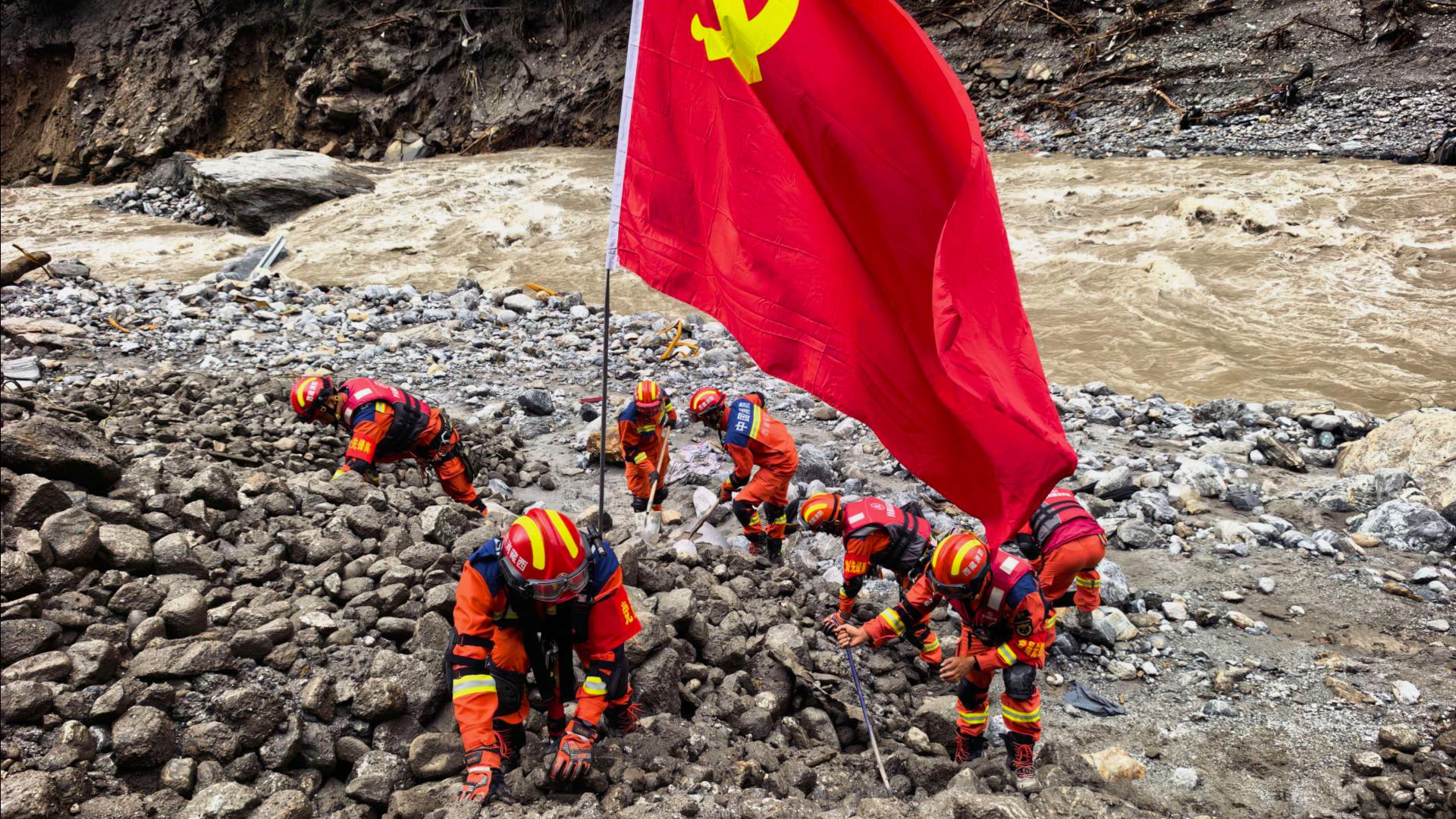
Firefighters continue search efforts along the Gyirong River. (Photo: Ministry of Emergency Management)
The disaster site remains extremely challenging, with unstable slopes and a high risk of falling rocks and landslides. Large sections of roads have been damaged, while communications remain disrupted in some areas. Heavy mud, sediment and rocks have buried river valleys, posing major challenges to search and rescue operations.
Rescue teams have overcome multiple challenges, including high altitude, strong winds, falling temperatures and frequent secondary disasters. They have adopted a combination of search methods, including foot searches across difficult terrain, boat searches along rivers and aerial reconnaissance by drones, conducting systematic checks of key areas such as ravines and riverbanks.
Rescuers are also equipped with life detectors and search-and-rescue dogs, allowing them to reach every area accessible to personnel and leaving no lead unchecked.
The risk of secondary geological disasters remains. Fire and rescue teams will continue working alongside other emergency response teams, maintaining a scientific and cautious approach while carrying out sustained searches in key areas.
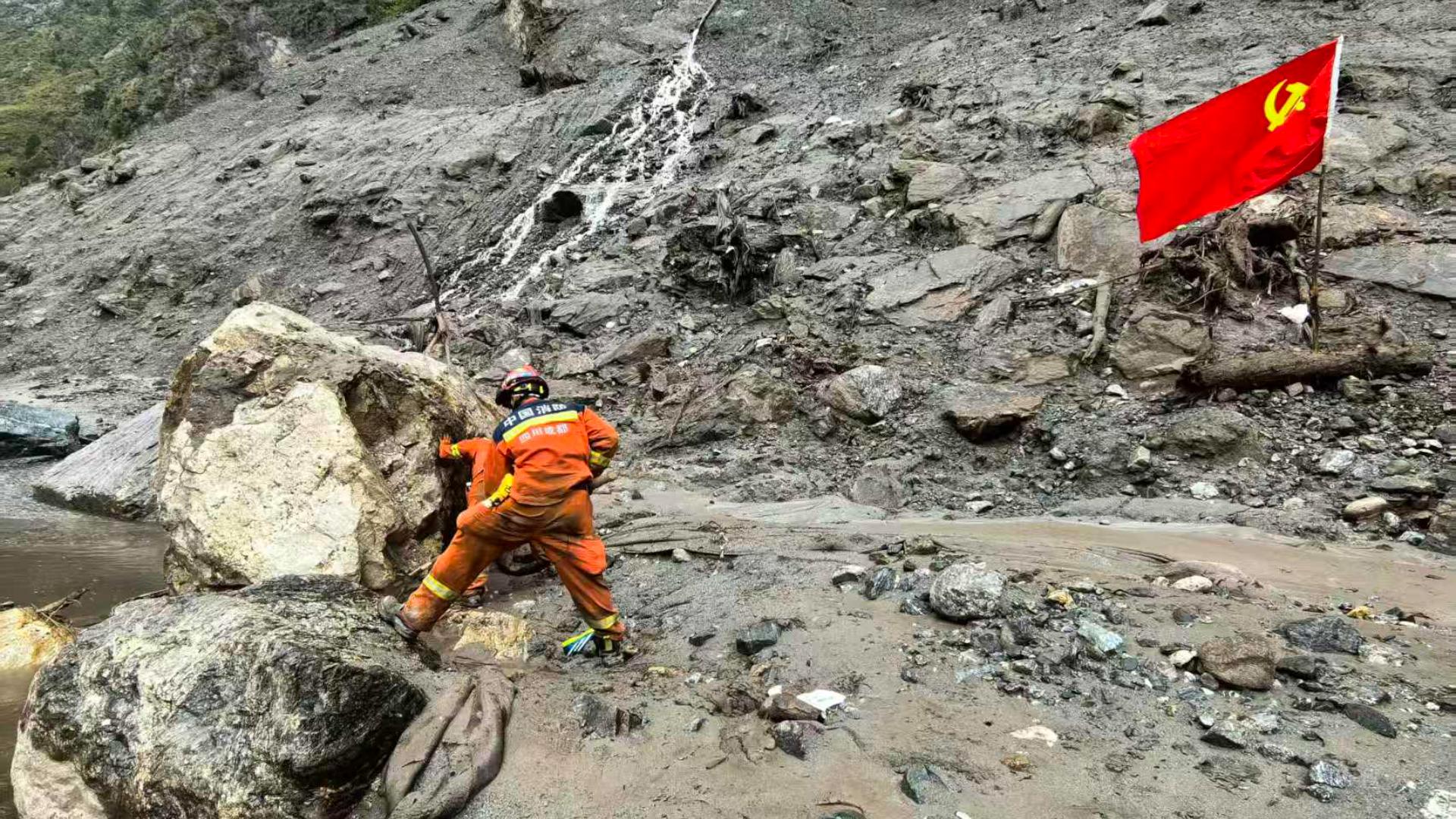
China's national fire and rescue crews have deployed 681 personnel to the disaster zone. (Photo: Ministry of Emergency Management)