


Not sure how to structure a proposal? Ask AI. Need to update products on an online store? AI can help polish product images in just minutes. In some factories, intelligent robots are efficiently taking over repetitive tasks such as handling and sorting. As AI continues to advance, it is becoming part of everyday life and powering a wide range of industries.
These changes bring both opportunities and challenges. What new industries and jobs will AI create? Will it replace human workers?
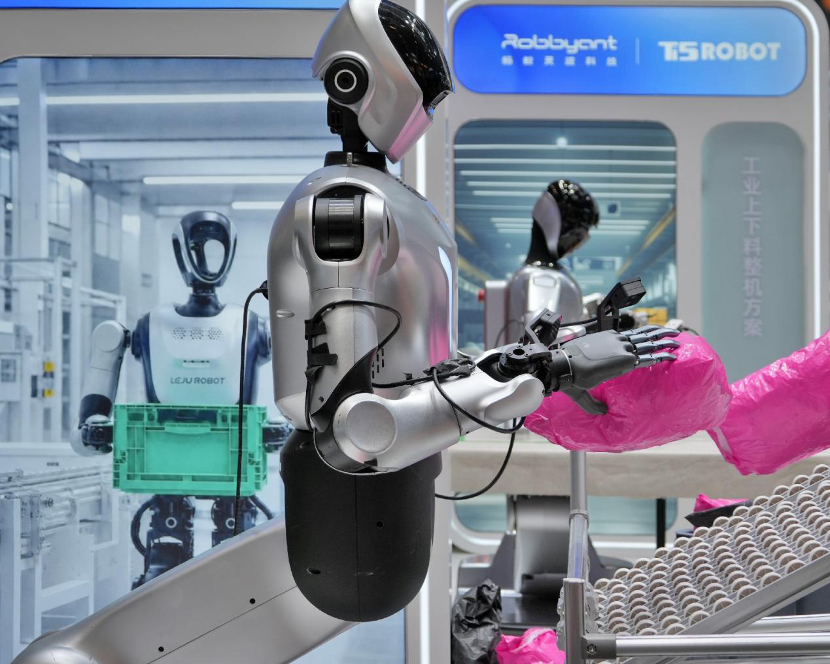
Humanoid robots demonstrate their package sorting capabilities at the 2026 World Robot Conference, Beiren Etrong International Exhibition & Convention Center, Beijing, August 20, 2026. (Photos provided to People's Daily)
Consider these figures. According to a report released by the World Economic Forum, about 92 million jobs worldwide are expected to be displaced by 2030 due to factors including AI, while 170 million new jobs are expected to be created.
Objectively speaking, AI will indeed reshape the job market. Tasks that are highly repetitive and standardized are increasingly being assisted or performed by AI, changing demand for workers in some occupations. However, changes in the number of jobs and the nature of work do not necessarily mean fewer employment opportunities overall.
More importantly, as AI adoption accelerates, existing employment structures and ways of working are also evolving. Some new opportunities are emerging from the integration of AI with traditional industries, while others are being created by the AI industry itself.
Recently, an e-commerce platform recruited an "AI visual designer," seeking candidates proficient in AI tools who could apply them to areas such as content generation and style experimentation. In the past, designing a webpage could take several days. With AI, designers can now generate multiple proposals within hours, allowing them to spend more time refining creative ideas, exploring new styles and shaping brand identities.
Similar changes are taking place across many sectors. In the legal profession, AI can quickly screen for compliance risks and sort through relevant laws and regulations, allowing professionals to focus on researching complex cases. In manufacturing, interdisciplinary talent with both engineering expertise and digital skills is increasingly in demand. AI is opening more opportunities for people to move across fields, change careers and develop new skills.
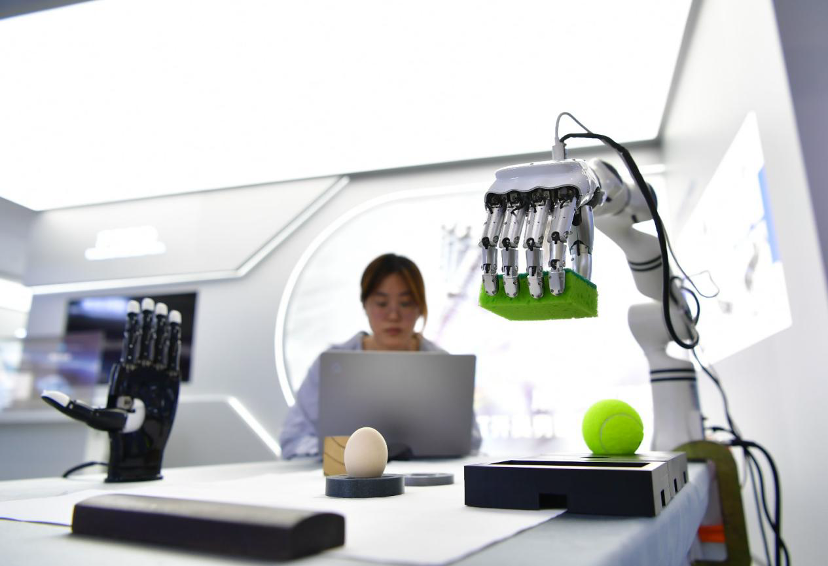
A tech firm employee in East China's Anhui Province trains a robotic hand to grasp items.
At the same time, the rapid growth of the AI industry itself is bringing a range of new occupations into the public eye.
Since 2019, more than 30 of the 110 new occupations identified by China's Ministry of Human Resources and Social Security have been closely related to AI.
One example is the AI trainer. In 2025 alone, more than 10,000 people in Shanghai took professional skills assessments for AI trainers. According to local business executives, what the market needs most today is interdisciplinary talent who understand both AI technologies and their specific industry applications.
Other emerging positions, including robotics product managers, digital human designers and prompt engineers, are also becoming career choices for many young people.
AI is not only creating new jobs; it is also lowering the barriers to entrepreneurship.
In the past, developing a digital product often required a team, substantial investment and considerable time and resources. Today, AI enables individuals to handle multiple tasks on their own, from coding and content creation to operational optimization. Some cross-border e-commerce entrepreneurs are using AI to quickly generate multilingual product copy and automate online-store operations, making it possible to run a business single-handedly.
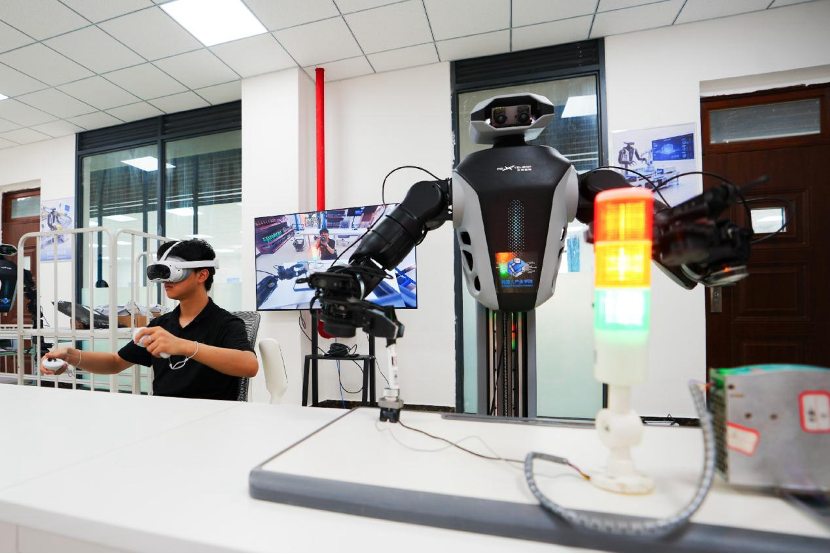
A student controls a robot to conduct a circuit test at Sichuan Vocational and Technical College in Southwest China's Sichuan Province.
Looking back at human history, every major technological revolution has reshaped the way people work while inevitably giving rise to new demands, industries and occupations. The steam engine ushered in the industrial age, the internet fueled the growth of the digital economy, and now AI is driving the rise of the intelligent economy.
As opportunities expand, so do the skills required to seize them. For job seekers, instead of worrying about what AI might take away, it may be more useful to think one step ahead: Which parts of my job could AI help me do more efficiently? What professional skills are my strengths? Every new skill we acquire today could become a key to opening the door to new career opportunities and building a place for ourselves in the future workplace.
By embracing the AI wave, continuously strengthening our capabilities, and combining AI's strengths in efficiency with uniquely human abilities such as critical thinking and empathy, people can find their footing, chart the right course, seize new opportunities and build a better future.