


Seven days have passed since a devastating mudslide tore through Gyirong Port in Southwest China's Xizang Autonomous Region, yet the pain remains raw.
On August 26, a fast-moving debris flow, triggered by the collapse of a high-altitude glacier in Nepal, slammed into the border gate at Gyirong Port. Surveillance footage that later circulated widely on social media captured the harrowing moment. At around 11 am, a towering wall of mud, rock and debris surged toward the port with terrifying speed and force.
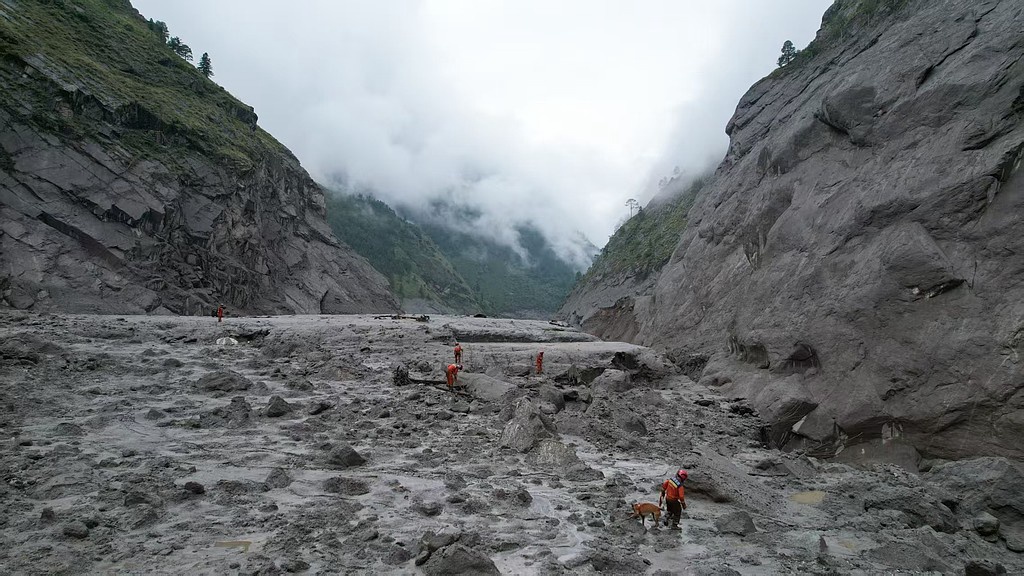
Rescuers inspect the mudslide-hit areas near Gyirong Port, Southwest China's Xizang Autonomous Region, on August 29, 2026. (Photo: VCG)
The mudslide has caused heavy casualties and left many people missing. Investigations have pointed to a collapsed glacier as the cause of the disaster along the China-Nepal border.
Unprecedented challenges
Rescuers are racing against time in the search for survivors, but operations face four critical challenges.
First, the disaster unfolded as a cascading chain of events. An ice-rock avalanche triggered by a high-altitude glacier collapse at about 5,200 meters rapidly became a high-speed debris flow. Plunging to around 4,000 meters, it scoured the mountainside and gathered huge volumes of material, forming a powerful flow that surged about 22 kilometers before striking Gyirong Port at an elevation of roughly 1,800 meters. Each stage intensified the destruction, creating a complex disaster far more difficult to respond to than a conventional landslide or flood.
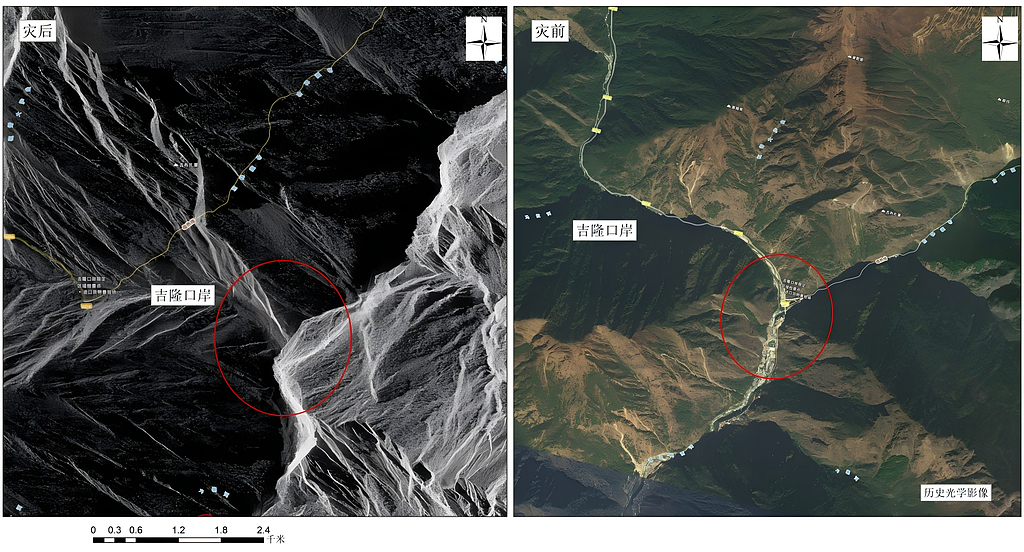
Before (R)-and-after comparison of the mudslide-hit area, Gyirong Port, Southwest China's Xizang Autonomous Region, on August 27, 2026. (Photo: VCG)
Second, narrow mountain canyons concentrated the force of the debris flow and left rescuers with extremely limited room to operate. The confined terrain both magnified the impact on Gyirong Port and restricted safe working areas.
Third, access to the affected area remains a major obstacle. Key roads were buried or destroyed, making ground access slow and hazardous. Helicopters face difficulties finding safe landing zones amid unstable slopes and debris, while heavy rescue equipment struggles in deep mud and confined spaces.
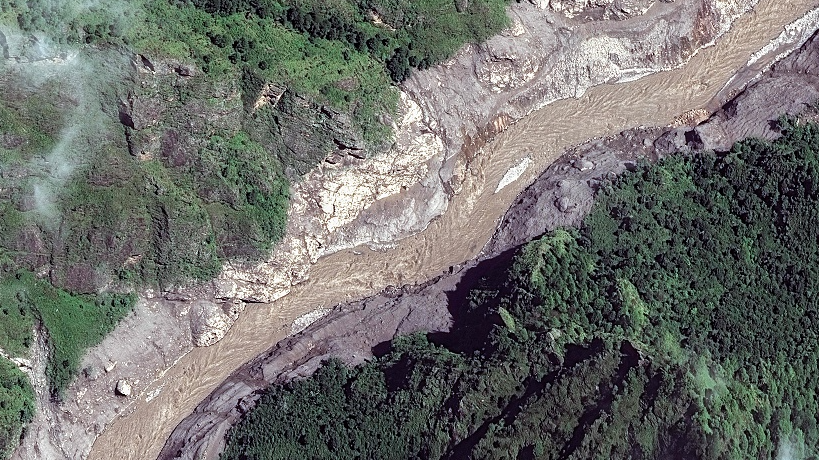
This handout satellite image taken and released by Vantor on August 27, 2026, shows the Trishuli River in Nepal after flash floods and landslides hit the area. (Photo: VCG)
Fourth, secondary risks continue to evolve. Saturated slopes along the narrow valley remain unstable, posing threats of rockfalls and barrier lake formation. The safety window for rescue operations can also shift with changes in weather, water levels and geological conditions.
Rescue, relocation and risk reduction
After the disaster, Chinese rescuers immediately launched an all-out effort to reach the affected port area and search for the missing.
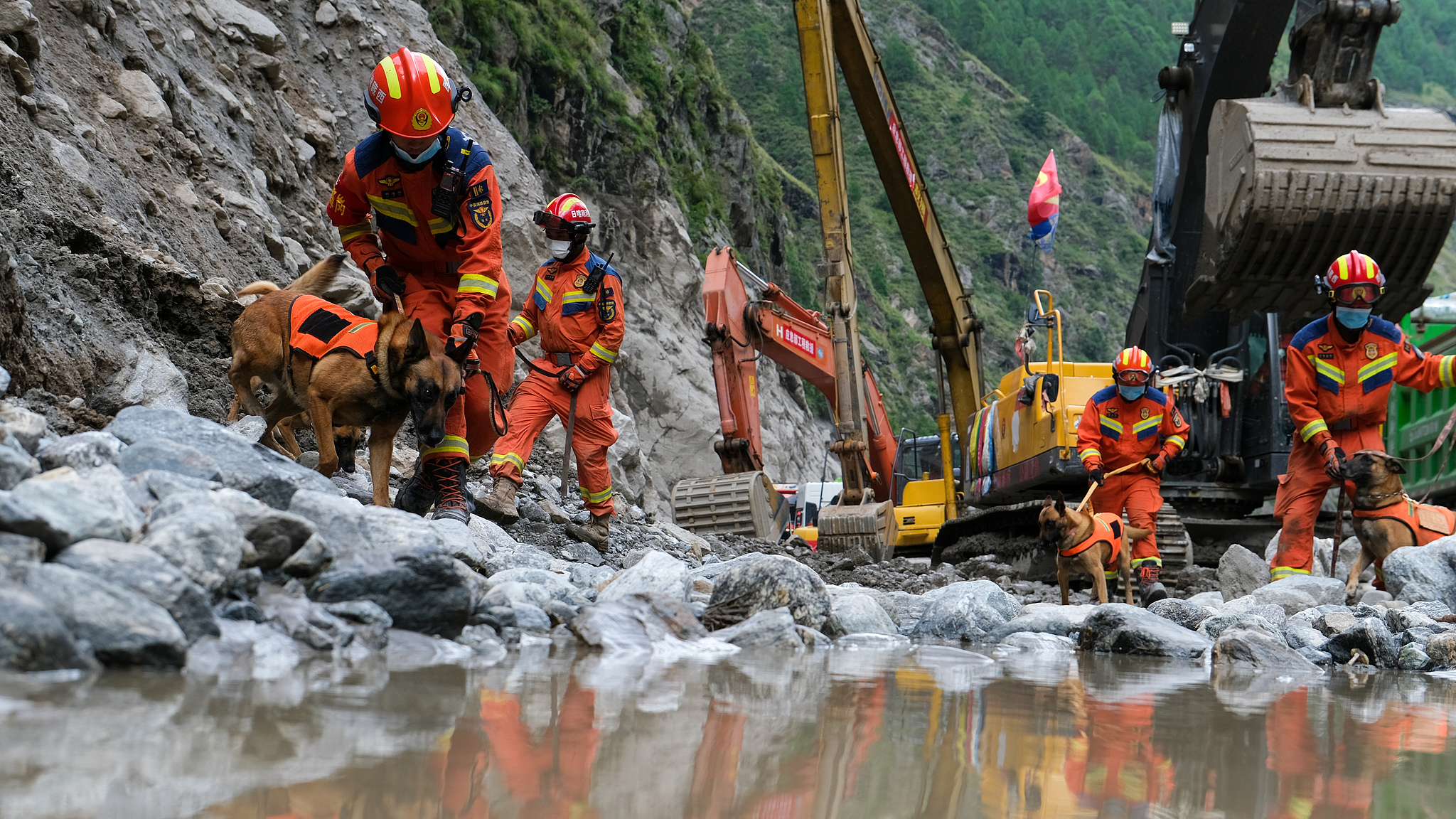
Firefighters and search-and-rescue dogs conduct search operations at the site of a mudslide in Gyirong County, Southwest China's Xizang Autonomous Region, on August 30, 2026. (Photo: VCG)
According to a press conference held on August 30, a total of 2,141 personnel have joined the search and rescue operations. They include members of the People's Liberation Army, the People's Armed Police Force and China Anneng, a state-owned engineering and rescue enterprise. Teams are operating across an area of 90,000 square meters, supported by 269 rescue vehicles and 3,922 sets of advanced rescue equipment.
A key priority is clearing and restoring G216 National Highway, the vital transport artery leading into the disaster zone. Battling massive boulders and deep sludge, crews operating heavy machinery have been working around the clock. As of Tuesday noon, clearance work along G216 had reached a point 800 meters from the Gyirong Port.
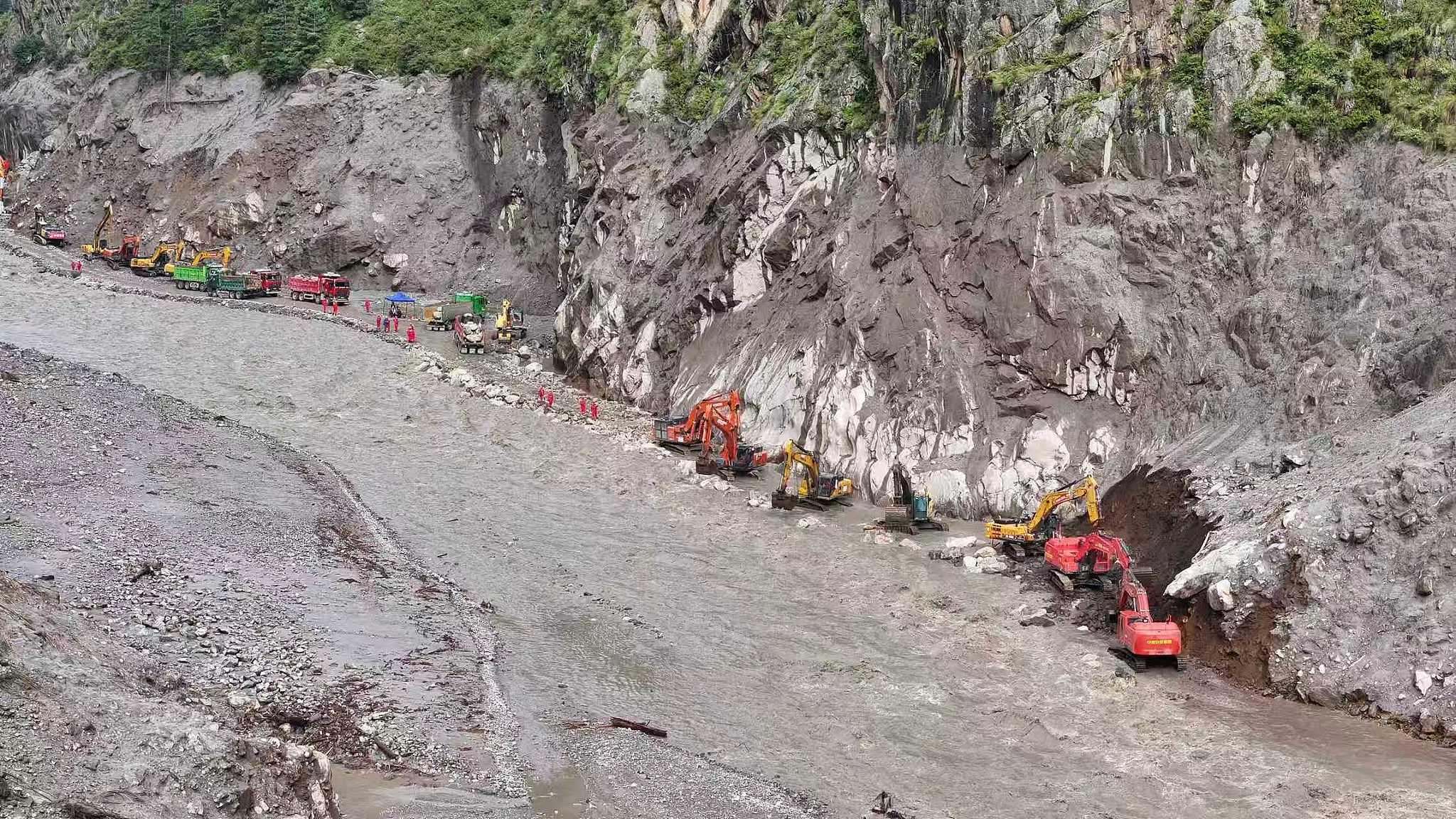
Rescuers work to reopen the only land route to Gyirong Port in Southwest China's Xizang Autonomous Region on August 31, 2026. (Photo: VCG)
Rescuers have advanced toward the core disaster area by land, water and air, using rubber boats along waterways, hiking through the mountains and deploying drones to drop supplies.
Upon reaching the core zone, rescue teams called out every few meters: "Is anyone there?" One firefighter said: "As long as there is even the slightest hope, we will never give up."
Equal care has been given to survivors. Affected residents were promptly relocated to temporary shelters, while 555 tourists were safely evacuated. Psychological support and counseling have also been provided to help people cope with the trauma.
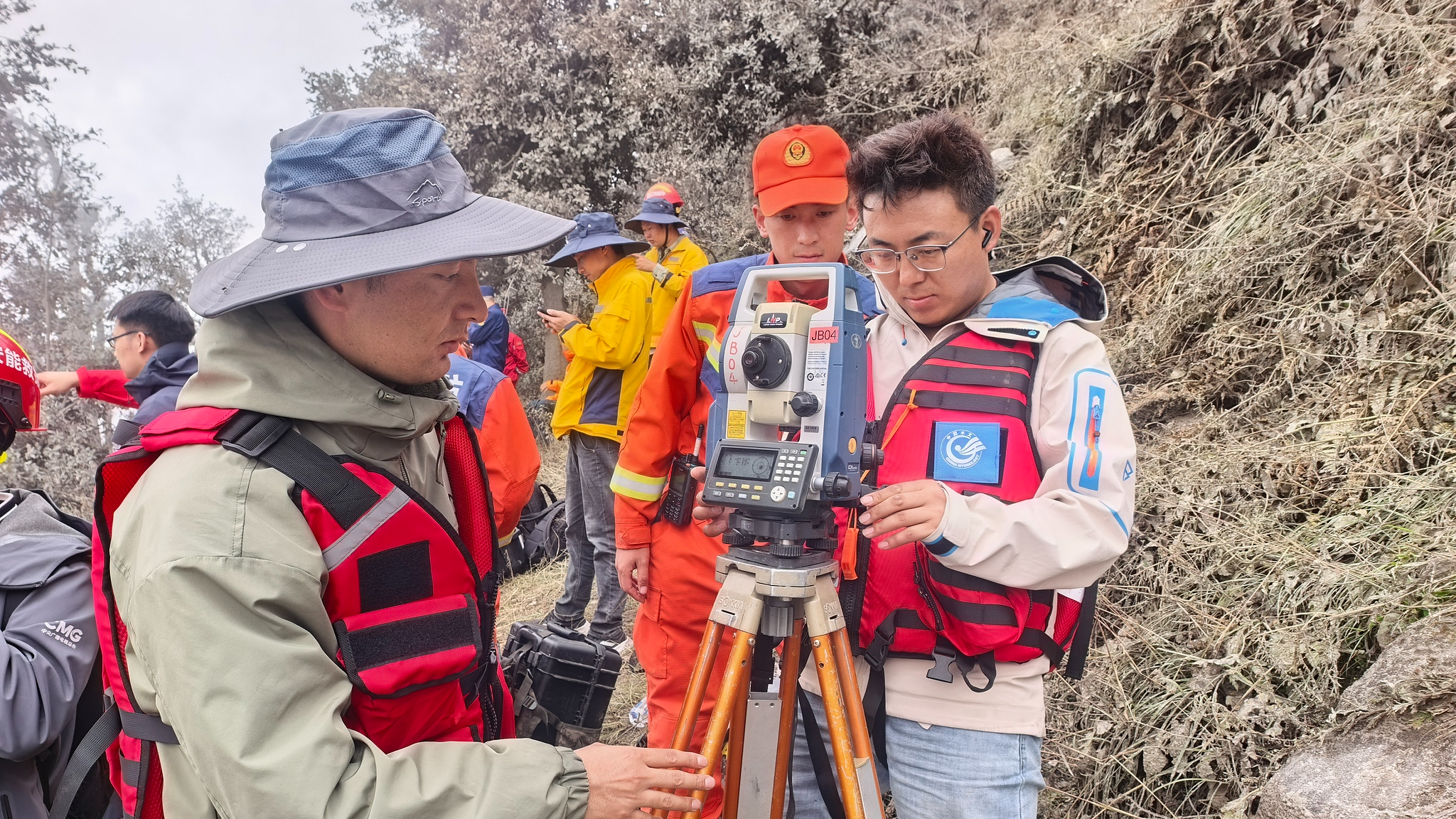
Rescuers install monitoring equipment to assess the stability of the barrier dam, changes in water levels and the risk of secondary disasters in the surrounding area in Gyirong County, Southwest China's Xizang Autonomous Region, on August 29, 2026. (Photo: VCG)
Continuous monitoring of secondary risks, particularly upstream barrier lakes, remains a top priority to protect rescuers and local communities. Even as the search continues, preliminary recovery and reconstruction efforts have begun.
Support to Nepal
In this cross-border tragedy, China has treated every missing person with equal urgency and care, regardless of nationality.
After careful verification, 261 foreign nationals from 23 countries were identified among the missing. Chinese officials promptly notified the relevant embassies and consulates and opened dedicated 24-hour English-language hotlines to provide updates and support to families awaiting news of their loved ones.
While carrying out rescue and relief operations on its own side, China has also extended assistance to Nepal, including emergency cash aid and humanitarian supplies.
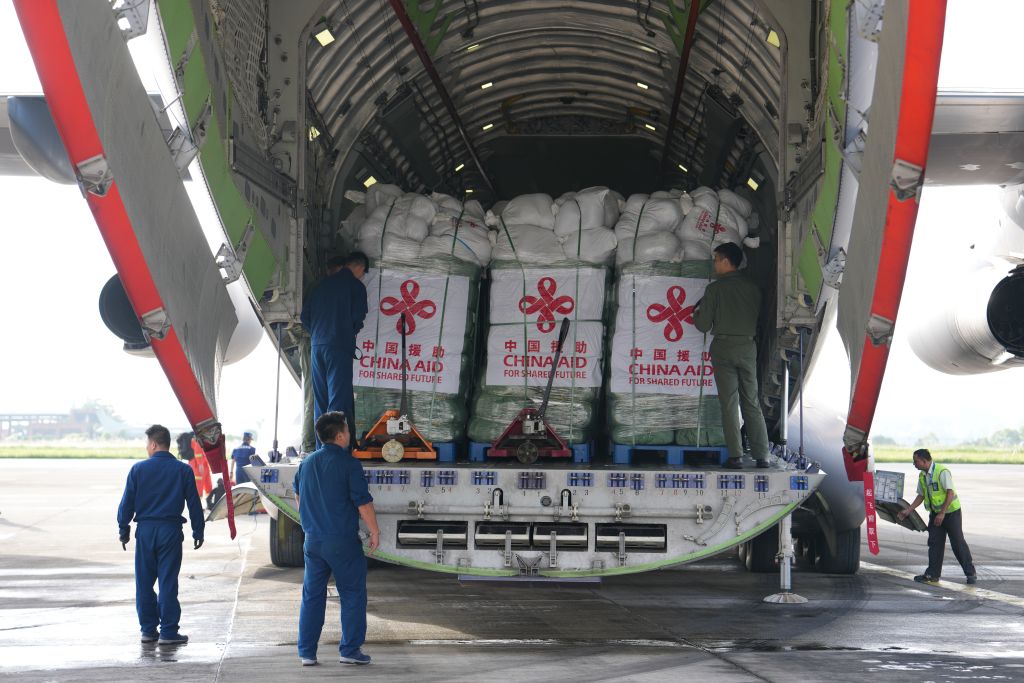
Staff members prepare to unload Chinese relief supplies at Tribhuvan International Airport in Kathmandu, Nepal, on August 30, 2026. (Photo: Xinhua)
The first batch of Chinese aid supplies has arrived in Kathmandu, and tunnel rescue experts have reached the disaster area in Nepal. China is also sharing critical information with the Nepalese side, including images, satellite data, and hydrological monitoring results from the affected region.
A second batch of aid is scheduled to depart on Tuesday, accoridng to Chinese foreign ministry. It will include urgently needed items such as drones, DNA testing equipment and reagents, water purification devices, and lighting equipment. Chinese DNA identification experts will also travel to the frontline to assist Nepalese authorities.
The efforts reflect a spirit of mutual assistance in confronting a shared challenge.
Blessings pour in
Heartfelt messages have poured in from Chinese and international netizens, many expressing the hope that border staff and others still unaccounted for will return safely.
The official Douyin account of Gyirong Port has been flooded with messages. One comment read: "Staff, please come out and update your content. We are all waiting." Another user wrote on Facebook: "No words to describe this heartbreaking scene of devastation. I hope and pray that all will be recovered and identified."
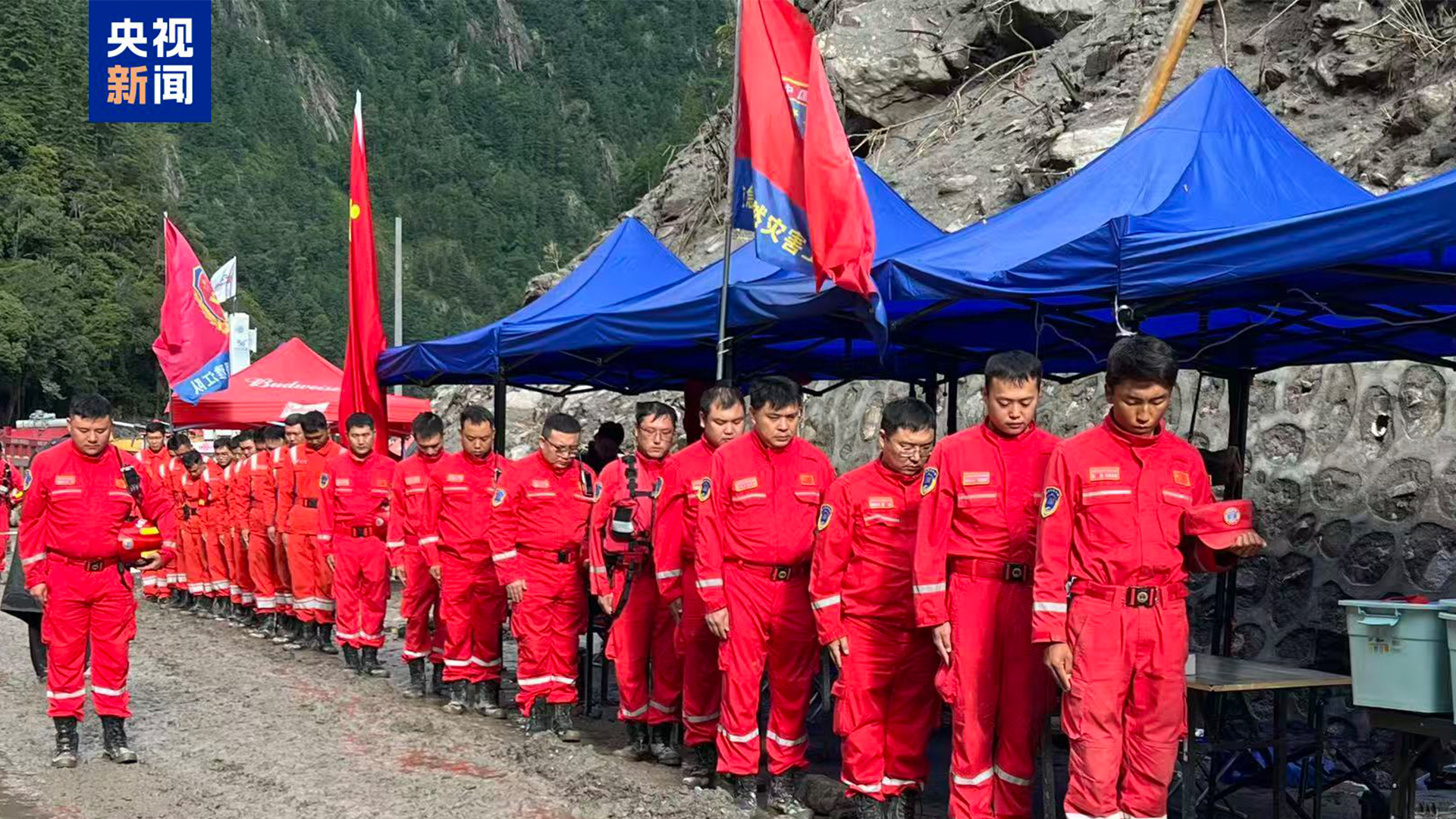
Memorial services were held in Gyirong County, Southwest China's Xizang Autonomous Region, on September 1, 2026. (Photo: CMG)
Seven days after the catastrophic torrent struck, a solemn silence fell over the disaster site on Tuesday morning as a memorial service was held for the victims. Rescuers paused their search operations to stand in silent tribute. As soon as the tribute ended, they returned to the mud-covered frontline and resumed their painstaking, grid-by-grid search.
The effort is guided by a simple principle: honor every life, pursue every viable avenue of scientific search and continue searching for possible survivors while accounting for every missing person.
(Ni Tao, Zhan Huilan and intern Song Weihang also contributed to this article)