


County in E China's Jiangxi becomes global insulator powerhouse
In Luxi county, Pingxiang city, east China's Jiangxi Province, workshops turn raw porcelain clay into insulators — bowl-shaped fittings that keep power lines safely separated from utility poles and towers.
The county has built a global reputation for electric porcelain, producing 75 percent of China's low- and medium-voltage porcelain insulators and 20 percent of the world's supply, with products sold to more than 40 countries and regions. In 2025, the county's 100 electric porcelain enterprises above designated size generated 9.81 billion yuan (about $1.46 billion) in output.
Porcelain-making in Luxi dates back to the Song and Yuan dynasties (960-1368). As one of the birthplaces of China's electric porcelain industry, Luxi has manufactured porcelain industrially for more than 120 years. In the new era, its electric porcelain sector has rapidly modernized, leading to a major industry cluster with a distinct regional identity.
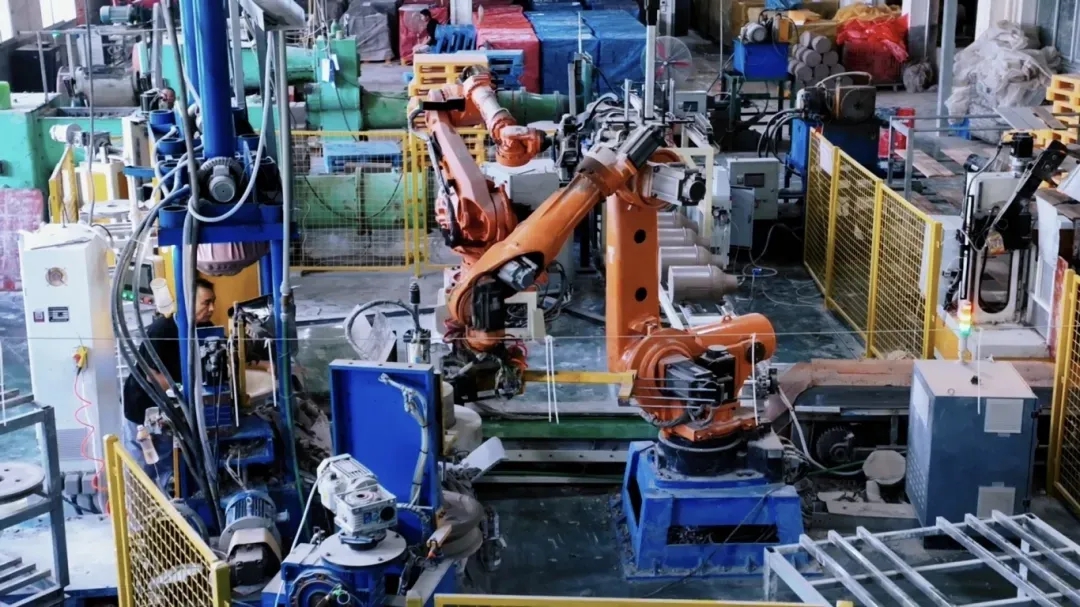
Intelligent equipment operates efficiently in the workshop of an electric porcelain company in Luxi County, east China's Jiangxi Province. (Photo: Pingxiang Daily)
However, low- and mid-range products once accounted for 60 to 70 percent of output in Luxi, with many long-standing technical problems yet to be solved and most traditional electric porcelain manufacturers hampered by outdated equipment, old production methods and insufficient research and development, according to Zhang Xueri, head of the technology management department at a local high-voltage electric porcelain research institute.
The institute was set up mainly to address common technical problems in the sector and drive technological upgrades, Zhang said.
The institute has helped companies set up their own research teams and has provided end-to-end support for technical breakthroughs, patent applications and talent development. It has also secured dedicated funding for technology upgrades to ease the financial burden of companies undergoing transformation.
In 2025, the institute worked with a local manufacturer to overcome long-standing technical barriers and began mass-producing stable and reliable ultra-high-voltage porcelain insulators, Zhang said.
The institute has overcome four key production technology challenges, reducing variation in porcelain component strength from 25 percent to under 10 percent and bringing overall performance up to advanced international levels.
In 2025, its advanced electric porcelain materials pilot test platform was named among the first batch of key pilot test platforms supported by the Ministry of Industry and Information Technology. To date, the platform has filed 15 invention patents and contributed to the drafting of 10 industry standards.
Luxi has also built a 5,000-mu (about 333.33 hectares) electric porcelain industrial park that has attracted major state-owned manufacturers.
The county is now home to 178 companies employing nearly 30,000 workers in the electric porcelain industrial chain, including 106 enterprises above designated size. It has China's only insulator industry cluster covering glass, composite and porcelain insulators.
At an AI-powered smart production line of Pingxiang Qiangsheng Electric Porcelain Manufacturing Co., Ltd., robotic arms carry out the production process, including molding and processing, with high precision.
Xie Xiqun, head of the company, said that AI has pushed the company's product pass rate to 98-99 percent and increased daily output roughly fivefold.
Luxi's insulator lineup now spans voltage levels from 10 kV to ±1100 kV across more than 40 product series.
Luxi's electric porcelain products are now sold in more than 40 countries and regions, with more than 600 customized products and over 20 international certifications. The county has also built a one-stop trade service platform to help local firms handle customer inquiries, certification and customs procedures for overseas orders.
Exports of the county's electric porcelain products reached 381 million yuan in 2025, up 79.16 percent year on year, and totaled 226 million yuan in the first half of 2026, up 52.15 percent from the same period last year.
Beyond manufacturing, Luxi has turned its electric porcelain heritage into a tourism draw. To date, Luxi has rolled out more than 130 cultural and creative products, with sales through supermarkets and retail outlets alone exceeding 17 million yuan as of June 2026.
Luxi has built a themed cultural town centered on its electric porcelain heritage, developing cultural tourism routes that let visitors explore ancient kiln sites, see modern electric porcelain production and try traditional craft techniques, alongside educational tours for students. The county is now planning an industrial tourism route themed on its electric porcelain industry, aimed at helping more people learn about stories behind the insulators.