


Chang'e-6 farside samples unlock secret behind the Moon's 'two faces'
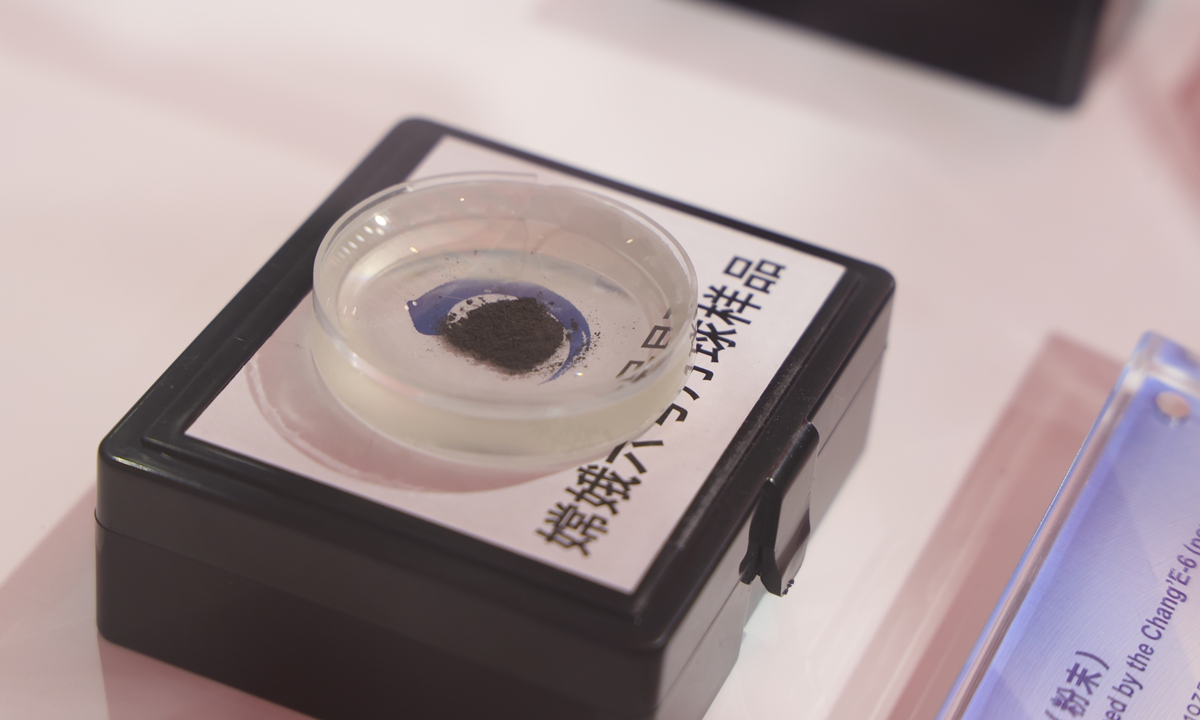
Image of Chang'e-6 lunar soil samples (Photo: VCG)
Gazing up at the night sky, we see that the moon always presents the same face to Earth. The nearside, which we know well, is marked by vast, dark lunar maria, while the farside is dominated by bright, heavily cratered highlands with few lunar maria.
Why does the moon have these "two faces"? This puzzle, which has confounded the global scientific community for decades, has recently gained a fresh answer thanks to the farside samples brought back by the Chang'e-6 mission.
Recently, a research team co-led by Professor Long Tao and Associate Professor Che Xiaochao from the Institute of Geology, Chinese Academy of Geological Sciences, along with international collaborators, published their latest findings online in Communications Earth & Environment, a scientific journal, providing crucial evidence to crack this mystery.
In an exclusive interview, the Global Times reporter spoke with Long and Che to learn how they deciphered the story of impacts from billions of years ago, all from millimeter-sized particles of lunar soil.
Ten rock fragments preserve 4-billion-year impact record
Chang'e-6 landed within the South Pole-Aitken (SPA) basin on the lunar farside. This basin is one of the largest and oldest known impact structures in the solar system, with a diameter exceeding 2,500 kilometers. Like a massive, penetrating "scar," it serves as a natural window for humanity to probe the deep crustal and mantle structure of the moon.
The core materials for this study were 10 feldspathic impact melt rock fragments, or clasts, meticulously selected from lunar soil sample CE6C0010. Each clast is only about 0.5 millimeters in diameter, smaller than a grain of millet.
"The moon essentially lacks an atmosphere and water, so it experiences no weathering or erosion, and there is no plate tectonic activity. Therefore, the impact craters on the lunar surface record a complete history from the moon's formation to the present day," Che told the Global Times.
The immense energy released by celestial impacts instantly melts the target rocks. The resulting cooled and solidified clasts act like time capsules, perfectly preserving the composition and age information from the time of the impact. The samples collected by Chang'e-6 come from the SPA basin region, and these impact melts inherently carry the deep-seated signatures of the basin's formation and evolution, Che explained.
Using high-precision ion microprobe analysis and applying the principle of radioactive decay, the research team conducted U-Pb and Pb-Pb dating on accessory minerals, such as zircon and phosphate, within the clasts. They successfully identified two distinct age clusters: one group formed around 4.25 billion years ago, and the other around 3.88 billion years ago.
These two ages, separated by nearly 400 million years, clearly record that the lunar crust in the SPA region experienced at least two major impact-related remelting events.
Long added that the formation of lunar soil is accompanied by long-term impact ejection, transportation and mixing. Many clasts are not formed in situ but are ejected from distant locations. Therefore, one cannot directly correlate these two ages to specific, individual impact events.
"We prefer to interpret these two sets of data as chronological markers for impact activity in this region during different stages," he told the Global Times.
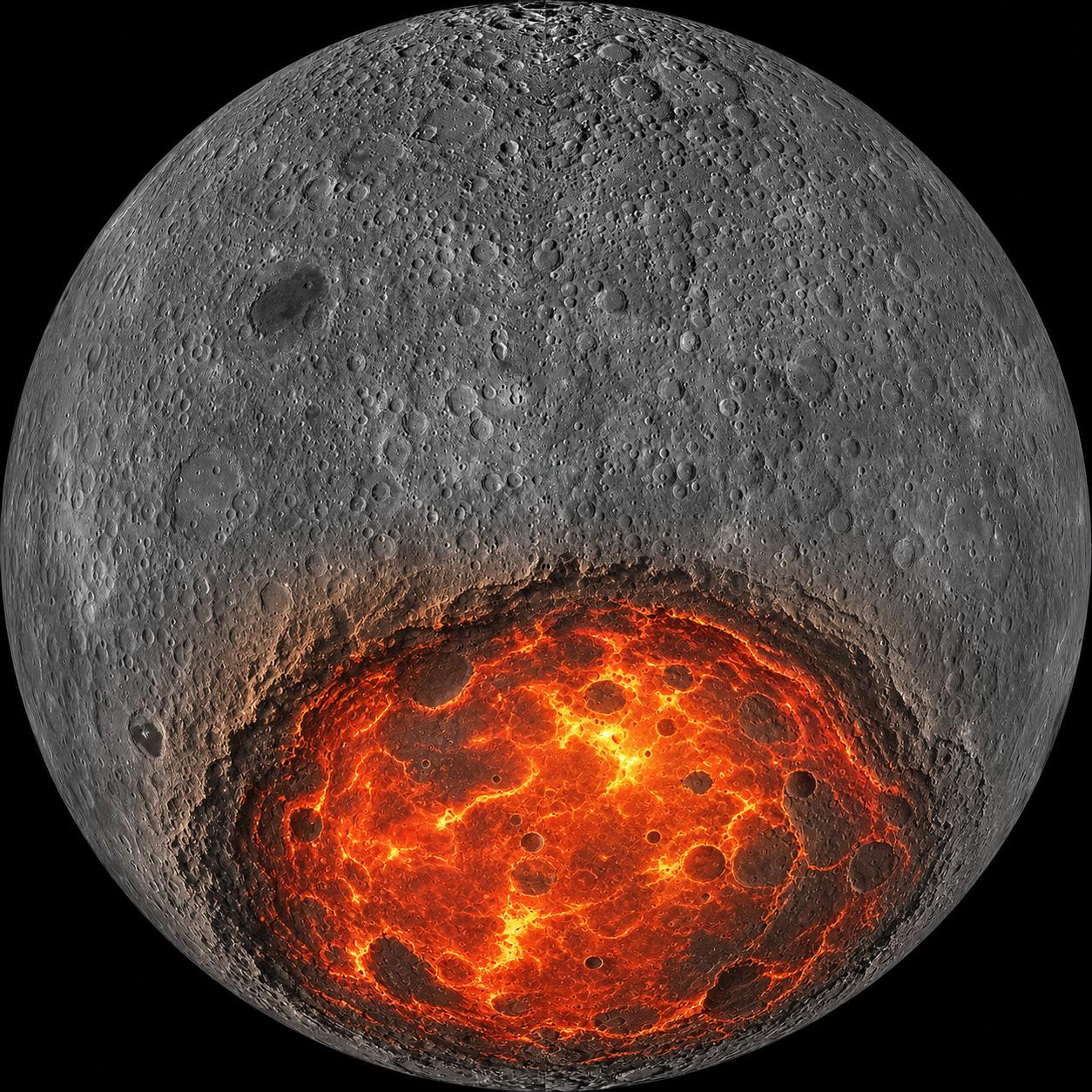
Based on imagery of the lunar farside, this illustration depicts the extensive melting of the South Pole-Aitken (SPA) basin interior caused by the giant impact. (Photo: Courtesy of the Institute of Geology, Chinese Academy of Geological Sciences)
Anomalous Pb isotope signatures: new clues beyond the classic model
Beyond the age information, the Pb isotopic composition of the clasts drew even greater attention from the team.
The test results showed that both groups of impact melt clasts possess relatively high initial Pb isotopic compositions. By combining the isotopic ages with evolutionary curves fitted using Monte Carlo methods, the team estimated that the lunar crust in the SPA region has a μ value (²³⁸U/²⁰⁴Pb ratio) of approximately 683 ± 140. This value is significantly higher than the levels predicted for primary ferroan anorthosite (crust) by the traditional Lunar Magma Ocean model.
"The early crystallization and differentiation processes of the lunar magma ocean should have formed a primary crust with a relatively low μ value," Long explained, using a vivid analogy. "However, the enrichment of radiogenic lead we measured in our samples is higher than expected. This directly indicates that the source material for these impact melts cannot simply be the primary lunar crust."
As a classic framework for explaining early lunar differentiation, crust formation and mantle reservoir evolution, the Lunar Magma Ocean model posits that the moon experienced a global melting event early in its history, he further explained.
"During the cooling of this magma ocean, crystallization and differentiation occurred: denser minerals like olivine and pyroxene sank to form the lunar mantle, while lighter plagioclase feldspar floated to form the primary crust. The final residual melt, enriched in potassium (K), rare earth elements (REE) and phosphorus (P), formed the urKREEP layer, sandwiched between the crust and mantle. In previous studies, the chemical and isotopic characteristics of different types of lunar magmas could largely be explained by mixing proportions of these primordial reservoirs," Long said.
However, in Che's view, this model describes a global, homogeneous evolutionary process. The farside samples brought back by Chang'e-6 deviate from this uniform framework.
He indicated that simply relying on the normal crystallization and differentiation of the magma ocean would struggle to produce such a high μ value in the lunar crust. This suggests that after the complete solidification of the magma ocean, additional geological processes must have further modified the crust-mantle materials in the SPA region.
This discovery also resonates with the long-standing debate over lunar dichotomy: Why are the nearside and farside so drastically different in terms of terrain, composition and internal structure? The research team realized that the clues might lie within the ancient giant impact that formed the SPA basin itself.
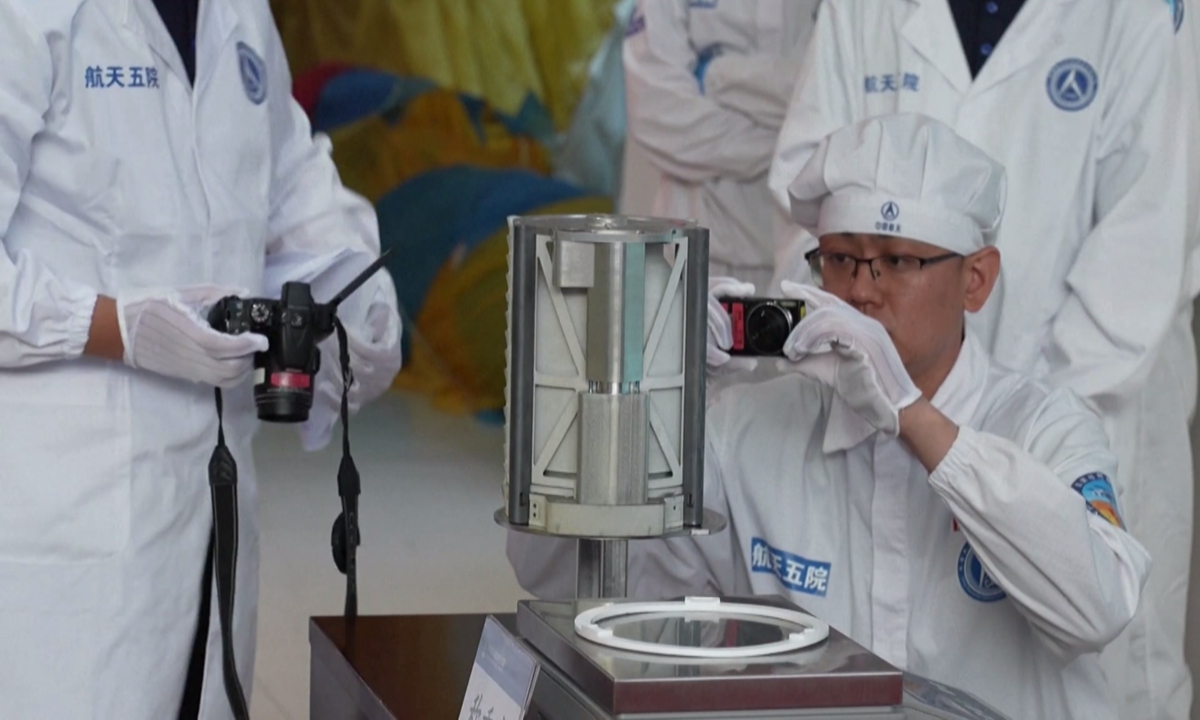
Researchers photograph lunar soil samples at the capsule opening ceremony for the Chang'e-6 returner held at the China Academy of Space Technology in Beijing on June 26, 2024. (Photo: VCG)
Giant impact: an ancient force reshaping the lunar farside
Based on the dual evidence from geochronology and isotopes, the research team proposed a novel evolutionary model, a "large-impact driven crust-mantle remelting and secondary reservoir formation" scenario, offering a new pathway to explain the origin of lunar asymmetry.
"The energy scale of the impact that formed the South Pole-Aitken basin is far beyond our everyday comprehension," Long explained. The impactor did not just penetrate the local primary ferroan anorthosite; it also stirred up the underlying upper mantle materials, causing large-scale melting, overturning, and thorough mixing of crust and mantle materials.
If components extremely enriched in radioactive elements, such as the urKREEP layer, were involved in this mixing, even in small proportions, they would act like a few drops of thick ink falling into clear water, fundamentally altering the overall Pb isotopic composition and the U-Pb evolutionary trajectory of the melt, Long said.
Under this model, the vast melt sheet formed by the giant impact would undergo another round of crystallization and differentiation upon subsequent cooling, ultimately generating a series of localized secondary reservoirs with varying μ values. The impact melt clasts analyzed in this study correspond precisely to this secondary crust formed after the impact.
Long went on to say that those components with even higher μ values, the "secondary KREEP," might be preserved deep within the basin or at greater depths, awaiting future exploration and research.
In Che's view, the most significant value of this model is that it shows "the crust-mantle evolution of the moon is not a one-off event. The solidification of the magma ocean was merely the starting point of its evolution. Subsequent large impact events have the full capacity to profoundly reshape the crust-mantle structure of localized regions, and even create secondary reservoirs that can be stably preserved for long periods."
This provides a crucial missing piece in understanding the cause of lunar dichotomy: the Procellarum KREEP Terrane on the nearside evolved along the path of magma ocean differentiation, developing its own reservoir characteristics.
In contrast, the SPA region on the farside, reshaped by the ancient giant impact, followed a completely different evolutionary trajectory. The distinct material foundations and evolutionary histories of different lunar regions may ultimately be what created the dramatically different nearside and farside we observe today.
"The traditional magma ocean model tells the story of the moon's shared 'childhood experiences,' while our research complements it with the subsequent 'story of regional differentiation'," Long added.
He cautioned against using a single, uniform model of primitive magma ocean differentiation to summarize the entire crust-mantle evolution of the moon. Different regions have their own unique evolutionary paths, and this is precisely the most important revelation brought to us by the Chang'e-6 farside samples.