


Illustration: Xia Qing/GT
Editor's Note:
The Shanghai Cooperation Organisation (SCO) enters a new stage with the conclusion of its 2026 summit in Bishkek this week. Over the past 25 years, the SCO has grown from six founding members into a partnership of 27 countries, making it the world's largest trans-regional organization. What is driving the organization's growth and resilience? What role does China play? Global Times (GT) reporter Liu Xuandi talked to Pakistani senator Mushahid Hussain (Hussain), who is also chairman of the Pakistan-China Institute and former Pakistani minister for information and culture.
GT: What is the significance of this year's summit, and how does the Shanghai Spirit continue to shape the SCO's role amid today's changing international landscape?
Hussain: The SCO, representing key countries with a combined economic output of nearly $30 trillion, has a historic opportunity to promote peace and prosperity, strengthen connectivity by land, sea and air, and help chart a new course for regional cooperation.
Founded in Shanghai in 2001, the SCO has adhered to the Shanghai Spirit, bringing countries together on the basis of win-win cooperation, inclusivity, mutual respect, connectivity and a shared future. Traditional Western-led organizations, whether military or non-military, have increasingly been shaped by a Cold War mindset, bloc politics and zero-sum thinking, manifested in sanctions, tariffs, trade wars and protectionism. The SCO offers a different path: In a multipolar world, countries should not seek enemies or build walls, but build bridges and address common challenges through multilateral cooperation. Therefore, the Shanghai Spirit represents not only the SCO's founding principles, but also the trend of our times. Being on the right side of history means embracing multilateralism in a multipolar world and taking a collective approach to common challenges.
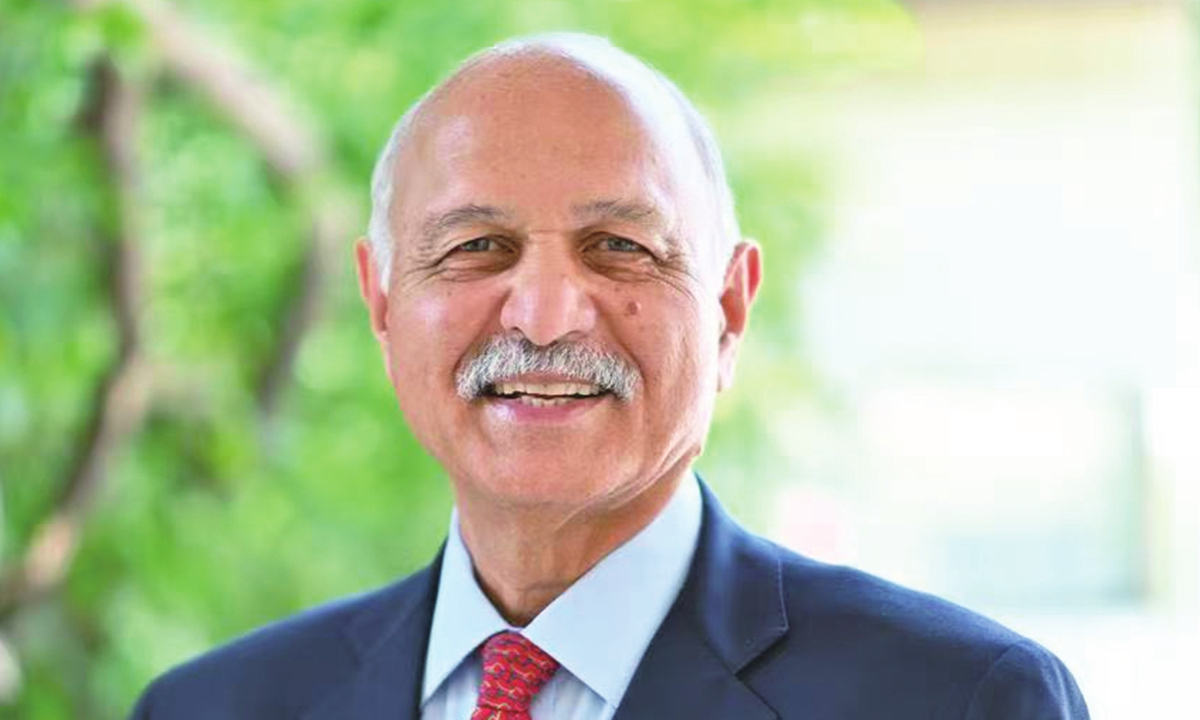
Mushahid Hussain (Photo: Courtesy of Hussain)
Hussain: Last year, during the SCO summit in Tianjin, China proposed the Global Governance Initiative (GGI). It came at a time when the Western-led "rules-based" order was increasingly undermined by double standards and disregard for international law. The GGI emphasizes that global governance should be based on the UN Charter, the Five Principles of Peaceful Coexistence, international law and universally recognized principles, offering an alternative approach to addressing the governance vacuum and the yawning gap between what Western countries profess and what they practice. It provides an important framework for building a more peaceful and cooperative international order, and the Bishkek summit was an opportunity to advance these principles.
From the Pakistani perspective, the SCO has already translated the Shanghai Spirit into practical cooperation, particularly in counterterrorism and connectivity. The Regional Anti-Terrorist Structure (RATS), based in Tashkent, coordinates member states' efforts against terrorism and extremism. Pakistan has a representative in RATS and benefits from this mechanism, while SCO members also conduct joint counterterrorism exercises, including that between Pakistan and China.
Connectivity, however, holds perhaps the greatest potential for deeper cooperation. Projects such as the China-Kyrgyzstan-Uzbekistan railway strengthen links among member states. Pakistan can contribute through Gwadar Port, while Central Asian landlocked countries can gain access to Gwadar and international markets. The China-proposed Belt and Road Initiative (BRI) has woven SCO member states more closely together, helping build a new framework for regional development.
GT: You once said that "the SCO has become a major plank of Asia, of the Global South." As the SCO continues to expand its influence, how do you see its role in strengthening cooperation among countries of the Global South and contributing to a more balanced and inclusive global governance system?
Hussain: The global balance of economic and political power is shifting from the West toward the East and the Global South, with Eurasia emerging as a center of gravity. In this context, the SCO, whose members are largely located in Eurasia, is becoming an important platform for connectivity, cooperation and addressing common challenges, as well as an increasingly important political and institutional voice of the Global South.
China plays a pivotal role by advancing initiatives such as the BRI and the GGI. Countries across Asia, Africa and Latin America increasingly reject a world order based on unilateralism, force and exclusion. The era of a single superpower is over, while tariffs and trade wars have failed to meet the interests of the Global South. China's initiatives resonate with aspirations of Global South countries and reflect the realities of a multipolar world. The SCO offers a strategic alternative to the confrontation, division and unilateralism associated with the traditional Western-led order. By promoting connectivity, cooperation, equality and mutual respect, it is helping build a more balanced and inclusive global order.