


Rescue operations have entered a new phase at Gyirong Port in southwest China’s Xizang Autonomous Region, after an emergency road leading to the disaster's core area was repaired and power was restored.
The mudslide, triggered by a high-altitude glacier collapse in Nepal on August 26, has left 21 people dead and 541 others missing in Xizang as of September 2.
More than 2,300 personnel, over 400 vehicles, more than 8,000 sets of rescue equipment and over 800 drone flights have been deployed so far.
Power returns to core site in Gyirong town
Power has been brought back to the core area in mudslide-hit Gyirong town.
Despite the continuing risks of landslides and rockfalls, frontliners worked around the clock to restore temporary power lines. Power was restored on September 3 at around 8 p.m.
The return of electricity has boosted basic support for frontline operations and created better conditions for search and rescue work.
At the core site, four lighting units, one low-voltage generator vehicle and one mobile charging shelter have been deployed.
Communication services have also been strengthened, with 12 base stations restored.
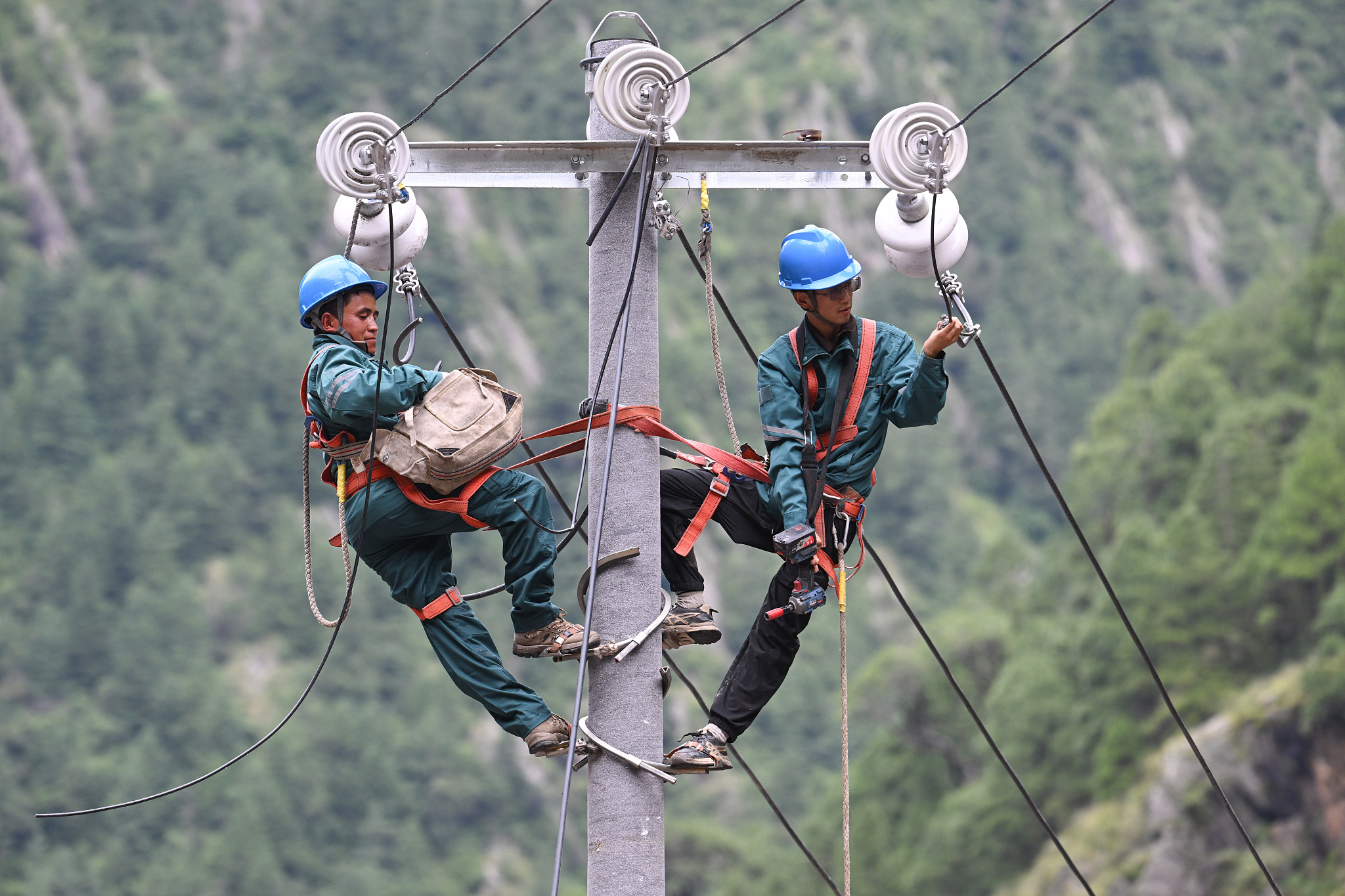
State Grid workers repair power lines in Gyirong County, southwest China's Xizang Autonomous Region, September 2, 2026. (Photo: VCG)
In-depth search underway at core disaster zone
With road access restored, rescue teams have moved more personnel and equipment into the affected core area for a new round of intensive search.
A total of 336 rescuers have carried out multiple rounds of systematic searches in the core zone, covering more than 1.6 million square meters. The focus now is on three major tasks: Search and rescue, road and debris clearance, and epidemic prevention and disinfection.
At the site, Armed Police personnel from Xizang are working through thick mud and piles of debris, scouring areas that remain difficult to access.
Large rocks buried in the mud cannot easily be moved by hand. In some areas, rescuers have to search carefully through gaps between boulders. The unstable slopes on both sides of the disaster zone also pose a continuing threat. Falling rocks and landslides add to the danger. Despite difficult conditions, rescuers are combing through every possible location for those still missing.
Excavation by heavy machinery continues amid natural threats
The reopening of the access road does not mean the rescue operation has become easier.
CGTN reporters at the scene have documented continued heavy rainfall, fast-flowing water and occasional rockfalls in the area around Gyirong Port. Large streams of water continue to flow down the mountain slopes, while rescue vehicles and heavy machinery work alongside damaged sections of road.
The unstable terrain means rescuers must balance the need to clear debris and search for missing people with the need to protect frontline personnel from secondary disasters. Heavy equipment, including excavators and loaders, has been deployed to reinforce and clear damaged routes.
Disinfection teams work around the clock
As search and clearance operations continue, epidemic prevention measures are being carried out simultaneously in the core area.
A disinfection and epidemic prevention team made up of personnel from multiple units of the Xizang Military Command has been working at Gyirong Port. The team is divided into three groups of five, with personnel rotating every eight hours to maintain 24-hour disinfection operations.
They are reducing public health risks in the disaster's aftermath, particularly in areas affected by mud, stagnant water and debris. The teams are working next to search and rescue personnel as the focus gradually shifts from emergency access to sustained cleanup and recovery.
Residents receive shelter and continued support
The disaster has also prompted extensive efforts to care for affected residents and the families of those missing or killed.
Authorities have established dedicated services for victims' relatives, including hotlines inside and outside China. Medical care, education, basic living assistance and psychological support have been extended to 499 relocated residents.
Residents and businesses in the town of Gyirong have banded together. They have voluntarily set up temporary service points manned 24/7, providing free supplies and accommodation to rescue personnel and affected residents.
PLA and Armed Police personnel have also set up a field kitchen near Gyirong Port, preparing hot meals for rescue teams working around the clock.
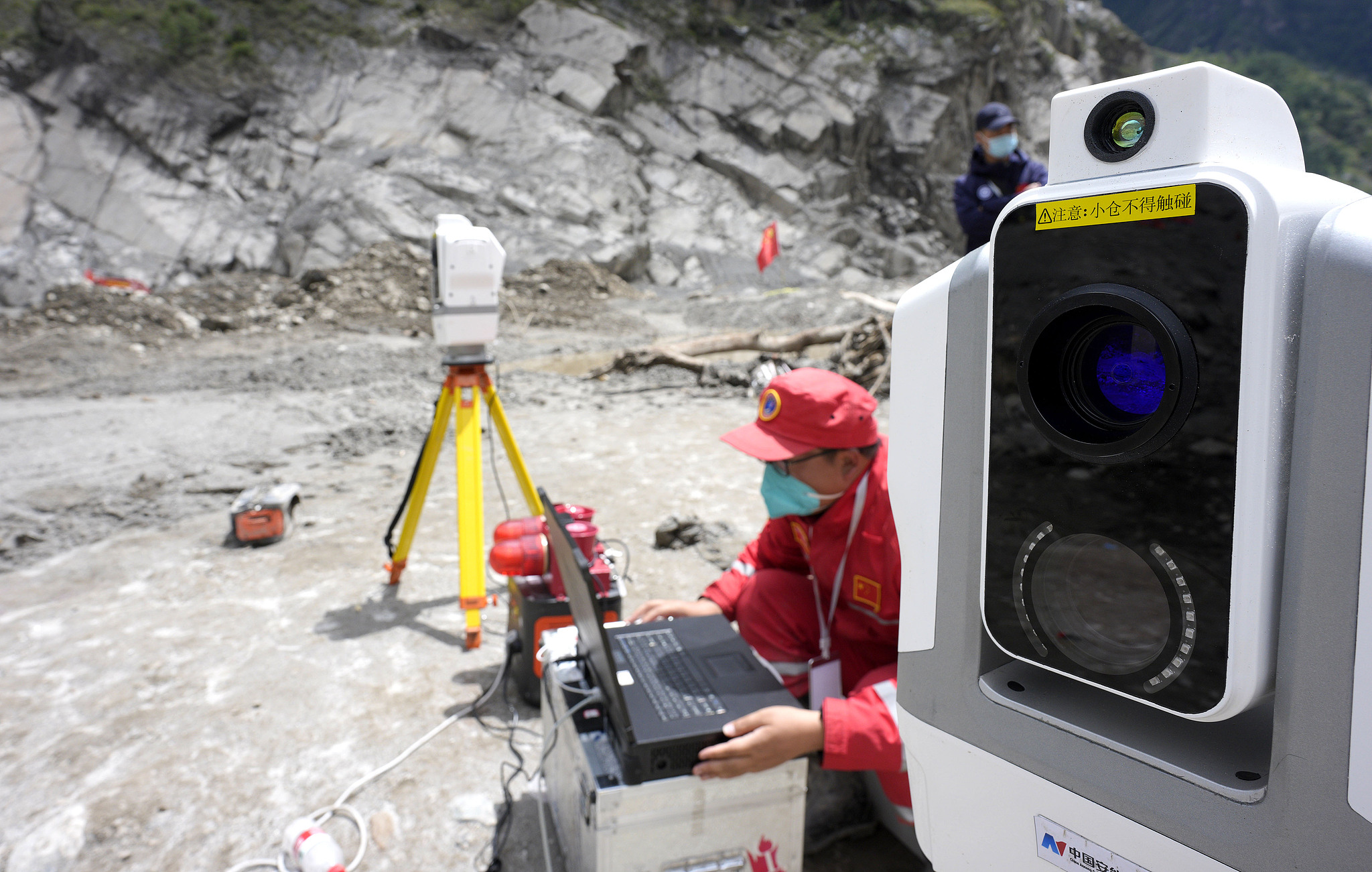
An operator uses a laser video AI monitoring device at a rescue site in Xigaze, southwest China's Xizang Autonomous Region, September 3, 2026. (Photo: VCG)
Experts monitor risks of secondary disasters
Authorities are also closely monitoring the possibility of further geological and hydrological hazards.
A team of 93 experts and technical personnel has been organized to monitor the risk of secondary collapses, landslides and mudslides in areas including the barrier lake and the source area of the ice-rock collapse.
Experts are also conducting geological hazard inspections along roads leading to the border. They are also monitoring rainfall, temperature and water levels in the Purepu Zangbo, Donglin Zangbo and Gyirong Zangbo river basins. Monitoring of the ice-rock collapse area continues through a combination of human patrols and technological surveillance.
The continued rainfall remains a major concern.
At the frontline, rescuers must constantly assess changes in water flows, slope stability and weather conditions before moving deeper into the affected area.
China steps up support for Nepal
The disaster has also prompted continued coordination between China and Nepal.
Nepal's police said the death toll from the disaster has risen to 1,252, with more than 4,800 people still missing.
On September 3, China's third batch of emergency relief supplies arrived in Kathmandu aboard a Chinese Air Force Y-20 transport aircraft. The shipment includes refrigerated body storage units, epidemic prevention supplies and daily necessities urgently requested by Nepal.
The third batch also includes Bailey bridge components needed for emergency reconstruction. The first batch of components has already been transported by land to Rizu Port in Xizang.
Ten forensic identification experts also arrived in Kathmandu as part of China's fourth team of assistance experts, supporting efforts to identify victims.
Chinese medical volunteers are also working with affected communities in Nepal.
Volunteers are treating survivors suffering from common post-disaster ailments, including fever, skin rashes and body pain. Their work complements the emergency relief effort by providing medical support to people exposed to harsh conditions in the disaster zone.
Nepal has expressed appreciation for China's continued assistance. Foreign Minister Shisir Khanal says Nepal sincerely appreciates China's support in this disaster. Khanal says China and Nepal share the Himalayan ecosystem and face common challenges from climate change, emphasizing the importance of international cooperation.
Chinese Foreign Ministry spokesperson Guo Jiakun says Beijing will continue to provide emergency assistance and carry out international rescue cooperation in response to Nepal's needs. He also says China and Nepal have worked closely since the disaster to share monitoring and early-warning information and coordinate disaster response.