


Mudslide-affected people return home in Gyirong Town, China's Xizang

People prepare to take vehicles and return home at a temporary relocation site in Gyirong Town, southwest China's Xizang Autonomous Region, Sept. 7, 2026. A fast-moving chain mudslide, triggered by a high-altitude glacier collapse in Nepal, struck Gyirong Port on the China-Nepal border in southwest China's Xizang Autonomous Region on Aug. 26, causing heavy casualties and leaving many missing. A barrier lake caused by the mudslide posed a serious threat to the lives and safety of the residents in the surrounding villages.
A total of 499 villagers were evacuated to Gyirong Town by the local authorities for their safety and experts were organized to carry out hidden danger investigations and hydrological monitoring to assess the risks of secondary disasters.
By far, the barrier lake on the upper reaches of the core affected zone of the mudslide-hit Gyirong Port has been drained. The local government has dispatched vehicles to transfer the affected people home in succession. On Monday, residents at the temporary relocation sites of Gyirong Town started returning home in an orderly manner. (Xinhua/Tenzing Nima Qadhup)

People take a vehicle and return home from a temporary relocation site in Gyirong Town, southwest China's Xizang Autonomous Region, Sept. 7, 2026. A fast-moving chain mudslide, triggered by a high-altitude glacier collapse in Nepal, struck Gyirong Port on the China-Nepal border in southwest China's Xizang Autonomous Region on Aug. 26, causing heavy casualties and leaving many missing. A barrier lake caused by the mudslide posed a serious threat to the lives and safety of the residents in the surrounding villages.
A total of 499 villagers were evacuated to Gyirong Town by the local authorities for their safety and experts were organized to carry out hidden danger investigations and hydrological monitoring to assess the risks of secondary disasters.
By far, the barrier lake on the upper reaches of the core affected zone of the mudslide-hit Gyirong Port has been drained. The local government has dispatched vehicles to transfer the affected people home in succession. On Monday, residents at the temporary relocation sites of Gyirong Town started returning home in an orderly manner. (Xinhua/Tenzing Nima Qadhup)

People take a vehicle and return home from a temporary relocation site in Gyirong Town, southwest China's Xizang Autonomous Region, Sept. 7, 2026. A fast-moving chain mudslide, triggered by a high-altitude glacier collapse in Nepal, struck Gyirong Port on the China-Nepal border in southwest China's Xizang Autonomous Region on Aug. 26, causing heavy casualties and leaving many missing. A barrier lake caused by the mudslide posed a serious threat to the lives and safety of the residents in the surrounding villages.
A total of 499 villagers were evacuated to Gyirong Town by the local authorities for their safety and experts were organized to carry out hidden danger investigations and hydrological monitoring to assess the risks of secondary disasters.
By far, the barrier lake on the upper reaches of the core affected zone of the mudslide-hit Gyirong Port has been drained. The local government has dispatched vehicles to transfer the affected people home in succession. On Monday, residents at the temporary relocation sites of Gyirong Town started returning home in an orderly manner. (Xinhua/Tenzing Nima Qadhup)
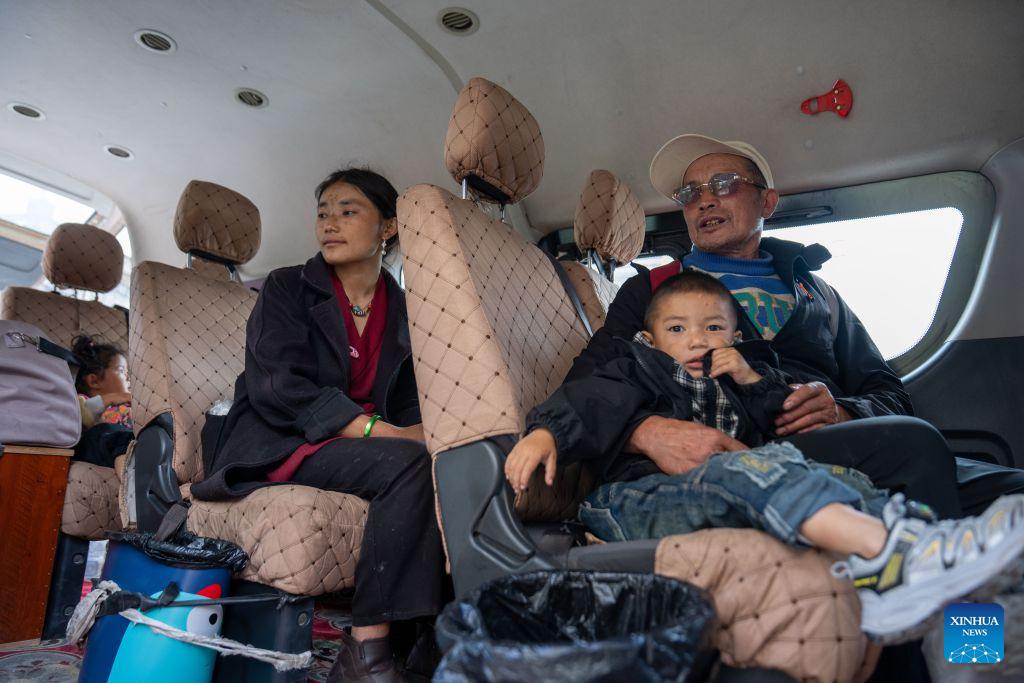
People take a vehicle and return home from a temporary relocation site in Gyirong Town, southwest China's Xizang Autonomous Region, Sept. 7, 2026. A fast-moving chain mudslide, triggered by a high-altitude glacier collapse in Nepal, struck Gyirong Port on the China-Nepal border in southwest China's Xizang Autonomous Region on Aug. 26, causing heavy casualties and leaving many missing. A barrier lake caused by the mudslide posed a serious threat to the lives and safety of the residents in the surrounding villages.
A total of 499 villagers were evacuated to Gyirong Town by the local authorities for their safety and experts were organized to carry out hidden danger investigations and hydrological monitoring to assess the risks of secondary disasters.
By far, the barrier lake on the upper reaches of the core affected zone of the mudslide-hit Gyirong Port has been drained. The local government has dispatched vehicles to transfer the affected people home in succession. On Monday, residents at the temporary relocation sites of Gyirong Town started returning home in an orderly manner. (Xinhua/Tenzing Nima Qadhup)

People wait for vehicles to take them home at a temporary relocation site in Gyirong Town, southwest China's Xizang Autonomous Region, Sept. 7, 2026. A fast-moving chain mudslide, triggered by a high-altitude glacier collapse in Nepal, struck Gyirong Port on the China-Nepal border in southwest China's Xizang Autonomous Region on Aug. 26, causing heavy casualties and leaving many missing. A barrier lake caused by the mudslide posed a serious threat to the lives and safety of the residents in the surrounding villages.
A total of 499 villagers were evacuated to Gyirong Town by the local authorities for their safety and experts were organized to carry out hidden danger investigations and hydrological monitoring to assess the risks of secondary disasters.
By far, the barrier lake on the upper reaches of the core affected zone of the mudslide-hit Gyirong Port has been drained. The local government has dispatched vehicles to transfer the affected people home in succession. On Monday, residents at the temporary relocation sites of Gyirong Town started returning home in an orderly manner. (Xinhua/Tenzing Nima Qadhup)