


China delivers fourth batch of emergency aid to Nepal while bolstering risk-warning network
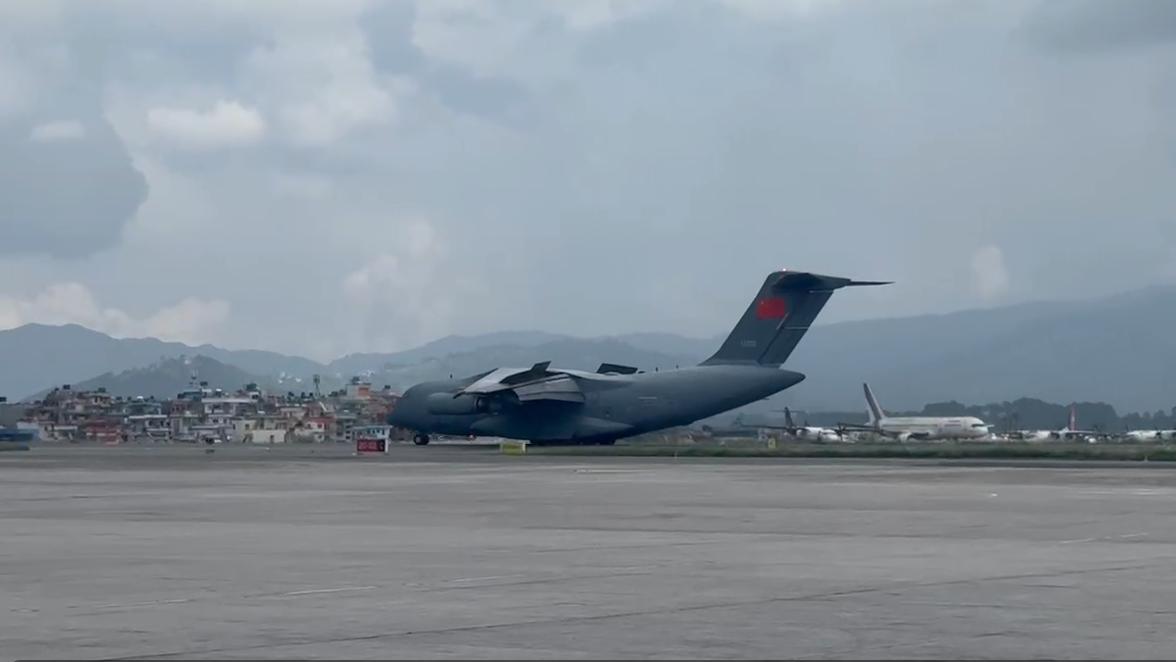
A PLA Air Force Y-20 transport aircraft carrying the fourth batch of emergency relief supplies from China arrives at Tribhuvan International Airport in Kathmandu, Nepal, September 8, 2026. (Photo: CMG)
The fourth batch of emergency relief supplies from China arrived at Tribhuvan International Airport in Kathmandu on Tuesday afternoon aboard a PLA Air Force Y-20 transport aircraft, as Beijing stepped up support for Nepal two weeks after a catastrophic transboundary glacier disaster.
Chinese Ambassador to Nepal Zhang Maoming and Nepal's Minister for Science, Technology and Innovation Mahabir Pun attended the handover ceremony. The supplies, including rescue hovercrafts, stainless steel permanent magnet flood-control pumps, backup batteries, mortuary cabinets and solar lights, were tailored to Nepal's most urgent needs.
Chinese Foreign Ministry spokesperson Mao Ning said at a regular press conference on Tuesday that, beyond government aid, the China Foundation for Rural Development has set up temporary shelters and provided daily necessities and basic medical services in the disaster-hit areas, while the Chinese Enterprises Association in Nepal has delivered the first batch of funds donated for relief operations. "China will continue standing firmly with Nepal to overcome this challenging time together," Mao said.
As of 6 p.m. Saturday, the massive debris believed to have started from a glacier collapse in Nepal on August 26 had left 43 people dead and 519 missing in Gyirong on the China side of the border, according to China's rescue headquarters. In Nepal, the death toll had risen to 1,357, with about 5,326 people missing as of 1 p.m. Tuesday, according to the country's National Disaster Risk Reduction and Management Authority.
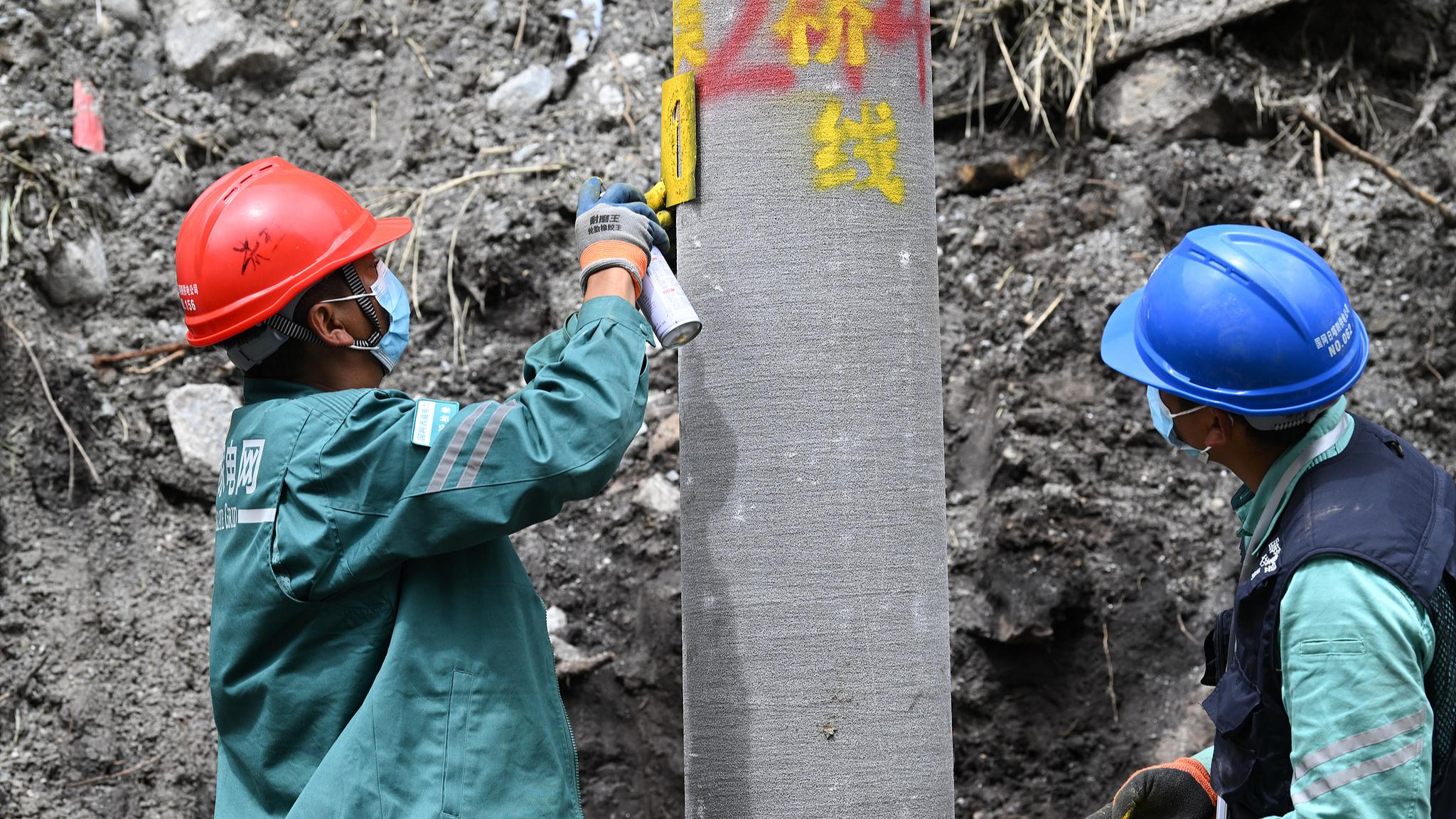
State Grid workers carry out work at the hardest-hit area of Gyirong Port in southwest China's Xizang Autonomous Region, September 4, 2026. (Photo: VCG)
Risk-warning network
Chinese workers are working hard amid harsh high-altitude conditions and volatile weather to continue rescue efforts and prevent further disasters.
Along the G216 national highway, the only lifeline for personnel, relief supplies and heavy machinery into the disaster zone, engineers have identified 58 geological risk points, classifying them into high, medium and low levels for targeted protection. Vulnerable roadbeds along riverside sections have been reinforced with gabion cages against water erosion, with backup cages on standby in anticipation of further rainfall and rising water levels.
Meanwhile, more than 170 monitoring specialists and 150 sets of professional equipment from emergency management, natural resources, water resources and meteorological departments have been deployed to form a real-time risk warning network covering valley slopes, rescue routes and the port area.
Wang Chenglei, an official with the risk monitoring department of the Ministry of Emergency Management, said essential monitoring facilities and technical teams will remain in place to help local authorities expand hazard screening and monitoring coverage.
The Ministry of Water Resources said river flow around the debris-flow impact crater on the Cuojian River and at a downstream barrier lake remains normal, though it warned that loose deposits on the slopes could still collapse and form new blockages.
Scientists say the disaster highlights the risks posed by a warming cryosphere. The Qinghai-Xizang Plateau is warming at twice the global average – and at up to three times above 5,000 meters – accelerating glacier melt, said Yao Tandong, an academician of the Chinese Academy of Sciences who leads the second Qinghai-Xizang Plateau scientific expedition.
He noted that the fractured glacier is of the maritime type, which accumulates and melts in large volumes and is more disaster-prone, and warned that ice avalanches are becoming "a new normal" as the climate warms.
Over the past 50 years, the "Asian water tower" region has lost 18% of its glacier area and 20% of its ice reserves. With more than 275,000 glaciers worldwide in retreat, experts are calling for regional risk surveys and sustained monitoring of the most dangerous glaciers.