


China's services: A window into China's new momentum of opening up
Zamir's China experience: A first-hand account
My recent visit to China provided me with a great opportunity to explore Jinan, Jilin Province, and Beijing, giving me the perfect chance to make an impactful visit to these areas of the country that has emerged as the second-largest economy in the world and a technological central hub of global inventions.
Beyond meaningful debates, Jinan left a very good impression on me about its green urban environment, efficient transportation, and combination of historical heritage and modern development.
One of the very important and impressive aspects that I noted was the convenience offered by China's digital ecosystem. Digital payments have become very deeply integrated into daily life, making transactions remarkably convenient and fast.
From shops and restaurants to transportation and everyday services, technology appears to be working quietly in the background, allowing people to save time and energy and enjoy greater convenience.
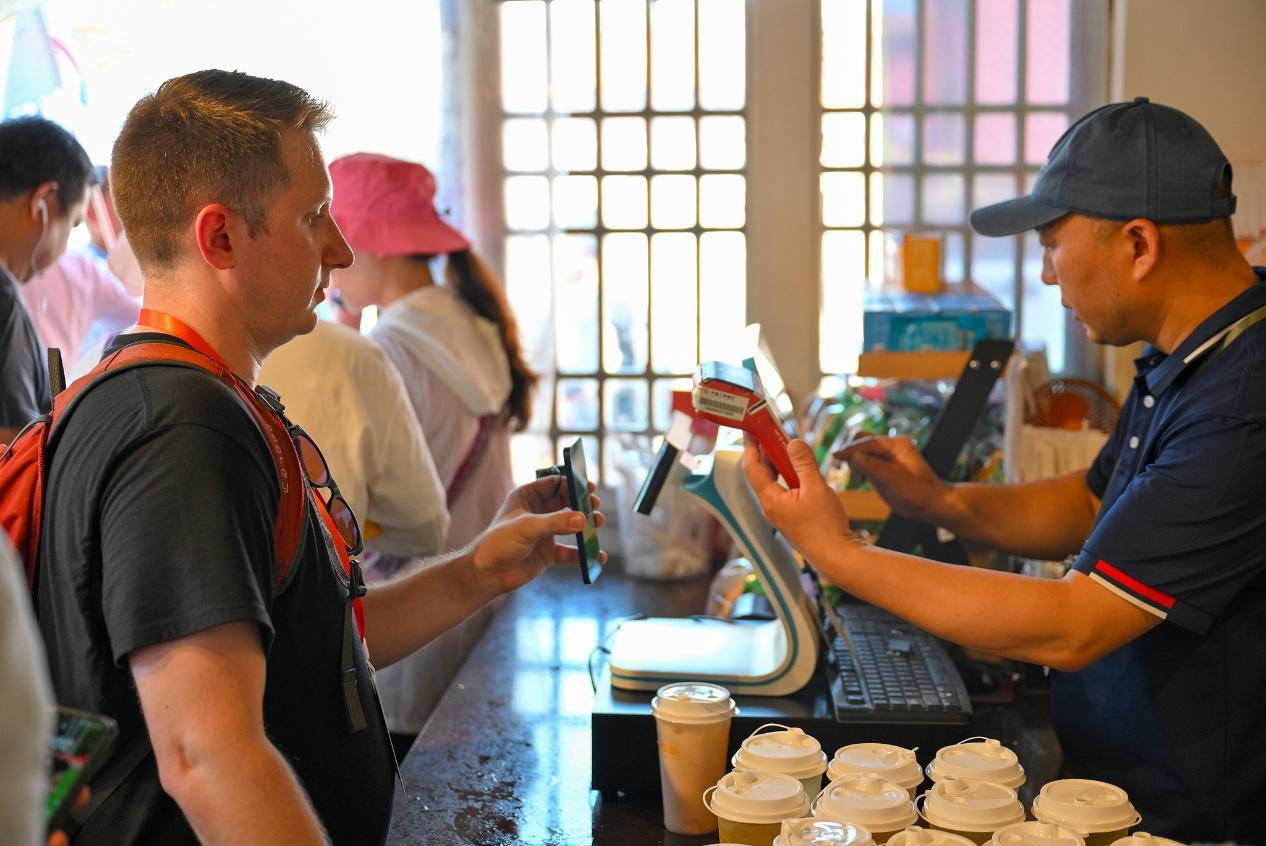
US youth delegates use mobile payment to buy drinks during a China-US youth exchange event in Beijing, China, on June 12, 2024. (Photos: VCG)
Transportation was another remarkable feature. Traveling within and between cities, I was able to experience the efficiency and scale of China's transport network integrated with digital services. High-speed rail, modern urban transportation, and very well-organized public facilities made traveling across vast distances surprisingly convenient. The experience of traveling between Jinan, Changchun and Beijing strengthened my impression that connectivity is not only an infrastructural concept in China, but it is an integral part of daily life.
Meanwhile, Beijing presented the very impressive combination of culture, history, technology and regional plus global connectivity that shines like a beacon of China's capital. Tourism in China has also impressed me, as modern services are aligned very closely with cultural experiences. Ancient heritage, public spaces, music, cuisine, and modern entertainment have become accessible through increasingly convenient transportation infrastructure that is impressively enmeshed with digital networks.
Beijing also provided me with the opportunity to witness China's remarkable technological transformation first-hand. We observed how advanced robotics, intelligence systems and automation are becoming an increasingly significant part of industrial development. What impressed me most was the combination of manufacturing capabilities, research and practical application. These modern robotic developments demonstrate that China is not only adopting emerging technologies, but it is also very actively contributing to their international advancements.
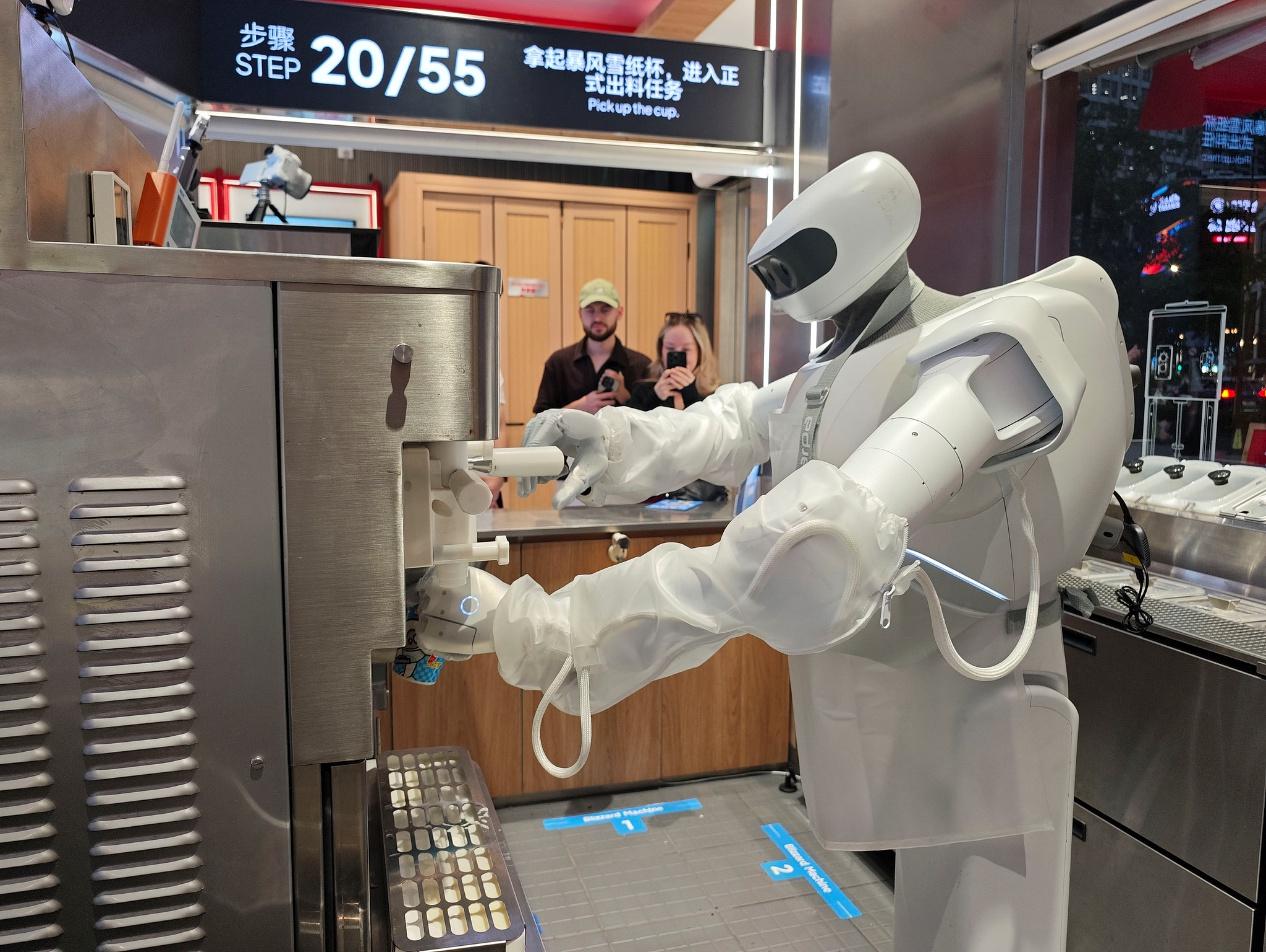
A robot makes ice cream for customers at the world's first robot ice cream restaurant in Shanghai, China, on September 8, 2026.
These visits have provided valuable insights into the speed and scale of China's technological achievements. They also highlighted opportunities for expanded cooperation between China and Pakistan in the fields of robotics, artificial intelligence, automation, smart education and digital transformation.
Such exchanges are strengthening people-to-people understanding and creating avenues for technological collaboration under the broader framework of China's cooperation across the globe.
As a Pakistani researcher and media fellow keeping a close eye on China's modern development, there are a lot of learnings from this travel experience, leading me to really appreciate the country's rapid transformation. What impressed me most was not only the sophistication of individual technologies but how infrastructure, technology and public services have come together to improve the everyday experience of locals and foreigners in this country.
Beyond the Journey: What Zamir's experience reveals about China
The 2026 China International Fair for Trade in Services (CIFTIS) is currently being held in Beijing. It brings together enterprises and visitors from all over the world, showcasing the services and technologies behind China's growing global connectivity.
For Muhammad Zamir Assadi, one of the most noticeable aspects of his trip to China was the convenience of digital payments and services.
In the second quarter of 2026, non-bank payment institutions in China processed more than 340.7 billion online payment transactions, worth 80.11 trillion yuan ($11.82 trillion). Digital payments have become deeply embedded in everyday life, from shopping and dining to transportation.
Zamir's experience reflects a broader digital transformation in China. In 2025, the country’s data industry reached 6.78 trillion yuan, up 15.7% year-on-year, according to a report released at the 2026 China International Big Data Industry Expo.
The transformation is also visible in transportation. Zamir's journey through Jinan, Changchun and Beijing offered a firsthand glimpse into the reach and efficiency of China's modern transport network.
High-speed rail, integrated transport systems and digital services have made long-distance travel increasingly convenient for both domestic and international travelers. In the first half of 2026, China's railways handled 2.35 billion passenger trips, up 5% year-on-year, a record high for the same period.
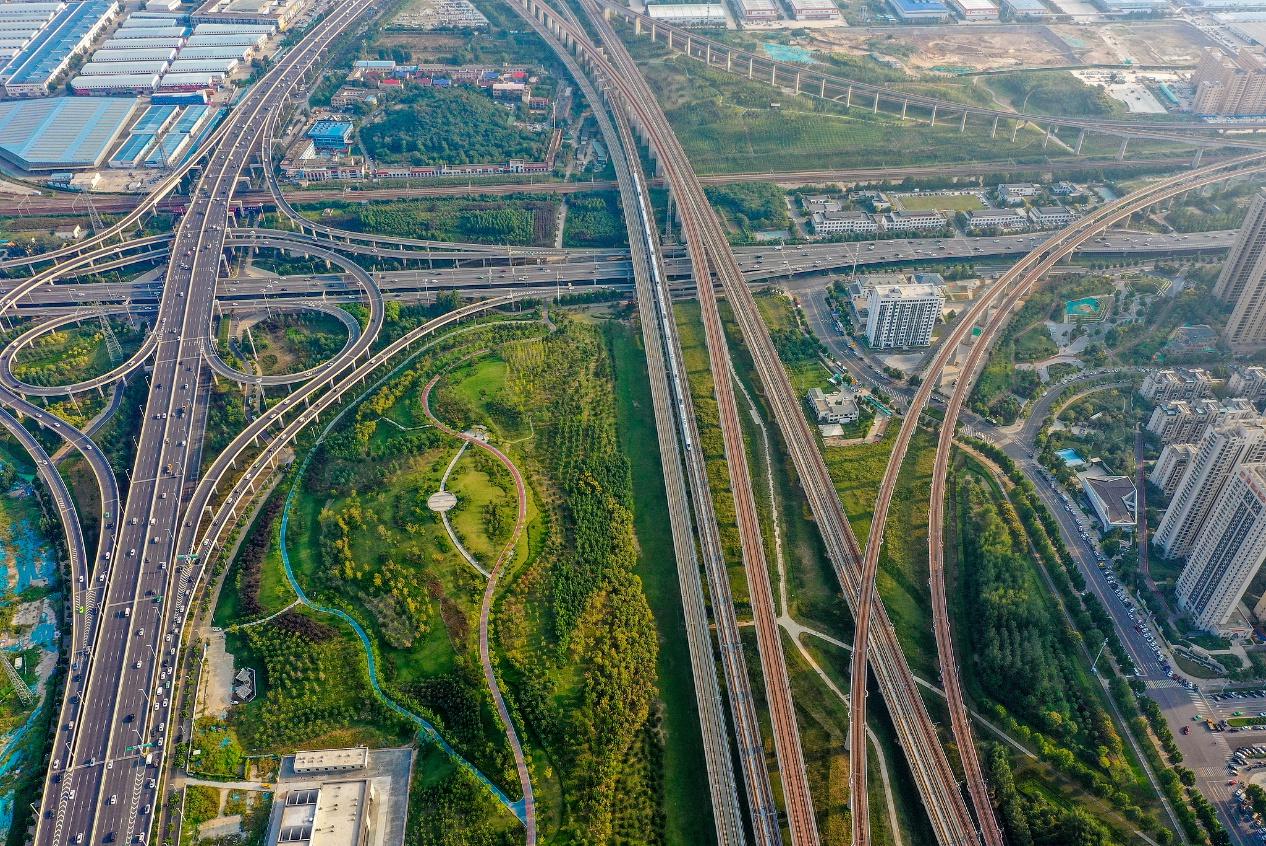
High-speed trains run through the greenery of Zhengdong New Area in Zhengzhou, Henan Province, China, on June 17, 2026.
For Zamir, connectivity was not an abstract infrastructure concept, but something he experienced first-hand. China's transport network has increasingly connected cities while supporting tourism, consumption, business exchanges and people-to-people interactions.
His experience in Beijing also highlights the growing integration of tourism, culture and modern services.
In the first half of 2026, China recorded 22.91 million inbound visits by foreign nationals, up 20.4% year-on-year. Of these, 17.82 million were visa-free entries.
The strong growth in inbound travel suggests that China is becoming increasingly accessible to international visitors, with cultural experiences supported by more convenient transportation and digital services.

Foreign tourists visit the Temple of Heaven in Beijing, China, on September 4, 2026.
Zamir's visit to a robotics company offered another perspective on China's technological transformation. China has been the world’s largest market for industrial robots for 13 consecutive years, while domestically produced industrial robots now account for more than half of the domestic market.
What he saw was therefore more than advanced machinery. It reflected a broader shift from adopting emerging technologies to integrating them into manufacturing and building new industrial capabilities.
Taken together, Zamir's experiences point to a common thread in China's transformation: technology is increasingly being applied to make everyday life more efficient, accessible and connected—from digital payments and smart transportation to AI-powered education and robotics.
For Pakistan, this also points to opportunities for practical cooperation. The 2026 Service Trade Fair also offers opportunities for other countries. China's continuously expanding service sector is meeting global demands and promoting international cooperation. Digital services, smart education, artificial intelligence, robotics and intelligent manufacturing could open new avenues for China-Pakistan cooperation, complementing traditional infrastructure projects with technology-driven development.