


China's 'super buyer' power fuels new engine for global trade
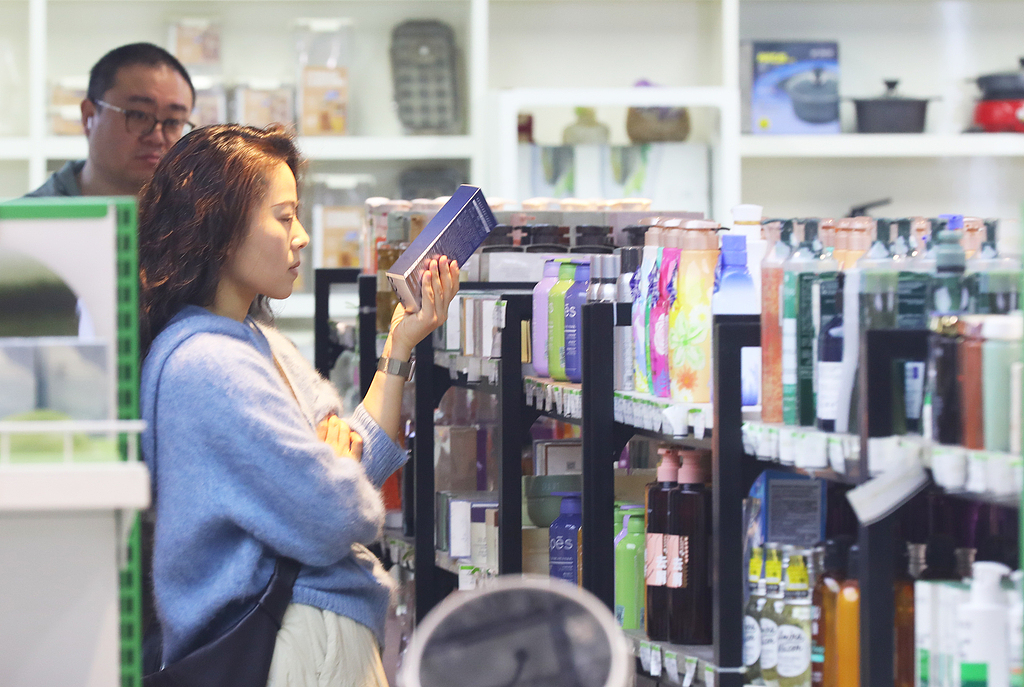
Visitors browsing imported cosmetics at the imported commodities market of Yiwu International Trade City, Zhejiang Province, east China, February 27, 2026. (Photos: VCG)
From Spanish ham and Malaysian durians to Nepalese wool felt and African handicrafts, a growing range of overseas products is finding its way into the hands of Chinese consumers.
At the imported commodities market of Yiwu International Trade City in east China's Zhejiang Province, some 150,000 products from more than 100 countries and regions are on display, offering a glimpse into China's steadily expanding import landscape.
As China is opening its market and tapping the potential of domestic demand, the world's "super buyer" is bringing fresh momentum to global trade and economic growth.
From selling to the world to buying from the world
Known as the world's largest wholesale market for small commodities, Yiwu has long been selling Chinese-made products around the globe. Increasingly, however, the city is also becoming a gateway for goods from around the world entering the Chinese market.
As imports into Yiwu have maintained strong growth, the customer base has expanded to major Chinese markets such as Beijing, Shanghai and Hangzhou. And now it takes only three days for products, such as bird's nest from Malaysia, to pass through customs in Yiwu, enter bonded warehouses and reach Chinese consumers.
In the first half of 2026, Yiwu's total foreign trade value reached 486.42 billion yuan ($72.5 billion) up 19.9% year on year, with imports rising 39.1% to 65.7 billion yuan ($9.8 billion).
Hainan's policy opening boosts imports
Further south, China's island province of Hainan is also seeing imports gain momentum as new policies and improved logistics facilities take effect.
Following the launch of island-wide independent customs operations in December 2025, the share of goods covered by the province's "zero-tariff" policy was raised to 74%, while the number of duty-free product categories expanded to more than 6,600.
The policy benefits have boosted both consumer spending and imports. In the first seven months of 2026, offshore duty-free sales in Hainan reached 21.6 billion yuan ($3.2 billion), up 17.9% year on year, driving growth in bonded warehousing and the circulation of imported goods. Meanwhile, the value of zero-tariff imports reached 3.624 billion yuan ($540.4 million) by the end of July, up 40.14% year on year, with 598 million yuan ($89.2 million) in taxes exempted.
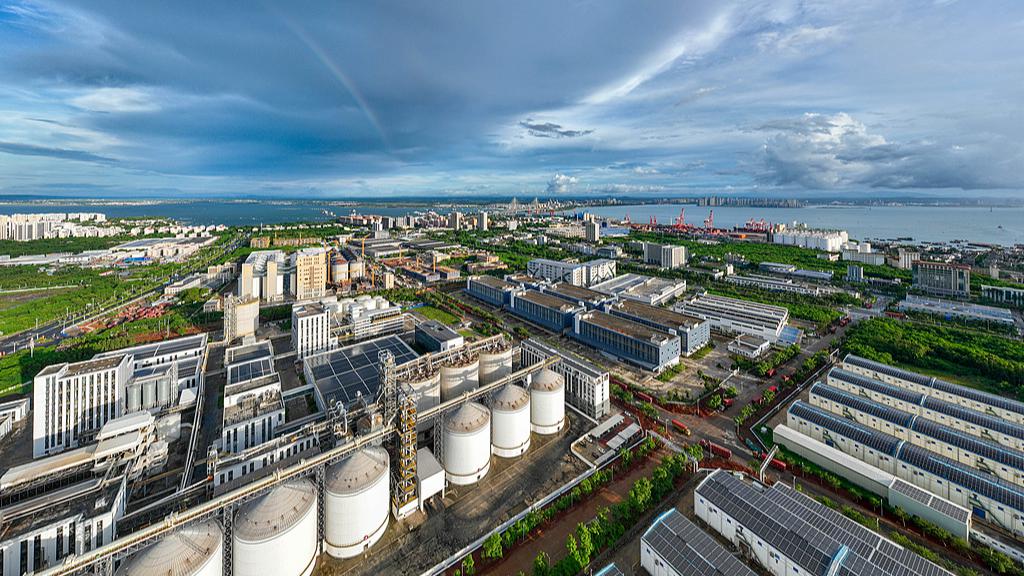
Yangpu Port in the Yangpu Economic Development Zone, Hainan, south China, September 18, 2025.
With three new international trade routes added, the province's Yangpu Port now has 38 in total to handle growing volumes of fresh produce from Southeast Asia, strengthening its role as a key distribution hub for imported goods.
Behind the growth is a faster and more streamlined customs system. Haikou Customs has rolled out a series of institutional reforms to improve clearance efficiency, including simplified procedures for eligible zero-tariff and bonded goods.
The number of items required in customs declarations has been cut from 105 to 33, while the average clearance time for imports has been reduced by 20%.
For companies importing raw materials from countries such as Indonesia and South Africa, the streamlined procedures now allow goods to be released almost immediately after declaration, significantly cutting logistics costs.
As policy barriers come down and supply chains move faster, Hainan is emerging as another important gateway linking overseas producers with China's vast consumer market.
China's auto industry draws global suppliers
Beyond consumer goods, China's role as a "super buyer" is also becoming visible in high-end manufacturing.
Chinese automakers have emerged as key customers for global auto parts suppliers, creating closer links between domestic manufacturers and international industrial chains.
On August 23, Christophe Perillat, chief executive officer of French automotive supplier Valeo, led a senior management team to China to seek new business opportunities in the market.
Over the past five years, Valeo has invested a cumulative 26 billion yuan ($3.88 billion) in China, adapting to the country's fast-moving market, technological innovation and cost advantages. More than 80% of the group's new orders in the first half of this year came from Chinese automakers.
In an interview with CMG, Perillat has compared China's auto market to a "gym" for the global automotive industry. "Because it brings together the highest level of innovation, the strongest competitiveness and the fastest pace," he said.
"To stay ahead in such a market, companies have to stay fit. For Valeo, that means becoming more localized and becoming a company that understands China better."