


The 'super seller' behind China's global gaming rise
At the recently concluded Gamescom 2026 in Cologne, Germany, 60 Chinese game companies gathered at the event, drawing long lines of players at their booths. During the opening night, Tencent released new trailers for Roco Kingdom World and Tides of Annihilation. miHoYo made the global debut of its new title Nodus Fall. Meanwhile, Hypergryph's Arknights: Endfield won the Best Booth Award in a player vote, becoming the first Chinese booth to receive the honor.
The excitement at Gamescom reflects more than a successful exhibition. It highlights the rapid growth of China's game industry in overseas markets. Chinese game companies are no longer simply "sellers" pushing individual hit titles for quick returns. Instead, they are competing through multi-genre portfolios, long-term localized operations and cross-border R&D collaborations, with Chinese-developed games gaining a growing presence in major markets including the US, Japan, South Korea and Europe.

Visitors gather at the Arknights: Endfield booth during Gamescom 2026 in Cologne, Germany, August 29, 2026. (Photo: VCG)
According to the 2026 China Game Industry Report, overseas revenue from self-developed Chinese games reached $12.372 billion in the first half of 2026, up by 30.22% year on year. The growth outpaced China's domestic game market, with both long-running titles and new releases contributing to the increase.
Behind this growth are several changes in the business models of Chinese game companies.
From hit games to global IPs
In the past, the main goal of going overseas was often to sell a successful game in as many markets as possible. Today, companies are looking further, seeking to build global intellectual properties, or IPs.
miHoYo is a good example. Through its Honkai series, the company has continued to develop different stories and games within a broader fictional universe. This strategy helps the company build a stable global fan base rather than depend on a single product.
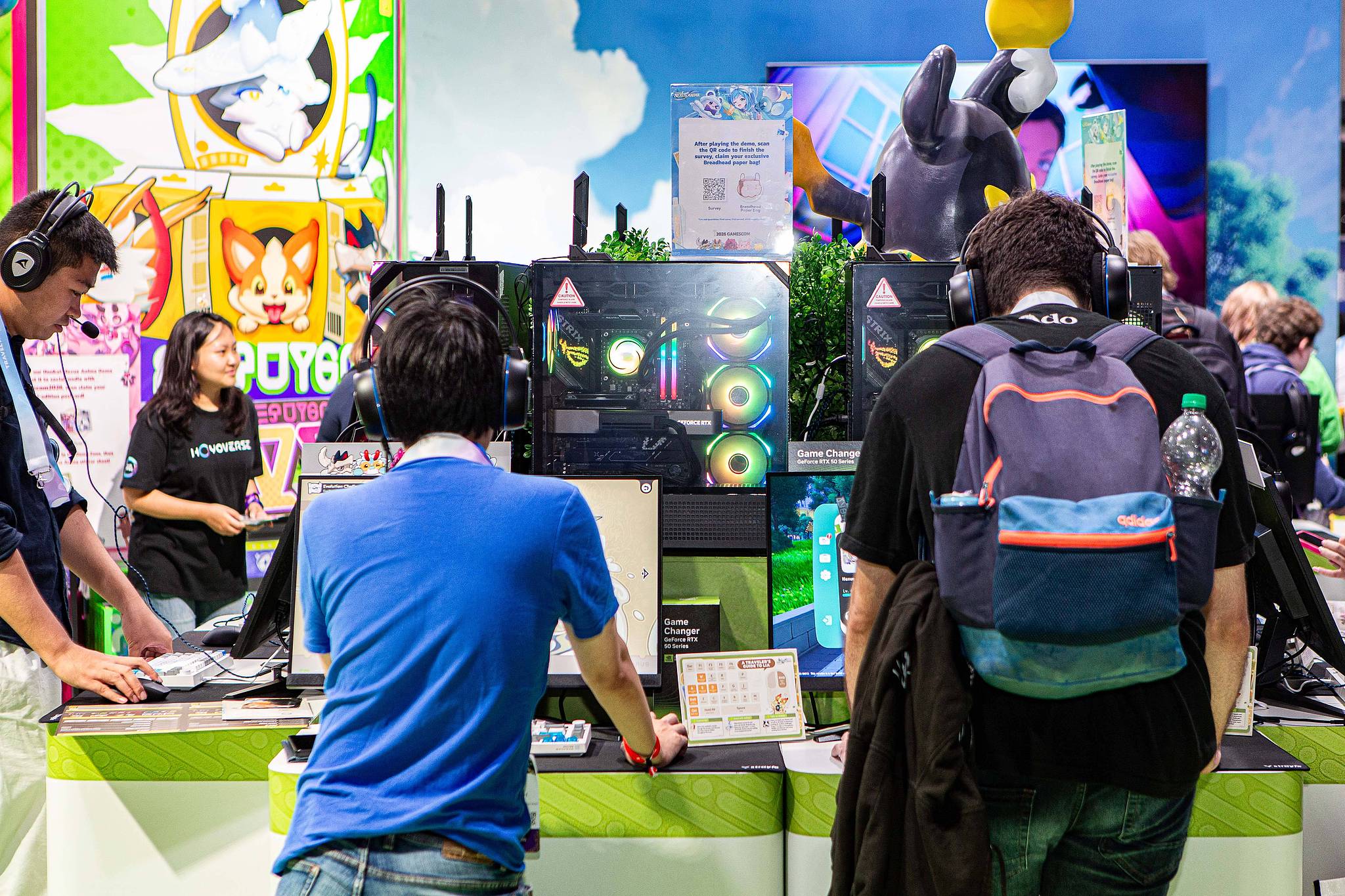
Visitors try out games at a booth during Gamescom 2026 in Cologne, Germany, August 29, 2026. (Photo: VCG)
Tencent is also expanding the global IP value of Honor of Kings. The company is developing different products and experiences around the IP, allowing it to reach players with diverse interests and gaming preferences.
Another emerging example is Game Science's Black Myth: Zhong Kui. Following the global attention generated by Black Myth: Wukong, the studio is developing a new single-player action RPG inspired by the Chinese folk figure Zhong Kui.
The significance lies not only in extending a successful game series, but also in the possibility of turning Chinese mythology and cultural themes into game worlds designed for a global audience. In this sense, the expansion of Chinese game IPs is taking more than one form, from interconnected game universes to new stories rooted in Chinese culture.
In essence, the strategic pivot is not from one product to another, but from a transaction-based business model to a relationship-based one, where the IP itself becomes an enduring asset and each new release can strengthen, rather than replace, what came before.
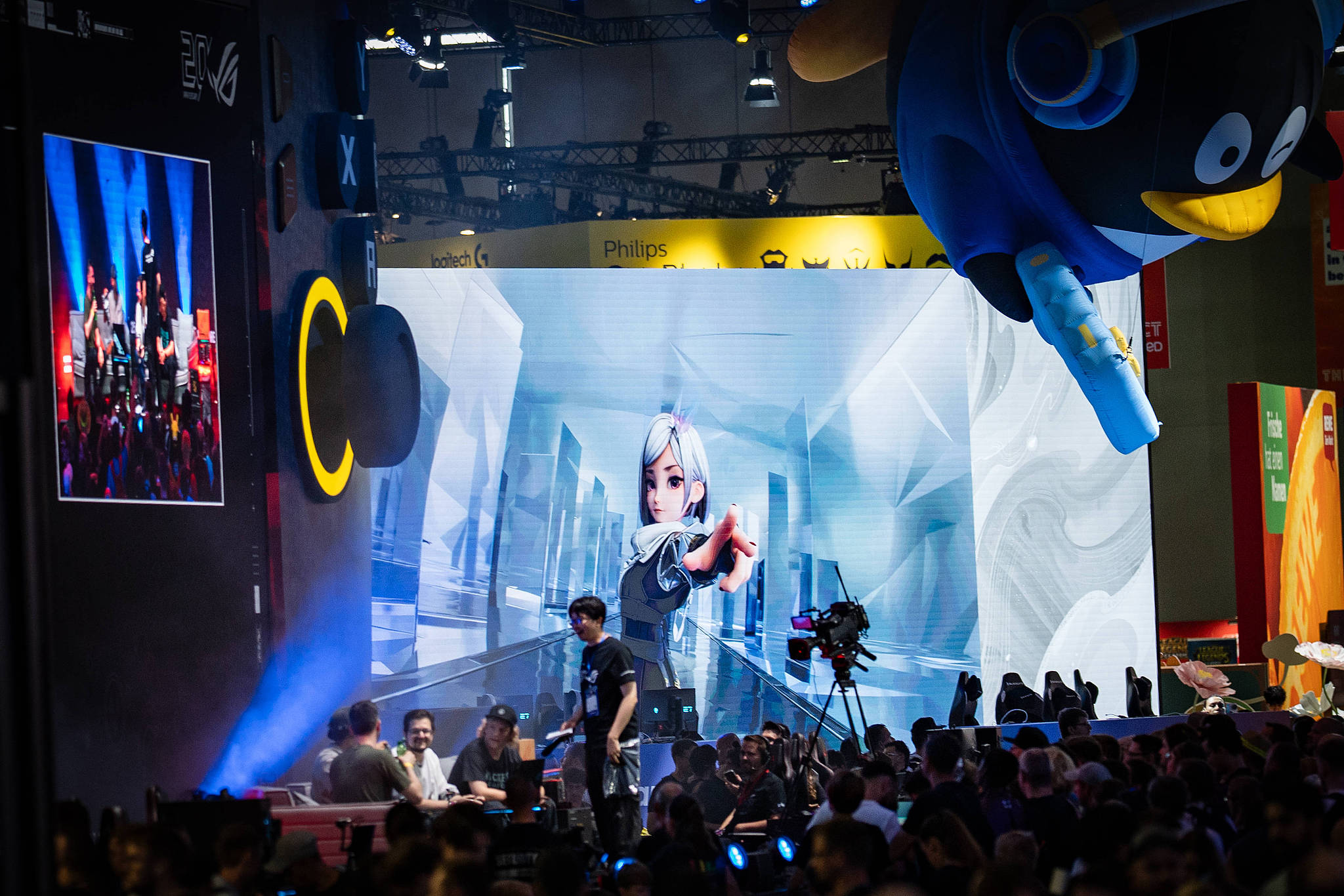
Industry professionals gather at a booth for discussions during Gamescom 2026 in Cologne, Germany, August 29, 2026. (Photo: VCG)
Chinese mobile games gain ground globally
According to Sensor Tower's global mobile game revenue ranking for May 2026, 38 Chinese publishers entered the global top 100, collectively generating $2.29 billion, or 42.8% of the total revenue of the top 100 publishers. The figures underline how mobile games have become one of the main channels through which Chinese game companies compete internationally.
The evolution of Chinese mobile games from overseas newcomers to established global players can be seen through companies such as 37 Interactive Entertainment, one of China's early game publishers to expand overseas. Its business now covers more than 200 countries and regions, with annual overseas revenue exceeding 5 billion yuan (over $746 million).
Its recent expansion into mini-games offers a glimpse into how Chinese developers are adapting to global competition. In the first quarter of 2026, new mini-games such as Survival 33 Days began generating additional growth alongside its long-running SLG titles, creating a model that combines the stable revenue of mid-to-hardcore games with the flexibility of shorter-cycle products. AI is also being used to lower development costs and increase the speed at which new products can be tested and launched.
The company's experience in SLG tells another part of the story. Ranked second globally in the category, 37 has built its position through products such as Puzzles & Survival, which found a substantial audience in the US market.
What matters beyond any single company is the capability behind these results. Chinese developers have built solid experience in game design, data-driven iteration, commercialization and long-term operations. Combined with localized publishing and increasingly efficient production pipelines, these capabilities allow developers to test new ideas quickly while continuing to operate established titles over many years.
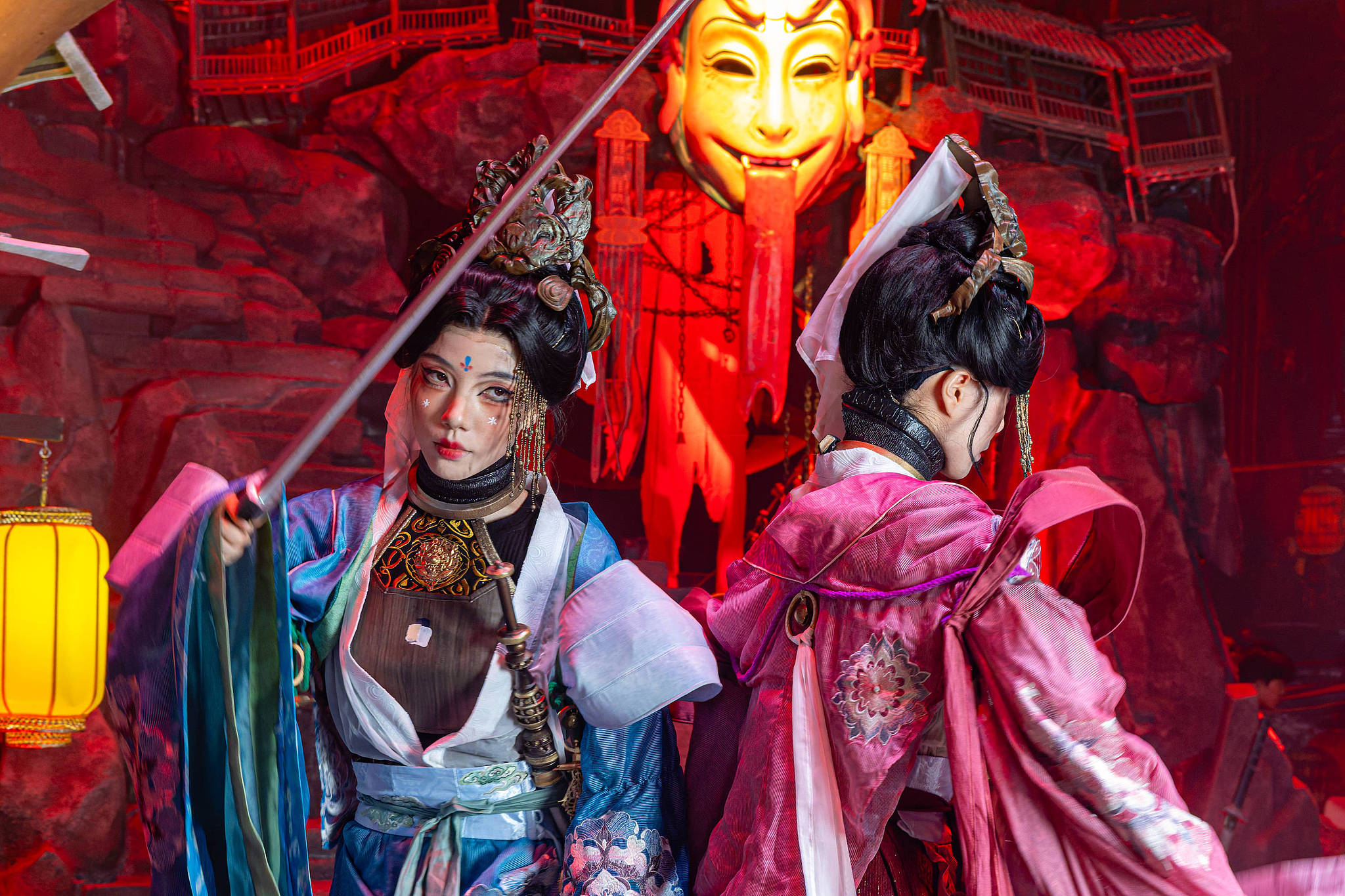
Two Chinese cosplayers showcase their costumes at the exhibition during Gamescom 2026 in Cologne, Germany, August 29, 2026. (Photo: VCG)
A complete industry chain is growing
The transformation goes far beyond individual titles. Chinese game exports are now propelled by an entire industrial chain moving overseas in concert – from development studios and localization specialists to advertising agencies, cloud platforms and legal compliance services. This collective momentum was vividly on display at Gamescom 2026.
Under the unified "Tianfu Games," a cluster of companies from Chengdu Hi-tech Zone made a joint appearance on this global stage, showcasing capabilities ranging from game development and technical services to cultural content and overseas operations.
The parallel overseas expansion of both creators and service firms underscores how the local gaming ecosystem has matured into a broader industrial cluster. Consequently, the economic impact of game exports is no longer limited to direct sales. It generates business for developers, publishers, advertisers, tech vendors and more – turning game exports into a broader form of digital entertainment trade.
Conclusion
The excitement at Gamescom is only one window into a much larger transformation. Chinese games are moving from individual hit products to global IPs, from single-title expansion to multi-genre competition, and from exporting games alone to building an international industrial ecosystem around them.
With a domestic player base of 684 million and first-half 2026 market revenue reaching 188.45 billion yuan, China remains one of the world's largest gaming markets. At the same time, overseas revenue from Chinese self-developed games reached $12.37 billion in the first half of the year, growing by 30.22% year on year.
The combination of a large home market, an experienced development ecosystem and growing overseas expertise is giving Chinese game companies a strong foundation for global expansion. The next challenge is whether they can turn that momentum into games and IPs with lasting appeal across different markets.