


2026 World Manufacturing Convention: Intelligent robots, drones power more real-world scenarios
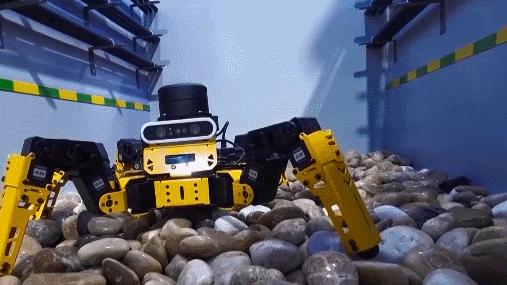
A bright yellow-color six-legged robot designed for high-risk power inspection. (Photo: CMG)
A range of intelligent equipment designed for high-risk industrial applications was showcased at the 2026 World Manufacturing Convention (WMC), demonstrating how advanced robotics and artificial intelligence (AI) are reshaping industrial safety and efficiency.
The 2026 WMC opened on Sunday in Hefei, east China's Anhui Province, attracting guests from more than 50 countries and regions. The event focuses on emerging industries, including intelligent connected new energy vehicles, next-generation information technology and AI, as well as future industries such as quantum technology, embodied intelligence and biomanufacturing.
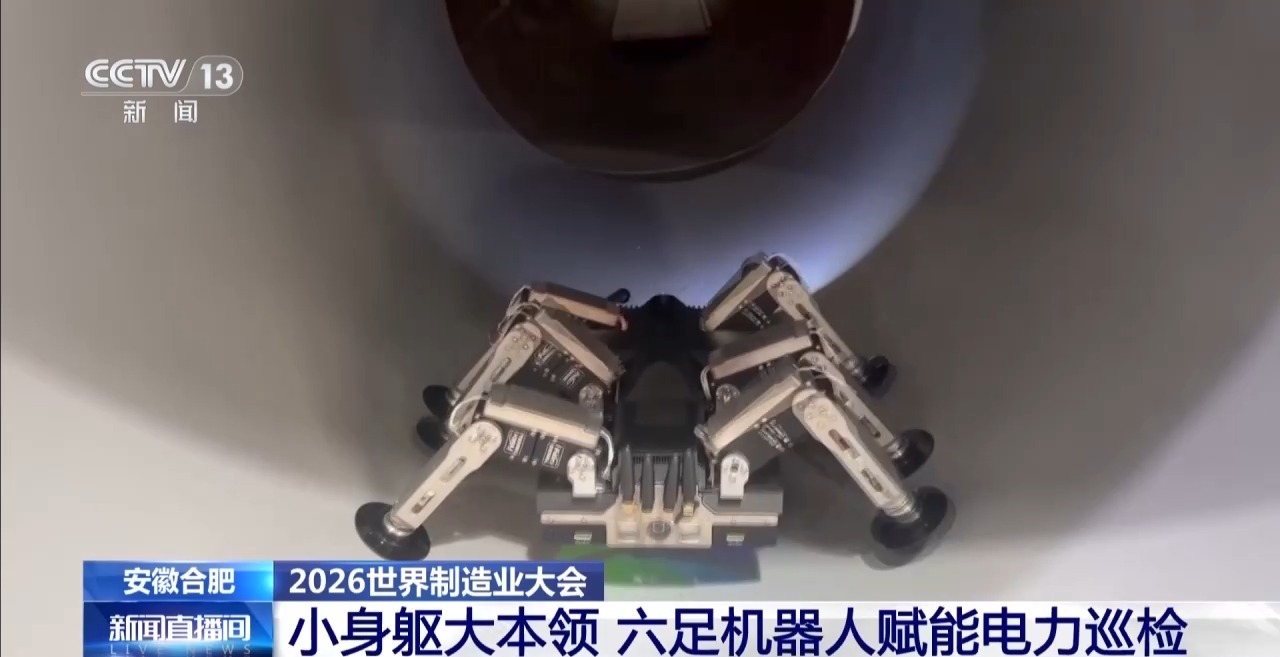
A hexapod-design robot with a suction cup on each leg. (Photo: CMG)
Among the highlights were several six-legged inspection robots. One hexapod robot attracted attention at the exhibition, with each of its six legs equipped with a suction cup that allows it to operate in enclosed spaces such as pipelines in power plants and substations.
The robot's six legs work in precise coordination, with three legs maintaining contact with the surface at all times. This design provides strong stability, enabling the robot to move safely along vertical walls and even inverted ceilings in hard-to-access inspection environments.
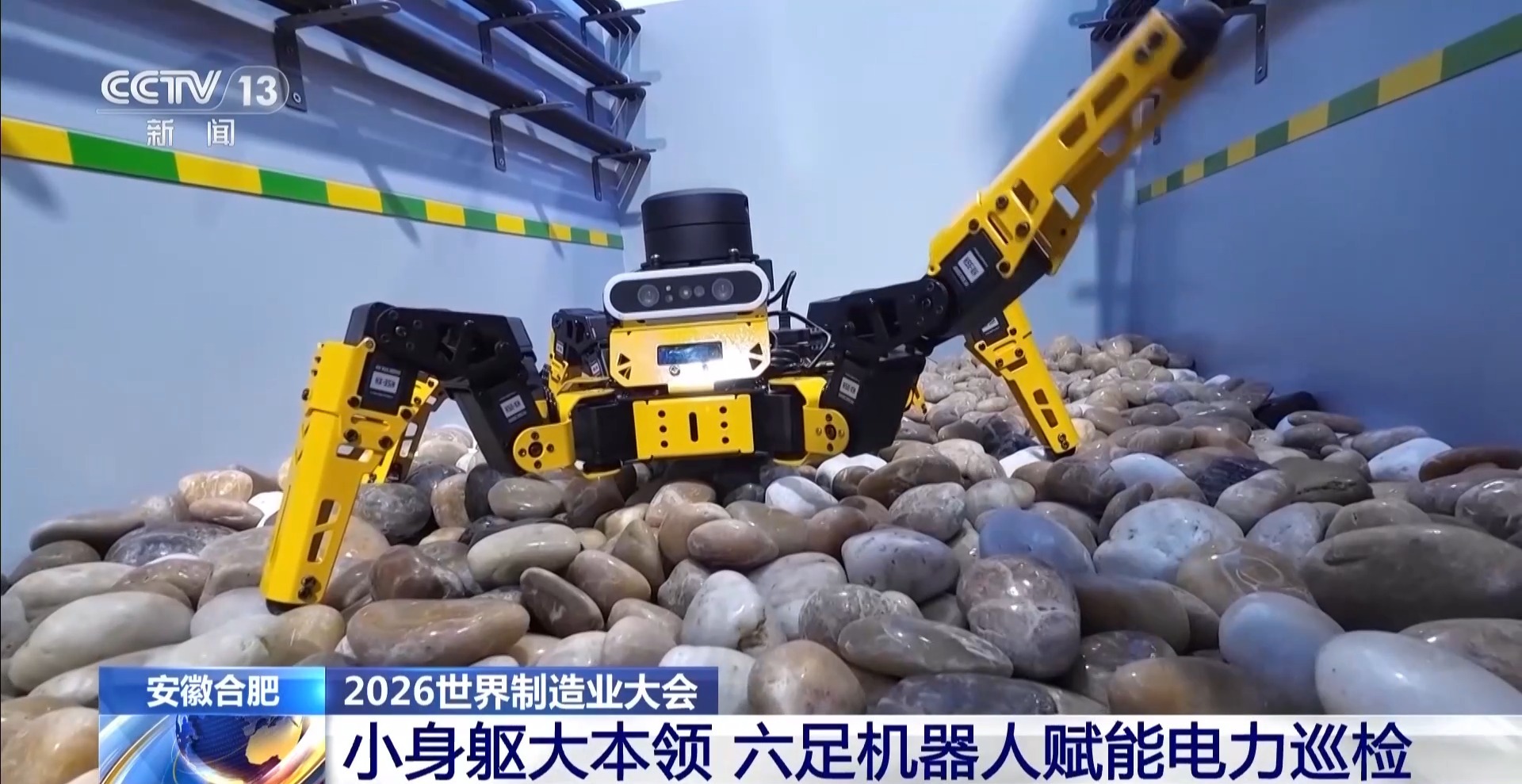
A bright yellow-color robot for high-risk power inspection. (Photo: CMG)
Another six-legged robot on display featured a bright yellow exterior, making it highly recognizable in high-risk power environments.
The LiDAR, visual cameras and infrared sensors mounted on the robot provide it with sharp "ears, nose and eyes," allowing it to detect abnormal sounds, gases and liquids that may indicate potential risks.
Despite weighing only 2.5 kilograms, the compact robot is powered by advanced intelligence. Through 5G connectivity and quantum-encrypted communication, it can connect with the Guangming Power Large Model, an AI model released by the State Grid Corporation of China, rapidly transmit data and generate real-time recommendations for handling detected problems.
Beyond individual operations, multiple robots can also work together as a team, significantly improving inspection efficiency.
In recent years, China's robotics industry is experiencing leapfrog development, with intelligent machines applied in global production and daily life.
According to the General Administration of Customs, in 2025 China's industrial robot exports surpassed imports for the first time. In the first half of the year, China exported industrial robots worth 6.29 billion yuan (about $939.1 million), an increase of 18.6%, with products shipped to 141 countries and regions worldwide.
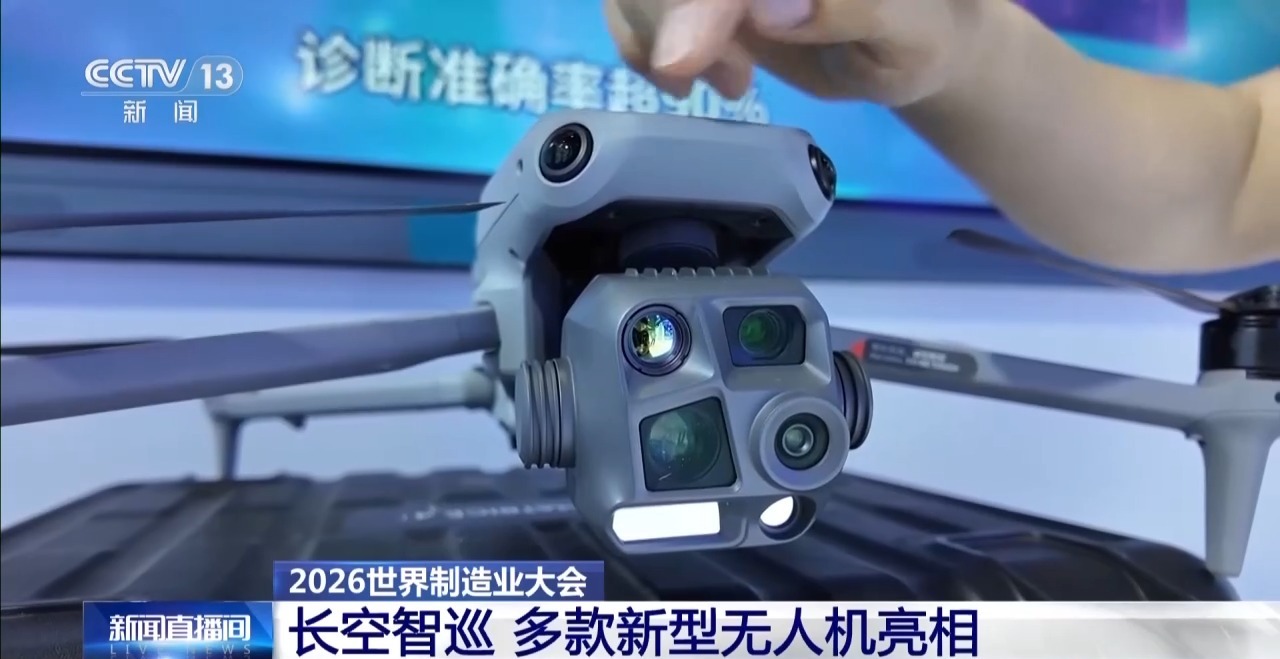
A power inspection drone with advanced visual capabilities. (Photo: CMG)
Drones with new capabilities in industrial inspection
Beyond ground-based robots, intelligent drones are also playing an increasingly important role in industrial applications.
A power inspection drone displayed at the event is equipped with advanced visual capabilities. It is not only able to capture images visible to the human eye, but also to identify hidden risks in electrical equipment caused by abnormal temperatures using thermal imaging technology.
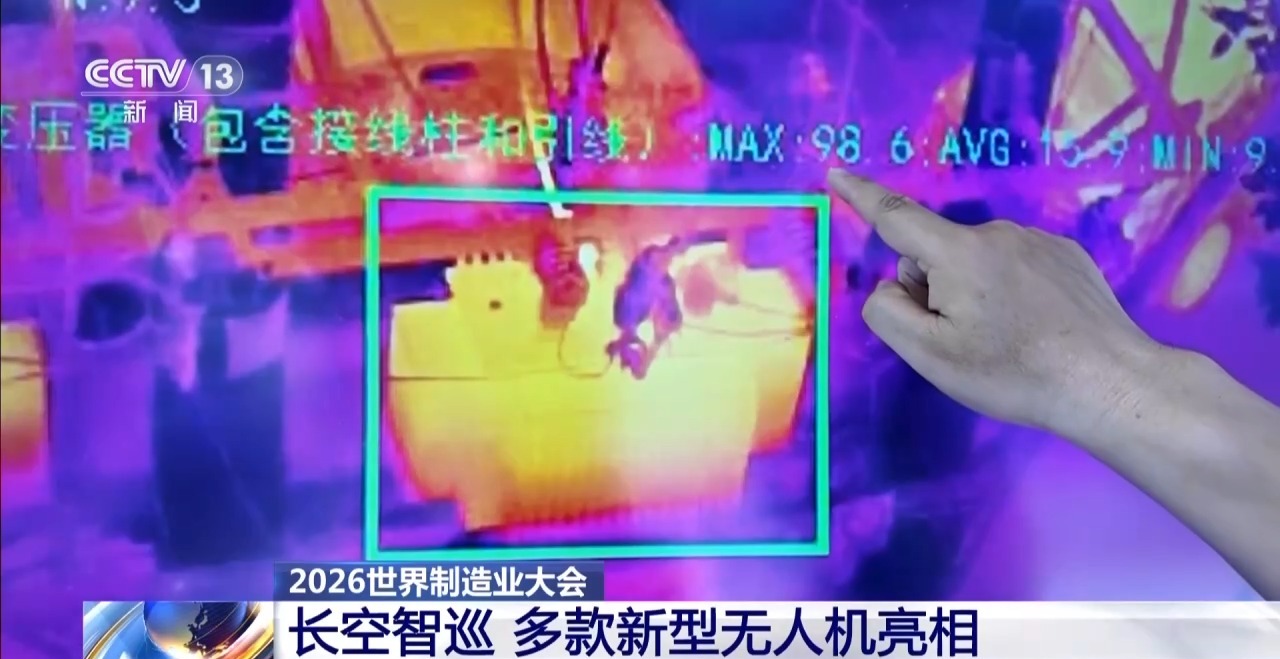
A thermal image showing a transformer with a highlighted area exceeding 98 degrees Celsius. (Photo: CMG)
During demonstrations, a drone's thermal imaging system detected a transformer with a highlighted area exceeding 98 degrees Celsius, flagging an abnormal reading that requires closer monitoring and further manual inspection.
This specialized visual large model has already been deployed across Anhui Province, covering 210,000 kilometers of distribution lines and analyzing more than 50 million inspection images. By leveraging these accumulated cases, the system can identify faults with an accuracy rate exceeding 94%, reducing the manual inspection workload by 80%. Its application has cut the fault-related outage rate across the province's power grid by more than 58%.
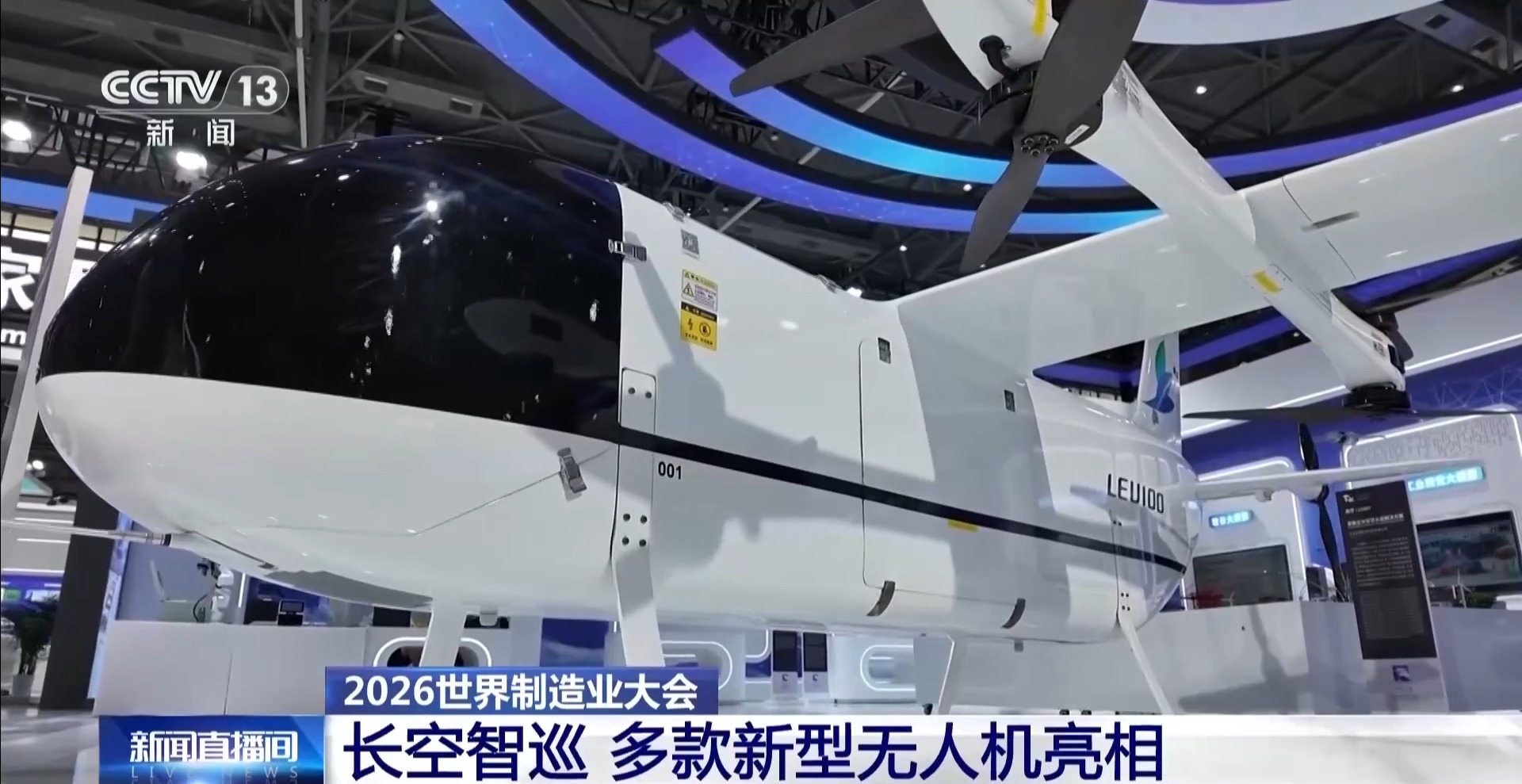
The large logistics drone displayed at the 2026 WMC. (Photo: CMG)
Another highlight was an electric logistics drone designed for cargo transportation. Featuring a rectangular cargo cabin, the drone can carry up to 50 kilograms of goods. Its innovative design combines a five-meter fixed wing with six groups of rotor blades.
The rotor blades enable it to take off and land vertically without a runway, while the fixed wing allows high-speed flight of up to 120 kilometers per hour and a range of 150 kilometers.
It can be widely applied in geological exploration, security patrols, emergency medical services and logistics delivery.