


Hungarian entrepreneur calls Wuhan mayors dialogue a beginning, not an ending
Hungarian entrepreneur Albrecht Viktor said he wants to bring Wuhan and Europe closer by connecting universities, cities and young people, after attending the 2026 Global Mayors Dialogue in Wuhan.
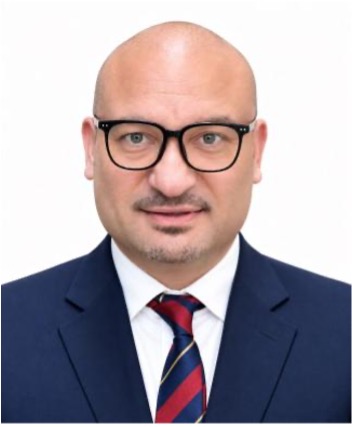
Albrecht Viktor
"I want to bring Wuhan closer to Europe and Europe closer to Wuhan," Albrecht said.
The dialogue, held September 18 to 20, brought municipal and institutional leaders from around the world to Wuhan.
Albrecht is president of the Common Future Chinese-European Hungarian Economic Association.
He attended as a representative appointed by the mayor of Gyenesdias, a lakeside town on Lake Balaton.
In December Gyenesdias Mayor Gal Lajos led a delegation to Wuhan and signed a cooperation agreement with Qiaokou district. Albrecht attended to deepen those ties and to connect them to a wider European network.
"For me, these are not separate activities," Albrecht said in an interview with People's Daily. "They are parts of the same mission: to connect people, knowledge and institutions."
As a result of the meetings and preparatory work, relationships are developing between Gyenesdias and Keszthely in Hungary and Wuhan's Qiaokou and Wuchang districts.
Cooperation areas include higher education, sport, healthcare, culture, tourism, innovation, environmental protection and economic development.
"It is not enough simply to say that Hungary and China should have strong relations," he said. "We need to connect municipalities, universities, hospitals, sports institutions, businesses and people directly."
A meeting point for Europe, China
Wuhan has the academic, scientific, technological, healthcare, industrial and transportation foundations to become an important meeting point between Europe and China, Albrecht said, but Europe also needs to understand Wuhan better.
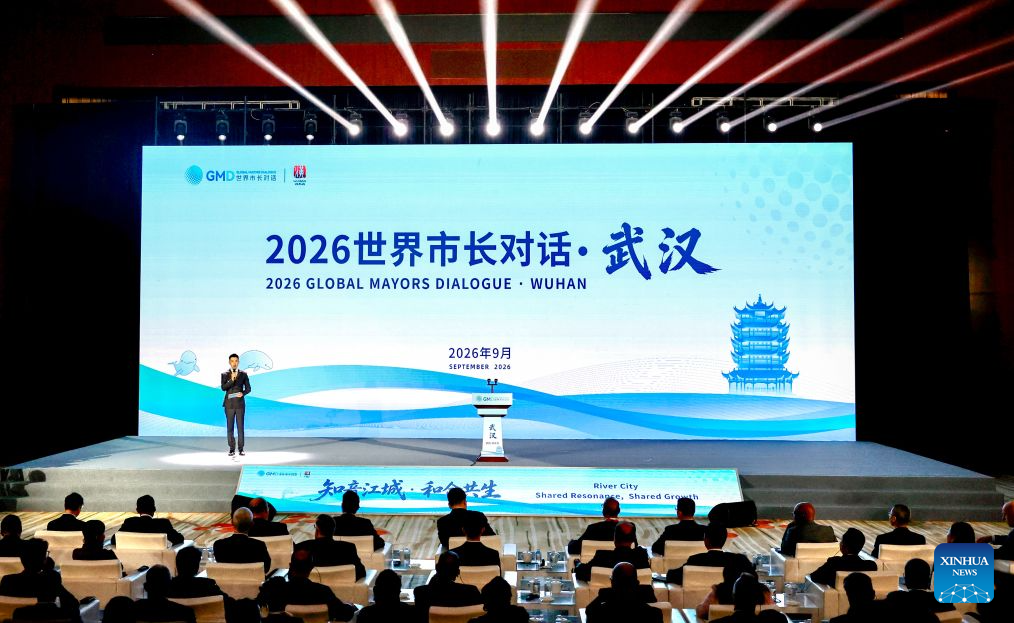
The 2026 Global Mayors Dialogue – Wuhan in Central China's Hubei Province. (Photo by Ni Na/Xinhua)
"I do not want to bring only Hungarian delegations here," he said. "I would like municipal and institutional leaders, professors, students, researchers, doctors, coaches, entrepreneurs and investors from other European countries to experience Wuhan as well."
He said he also wants to connect Wuhan's universities, researchers, young people, businesses and innovations with Hungarian and European partners.
"Maintaining continuous communication in today's international environment is more important than ever," he said.
China, Hungary and other European countries have their own interests, perspectives and priorities, Albrecht said.
"That is precisely why dialogue is so important," he said. "The more students, professors, entrepreneurs, doctors, researchers, athletes, journalists and local communities meet one another, the better we can understand each other's way of thinking."
International media must also play a role.
"We should not only talk about one another; we should increasingly talk with one another," Albrecht said.
Connecting universities, young people
Albrecht said universities and young people are the long-term foundation of these relationships.
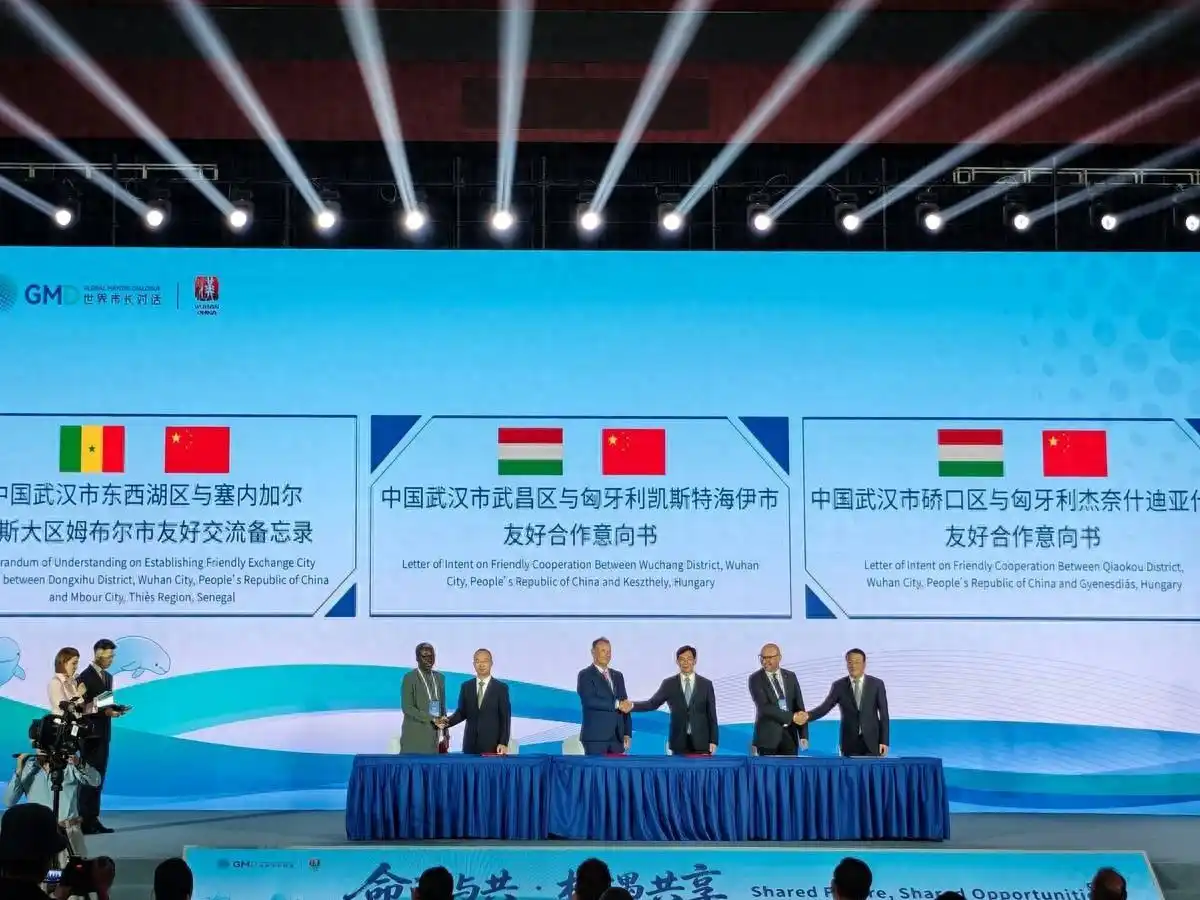
Zhao Hongliang, deputy Communist Party of China (CPC) secretary of the Qiaokou District CPC Committee, and Albrecht Viktor, special representative of the mayor of Gyenesdias, Hungary, sign an agreement establishing a friendly cooperation and exchange relationship between the two localities on Sunday September 20. (Photo: Hubei Daily)
A European student who studies in Wuhan returns home with more than academic knowledge, he said, and a young person from Wuhan who studies in Hungary or elsewhere in Europe gains the same.
"If we connect universities and young people today, tomorrow they will connect Europe and China," he said. "Overall, if I had to answer what will make Wuhan, within a few years, one of China's most developed cities, it would be this kind of international outlook, which will be seen in Europe and countries around the world.
"I am sure that I will support the young people who make this possible. I will help them in the same way."
A city is made great by its people
Wuhan's strength also lies in the attitude of its people, Albrecht said.
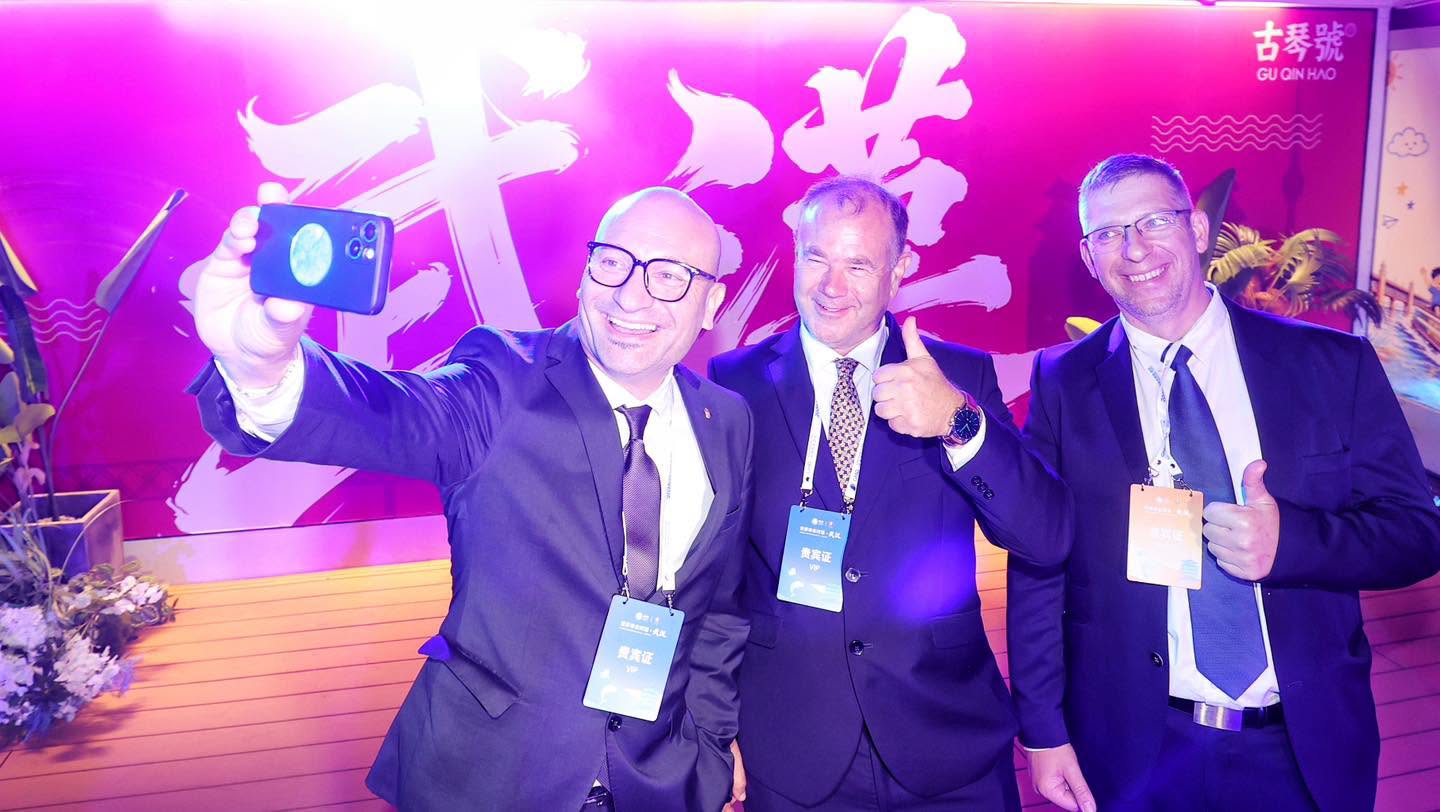
Participating guests board the Guqin cruise ship to enjoy a night view of the Yangtze River on Friday September 18. (Photo: Economic Daily)
"Over the past 15 years and particularly during these recent international meetings, I have experienced tremendous openness and hospitality in Wuhan, together with something I would describe with one important word: humility," he said. "Wuhan does not simply want to show itself to the world. Wuhan also wants to listen to the world."
A city was not made great "only by its skyscrapers, universities or technology," Albrecht said. "Above all, it is made great by the people who build it, generation after generation."
Albrecht said leaders and professionals at the dialogue found they share many questions: how to make cities more livable, use technology responsibly, improve education and healthcare, protect the environment and create a better future for the next generation.
"I do not measure the value of an international meeting by how many business cards we take home, but by how many meetings become genuine cooperation," he said.
"For me, this event is not an ending. It is a beginning."
Looking five to 10 years ahead, Albrecht said he wants results rather than plans, with young people, universities, cities, businesses and professionals beginning to find one another naturally.
"The greatest success would be to reach the point where we no longer need to organize every relationship ourselves," he said. "Our children should not have to choose between China and Europe.
"They can be part of a generation that connects the two naturally."
Albrecht said that if the right people and institutions are connected today, the next generation would continue building these relationships naturally.
"For me, this is what our shared future means," he said.