


Hainan steps up efforts to build a low-carbon island
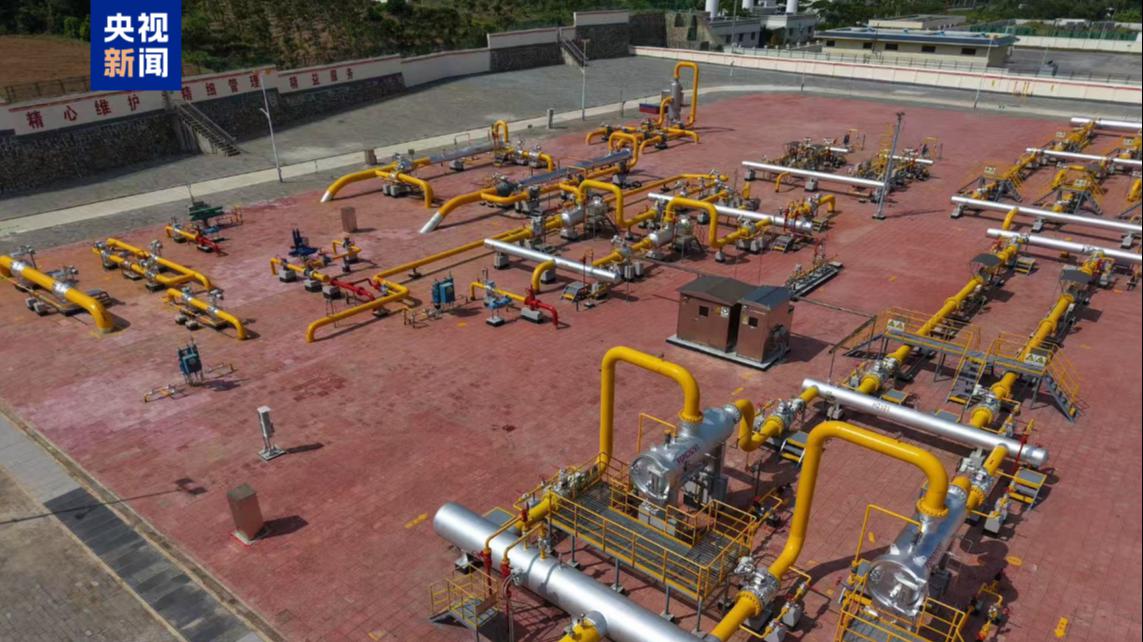
China's first island-loop natural gas pipeline network, south China's Hainan Province. /CMG
South China's Hainan Province is stepping up efforts to build a low-carbon economy, with cleaner energy, greener transportation and a more integrated energy system forming key parts of the transition.
The latest progress came on Wednesday, when the country's first island-loop natural gas pipeline network, the Hainan natural gas network, surpassed 35 billion cubic meters in cumulative gas transmission, according to PipeChina.
The 899-kilometer network has 14 processing stations and 42 valve chambers, passing through 14 cities and counties and serving more than 10 million people. It mainly supplies gas to power plants, industrial users and urban gas customers.
The natural gas transported through the network has replaced an estimated 46.6 million tonnes of coal, reducing dust emissions by more than 25.4 million tonnes and carbon dioxide emissions by more than 51.2 million tonnes, according to PipeChina.
But Hainan's low-carbon transition goes beyond its energy supply.
The island is also moving toward cleaner transportation. Under a development plan released in July, Hainan will steadily advance a ban on the sale of new fuel-powered vehicles by 2030, making it the first provincial-level region in China to adopt such a target.
The plan also calls for all newly added or replaced vehicles in public services and social operations, except those for special purposes, to use clean energy by 2030. All newly added or replaced private vehicles will also be powered by new energy.
Hainan is also expanding its clean-energy base. According to the provincial government's 2026 work report, by the end of 2025, clean energy accounted for 87.2% of the province's total installed power generation capacity. The province has also been advancing projects involving renewable energy, nuclear power and other clean-energy sources.
A 2025 plan for building Hainan into a low-carbon island sets longer-term targets. It aims for the province to peak carbon emissions before 2030, fully build a low-carbon island by 2045, and achieve carbon neutrality by 2060. The plan covers six areas, including reducing emissions from industries, cities and transportation, increasing carbon sinks, and improving carbon management.