


China celebrates ninth farmers' harvest festival as agriculture posts record gains
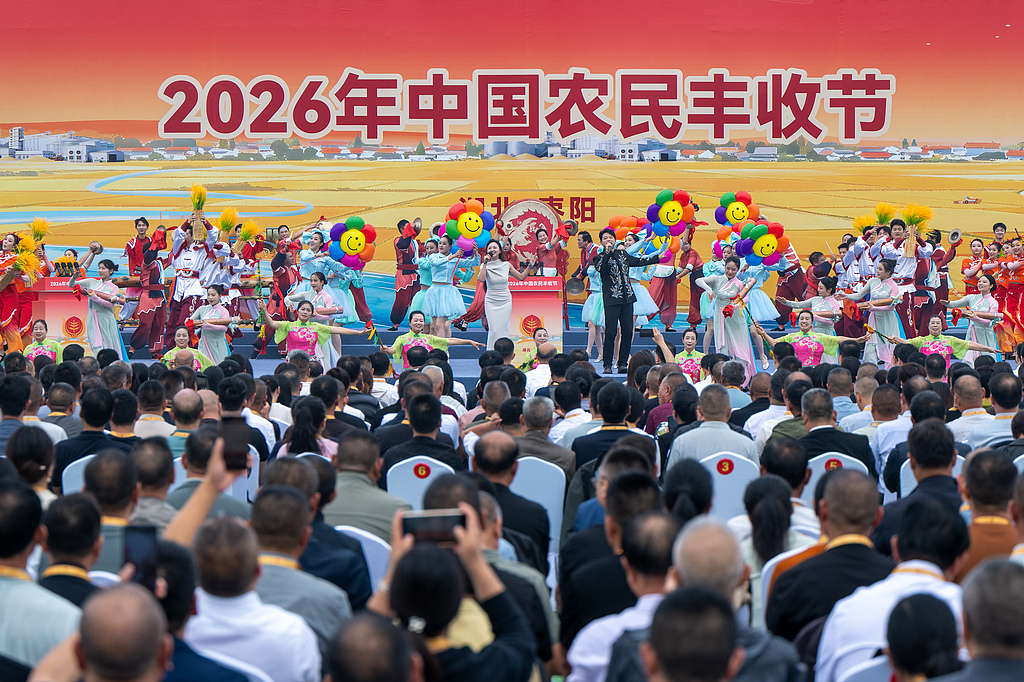
The 2026 Chinese farmers' harvest festival national main event is held in Dongjiao Village, Zaoyang City, Xiangyang, central China's Hubei Province, September 23, 2026. (Photo: VCG)
As autumn arrives, rice fields in northeast China turn into vast seas of gold, corn cobs glow amber under the sun across the North China Plain, and orchards on the Loess Plateau in northwest China are dotted with red apples.
The harvest speaks quietly, yet vividly, of a year of hard work and the rewards reaped by millions of farmers across the country.
A festival for farmers
The autumnal equinox this year marks the ninth Chinese farmers' harvest festival, a national festival established in 2018 and held each year around the same date to honor China's farmers and celebrate the harvest.
China is home to hundreds of millions of farmers, whose work helps put grain on people's tables and vegetables, fruits and other agricultural products into daily life.
The harvest festival is, above all, a tribute to their labor. It gives wider recognition to the contribution of farmers and marks their place on the nation's calendar.
China's agricultural report card
Behind the annual celebrations is the steady progress of China's agricultural sector.
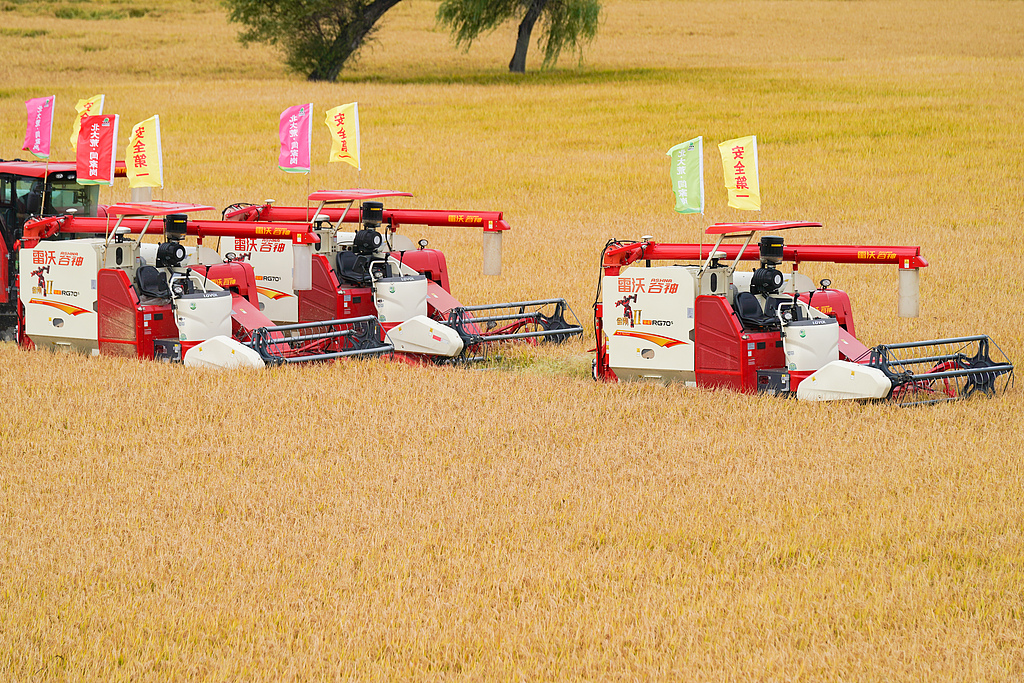
Three autonomous combine harvesters operate during a harvest ceremony in Harbin, northeast China's Heilongjiang Province, September 23, 2026. (Photo: VCG)
China's grain output reached 714.88 million tonnes in 2025, remaining above the 700-million-tonne mark for the second consecutive year.
Summer grain output this year reached a record 150.75 million tonnes, or 301.49 billion jin, exceeding 300 billion jin for the first time. Early rice output has remained above 56 billion jin for six consecutive years.
Meanwhile, the per capita disposable income of rural residents rose 5.5% in real terms in the first half of this year to 12,699 yuan (around $1,893).
China's annual grain output of more than 700 million tonnes translates into per capita grain availability of over 500 kilograms, well above the internationally recognized food-security benchmark of 400 kilograms.
The record summer grain harvest also provided a strong start to the 15th Five-Year Plan period (2026-2030), underscoring the country's continued capacity to secure grain supplies while improving agricultural production.
Celebrating harvests across the country
This year's festival features a nationwide main event in Xiangyang, central China's Hubei Province, along with 46 other major activities covering agricultural science and technology, legal services, medical care, sports and culture and other areas, according to the Ministry of Agriculture and Rural Affairs.
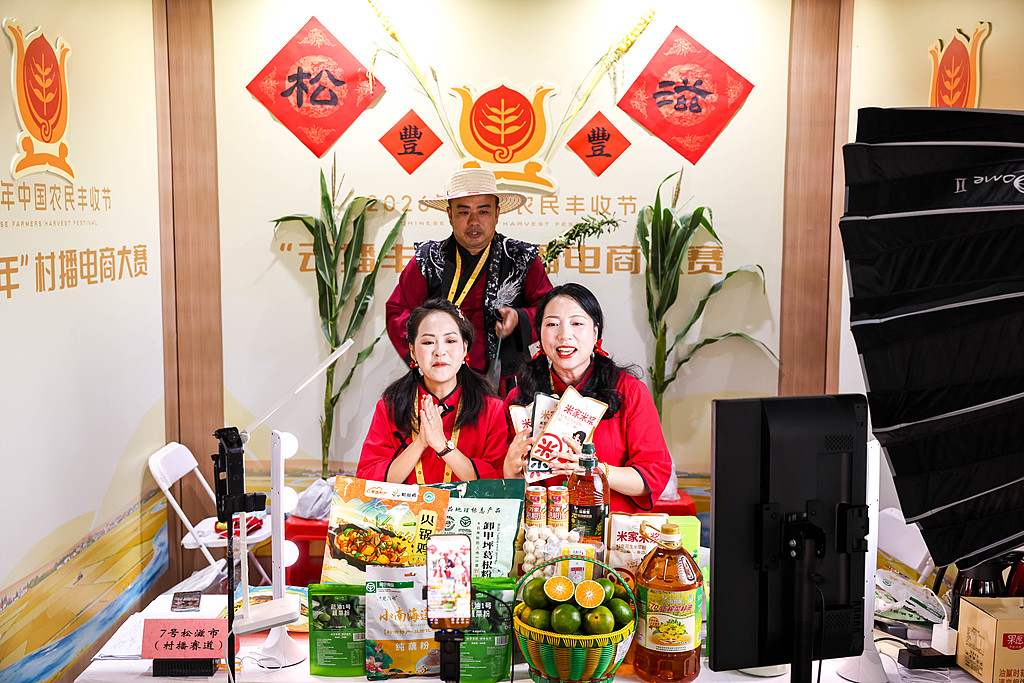
Villagers are hosting a live stream in Dongjiao Village, Zaoyang City, Xiangyang, central China's Hubei Province, September 23, 2026. (Photo: VCG)
Together, the activities aim to meet farmers' needs in production and daily life, showcase the fruits of the harvest, highlight the role of farmers, promote traditional farming culture and boost consumption of agricultural products.
At the harvest fair in Dongjiao Village on the outskirts of Xiangyang, local specialties are taking center stage. From Xiangyang's signature "Eight Bowls" feast and Qianjiang crayfish to Macheng's traditional hanging-pot banquet, visitors can sample local delicacies while experiencing the flavors of a bumper harvest in Hubei.
Beyond the feast, one of Dongjiao Village's most telling stories is preserved in 43 old account books kept in the village reception hall.
According to Hu Aiguo, the village Party secretary, the village collective was once more than 90,000 yuan in debt. For five decades, village officials have recorded every item of income and expenditure, down to travel expenses of just a few cents. That practice of keeping the books open and transparent helped build trust between village officials and residents.
With that trust as a foundation, villagers and officials worked together to turn the village's fortunes around, developing peach contract farming, aquaculture and rural tourism. Per capita income has since risen from less than 80 yuan decades ago to more than 30,000 yuan in 2025.
The 43 old account books record more than financial transactions. They chronicle a decades-long journey of trust, collective effort and rural revitalization.