


The making of a Chongqing brother: teaching, service, and building a life in China
Francis Stonier never anticipated that a brief academic exchange would ultimately lead him to build a life thousands of miles from home.
Today, the American professor teaches at the Faculty of Education, Southwest University in Southwest China's Chongqing municipality, where he has lived for nearly seven years. For him, China has long ceased to be merely a workplace; it is now his second home.
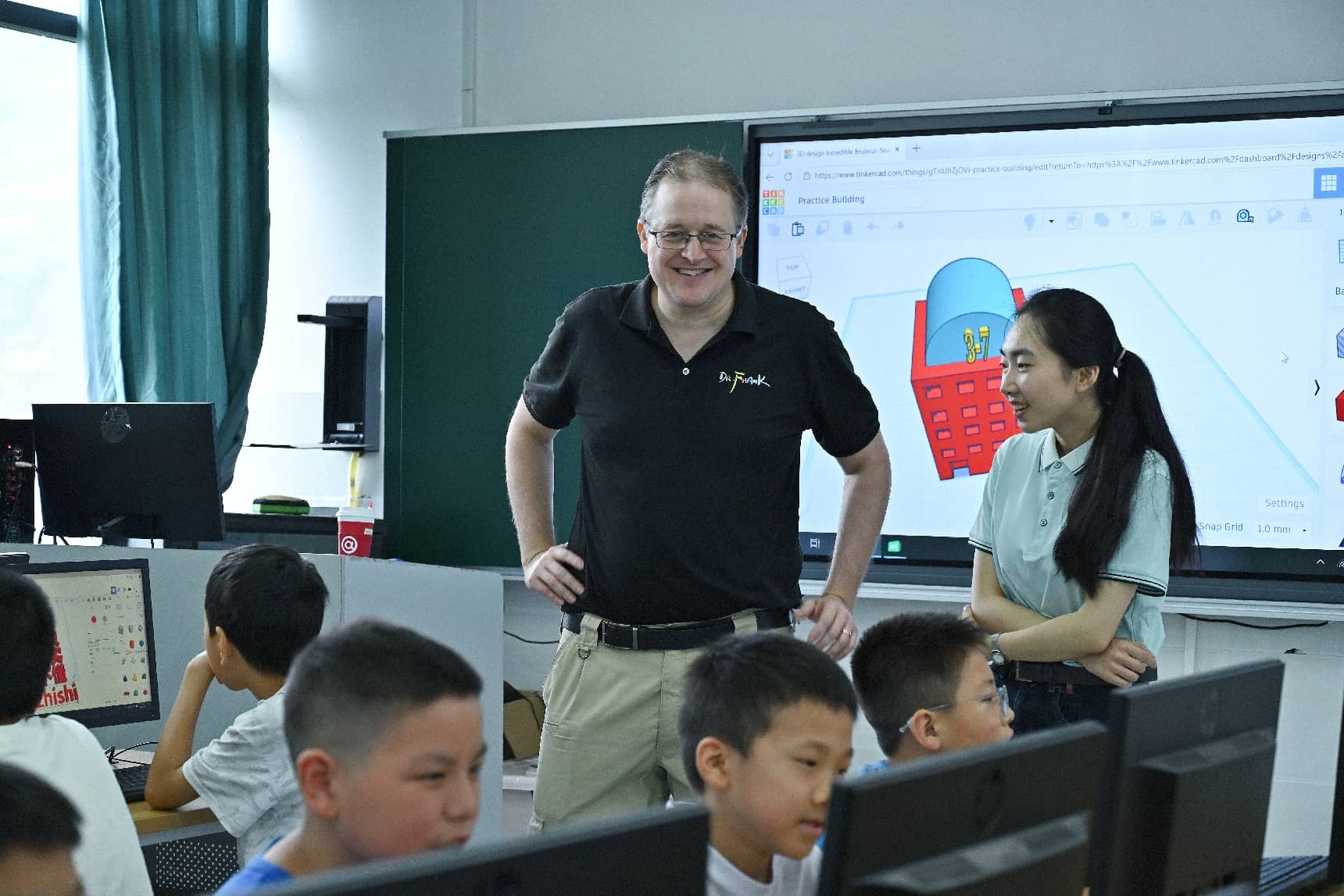
Francis Stonier instructs students on 3D modeling at a primary school in Beibei district, Southwest China's Chongqing municipality. (Photo: Long Wenquan)
His connection with China began in 2008 during his first visit, as part of an academic exchange program led by his mentor, the late American educator Dr. Dwight Allen. A longtime observer of China, Allen told him before departure: "You're going to love this place."
He was right.
"The people I met and the experiences I had here exceeded anything I could have imagined," Stonier recalled.
Though he returned to the US afterward, his connection with China never faded. While teaching at a US university, he formed close friendships with visiting scholars from China's Southwest University. They repeatedly encouraged him to join their campus in Chongqing.
"Come to Chongqing, Stonier! You'll find your ideal research environment at Southwest University," they told him.
Stonier's research focuses on interdisciplinary education, an area the university aimed to strengthen—he accepted the invitation.
In autumn 2019, he officially joined Southwest University, marking the beginning of a new chapter.
One of his earliest initiatives was ambitious: designing a comprehensive STEAM (Science, Technology, Engineering, Arts, and Mathematics) education framework tailored specifically to China's educational landscape. While STEAM pedagogy—which emphasizes cross-disciplinary problem-solving—had gained traction internationally, systematic implementation within Chinese universities was still emerging. Stonier dedicated countless hours to reviewing literature and developing curriculum materials, ultimately crafting a cohesive program spanning kindergarten through university levels.
What distinguishes his teaching is his ability to translate abstract scientific principles into tangible, experiential learning.
"You cannot simply overwhelm young students with theoretical definitions," he explained.
When introducing X-rays, for instance, he avoids complex physics equations. Instead, he asks students to recall personal experiences, such as a recent dental visit or a cast after a broken bone. He then uses simple materials like black construction paper and white cotton swabs, guiding students to arrange the swabs into skeletal shapes to visually simulate radiographic imaging.
By the end of the lesson, an intangible concept becomes concrete and memorable.
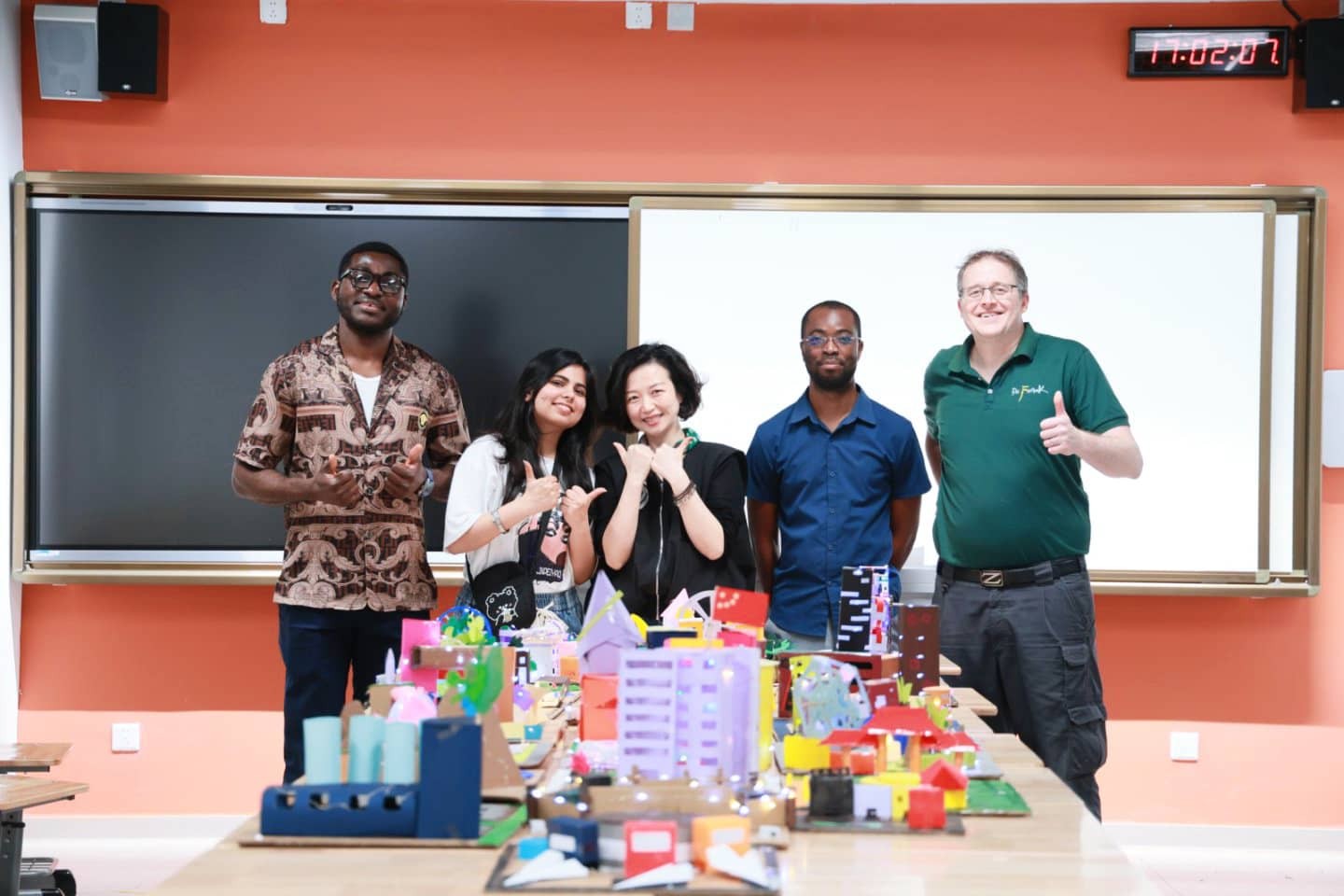
Francis Stonier (first from right) takes a group photo with students to mark the completion of a project-based learning program at the Bashu Secondary School in Southwest China's Chongqing municipality. (Photo courtesy of Francis Stonier)
Stonier adheres to a clear classroom principle: every 3D-printed model and student-crafted project belongs to the learner.
"Students must hold their own creations," he said. "That tactile moment is often where genuine scientific curiosity takes root."
His coursework has since expanded beyond 3D printing to include computer programming, robotics, and other emerging technologies. Recognized for his broad expertise and innovative methods, students affectionately dub him the "magic professor."
He is currently establishing a dedicated 3D printing laboratory at Southwest University.
"The value of education lies in bringing cutting-edge technology into the classroom and giving every student the opportunity to create with it," he said.
Yet for many in Chongqing, Stonier is remembered not only for his academic contributions but also for his actions during the devastating 2022 wildfires in Jinyun Mountain, Beibei district.
As the blaze spread across the mountains, thousands of local residents braved temperatures approaching 40 degrees Celsius, transporting supplies uphill on motorcycles with baskets strapped to their backs.
Upon seeing online appeals for volunteers, Stonier recognized an urgent need. A large number of donated chainsaws had arrived to help establish firebreaks, but most remained unassembled in shipping crates. Rescue teams desperately required personnel capable of quickly assembling and operating them. This proved to be familiar territory.
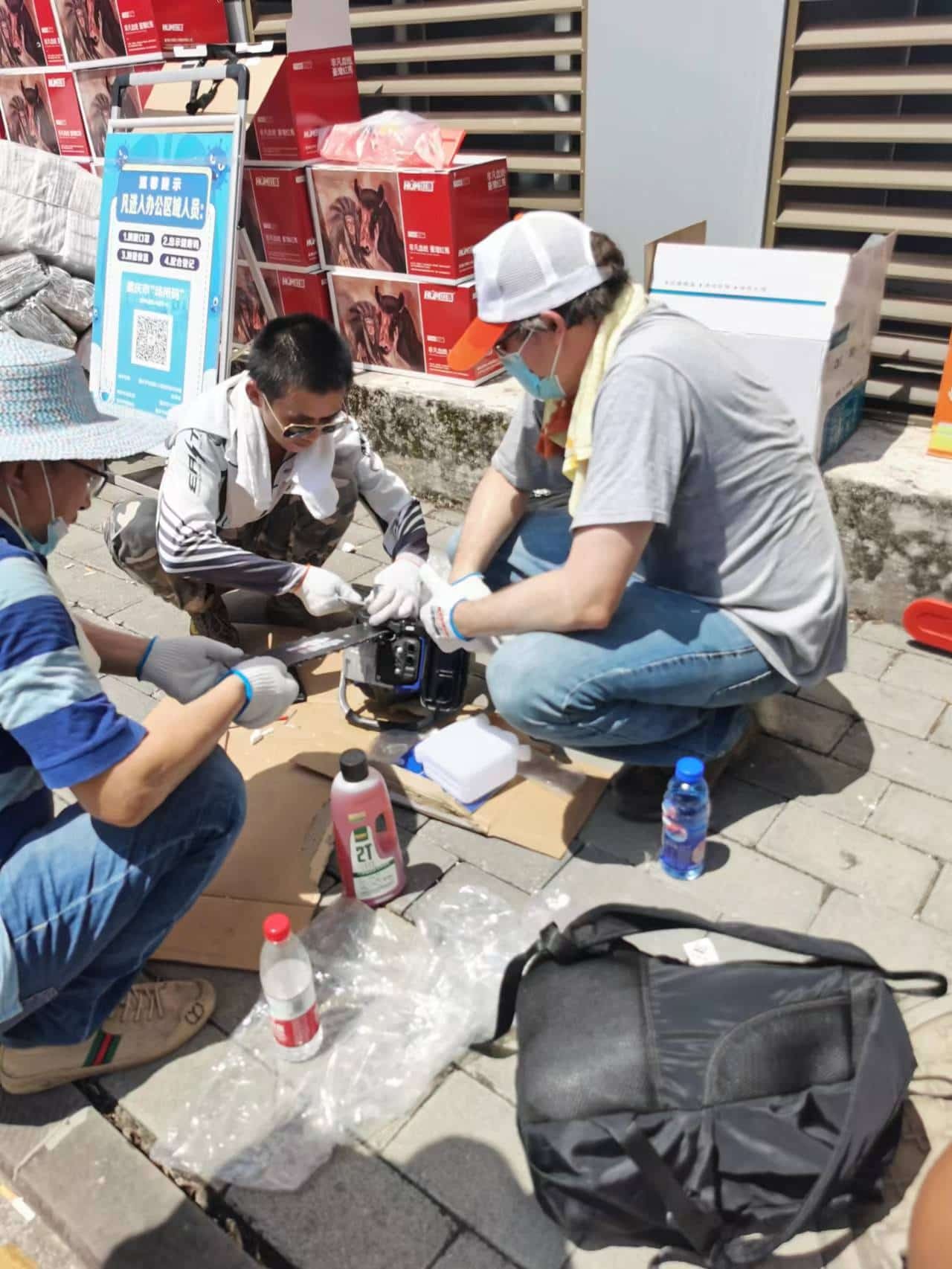
Francis Stonier (right) assembles a chainsaw at the Jinyun Mountain assembly point in Beibei district, Southwest China's Chongqing municipality, while waiting to head uphill for rescue efforts. (Photo courtesy of Francis Stonier)
Raised in the forested hills of Missouri, Stonier spent much of his youth helping his family prepare firewood for wood-burning stoves, mastering chainsaw assembly and maintenance along the way.
After coordinating with a translator, he drove directly to the logistics hub. Confronted with mounds of disassembled parts, he worked alongside two Chinese volunteers, rapidly assembling and testing four chainsaws. He then demonstrated efficient assembly techniques to other responders. To transport the equipment toward the fire zone, he and his translator flagged down a taxi until the road grew too steep. There, they joined a convoy of volunteer motorcyclists ascending the mountain. With a heavy backpack secured, Stonier climbed onto the rear of a motorcycle and headed toward the smoke-choked ridgeline.
Despite hazardous conditions, his resolve never wavered. Upon reaching a staging area near the primary firebreak, he personally handed over the assembled chainsaws, flashlights, and other critical supplies to frontline firefighters. Once the blaze was contained, a photograph of Stonier seated on a motorcycle, chainsaw in hand, en route to the fire zone, quietly went viral across Chinese social media. Residents praised his courage and selflessness, gradually bestowing upon him the affectionate moniker "Chongqing brother."
"I love that nickname," he said with a smile. "I've always felt deeply connected to this community. When our shared home faces danger, it's only natural to step forward and help."
The experience profoundly shaped his understanding of the local spirit. "When disaster struck, no one asked, 'What can I get?' Instead, everyone asked, 'How can I help?'" he reflected. "It was those countless small, determined acts that revealed the profound mutual care embedded in this community."
Since relocating to China, Stonier has also dedicated substantial time to supporting education in rural areas.
"I don't track expenses or seek recognition when volunteering," he stressed. "I do it because I want to. It's always been part of my life, and now it's woven into my life here."
Over the years, he has visited nearly 100 schools in and around Chongqing. Beyond teaching, he has worked to connect rural students with social resources, creating opportunities for them to broaden their horizons. He has brought them to Southwest University, as well as museums of natural history, science and technology centers, and many other educational venues.
At the close of our conversation, I asked what he would say to his late mentor, Dr. Allen, if he could see him today.
After a thoughtful pause, Stonier smiled.
"In 2008, he told me that China would become a place where talented people from around the world would want to study and work. At the time, I thought, 'Maybe.'"
"Now his prediction has come true," he said. "More and more international scholars and young professionals are choosing to study and build their lives in China. I'm fortunate to be one of them—to have found a home here and a purpose in sharing what I've learned with more young generations."
Looking back on the journey, Stonier added with a smile: "When he sees everything I've done over the years, I think he'd be proud of me."