


How can the world build a sustainable future? Start with engineers
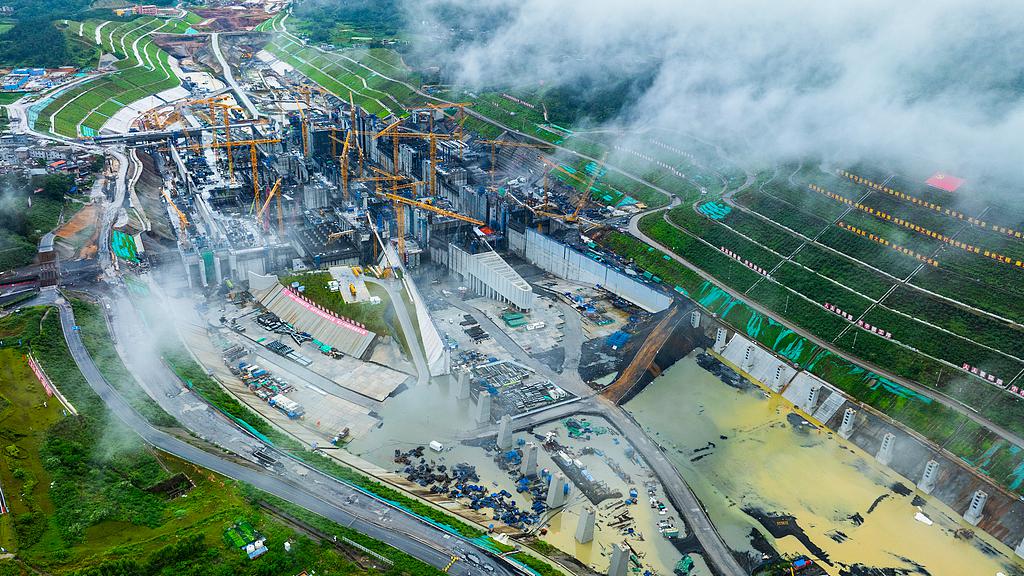
A view of the Pinglu Canal under construction, Qinzhou, south China's Guangxi Zhuang Autonomous Region, August 7, 2025. /VCG
At a high level dialogue marking the fifth anniversary of the Global Development Initiative (GDI), Chinese Vice President Han Zheng announced China's new engineering capacity building program. Over the next five years, China will train 10,000 engineers from developing countries across transport infrastructure and information and communications technology (ICT).

An aerial view of the Huajiang Grand Canyon Bridge, southwest China's Guizhou Province, May 4, 2026. /VCG
Why engineering capacity matters for sustainable development
With fewer than five years left to fulfill the 2030 Agenda for Sustainable Development, the world faces severe hurdles: mounting climate pressures, widening development gaps, persistent cycles of poverty, inadequate infrastructure and limited development capacity across the Global South. At the root of these difficulties lies a major shortfall in engineering capacity.
Engineering applies scientific knowledge and technical methods to solve real development problems in local economical, societal and environmental context. More than mere technical specialists, engineers are architects of sustainable development. They translate scientific and technological innovation into tangible goods, services and infrastructure – roads, bridges, energy systems, water pipelines and digital networks – which underpin economic growth, social inclusion and environmental protection.
Sustainable Development Goals (SDGs), ranging from clean water and sanitation to affordable clean energy, resilient infrastructure and sustainable cities, cannot be realized without sufficient skilled engineering talent. Engineers drive renewable‑energy transitions, advance urban planning, mitigate waste and pollution, and build low‑carbon, climate‑proof infrastructure. Engineering capacity therefore represents a fundamental enabler of green, inclusive, sustainable growth, rather than purely technical know-how.
Closing engineering capacity gaps is critical to bridging overall development divides. Many Global South nations lack institutional and human resources to plan, execute and maintain complex infrastructure. They also struggle to harness digital and AI tools for digital‑green transitions in safe, equitable and ethical ways. While artificial intelligence empowers engineers to forecast energy demand, boost agricultural yields and spot infrastructure risks early, it also poses risks such as unreliable outputs and heavy resource consumption. Maximizing these technologies depends on guiding them toward collective global benefit.
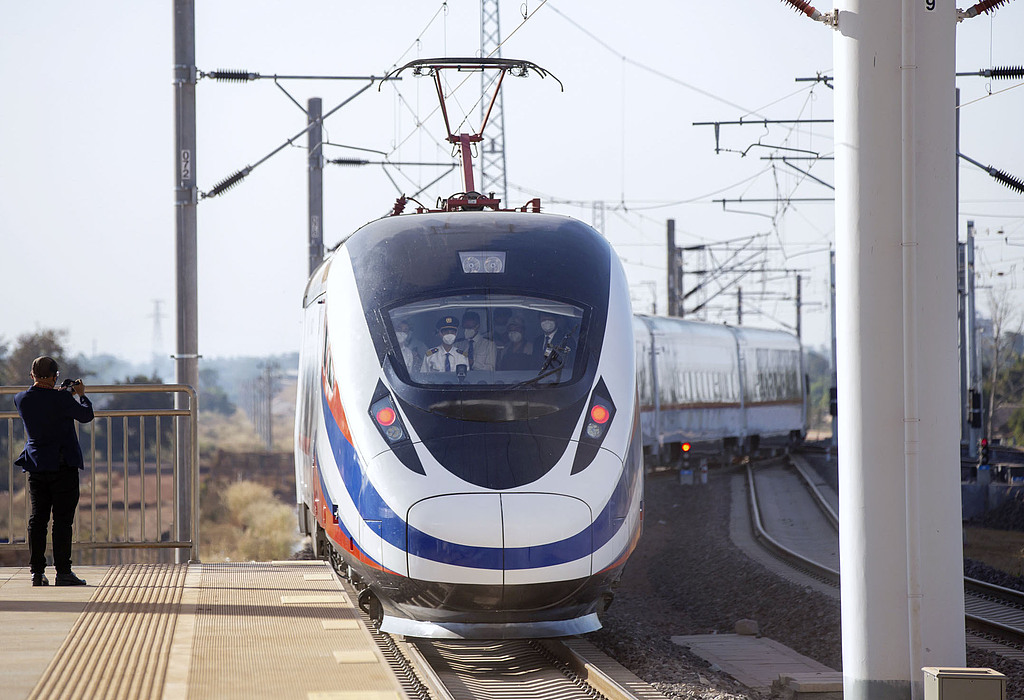
A train on the Chinese-built railway that connects the Lao capital to the Chinese city of Kunming, Vientiane, Laos, December 3, 2021. /VCG
A timely and much‑needed undertaking
China's engineering capacity building program offers a practical response. Building on precedents including the African Engineering Capacity-Building Initiative and China-Africa talent training schemes, it directly addresses local skill shortages constraining Global South progress. Its focus on transport infrastructure and ICT supports connectivity, trade, digital inclusion and economic transformation.
The China-Laos Railway has created over 100,000 local jobs, carrying 43 million passengers and 48.3 million tonnes of goods in three years. The Addis Ababa-Djibouti Railway generated more than 55,000 local positions and strengthened cross-border links.
Digital infrastructure cooperation has meanwhile mitigated digital divides and opened international markets for small- and medium-sized enterprises. Transport connects rural producers to markets and expands access to education and healthcare; ICT enables e-governance, remote learning and telemedicine. Both sectors underpin inclusive sustainable development.
This initiative embodies international cooperation built on solidarity and shared prosperity, advancing people to people exchanges, technology transfer and the vision of a community with a shared future for humanity. By investing in young engineers, it cultivates home grown sustainable development leaders.

The interior of a data center, Jiujiang, north of China's Jiangxi Province, May 22, 2022. (Photo: VCG)
An African experience in global cooperation
Aligning with these efforts, the World Federation of Engineering Organizations (WFEO) Engineering Capacity Building for Africa Program (ECBAP), supported by the China Association for Science and Technology (CAST), strengthens African engineering capacity, focused on digital and AI capabilities, through improved engineering education, professional upskilling and collaborative innovation.
Launched in Kenya in March 2025, ECBAP has delivered "AI for engineering" training across Kenya, Uganda, Cabo Verde and Tanzania, and will cover more African countries in the coming years. Recently, Its inaugural "AI + Engineering" Challenge drew 141 practical proposals from countries in all African subregions targeting African priorities including energy transition, food security and resilient water infrastructure, with promising solutions earmarked for entrepreneurial incubation.
From ECBAP practices, we have learnt that there are strong demands on engineering capacity development, especially digital engineering capacity in African countries for accelerating the implementation of the SDGs, and there is high interest of African engineers in harnessing digital technologies in their engineering practice to promote sustainable development. The newly announced engineering capacity building program by China emerged and meets the urgent needs of vast developing countries. As an important pragmatic step of deepening the implementation of the Global Development Initiative, the new program gives ECBAP fresh impetus to expand training and translate skills into local real world impact.
As the 2030 SDG deadline draws near, investment in human capital and engineering excellence will decide whether global sustainable development pledges succeed. Action cannot wait, progress must be built through skilled expertise and shared global commitment.
Gong Ke is the chair of the Special Task Force for Engineering Capacity Building for Africa Program (ECBAP), World Federation of Engineering Organizations (WFEO).