


China rebukes certain Western countries over human rights criticism, says they have no right to lecture it
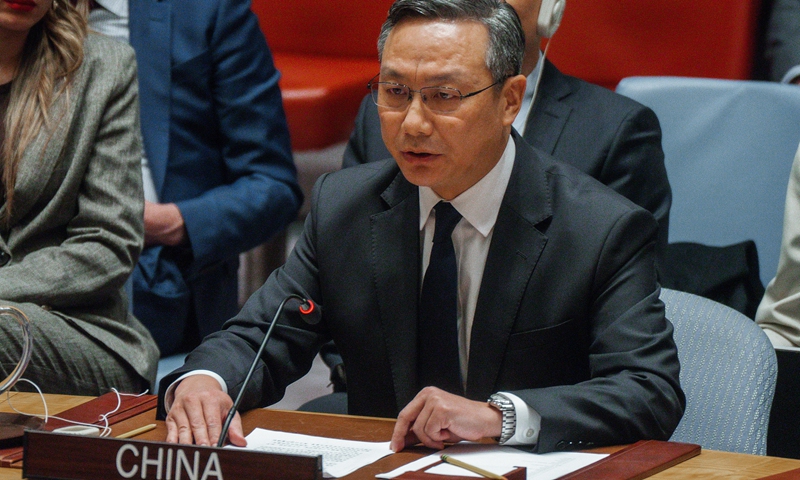
Photo: VCG
Sun Lei, China’s Deputy Permanent Representative to the United Nations, on Tuesday delivered a rebuttal during the general debate of the UN General Assembly’s Third Committee in response to Western countries, urging a handful of countries to stop fabricating and spreading lies about China and stop using human rights issues for political manipulation.
China strongly condemns and is firmly opposed to the groundless accusations and malicious smears of China’s human rights situation made by countries including the UK, Australia, Japan, Ireland, the Czech Republic and Lithuania, in their replies during the general debate of the Third Committee of the United Nations General Assembly, Sun said, according to a statement released by the Permanent Mission of China to the UN on Tuesday.
These countries consider themselves superior to others and often assume the posture of self-appointed “human rights teachers,” yet they have serious human rights problems of their own, Sun said, adding that these countries are in no position to lecture others on human rights, let alone make irresponsible remarks about China.
According to Sun, China has continued to safeguard and improve people’s well-being through development, eliminating absolute poverty nationwide. Nearly 100 million people have been lifted out of impoverishment, and a middle-income group of more than 400 million people has been established.
By contrast, poverty has continued to worsen in the UK in recent years, with over 14 million people living below the poverty line, half of whom are in “extreme poverty.” In Japan, the relative poverty rate among households stands at 15 percent, while child poverty has become increasingly pronounced. China expresses deep concern over the human rights situations in Japan, Sun said.
Meanwhile, China has continued to advance whole-process people’s democracy and ensure that the people run the country, with public support for and satisfaction with the government exceeding 90 percent for years. The national security law in Hong Kong marked a historic turning point for Hong Kong, bringing it from chaos to governance and from stability to prosperity, while improving and developing its democratic system, winning broad support across the city, Sun said.
By contrast, polls show that about 75 percent of people in the UK are concerned about the future of democracy. In Australia and the Czech Republic, public trust in government has fallen to new lows, with young people’s confidence in democracy also declining significantly, Sun added.
Sun said that all ethnic groups in China are equal members of the family of the Chinese nation and are closely united like the seeds of a pomegranate. The political, economic, cultural, religious and other rights of people of all ethnic groups in Xinjiang Uygur Autonomous Region and Xizang Autonomous Region are effectively protected. The enactment and implementation of the Ethnic Unity and Progress Promotion Law aims to promote common prosperity and development among all ethnic groups.
By contrast, Japan has failed to fulfill its commitments to eliminate racial discrimination and has not treated the Ainu and Ryukyu peoples as equal ethnic groups, leaving their survival and development under threat. In the UK, Australia and Ireland, colonialism has caused enduring harm to this day, and these countries are facing serious social problems, including racism and ethnic divisions, Sun said.
Sun said that amid global turbulence and headwinds facing multilateralism, China has contributed to the international human rights cause through its development and concrete efforts to promote dialogue, cooperation and more equitable global human rights governance.
By contrast, countries such as the UK, Australia, Japan, the Czech Republic and Lithuania frequently invoke morality, yet remain indifferent to the unjust treatment suffered by the people of Palestine, Iran and Cuba. They repeatedly use human rights as a pretext to interfere in the internal affairs of other countries and impose unilateral coercive measures, infringing on the interests of developing countries and playing a highly disgraceful role, Sun added.
Sun said the global trend toward multipolarity and more democratic international relations is irreversible and called for greater solidarity and cooperation on human rights. He said that China would pursue a human rights development path suited to its national conditions, engage in constructive dialogue and oppose the politicization of human rights, while urging a small number of countries to stop fabricating and spreading lies about China and stop using human rights issues for political manipulation. Otherwise, they will only end up hurting themselves.