


Hollow-core fiber: A new highway for AI data transmission
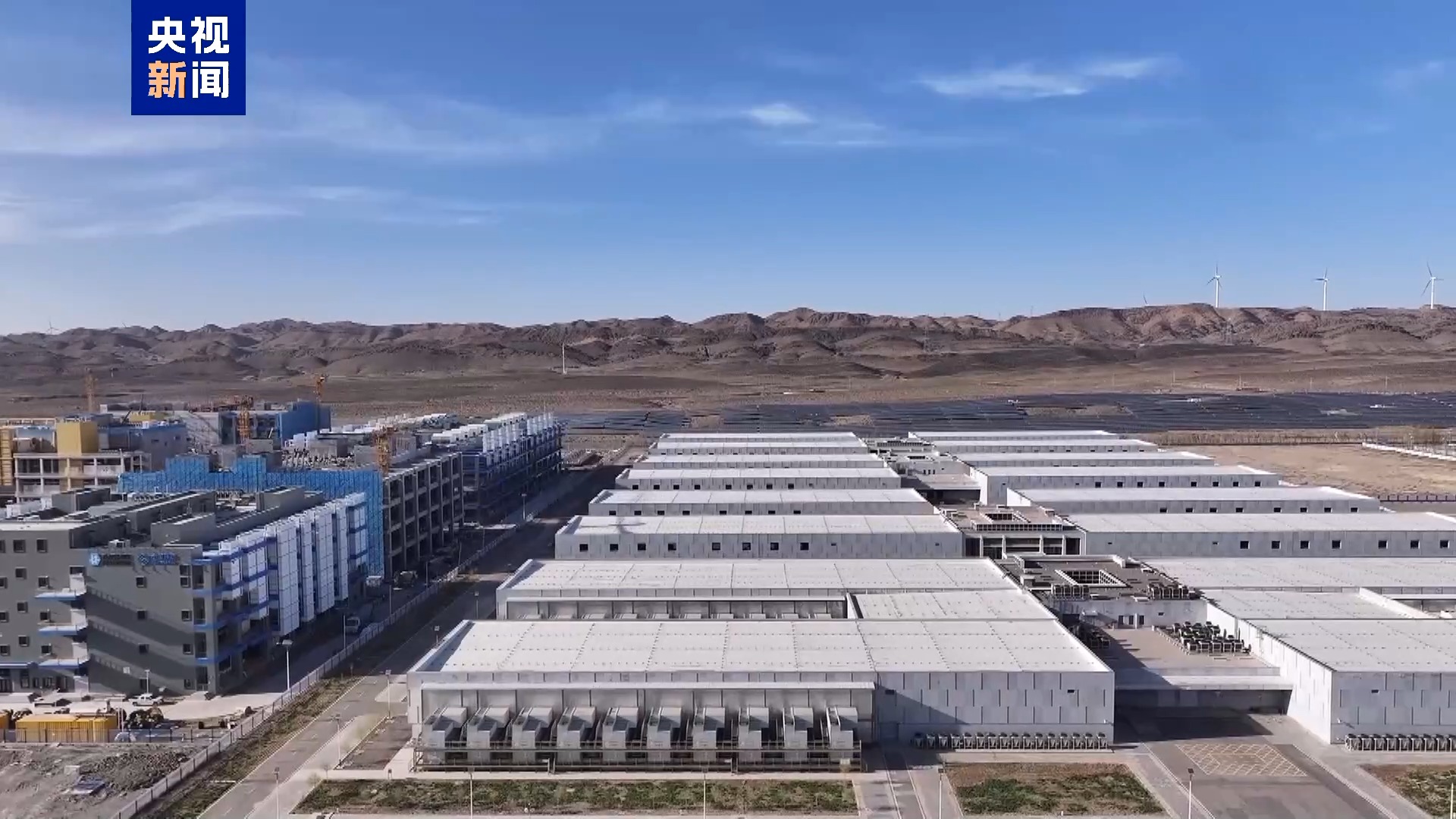
A data center in northwest China's Ningxia Hui Autonomous Region. (Photo: CMG)
The AI boom is putting unprecedented pressure on the infrastructure needed to power and connect computing centers. In northwest China's Ningxia Hui Autonomous Region, one of the country's eight national computing hubs, demand for computing power has grown far faster than expected.
"We have already completed in just one year all the construction needs originally planned for the entire 15th Five-Year Plan period (2026-2030)," said Zhou Chongyang, a computing network planning expert at China Mobile's Ningxia branch. "Under the latest plan, 60 new data centers are set to be built, tripling the scale of the original plan."
As more companies move into data centers, network congestion can cause delays in data transmission and increase the time and cost of AI model training. The problem is particularly acute in Zhongwei, a key computing cluster in Ningxia located more than 1,000 kilometers from major computing demand centers in eastern China.
Even with high-grade fiber connections, data transmission between Zhongwei and eastern hubs can take around 20 milliseconds – too slow for latency-sensitive AI applications.

A view of the hollow-core fiber. (Photo: CMG)
To address the bottleneck, engineers are turning to a new generation of optical fiber technology: hollow-core fiber.
Less than 0.4 millimeters in diameter, the fiber is so thin that it is difficult to capture clearly on camera. Magnified 1,000 times, its hollow interior becomes visible, with 20 tiny glass cylinders embedded in the walls to create a high-speed pathway for light signals. The technology has already been deployed between data centers 30 kilometers apart, paving the way for high-speed data transmission over longer distances.

Illustration of the interior of a hollow-core fiber. (Photo: CMG)
Hollow-core fiber can reduce both transmission loss and latency by more than 30% compared with conventional solid-core fiber, offering ultra-low latency, low loss and high bandwidth for more efficient AI model training.
The upgraded communications network also makes computing resources more accessible. A local computing platform pools scattered and idle resources, allowing customers to access available computing power more flexibly.
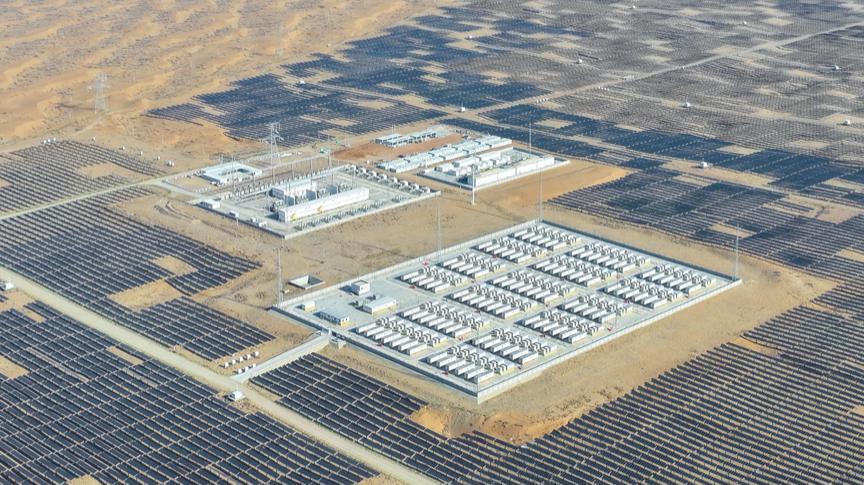
An aerial view of a renewable energy base, Zhongwei, northwest China's Ningxia Hui Autonomous Region, January 28, 2026. (Photo: VCG)
How can the power grid keep up?
The rapid expansion of computing infrastructure is creating another challenge: electricity.
Data centers are being built much faster than before. A facility that once took 18 months to two years to complete can now be delivered in as little as four and a half to five months using modular steel-frame construction.
The power infrastructure serving those facilities, however, cannot be built at the same speed. A new substation can still take around 18 months from approval to completion.
To close the gap, Ningxia is bringing forward grid construction. Four substations originally scheduled to begin construction in 2028 and 2029 have been brought forward to 2027.
But matching supply and demand is not simply a matter of building more substations.
New data centers often operate below full capacity during their initial stages, meaning they may not immediately need the highest-voltage power supply required for future peak demand. Ningxia has therefore introduced a tiered power supply model: data centers initially receive power at a lower voltage level and switch to higher-voltage supply as their electricity demand grows.
The region is also testing new ways to match computing demand with renewable power. A recently completed large-scale green-power direct-supply project uses a system that forecasts computing workloads and electricity demand to dynamically schedule power generation and energy storage based on fluctuations in wind and solar power.
Renewable energy now accounts for 87.6% of electricity consumption at Ningxia's data centers, 7.6 percentage points above the national target.
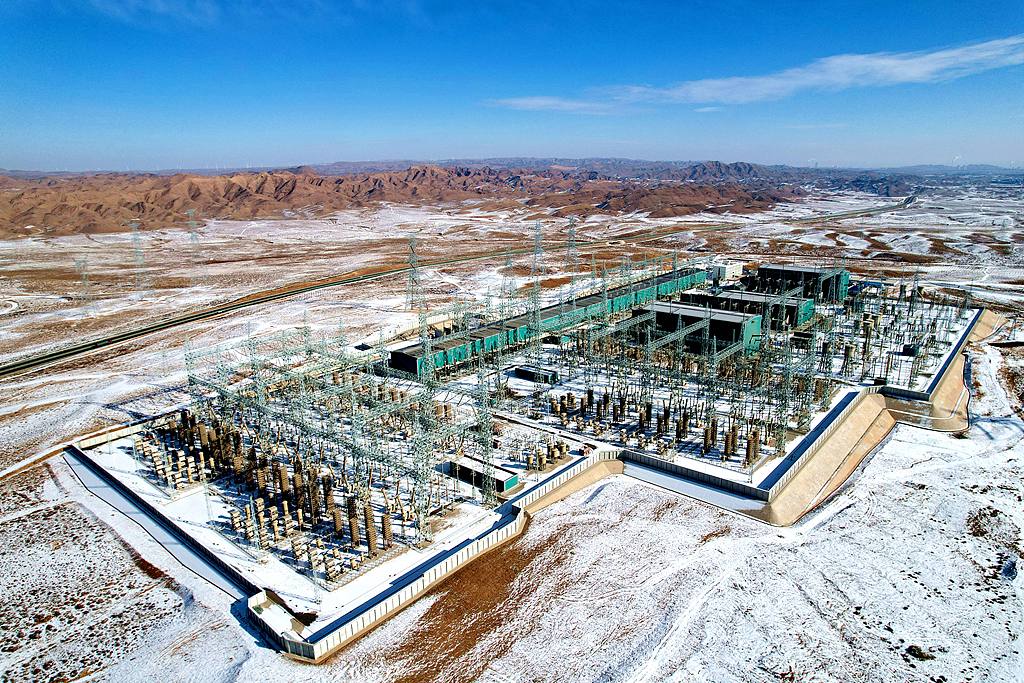
A view of a converter station, Zhongwei, northwest China's Ningxia Hui Autonomous Region, January 7, 2026. (Photo: VCG)
Bringing three networks together
The challenge goes beyond building more fiber, substations or data centers. It also requires breaking down barriers between different sectors and government departments, and finding new ways for them to work together.
Ningxia is exploring coordination mechanisms that bring the computing, communications and power sectors together, helping different departments and businesses align their plans and resources as computing demand grows.
As one of China's eight national computing hubs, Ningxia is accelerating the integrated development of these three networks, with the aim of building a green, secure and reliable computing hub serving users across the country.