


Facing death, keeping hope alive: The Long March at 90
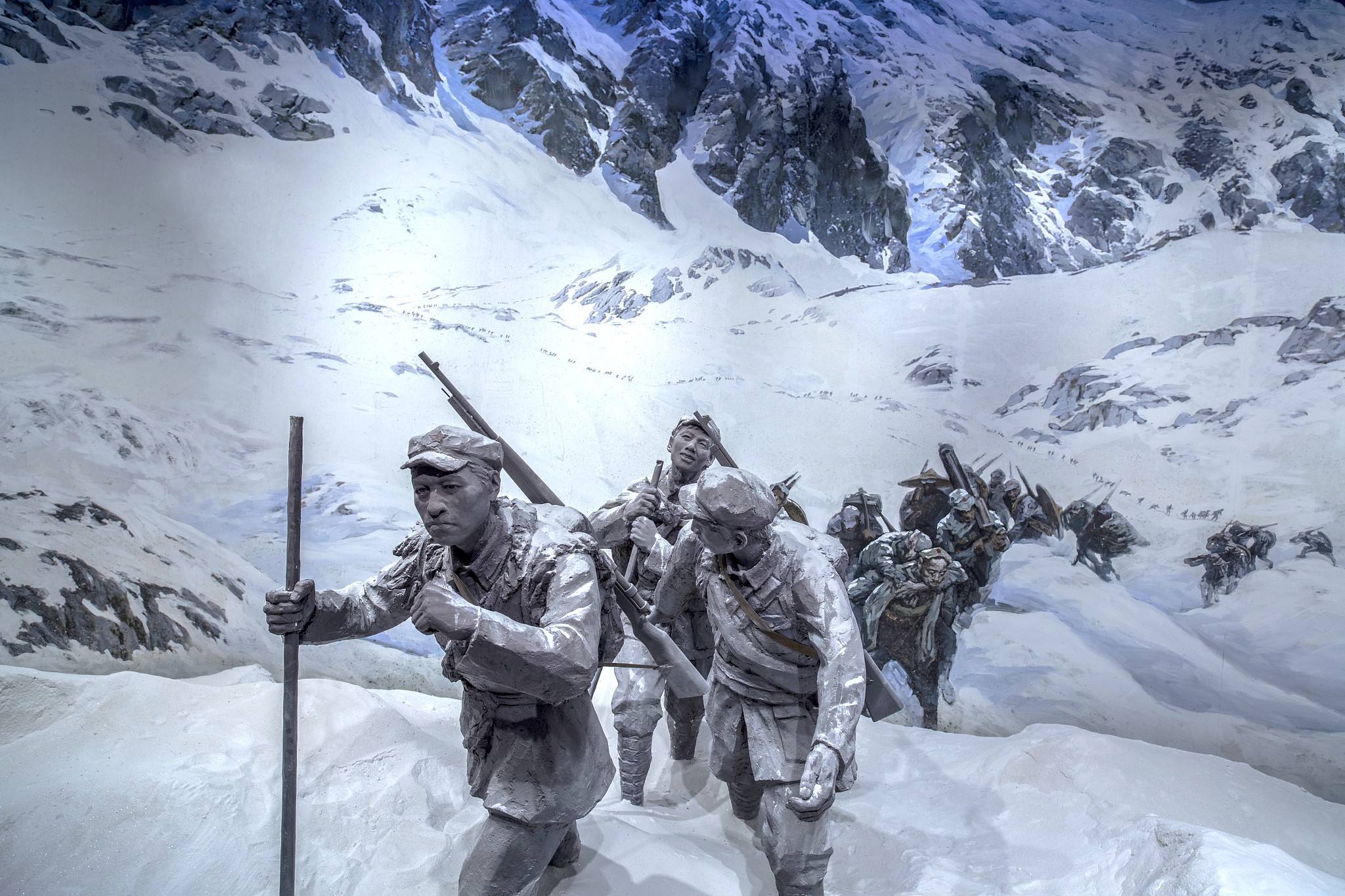
A work of art depicting a scene of the Red Army crossing snowy terrain during the Long March. (Photo: CFP)
In late 1934, on the banks of the Xiangjiang River, some men's chance of survival depended on others holding their ground. As the Chinese Red Army fought to cross, its 34th Division, commanded by Chen Shuxiang, helped keep pursuing forces at bay. The main force crossed; the division was cut off. Many who secured a passage for their comrades never found one for themselves. They were fighting for a future they might never see.
October 22, 2026, marks the 90th anniversary of the completion of the Long March. For those remembering it today, the outcome is known; yet for those who lived through it, nothing was assured. To understand its enduring place in the Chinese collective memory, we need to recover that uncertainty: When survival itself hung in the balance, what force drove people to press on?
Courage, and the willingness to change
The Long March began amid the civil war. Facing Nationalist encirclement, Communist forces left their southern bases to preserve their movement and seek a way forward. Different Red Army formations took different routes during 1934–1936, covering thousands of kilometers through repeated battles, mountain ranges and marshlands. Danger accumulated; hunger weakened soldiers already exhausted by marching; wounds became harder to heal without adequate food or medicine. Crossing one river brought no guarantee of reaching the next.
Yet hardship alone cannot explain endurance. Suffering can break trust and scatter communities. The question is how people respond to it. On the banks of the Xiangjiang River, the soldiers braved immense danger to cover the evacuation of others. It was their courage that preserved the possibility for the rest to press on.
But the terrible losses also exposed failures of command. Respect for their sacrifice required learning from the decisions that had made it so costly. At the Zunyi Conference in January 1935, Communist leaders confronted military failures and reorganized the leadership, strengthening Mao Zedong's position. Survival required the ability to re-examine and adjust a course of action that had lead to failure. The following month, the Red Army captured Loushan Pass and retook the nearby city of Zunyi. That victory mattered beyond the mere recovery of territory; it demonstrated that a severely battered army could still regain the initiative and turn the tide.
Here lies a lesson that travels well beyond military history. Resilience involves judgment as much as resolve. People need not only the courage to face danger, but also the honesty to recognize when determination is being spent on the wrong approach. The movement survived through both steadfast commitment and a growing capacity to adapt.
A future worth enduring for
In the National Museum of China, a partly eaten leather belt brings the ordeal into focus. It belonged to a young Red Army soldier, Zhou Guangcai. During a grassland crossing in 1936, supplies ran out. Soldiers scoured the area for roots and wild plants, even turning to leather to stave off hunger. Part of Zhou's belt was eaten. At his insistence, the rest was saved; he later marked it to commemorate the Long March.
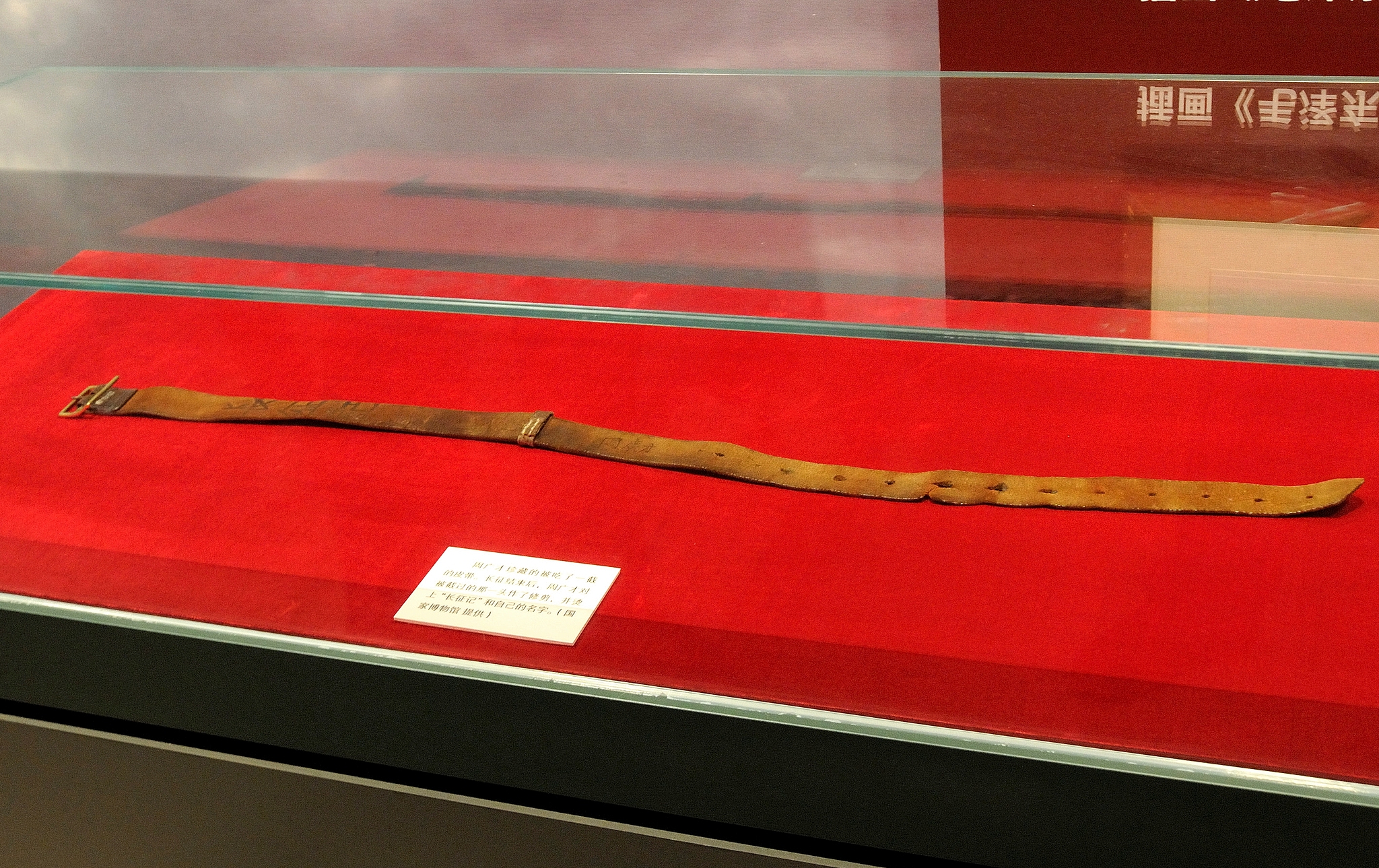
The remaining half of the belt eaten by Red Army soldier Zhou Guangcai, provided by the National Museum of China and photographed at the Military Museum of the Chinese People's Revolution, Beijing, October 13, 2016. (Photo: CFP)
Though the object was small, the story revealed the vast gap between the extreme circumstances of that time and our everyday lives today. A belt, something normally taken for granted, had become food. Its surviving length makes deprivation more tangible than a list of distances or battles ever could. It reminds us that the march was made by people whose bodies could fail, whose endurance had limits and whose next meal was uncertain.
What sustained such people? Their political convictions held a promise with immediate human meaning: a China freed from poverty and oppression. They could not know whether they would live to see it. Yet that possibility imbued their struggle with a significance that transcended the individual instinct for survival. Shared belief, military discipline and a sense of responsibility toward comrades transformed hope into the daily effort of carrying on.
For readers familiar with the biblical Exodus, that perilous journey – sustained by the hope of a shared future – may evoke a sense of resonance, despite the different historical contexts. The connection is rooted in a fundamental question of human nature: How do people maintain solidarity when the world they seek remains tantalizingly out of reach?
How a journey became a nation's memory
Through survivors' accounts, remembrance of the dead and stories passed between generations, the Long March entered China's national memory. The experience of revolutionary forces became a wider resource for thinking about courage, sacrifice and recovery from setbacks. Its power lies partly in the knowledge that what later appears inevitable once hung by a thread.
Suffering offers no guarantee of greatness, yet the way a society remembers hardship can influence how it meets new challenges. Memories of mutual responsibility can strengthen solidarity; memories of costly mistakes can encourage learning. Such habits help societies withstand shocks and sustain the patient work of renewal.
For readers outside China, this offers a way to understand why the Long March still matters. Beneath those unfamiliar place names traversed by the Red Army lie decisions familiar to us all: changing course after facing setbacks and continuing to strive for the future we have envisioned.