


Canton Fair at 70: How China contributes to certainty in global trade
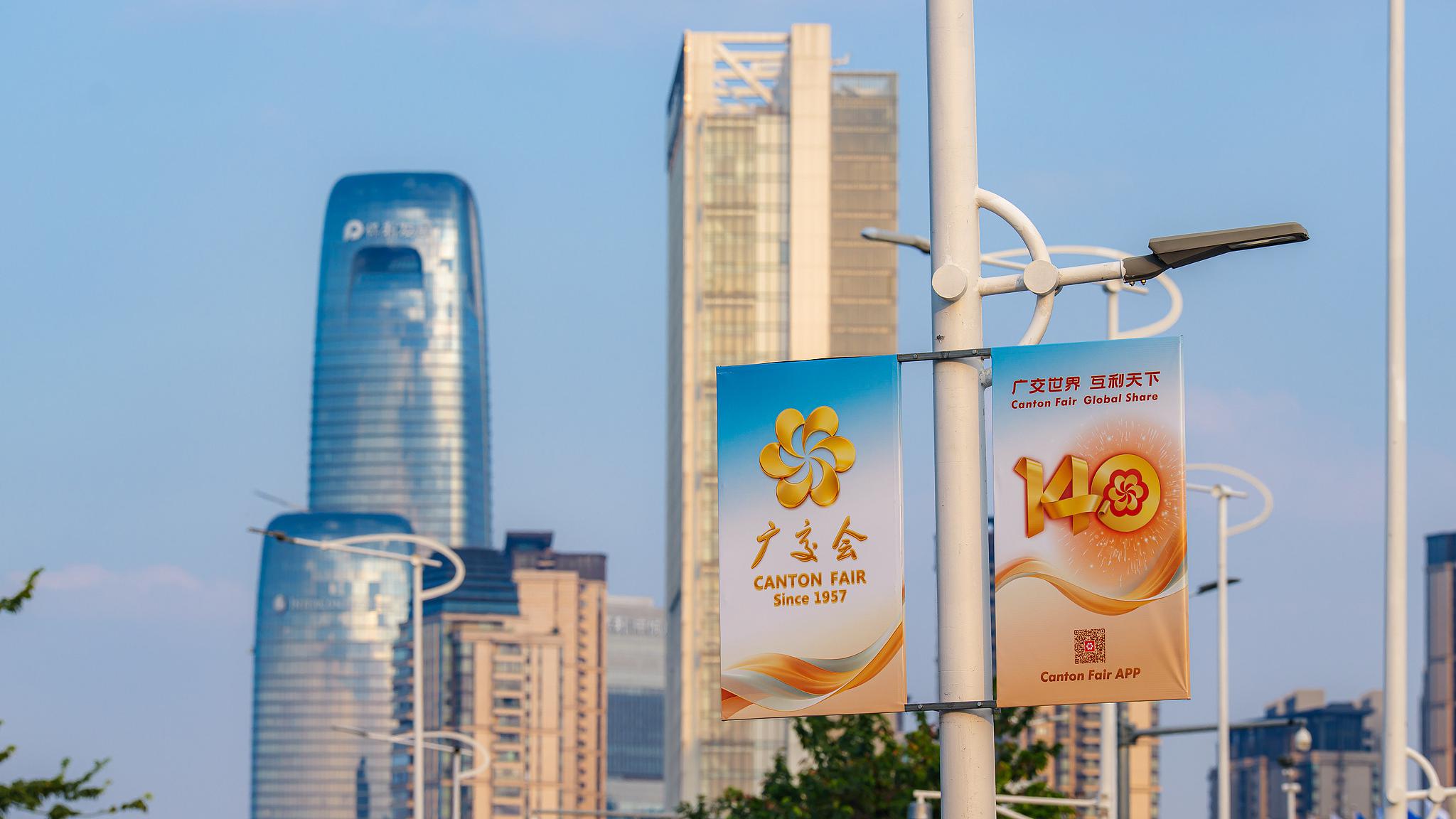
Promotional displays are seen outside the venue of the 140th China Import and Export Fair, also known as the Canton Fair, in Guangzhou City, south China's Guangdong Province, October 11, 2026. (Photo: VCG)
"We have participated in the Canton Fair for decades and successfully developed our business in the Chinese market," said Yohanes Gunawan, export department manager at an Indonesian fast-moving consumer goods company PT Sinar Antjol.
"It's an indispensable platform for international trade. We have never missed a session since our first participation, and we will continue to take part in the future," he said.
The company's long-standing presence at the fair reflects its enduring appeal to global businesses. The 140th China Import and Export Fair, widely known as the Canton Fair, held its first day of exhibition in Guangzhou on Thursday, marking the 70th anniversary of the event.
Over the past 70 years, the Canton Fair has grown from attracting 1,200 buyers at its inaugural session to 310,000 today, reflecting China's expanding role in global trade and deepening integration into the global trading system.
As the world's largest goods trader, China has become an anchor of certainty in global trade. Data released by China's General Administration of Customs on Wednesday showed that the country's goods imports and exports reached 39.94 trillion yuan (about $5.96 trillion) in the first three quarters of this year, up 18.8% year on year.
Global buyers flock to the fair
Bustling exhibition halls are bringing together exhibitors and buyers from around the world at the Canton Fair, which has attracted 310,000 buyers from more than 220 countries and regions to Guangzhou.
One of the fair's biggest draws is its evolving range of products, reflecting China's shift toward innovation-driven and higher-value trade. In its early years, transactions were dominated by agricultural and sideline products. Today, technology has taken center stage.
The first phase of this year's fair focuses on emerging trends in innovation, green development and intelligence, featuring 17 specialized exhibition zones for emerging and future industries. Cutting-edge products in areas such as brain-computer interfaces, next-generation energy storage and advanced chips are also on display.
Zhang Li, assistant minister of commerce, said 64% of participating companies had adopted new technologies, including industrial internet systems and AI, while new products accounted for a record 23.2% of all exhibits.
Beyond showcasing products, the fair has increasingly become a launchpad for new releases, where Chinese companies introduce their latest innovations to global buyers and gauge their performance against evolving market needs. These debuts offer a glimpse into changing global demand, product standards and the real-world applications of emerging technologies.
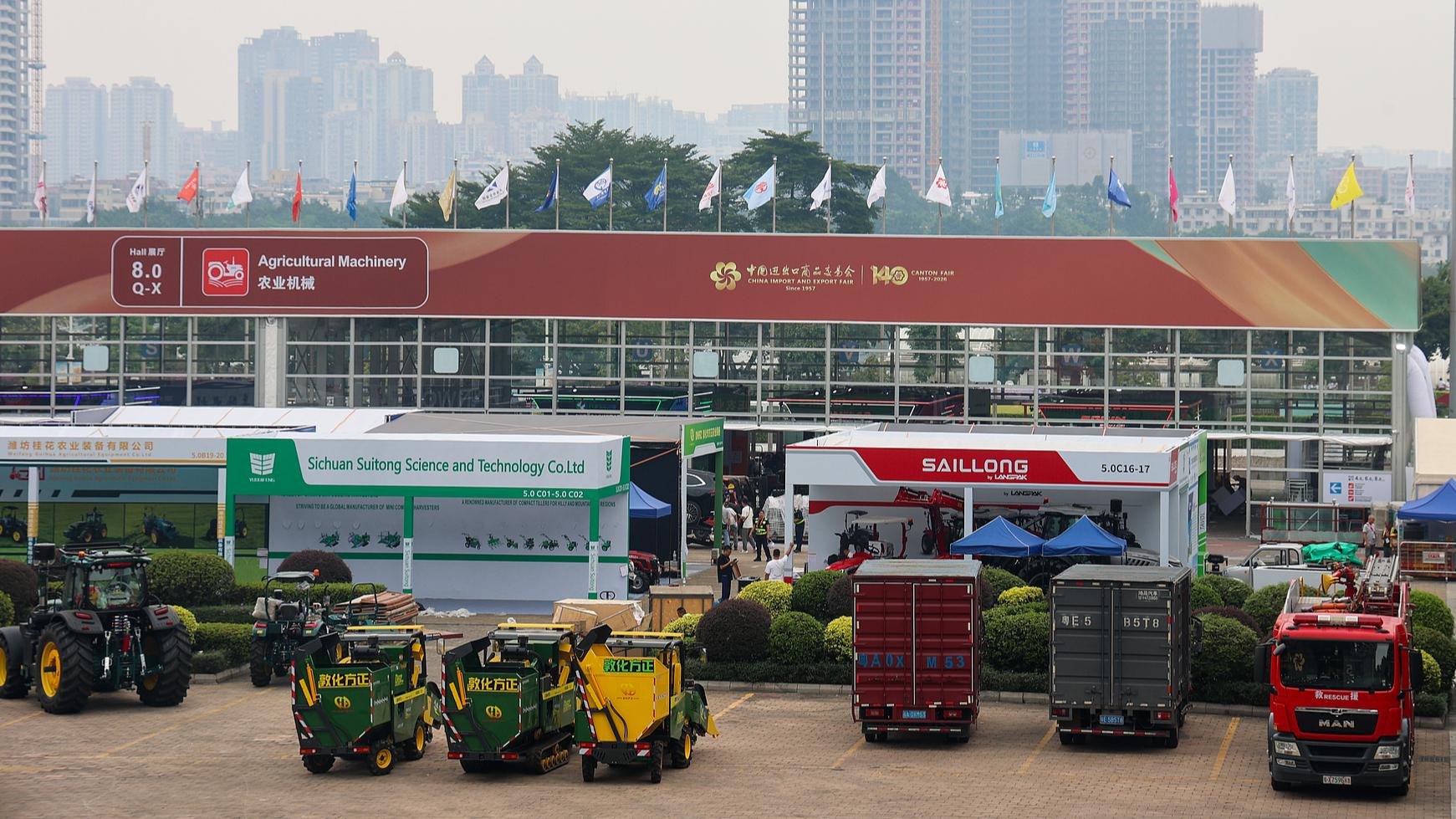
Agricultural machinery and trucks are displayed beneath a sign reading "Agricultural Machinery" outside the venue of the 140th China Import and Export Fair in Guangzhou City, Guangdong Province, south China, October 12, 2026. (Photo: VCG)
Canton Fair fosters global industrial cooperation
Zhang also highlighted China's industrial strengths and their role in supporting other economies. China's strong industrial base and supply chains enable it to provide countries, particularly developing economies, with manufactured goods and production equipment to support industrialization and integration into global supply chains, he said.
In this way, the fair's role has long extended beyond trade transactions.
Of the 32,000 participating companies, nearly 20% have invested overseas, creating more than 200,000 jobs in host markets. The fair is evolving from a place to secure orders and sell products into a platform for building local operations and improving services, contributing to efforts to foster an open global economy.
Khaled Ramzy, overseas export director at Egypt's Fresh Electric Appliances Company, a home appliance retailer, said the Canton Fair had played an important role in the company's development.
"We participate not only as an exhibitor to promote our brand and raise its profile," Ramzy said, adding that the company also sends procurement teams to the fair to source components from Chinese suppliers and build business relationships with them.
China's expanding import market offers new opportunities
On September 27, the first batch of imported exhibits for the fair cleared customs. The shipment from Türkiye included teapots, coffee machines and ceramic tableware, totaling 84 items and weighing 12.3 tonnes. It was just one example of the fair's role in bringing products from around the world to China.
As more high-quality products from around the world enter the Chinese consumer market and become part of China's industrial and supply chains, the expanding market is creating more opportunities for businesses worldwide.
Wang Jun, deputy head of the General Administration of Customs, said that China's imports grew 22.3% year on year in the first three quarters of this year, outpacing export growth by 5.9 percentage points.
On May 1, China expanded its zero-tariff treatment to all 53 African countries with which it has diplomatic relations, bringing the total number of countries covered by its zero-tariff policies to 63. In the first three quarters, China's imports from these countries totaled 867.53 billion yuan (about $129.6 billion), up 15.3% year on year.
Wang said China's growing imports reflect domestic demand for production and consumption, as well as the country's efforts to further open its market to the world. China is not only the "world's factory" but also the "world's market," an open platform that shares opportunities with the world, he said.