


China's clean energy equipment exports gain momentum
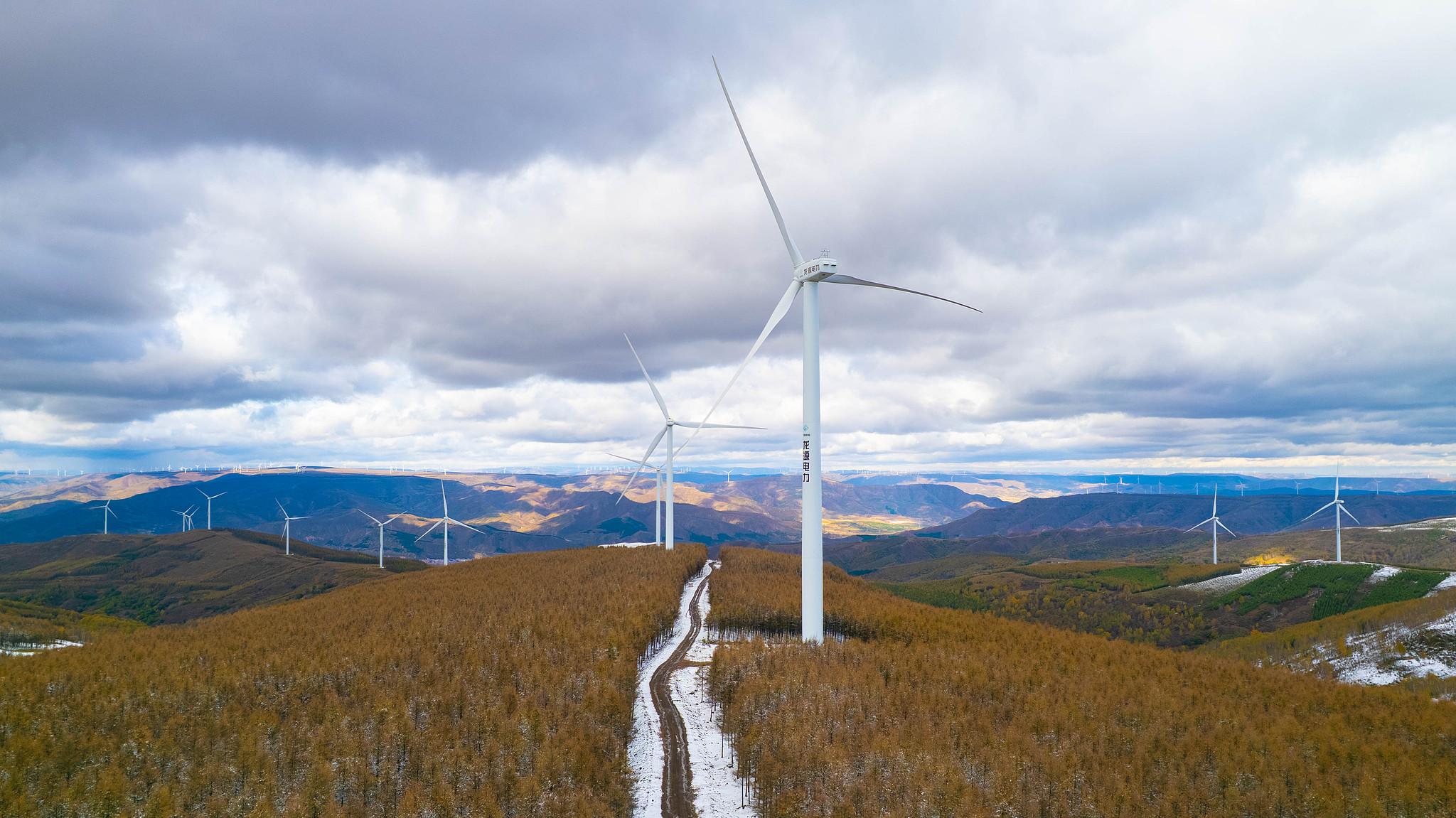
A view of the Longyuan wind farm in Chengde, north China's Hebei Province, October 6, 2026. (Photo: VCG)
China's clean energy equipment industry has made significant progress in technological innovation, industrial scale and international market expansion this year, providing strong support for the global energy transition, according to the China Machinery Industry Federation (CMIF).
China's total installed power generation capacity reached 4.103 billion kilowatts by the end of August, up 11.1% year on year, reflecting continued growth in the country's energy infrastructure.
In the first half of this year, output of nuclear power, hydropower and wind power generating units increased 92%, 51.9% and 11.5% year on year, respectively, the CMIF said.
On October 13, Dongfang Electric Machinery, based in Deyang, Sichuan Province, dispatched a batch of gas, hydropower and wind power equipment for energy projects in several Chinese provinces.
The equipment features domestically developed key materials, core manufacturing processes and advanced hydraulic and electromagnetic designs, helping overcome technological bottlenecks and strengthen China's independent manufacturing capabilities.
Meanwhile, new energy storage technologies are moving from demonstration projects toward large-scale deployment. A phase-change direct-cooling system developed for energy storage applications can improve heat transfer efficiency, enhance battery temperature uniformity, reduce auxiliary energy consumption and mitigate thermal runaway risks.
China has also achieved breakthroughs in emerging energy technologies, including the engineering application of vanadium redox flow batteries and advances in key hydrogen energy materials and equipment.
Overseas markets drive growth
Overseas demand has become an increasingly important growth engine for China's clean energy equipment industry, with exports of power generation, transmission and transformation, and energy storage equipment maintaining strong momentum.
Recently, an F-class 50-megawatt heavy-duty gas turbine departed from Deyang for Kazakhstan via the Horgos port. The shipment marked the first overseas export of a fully domestically manufactured high-end heavy-duty gas turbine as a complete unit.
In September, Tanzania's Julius Nyerere Hydropower Station officially entered commercial operation. With a total installed capacity of 2,115 megawatts, the project represents the largest hydropower project exported in a single package under a Chinese proprietary brand. Its annual power generation has exceeded 3.1 billion kilowatt-hours, helping meet approximately half of Tanzania's electricity demand.
Industry experts said China's clean energy equipment exports are shifting from individual products toward integrated solutions combining technology, standards and services.
China has cooperated with more than 100 countries and regions on green energy projects. Chinese manufacturers supply around 70% of the world's wind power equipment and 80% of its photovoltaic modules, with clean energy products reaching more than 200 countries and regions.
Innovation underpins high-quality development
At the 2026 World Conference on Clean Energy Equipment, held in Deyang, participants highlighted innovation and intelligent manufacturing as key drivers of high-quality industrial development.
At Dongfang Electric Machinery's digital welding workshop, automated production lines have shortened product design cycles by 40% and manufacturing cycles by 30%. The company's first-pass product qualification rate has remained above 98%.
According to China's 15th Five-Year Plan for the development of a new energy system, the country's total installed power capacity is expected to reach 5.4 billion kilowatts by 2030, with wind and solar power accounting for more than half of the total.
Industry leaders called for deeper integration of artificial intelligence and advanced digital technologies with equipment manufacturing, stronger domestic capabilities in core materials and components, and forward-looking investment in energy storage, hydrogen energy and controlled nuclear fusion.
These efforts are expected to strengthen China's energy equipment industry and create new opportunities for international cooperation in the global transition toward cleaner energy.