


Chinese scientists trace local origins of early millet farmers in northern China
(Photo: Global Times)
Chinese scientists have found genetic evidence that early millet-farming populations in northern China originated locally rather than emerging from a major influx of migrant agricultural groups, according to research published in the journal Science Advances.
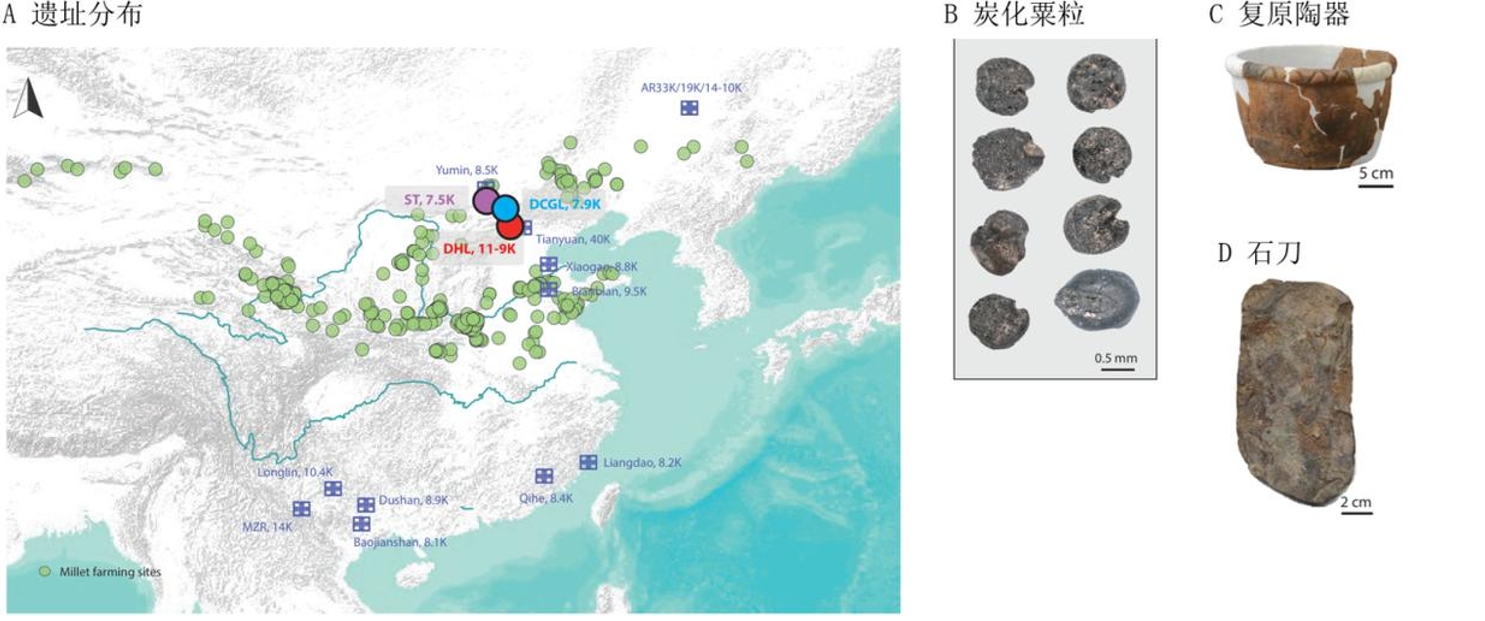
The research analyzed genome-wide data from seven ancient individuals at the Donghulin site in Beijing and the Dengcaogouliang and Sitai sites in Zhangjiakou, North China's Hebei Province, combined with carbon-14 dating and stable isotope evidence. It covers a period from about 11,000 to 7,300 years ago.
The study was conducted by teams led by Huang Yanyi and Pang Yuhong of Peking University's Biomedical Pioneering Innovation Center, together with Zhao Chaohong and Wu Xiaohong from the university's School of Archaeology and Museology, and collaborating archaeological institutions.
Huang told the Global Times that the research employed multidisciplinary and hi-tech methods. Combining ancient genomics, archaeological remains and dietary evidence, it has revealed the genetic continuity and local origin of millet-related populations in the region.
According to Huang, the origins of the earliest populations that used and cultivated millet, and whether the intensification of millet farming was driven mainly by local people or by incoming farming groups, had long been difficult to resolve because of a lack of direct genetic evidence from early millet-related populations.
Zhao Chaohong, one of the research fellows, told the Global Times that because the Donghulin site is older than other sites and has yielded more material, the research team began work there first.
"New discoveries during later excavations at the Dengcaogouliang and Sitai sites brought human and plant remains into the same research framework, ultimately shaping this multidisciplinary collaboration," said Zhao.
Zhao explained that the excavations had uncovered a relatively large number of individuals, but the study selected representative individuals whose stratigraphic context and dating data were relatively clear. Three were from the Donghulin site, with individuals from the other two sites also included, for a total of seven.
"We selected these individuals to examine kinship and, together with agricultural remains, to see whether early agriculture was domesticated by these people," Zhao said. He added that continuous chronological material from Donghulin and other sites allows research fellows to observe when agriculture began to emerge in northern China and how it persisted afterward.
The study found that three ancient individuals from the Donghulin site were genetically close to one another and had relatively close genetic ties to contemporaneous hunter-gatherer populations in the Heilongjiang River basin. The findings point to deep ancestral links among early Holocene populations in inland northern East Asia.
Further comparison showed that the populations at the Dengcaogouliang and Sitai sites were, genetically speaking, highly similar to the Donghulin population, belonging to the same northern inland genetic branch of East Asia.
The Dengcaogouliang people retained ancestry most closely related to Donghulin, with no significant mixture from outside groups, suggesting that the local genetic background persisted for more than 3,000 years.
At the same time, dietary evidence indicated a clear shift. Combined with archaeological evidence, the research fellows found that C4 crops, plants that use the C4 carbon fixation pathway to concentrate carbon dioxide around the enzyme Rubisco, including millet, became increasingly important in the diet of the studied populations. The continuity in genetic background alongside the dietary shift supports the view that millet farming in the region developed mainly on the basis of local populations, providing genetic support for the local origin of early millet-farming groups.
The study also found that Donghulin-related ancestry contributed to the formation of early hunter-gatherer populations around Lake Baikal and in Mongolia.
"The study shows the interaction between inland northern populations and neighboring groups and their influence on later populations, offering new evidence for understanding the relationship between the development of millet farming and the population history in East Asia," said Huang.